
Beskrivning
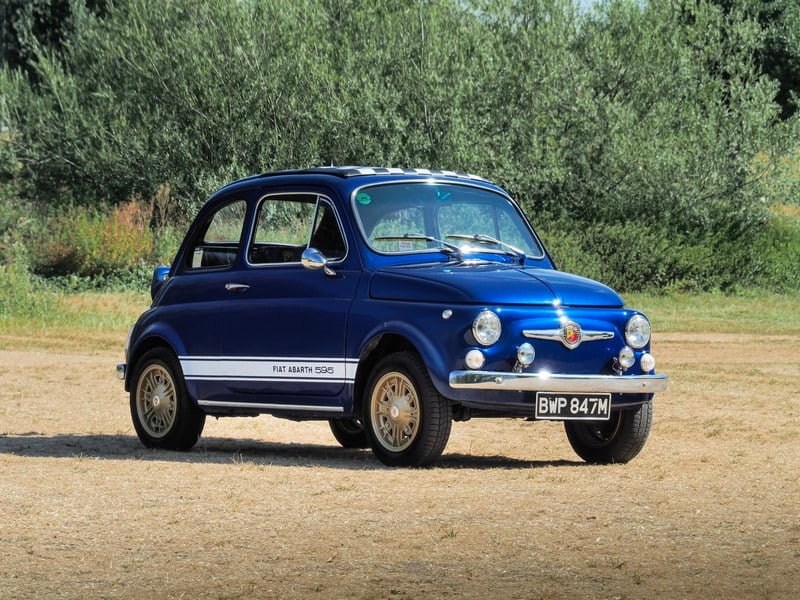
The car we offer has been completely restored directly by its owner, a well-known collector and former racing driver. It is now in excellent condition, both in terms of bodywork and mechanics. The car is equipped with an Italmeccanica volumetric compressor, special Fergat wheels and, of course, an Abarth muffler. Ready to use, available for viewing and testing. The Fiat 500 was born between the two world wars with the intention of offering an economical car with which to start the motorisation of the country. Its small size and vague resemblance to Walt Disney's character led to its being called Topolino (Mickey Mouse), which, while remaining a nickname, would identify the three series produced from 1936 until the post-war period in 1955. At the beginning of the 1930s, Fiat had to produce a compact and economical car with which to allow the spread of the automobile in Italy. Initially, the idea of the then technical director, engineer Antonio Fessia - who would later move to Lancia and be the father of the * Lancia Flavia* and others - was to produce an 'all forward' car, i. e. with an engine and front-wheel drive. This was an unusual architecture for the time, when the engine was at the front, but traction always at the rear. Reluctantly Fessia had to put the brakes on the innovative drive due to a mishap that occurred during the testing of the first prototype, so in 1934, the project was entrusted by the same engineer to the young * Dante Giacosa*, who until then had been working on aviation engines.
The design was always guided by cost containment, which influenced all the technical choices of Giacosa's new team: the layout became traditional, with a front engine and rear-wheel drive, but something unusual remained, in fact, the four-cylinder was located in front of the front axle but also in front of the radiator. With a displacement of 569 cc, which would give the car its official name '* Fiat 500*', the engine was equipped with side valves that made it particularly low. The surrounding parts are made as simple and inexpensive as possible: the radiator, located behind the engine in a raised position, does not need a pump to circulate water because it uses the radiator principle, which brings the hottest water upwards, which cools as it flows down the radiator and back into the engine. The low engine with the radiator behind it gave the bonnet a streamlined, aerodynamic line, with the external headlights flanking it, which, in the imagination of those who saw them from inside the car, resembled the ears of the comic-book character Mickey Mouse, hence the nickname that was to become immediately popular and identify the little car.
In * June 1936*, the Fiat 500 was officially presented to the public as the 'new little big car of savings and work', as the Istituto Luce film emphatically defines it as it advances on the terrace of the Circolo della Stampa, showing off its compactness.
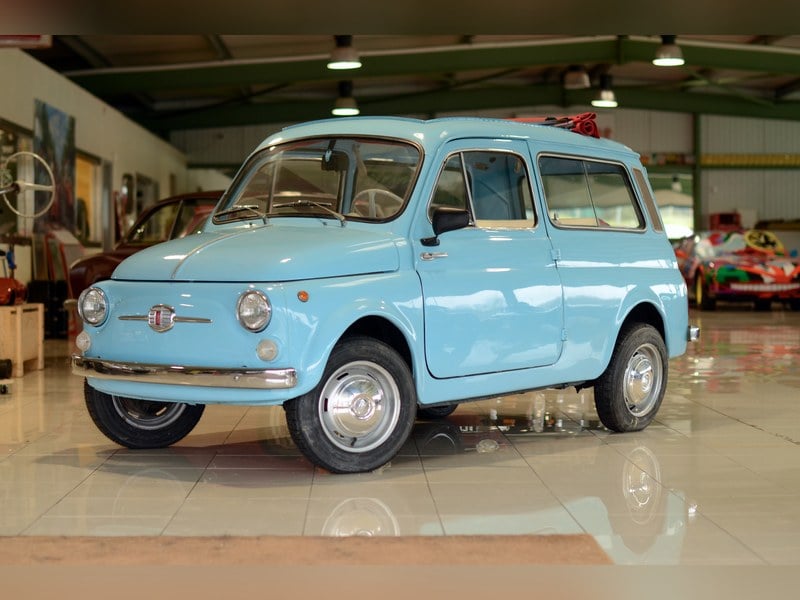
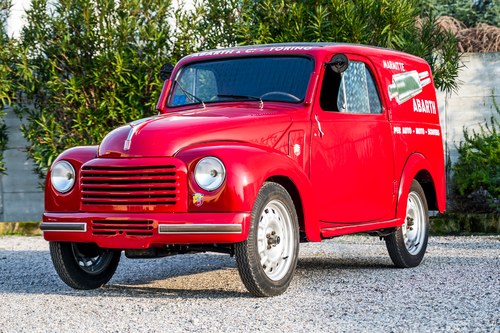
1948 saw the birth of the second series, which evolved into the four-seater Giardiniera Belvedere version until it embraced new styling cues with the third series of 1949, in production until 1955, when it passed the baton first to the 600, later joined by the New 500. After the inauspicious events that saw Turin heavily bombed during the World War, production of the Topolino exceeded 120, 000 units: the time had come for the launch of the * Fiat 500 B, which took place at the 1948 Geneva Motor Show. The bodywork remains almost unchanged, the dashboard, steering wheel and bonnet hooks change, while most of the new features are hidden: the displacement remains the same but the new cylinder head, which now contains the valves, and the new carburettor with petrol pump, allow ** almost 30% more power, taking the top speed to 95 km/ h. The braking system, suspension with hydraulic shock absorbers and the electrical system are also new. Alongside the saloon and convertible versions, by far the most popular, the '500 Giardiniera Belvedere' was born. This was a family version, finally able to accommodate four people, with bodywork inspired by American station wagons with wood trim. The tailgate provides convenient access to the load compartment, which can be increased in capacity by folding down the backrest of the rear bench seat. Production of the Fiat 500 B ended after a year and about 21, 000 units assembled: the third series, the Fiat 500 C, made its debut at the Geneva Motor Show in March 1949. It was adapted to the new stylistic trends with headlights recessed in the mudguards, a horizontal grille, while the bonnet became a single piece with opening from the inside. The spare wheel is now housed in a new dedicated compartment, accessible from the outside through a lockable door. The engine evolves further with the adoption of the aluminium cylinder head but performance remains virtually unchanged, despite the overall increase in weight to 800 kg. The equipment was also enriched, with the introduction of the windscreen defrosting system combined with the ** car interior heating system*. After more than 376, 000 units, production of the Fiat 500 C in its various versions ended in 1955. The Topolino, particularly the Giardiniera Belvedere, became one of the stars of the post-war period: the perfect family car for Sunday outings, it was transformed into a versatile van for all kinds of work, from the craftsman to the baker.