Mercedes A Class: Models and Specs
1997 to present • Premium compact hatch/saloon • Front-wheel drive (some AWD/4MATIC) • Petrol and diesel engines • Manual or automatic (varies by year)
Overview
For almost thirty years, the Mercedes A-Class has been a default choice among buyers who want a premium badge, a modern interior and a compact footprint that functions equally well on the motorway or in a supermarket car park. It’s a model line that’s evolved over time: early cars were tall and practical, whereas more modern iterations have become sharper, sportier and blessed with a more premium feel. **Buyer note:** A clean-looking A-Class can be an expensive mistake if the history doesn’t add up. Condition and servicing matter more than a particular car’s specifications or age.
Price
- Starting price
- 684 €
- Average price
- 25.361 €
- Price range
- 684 € - 61.500 €
Specifications
- Manufacturer
- Mercedes-Benz
- Production Years
- 1997 to present
- Vehicle Class
- Premium compact
- Body Styles
- Hatchback, saloon
- Layout and Drive
- Front-engine; FWD (some AWD models, branded 4MATIC)
Mercedes A Class in Detail
The Mercedes A-Class has been completely reinvented over the last three decades. What started as a tall, practical car built around clever packaging has gradually morphed into the sharper and more conventionally proportioned premium hatchback/saloon most UK buyers recognise today.
Early A-Class models were designed with practicality uppermost: an upright driving position, easy access and a city-friendly shape that prioritised space and visibility over aesthetics. However, with each subsequent generation, Mercedes shifted the A-Class toward a more performance-focused, tech-heavy identity.
For UK buyers, that evolution matters because it changes what you’re actually buying:
Older A-Class: practical, simple, often cheaper to keep going, provided it’s been maintained properly.
Newer A-Class: more modern, more premium, more complex, and therefore usually more expensive to maintain.
Buyer note: Don’t just shop for an “A-Class.” Search for the generation or model that matches your priorities or preferences, because there’s very little shared DNA between old and new generations.
As mentioned above, the A-Class covers a wide spectrum of vehicles. Some versions are built for economy and commuting, while others (especially the more recent AMG flagships) are pocket rockets. Don’t shop by headline numbers alone: decide whether you need relaxed daily usability or performance despite its higher running costs.
Variant | Era (UK) | Engine type | Power | 0–60 mph | Top speed |
A 180 | W177 (2018–2023) | 1.3L turbo petrol | 134 bhp (100 kW) | 8.8 sec | 130 mph |
A 200 | W177 (2018–2023) | 1.3L turbo petrol | 161 bhp (120 kW) | 8.0 sec | 140 mph |
AMG A 35 4MATIC | W177 (2019–2023) | 2.0L turbo petrol + AWD | 302 bhp (225 kW) | 4.7 sec | 155 mph (limited) |
AMG A 45 S 4MATIC+ | W177 (2019–2023) | 2.0L turbo petrol + AWD | 416 bhp (310 kW) | 3.9 sec | 168 mph (limited) |
Buyer note: Always verify the exact engine output and spec on the individual listing. Mercedes trims can vary by year, and even according to which optional extras were fitted.
The A-Class has changed shape dramatically since 1997, but for most UK buyers, the biggest real-world difference involves the choice between hatchback or saloon, especially in terms of parking, rear space and boot practicality.
Body style | Model code | Length | Width (incl. mirrors) | Height |
A-Class Hatchback | W177 | 4428 mm | 1992 mm | 1452 mm |
A-Class Saloon | V177 | 4558 mm | 1992 mm | 1458 mm |
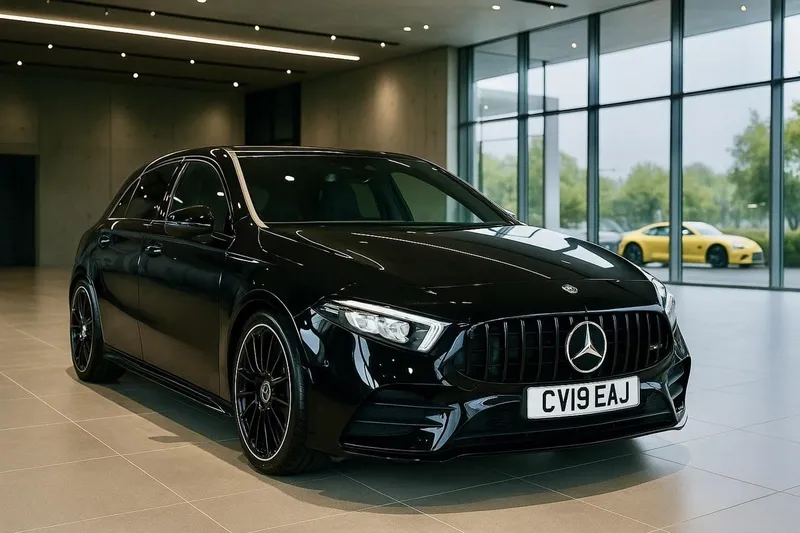
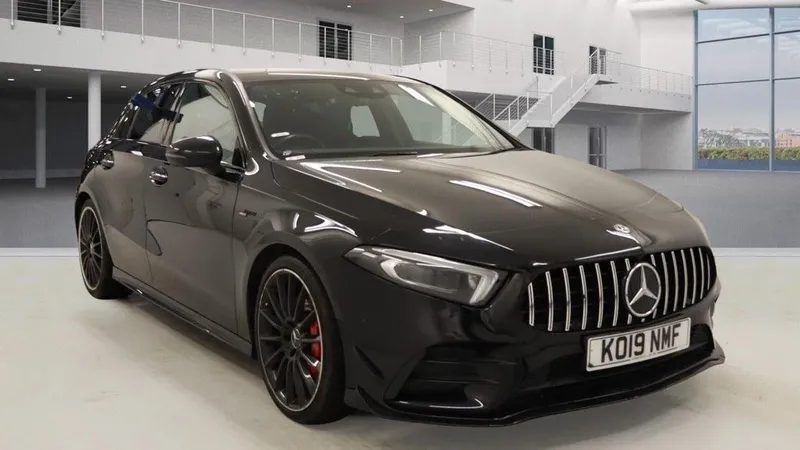
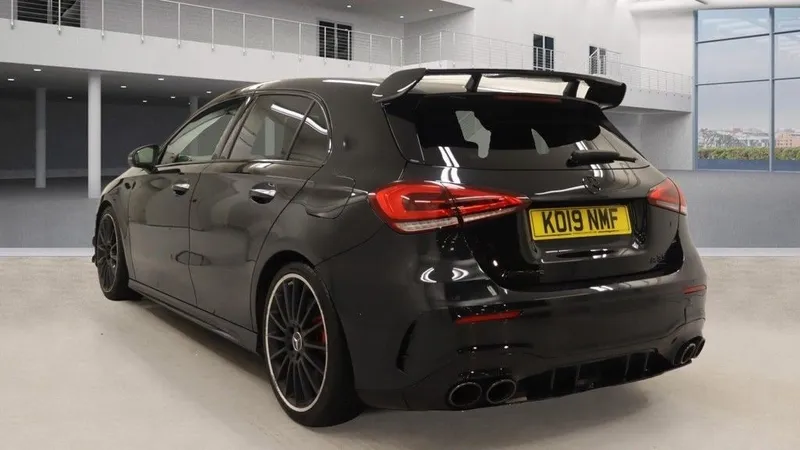
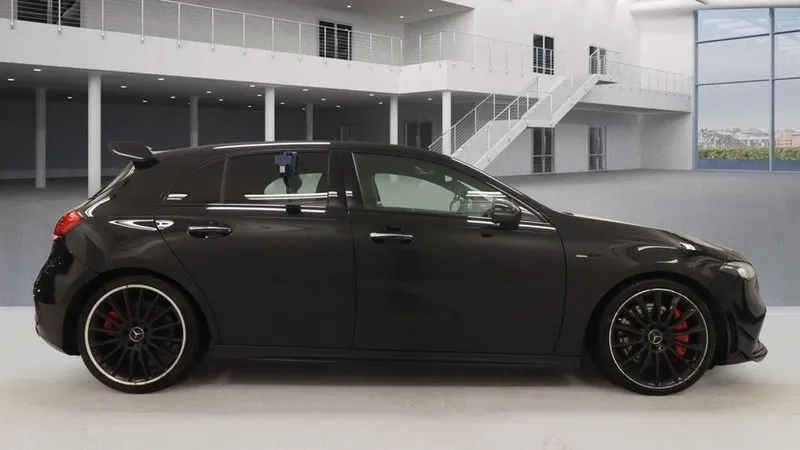
The Mercedes A-Class design has evolved from being an urban runaround to a compact car with a premium aura. Compared with older generations, modern A-Class models are lower, wider, and more aggressive, abandoning the first-generation car’s rather frumpy mini-MPV styling.
Across the range, the styling has always been clean and sharp rather than classic (despite the Classic badging on some early models). Indeed, trim levels can change the car's overall personality. Some versions feel subtle, whereas others lean into sporty visuals with bigger wheels and more dramatic bumpers.
Buyer note: Larger wheels can look great, but often mean a firmer ride and more kerb damage. Similarly, sporty bumpers sit lower down and pick up scrapes easily on kerbs and speed humps, while dark trim packages and aggressive styling can hide repairs in photos.
The original A-Class was shorter than a contemporary Ford Ka, yet surprisingly spacious thanks to its high roofline. Across all four generations, the A-Class is one of those cars that can look brilliant in photos even when it’s led a hard life. Because it’s a premium hatchback that often lives in cities, exterior condition is where you’ll spot whether it’s been properly cared for, or simply kept presentable. Very early models were prone to rust, but - like the launch model’s infamous high-speed instability - this was quickly addressed.
The A-Class is often bought for its cabin, especially in newer models where the interior looks and feels more sophisticated and technology-oriented than people might expect from a compact hatchback. When it’s clean and correctly specified (basic models can be rather parsimonious), it feels like a premium car you’d be happy to sit in every day. Third and fourth-generation models are particularly impressive inside, especially ones with dual panoramic screens in situ - screens you’d also find in far more expensive Mercs of that era.


An A-Class isn’t designed to feel like a big SUV, but modern generations are built around strong safety fundamentals, with the four-star Euro NCAP rating of the first-generation model uprated to a full five stars on the second-generation and beyond.
Safety equipment varies considerably depending on year, trim and options, so don’t assume two similar-looking A-Class vehicles will be comparably specified with safety kit.
What you can generally expect:
stability control and traction systems
ABS braking support
airbags and strong cabin structure
Depending on model year and spec, an A-Class may or may not have a reversing camera and/or parking sensors, plus the modern suite of driver assistance features like automatic emergency braking.
A good A-Class should feel smooth, consistent, and properly maintained. The quickest way to spot a risky one is focusing on the details that don’t polish up easily:
• A service history that adds up
• Clean cold start behaviour
• Smooth gearbox operation
• No clunks from the suspension
• Stable braking
• Honest tyres.
Price trends
Letzter Verkauf
7.995 £
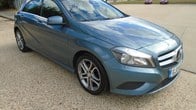
2013 Mercedes A Class A180 Hatchback
Derzeit zum Verkauf
62
0 Live-Auktionen
62 Anzeigen




Verkauft
184
Höchster Verkaufspreis
61.500 €
Durchschnittlicher Preis
25.361 €
Niedrigster Preis
684 €
FAQs
In the UK, diesel still makes sense if you do regular motorway mileage and longer trips, whereas petrol is often a safer choice for mixed driving and shorter journeys.
An automatic A-Class can be an excellent daily car, as long as it shifts smoothly and has a strong service history. On a test drive, you want the car to feel consistent with no hesitation or harsh changes, and no strange behaviour in stop-start traffic.
It can be, because it’s a premium car with premium parts and (in later generations) more tech than most mainstream hatchbacks. Servicing isn’t the issue unless it’s the lack thereof; the expensive moments usually come from ignoring warning lights or buying a car with hidden issues.
A clean car with full or partial maintenance history is almost always cheaper to own than a “bargain”.
AMG Line often means sportier styling and a nicer cabin feel, but it doesn’t automatically mean it’s the best car mechanically. In fact, AMG Line models often have lower bumpers that scrape easily, larger wheels attracting more kerb damage, a harsher ride and a sporty look that sometimes encourages harder use. If you’re looking for comfort over presence, AMG Line models may be worth avoiding. Buy them for their distinctive look and interior feel, but pay close attention to their history and condition.
It’s one of the easiest ways into modern Mercedes ownership. It’s compact, comfortable, and has premium connotations while being relatively simple to drive. Just don’t buy one based on monthly payments or badge appeal, because the best A-Class is the one that’s been cared for most diligently.
It can be, though it depends on the exact generation, engine and past treatment.
The A-Class is a premium compact car with a lot of technology, where long-term reliability usually comes down to staying ahead of maintenance rather than catching up after problems appear. The best long-term examples are the ones that have been serviced on time, driven consistently and fixed properly when small issues show up, with manufacturer-approved parts.
Buyer note: If you want long-term reliability, avoid cars with warning lights, vague service history or evidence of cheap fixes.