Peel P50: Models and Specs
1962–1965 (original production); 2011–present (continuation) · 49cc single-cylinder · Rear-engined · Three-wheel single-seat microcar
Overview
The Peel P50 is the smallest production car ever made, as certified by the Guinness World Records. Built on the Isle of Man by a company better known for fibreglass marine components, it was designed for one adult and a bag of shopping. This is a stripped-back, fibre-shelled urban runabout that made no concessions to comfort, convention or cargo. The P50 couldn’t have been made any smaller and still been able to function. As such, the P50 sits at the outer edge of what an automobile can be. It has one door, one headlight, one wiper, no reverse gear and a kerb weight of just 130 lbs. That combination of audacity and simplicity has made the P50 one of the most recognised microcars in history, and one of the rarest collector’s cars of the 1960s.
Specifications
- Production years
- 1962–1965 (original); 2011–present
- Body style
- Three-wheel single-seat microcar
- Layout / Drive
- Rear-engined, rear-wheel drive
- Engine family
- 49cc single-cylinder two/four-stroke; electric
- Transmission
- 3-speed manual, no reverse
Peel P50 in Detail
Peel Engineering was founded by Cyril Cannell on the Isle of Man in the late 1940s, initially supplying fibreglass components to the marine and automotive industries. The decision to build a microcar grew from this expertise in glassfibre construction, and the P50 was launched in 1962 as a genuine attempt at the minimum viable automobile for city use.
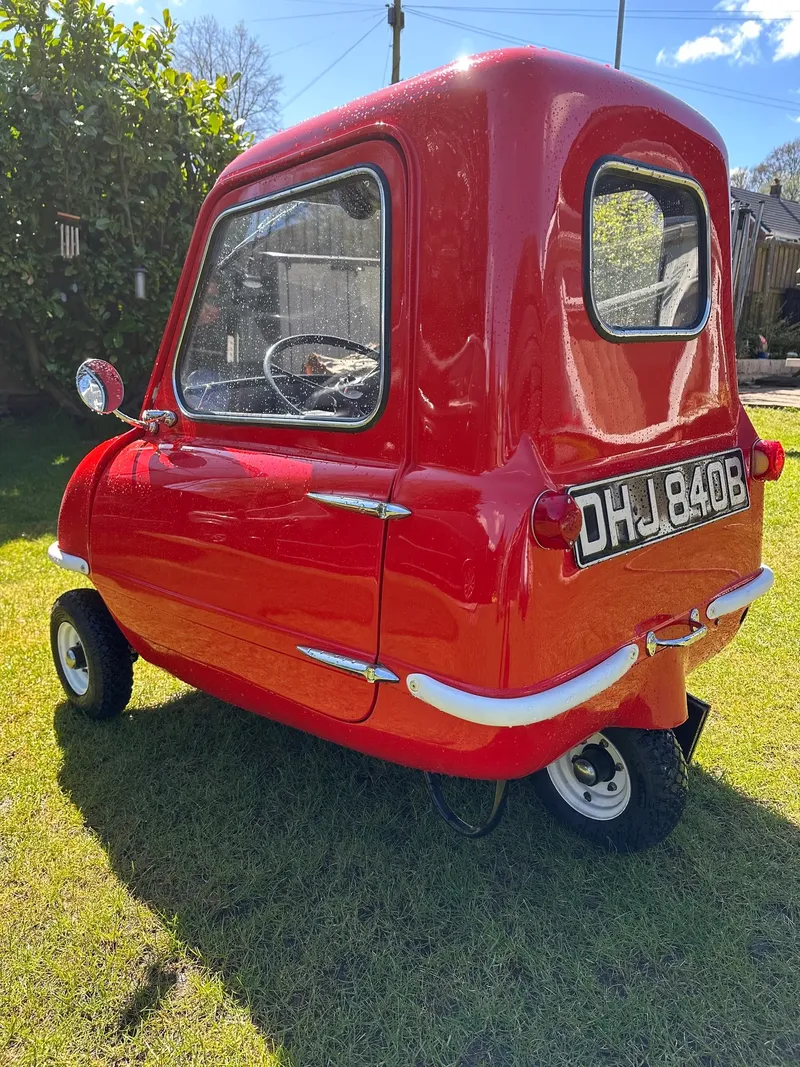
Approximately 50 cars were sold during the original production run, costing £199–£299 each, but production ceased in 1965 as the market for ultra-minimal city transport proved too niche to be commercially sustainable. That was despite the obvious economies in the P50's engineering, with a fibreglass monocoque body, a single 49cc two-stroke moped engine and a three-speed gearbox with no reverse. Manoeuvring in confined spaces required the driver to get out and physically drag the car backwards by a handle mounted at the rear. Avon 5-inch kart tyres were fitted.
The nameplate was revived in 2011 when businessmen Gary Hillman and Faizal Khan secured investment through Dragons' Den and established new production facilities at Sutton-in-Ashfield. The continuation cars are faithful reproductions with the same dimensions and fibreglass construction, but they were internally revised with updated suspension, steering and drivetrains, as well as benefiting from a reverse gear to comply with modern legal requirements. Since 2011, Peel Engineering has produced official continuation cars in petrol and electric variants, built to order.
The P50's sole original powertrain was a 49cc Zweirad Union DKW single-cylinder two-stroke producing 4.2 hp, and performance figures vary depending on the driver’s weight. Performance is relative anyway, but owners and the manufacturer consistently claimed fuel efficiency of 100 mpg. The P50’s top speed of approximately 38–40 mph means no acceleration figures have ever been published.
Metric | Original (1962–1965) | Continuation Petrol (2011–present) | Continuation Electric (2011–present) |
Engine | 49cc single-cylinder two-stroke DKW | 49cc four-stroke | Brushless DC electric motor |
Power | 4.2 hp @ 6,600 rpm | Not published | 2 kW (nominal) |
Top speed | 38–40 mph | 28 mph | 25–28 mph |
Fuel consumption | 100 mpg (claimed) | Not published | 50-mile range per charge |
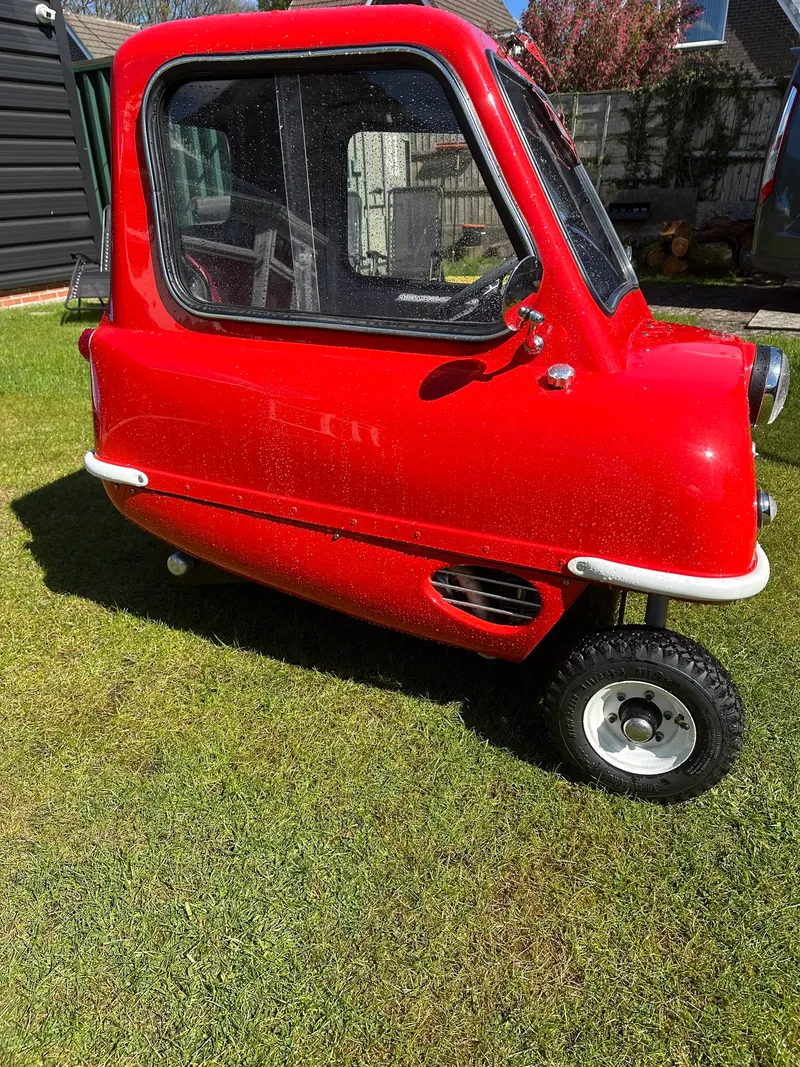
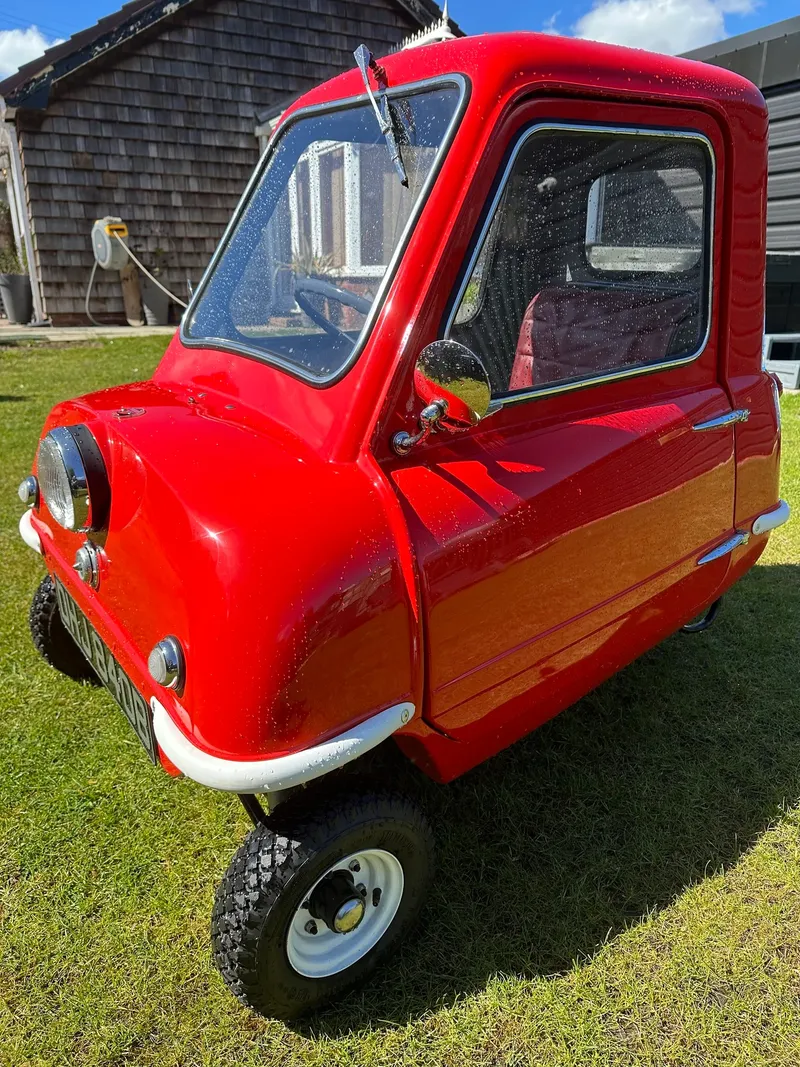
The P50 is instantly recognisable, mainly because there’s nothing else it could be. Its profile is a short, rounded fibreglass shell with a single door on the left-hand side, a single headlight centred on the nose and a single windscreen wiper. The car is as large as it needs to be to contain one seated adult, an engine and perhaps a bag of groceries. Three wheels (two at the front and one at the rear) keep width down to 39 inches.
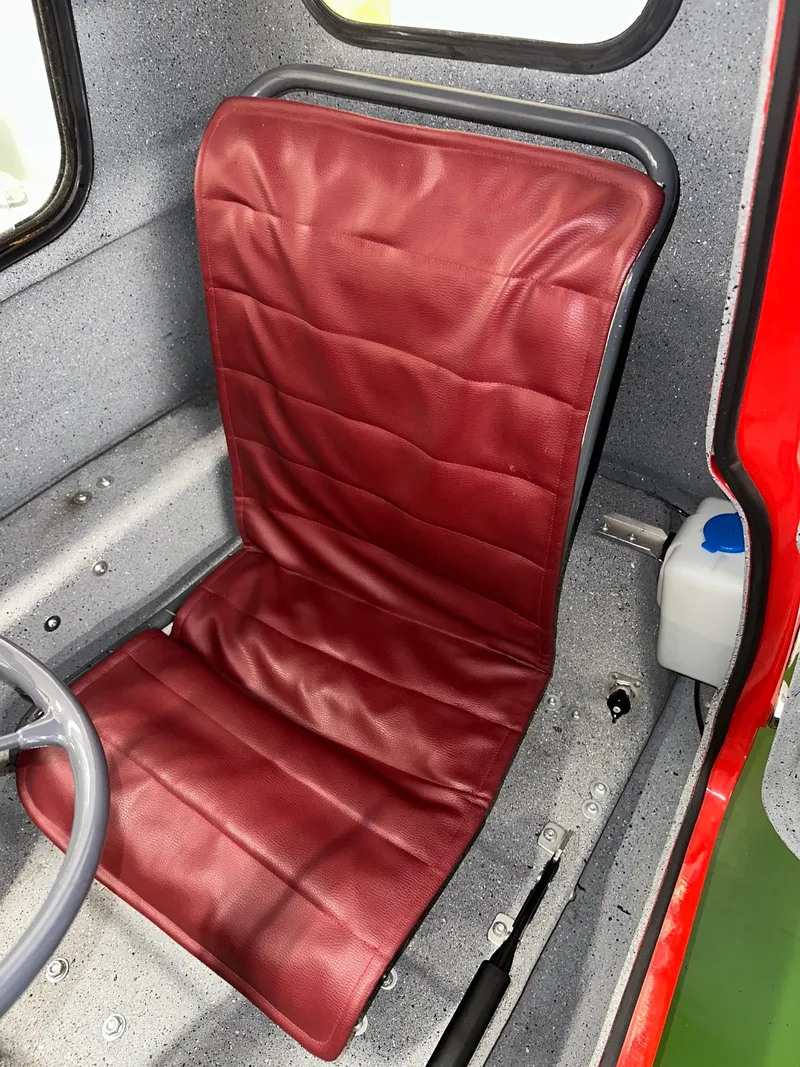
Inside, the driver sits in a fibreglass tub with no padding, no instrumentation beyond what’s essential, and no concessions to ergonomic comfort beyond the basics of visibility and control. There’s nothing to do other than drive - and look up at everything around you, since it’ll undoubtedly be taller than you are.
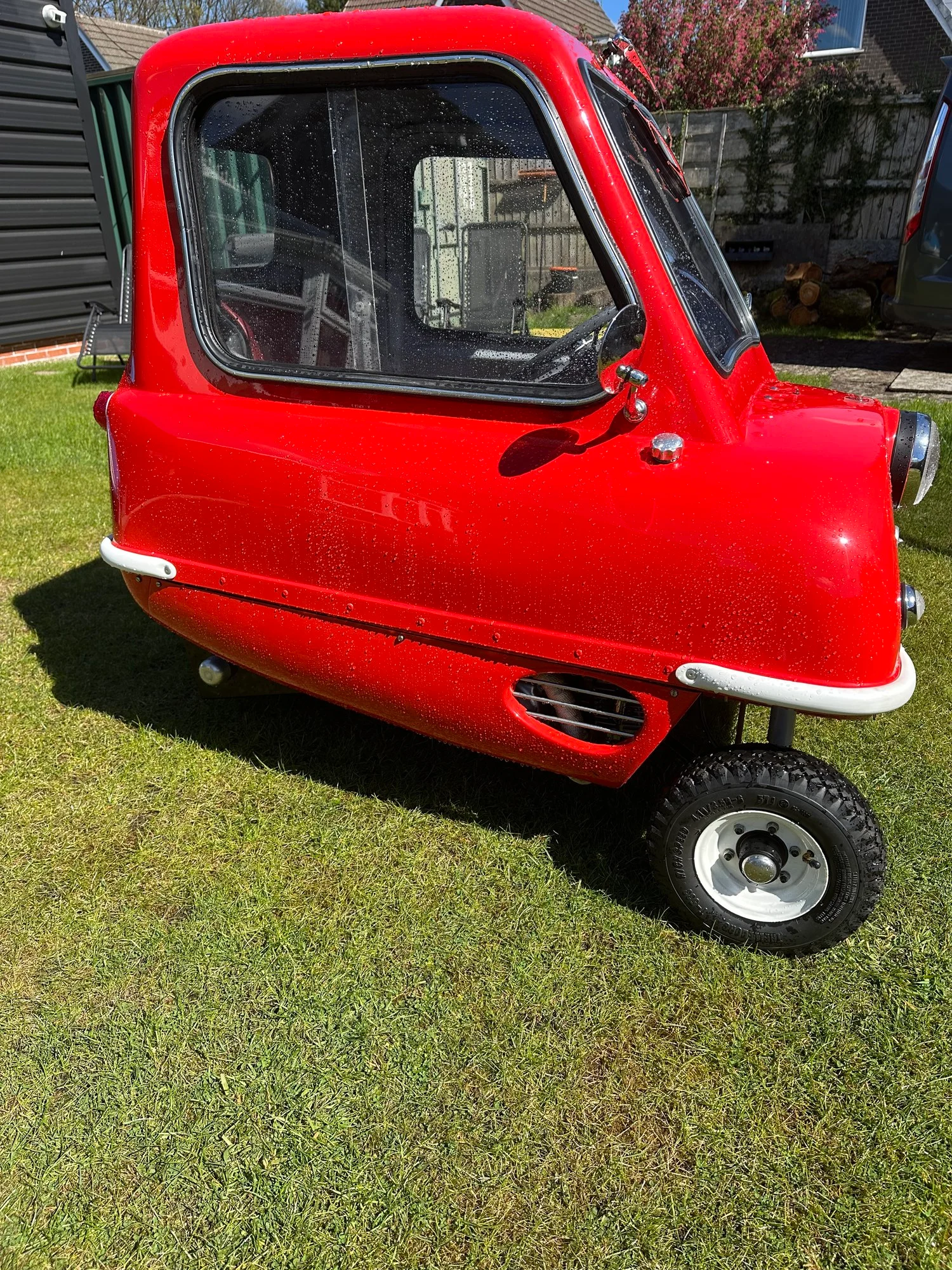
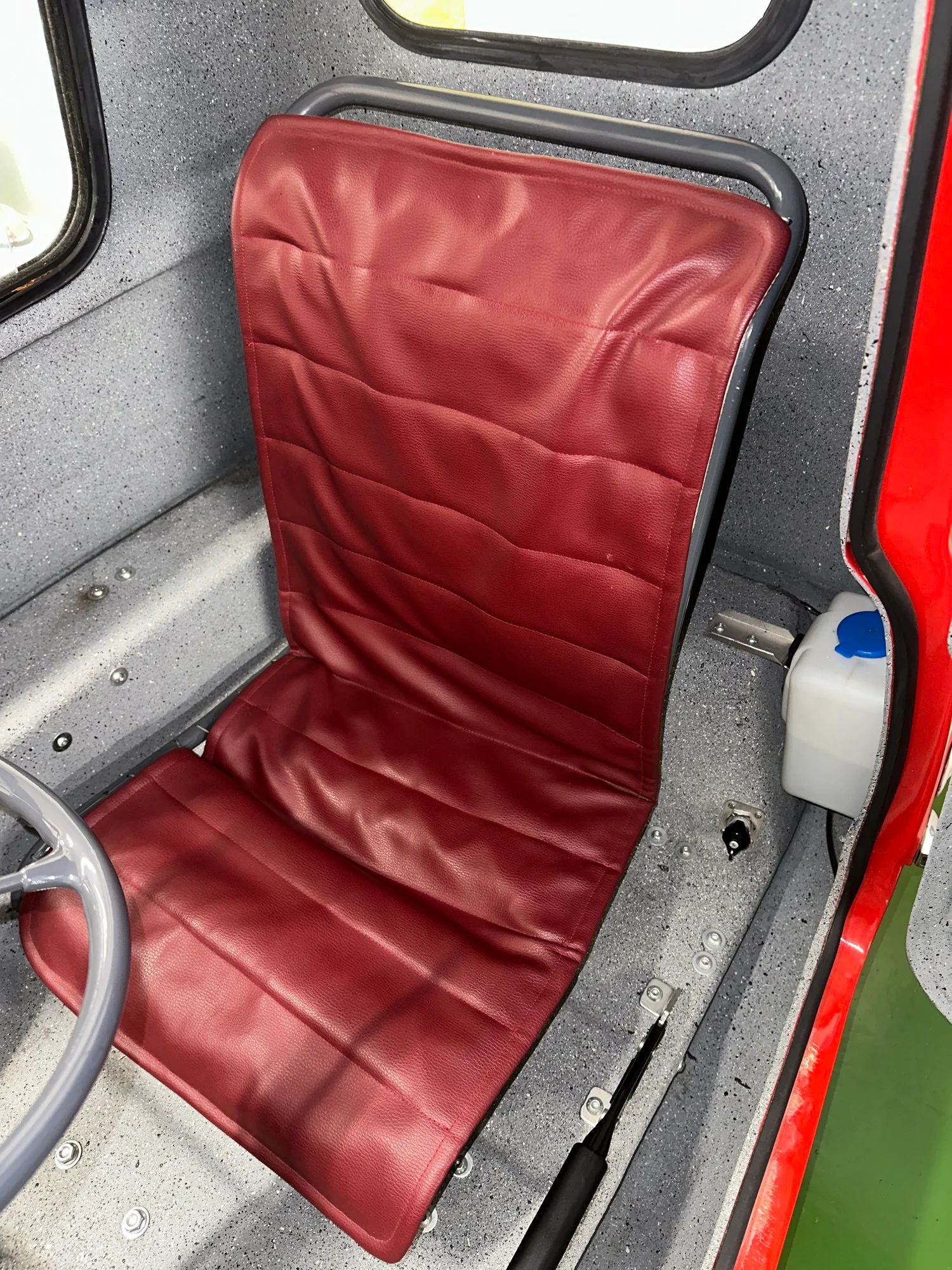
The Peel P50 has no generations and no distinct structural divergences, other than the varied powerplants installed in modern continuation models.
The original Peel P50 (1962–1965) was built outside any formal automotive safety regulation frameworks. Its fibreglass monocoque offered no meaningful crash protection, and no passive safety systems of any kind were fitted. The car was road-legal by the simple virtue of having an engine, wheels and a headlight.
Continuation cars (2011–present) are built to modern UK Kitcar/MSVA standards and must pass a Motorcycle Single Vehicle Approval inspection before road registration. They incorporate a reverse gear and updated mechanical components, but remain minimal with no electronic safety architecture.
Pros
Holds an unbroken Guinness World Record as the world's smallest production car, despite Top Gear’s infamous efforts to supplant it with the P45
Claimed 100 mpg fuel economy makes running costs negligible for occasional use
Extreme rarity (just 27 known survivors) means documented examples command strong and rising auction values
There’s no smaller, simpler or cheaper way to travel along British roads without getting wet in a downpour
Cons
No reverse gear on original production cars means a driver can’t exit a drive-in parking space without getting out and pulling the car out by hand
The fibreglass tub offers no crash protection. Any collision damage to the body is structurally serious and period-correct repair is near-impossible
Complex registration and ownership history on imported examples, which were sometimes titled as mopeds rather than cars in their country of entry
Pulling up next to an SUV, bus, lorry, van or even a family car is faintly terrifying
FAQs
Original cars have always been road-legal in the UK. Continuation cars require MSVA (Motorcycle Single Vehicle Approval) inspection as a three-wheel moped before registration.
Original parts are effectively non-existent through normal supply chains, given the 47-car production run. The 49cc DKW engine was a moped unit shared with other period vehicles, so mechanical components may be sourced from moped specialists, but body parts will require fabrication.
Given the extreme scarcity of original vehicles, a documented 1960s car with a clear UK registration history is the gold standard. Buyers new to the marque may also consider a continuation car from Peel Engineering as an accessible entry point before committing to an original.
The original's 49cc two-stroke engine can return around 100 mpg, making fuel costs negligible. The dominant running costs for an original are storage, insurance and any restoration or fabrication work, which requires bespoke craftsmanship rather than off-the-shelf parts.