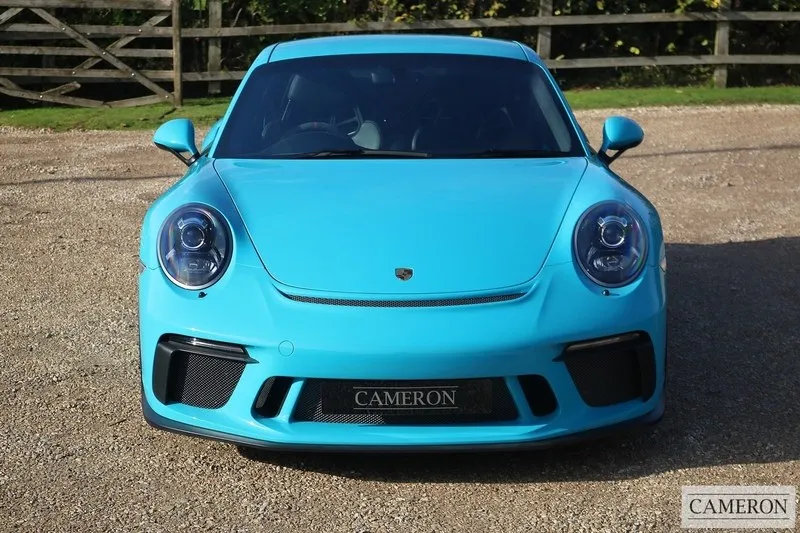
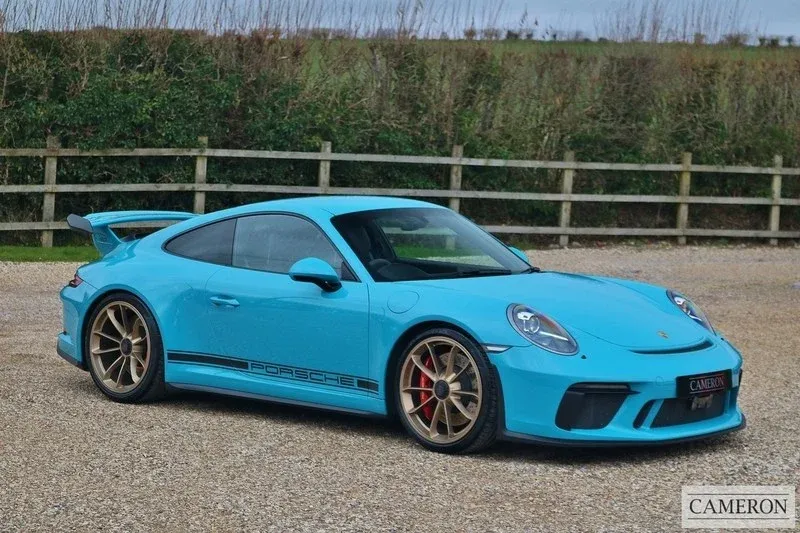

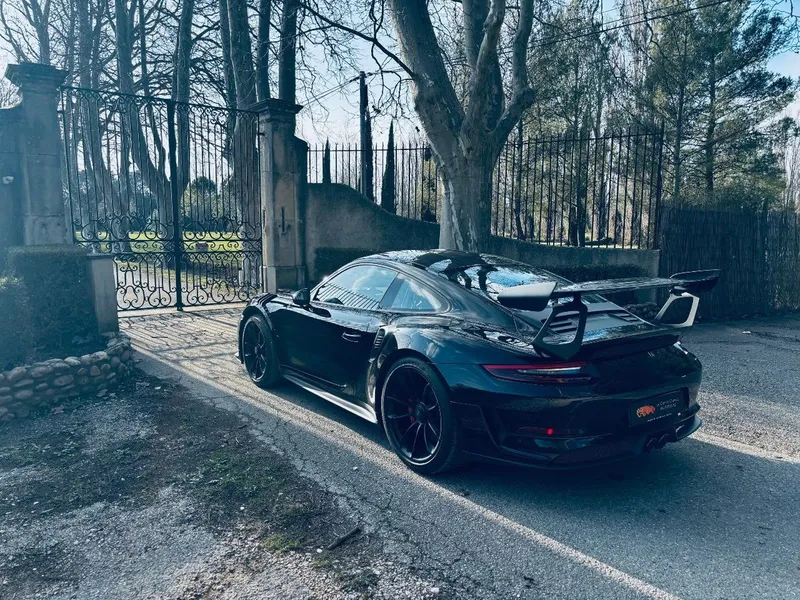
Porsche 991 GT3: Models and Specs
Years: 2013–2019 | Engine: 3.8-litre 9A1 MA1.75 (991.1) / 4.0-litre 9A1 MA1.75 (991.2) | Power: 468–493 bhp | Gearbox: 7-speed PDK (991.1 only); 6-speed manual or 7-speed PDK (991.2)
Overview
It’s often said that all Porsche 911s are the same, but the 991 GT3 certainly wasn’t. This was the most extensively re-engineered GT3 in the variant's history, replacing the Mezger engine architecture that had underpinned every previous GT3 with an all-new 3.8-litre direct-fuel-injection flat-six. It was the first GT3 to use rear-axle steering, and it even swapped the 997 GT3's hydraulic steering rack for an electromechanical system. The 991 platform itself was 25 per cent stiffer and 13 per cent lighter than the 997 shell. The 991.1 GT3 was controversial in being PDK-only at launch, before Porsche reintroduced a six-speed manual gearbox with the 991.2 update in 2017. The new version also received a 4.0-litre engine, a revised rear wing generating 20 per cent more downforce, and helper springs at the rear axle. The 991.2 introduced the manual-only GT3 Touring variant, with a retractable active rear spoiler replacing the fixed wing.
Specifications
- Production years
- 2013–2019
- Engine range
- 3.8/4.0-litre flat-six
- Power range
- 468–493 bhp
- Gearbox
- 7-speed PDK/6-speed manual
- Body style
- 2-door coupe
Porsche 991 GT3 in Detail
Rapid evolution
The 9A1 engine in the 991.1 GT3 was not derived from the classic Mezger unit, but it did share architecture with the 991 Carrera S. Reprised elements included bespoke cylinder heads, crankshaft, forged pistons, titanium connecting rods and hydraulically controlled rocker-arm valve gear. The street version of the 9A1 was tuned to a 9,000 rpm ceiling, 600 rpm above the contemporary 991 GT3 Cup race car.
The 991.2 update made further changes, with a 4.0-litre unit derived from the 911 GT3 Cup racing car. The rear wing was repositioned to generate 20 per cent additional downforce in cleaner air, and a smaller 360 mm GT steering wheel sourced from the 918 Spyder hypercar replaced the 991.1's larger rim.
Variant | Power | Torque | 0–62 mph | Top Speed | Gearbox | Weight |
991.1 GT3 | 468 bhp | 324 lb-ft | 3.5 sec | 196 mph | 7-speed PDK | 1,430 kg |
991.1 GT3 RS | 493 bhp | 339 lb-ft | 3.3 sec | 193 mph | 7-speed PDK | 1,420 kg |
991.2 GT3 | 493 bhp | 339 lb-ft | 3.4 sec (MT)/3.2 sec (PDK) | 197 mph | 6-speed MT or 7-speed PDK | 1,418/1,430 kg |
991.2 GT3 Touring | 493 bhp | 339 lb-ft | 3.4 sec | 197 mph | 6-speed MT only | 1,418 kg |
991.2 GT3 RS | 493 bhp | 457 lb-ft | 3.2 sec | 193 mph | 7-speed PDK | 1,430 kg |
The 991.2 GT3's 25 bhp increase over the 991.1 came from the displacement increase to 4.0 litres and a shift from hydraulic rocker arm valve clearance compensation to a rigid valve control system, which raised throttle response precision and allowed a 9,000 rpm ceiling. The 991.2 manual is 15 kg lighter than the PDK variant and uses standard PTV rather than the PDK's more advanced PTV+ with brake-based torque vectoring assistance. The 991.1 GT3 RS produced 493 bhp from a 3.996-litre version of the 9A1 unit, with 12.9:1 compression and widened rear bodywork.
The 991 GT3 encompassed the following main variants:
GT3. A naturally aspirated 3.8/4.0-litre with rear-wheel drive and 468-493 bhp
GT3 Touring. A manual-only 991.2 sub-variant with a retractable rear spoiler
GT3 RS. A widebody, PDK-only homologation sub-variant
The 991 GT3 was 54 mm wider at the front and 41 mm wider at the rear than the 997 GT3, with a 100 mm longer wheelbase. The 991.2 repositioned the rear wing further back on revised mounts, increasing downforce by 20 per cent and improving aerodynamic balance at high speed. A bonnet vent above the front radiators, three front cooling intakes and a lower front air dam were retained from the 997 GT3.
The 991.2 GT3 revised the front inlet profiles with a more pronounced lower lip and wider outer intake apertures. The GT3 Touring deleted the fixed rear wing and replaced it with a retractable active spoiler integrated into the engine lid that extends upward at speeds above 75 mph. Its rear exterior profile at rest is identical to a standard 991 Carrera.


The 991 GT3 benefitted from the broader interior redesign of the 991 platform, with improved dashboard ergonomics, higher-quality materials and a more structured centre console. Standard equipment included Sport Chrono with lap timer, PCM infotainment with optional satellite navigation and full leather upholstery. The Clubsport package added a rear half-roll cage, six-point harnesses, and carbon-fibre bucket seats sourced from the 918 Spyder hypercar.
The 991.2 update introduced a 360 mm GT steering wheel, plus revised infotainment with improved connectivity. The 991.2 GT3 Touring was available only with the six-speed manual gearbox, but its interior specification was identical to the 991.2 GT3.


No Euro NCAP crash tests were ever conducted on the 991 GT3, but it was undoubtedly a safe car. Standard safety equipment across all 991 GT3s included ABS, stability management with two-stage disable, torque vectoring and rear-axle steering. The 991 GT3 introduced dynamic engine mounts using magnetically controlled fluid stiffness, which dampen vibration at road speeds but firm up again under aggressive driving.
Bodywork and crash history
Confirm panel gaps and paint depth across all sections. Any 991 GT3s used for track days are at risk of unrepaired kerb and barrier contact damage at front corners and rear quarter panels
Inspect the rear wing mounting points for stress cracking in the engine lid surface finish
991.1 GT3 (3.8-litre 9A1) engine
Confirm via engine stamp and Porsche PIWIS history whether the car carries the original MA1.75 unit or the G-revision replacement. The latter addressed a connecting rod bolt failure, and any 991.1 GT3 without documented engine replacement history should be treated as requiring specialist inspection
Check for oil consumption above 0.5 litres per 1,000 miles on the 3.8 unit, as elevated consumption without external leaks suggests bore glazing from track use
991.2 GT3 (4.0-litre 9A1) engine
Verify oil service intervals. Porsche recommends annual or 20,000-km changes for track-used cars, and extended intervals accelerate camshaft wear on the valve train
Confirm intake valve carbon build-up has been assessed, as the 4.0-litre uses direct injection without port wash, making periodic intake cleaning necessary
Gearbox and transmission
On PDK cars, ensure there’s no jerking or hesitation during low-speed driving; the 991 GT3's LSD calibration can produce driveline shunt if clutch wear is advanced
On manual cars, test the six-speed shift quality across all gates since it’s sensitive to incorrect gear oil specification
Suspension and steering
Confirm PASM function across both modes at rest. Non-switching dampers on a 991 GT3 indicate a faulty solenoid or strut failure, both common on track-intensive cars
Verify rear-axle steering actuator function. Failure presents as a steering warning light
FAQs
The 991.2 GT3 manual weighs 15 kg less than the PDK variant, uses standard PTV rather than PTV+ and is the only transmission available in the GT3 Touring. The PDK offers faster gear changes, the more advanced PTV+ torque vectoring with brake assistance, and a marginally faster 0–62 mph time of 3.2 seconds against the manual's 3.4 seconds.
The 991.1 uses a 3.8-litre 9A1 unit with hydraulically controlled rocker-arm valve-clearance compensation, allowing a 9,000 rpm ceiling. The 991.2 raises displacement to 4.0 litres and produces 493 bhp (25 bhp more than the recalled-and-revised 991.1) while eliminating hydraulic valve gear failure.
Yes. The Touring uses the same 4.0-litre 9A1 engine, the same suspension geometry and the same 6-speed manual gearbox as the standard 991.2 GT3. The differences are the deletion of the fixed rear wing in favour of a retractable active spoiler, revised front air intakes to compensate for the aerodynamic balance change, and a Gurney flap on the active spoiler to maintain downforce.
The 991 system operates in counterphase at low speeds to reduce the turning circle and increase agility, and switches to in-phase assistance above approximately 50 mph to improve straight-line stability. The 992 GT3 retained and recalibrated this system.