Porsche 997 Turbo: Models and Specs
Years: 2006–2012 | Engine: 3.6-litre twin-turbocharged Mezger (997.1) / 3.8-litre twin-turbocharged DFI (997.2) | Power: 480–530 bhp | Gearbox: 6-speed manual or 5-speed Tiptronic S (997.1); 6-speed manual or 7-speed PDK (997.2)
Overview
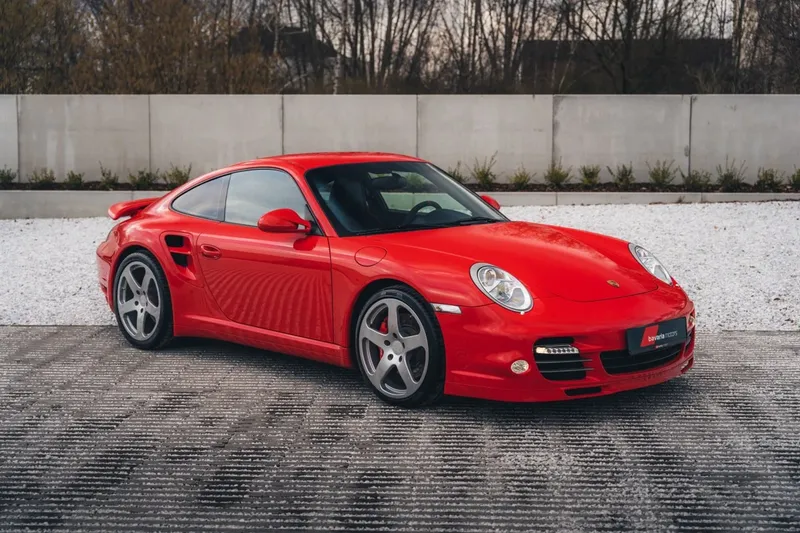
The 997 Turbo will always be remembered as the last 911 Turbo to use the Mezger engine traceable to Porsche's GT1 endurance racing programme. Offering a 30 bhp increase over the outgoing 996 Turbo S, the initial 997.1 Turbo was produced in coupe form from 2006, and as a cabriolet from 2007. The 997.2 Turbo arrived in 2009 with a revised 3.8-litre engine incorporating Porsche's Direct Fuel Injection (DFI), a new PDK dual-clutch gearbox, and a retuned all-wheel-drive system with optional torque vectoring. A new Turbo S variant producing 530 bhp also became a permanent addition to the model catalogue.
Price
- Starting price
- 12.900 €
- Average price
- 86.156 €
- Price range
- 12.900 € - 150.000 €
Specifications
- Production years
- 2006–2012
- Engine range
- 3.6/3.8-litre twin-turbo
- Power range
- 480–530 bhp
- Gearbox
- 6-speed manual/5-speed Tiptronic S/7-speed PDK
- Body styles
- 2-door coupe/cabriolet
Porsche 997 Turbo in Detail
Seventh heaven
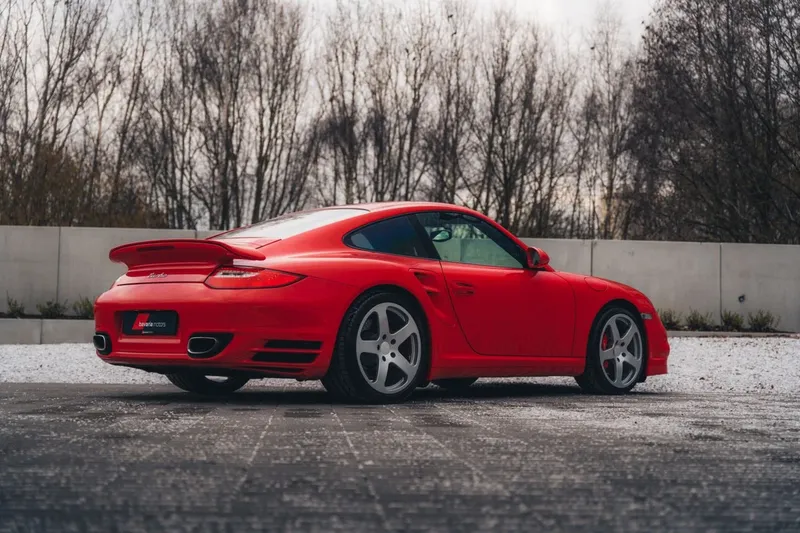
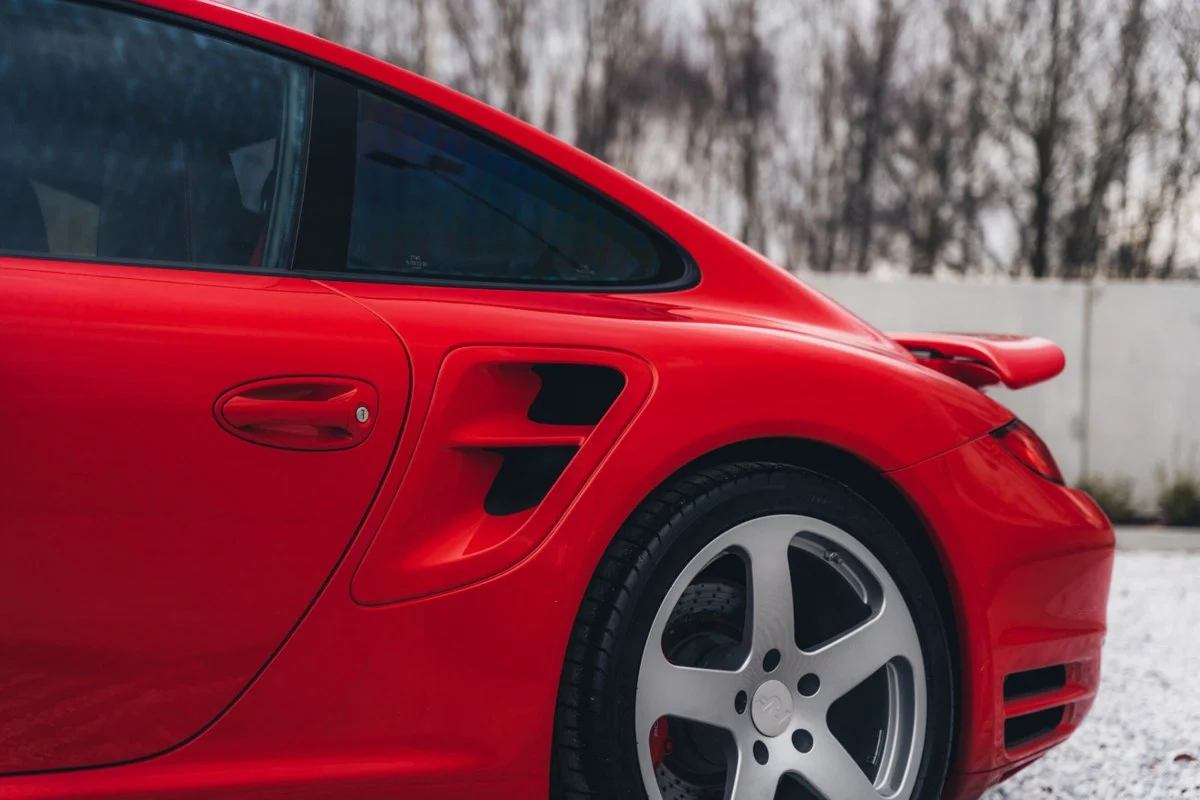
The 997.1 Turbo used the 997 Carrera 4's wider body shell shared with all Turbo variants, capped by an automatically extending rear spoiler that retracted at 50 mph and deployed at 75 mph, making motorway traffic officers’ lives much easier. The 997.1 Turbo's Mezger unit was robust and immune to the bore scoring issues documented in the M97 Carrera engine of the same era.
The 997.2 Turbo's DFI engine represented a wholesale departure from the Mezger unit, while the 997.2 also introduced a torque vectoring option to improve turn-in response. Meanwhile, the PDK gearbox could change gears in under 100 milliseconds, making the Tiptronic S seem rather old-fashioned by comparison. Further modernity came courtesy of the mid-cycle 997.1 'Gen 1.5' update of late 2008, which introduced satellite navigation with Bluetooth and iPod connectivity.
Variant | Power | Torque | 0–62 mph | Top Speed | Gearbox | Weight |
997.1 Turbo (manual) | 480 bhp | 457 lb-ft | 3.9 sec | 193 mph | 6-speed manual | 1,585 kg |
997.1 Turbo (Tiptronic S) | 480 bhp | 457 lb-ft | 3.7 sec | 193 mph | 5-speed Tiptronic S | 1,585 kg |
997.2 Turbo (PDK) | 500 bhp | 479 lb-ft | 3.3 sec | 194 mph | 7-speed PDK | 1,595 kg |
997.2 Turbo S (PDK) | 530 bhp | 516 lb-ft | 3.0 sec | 194 mph | 7-speed PDK | 1,605 kg |
997.1 Turbo Cabriolet | 480 bhp | 457 lb-ft | 3.9 sec | 192 mph | 6-speed manual/Tiptronic S | 1,655 kg |
The 997.1 Turbo's 480 bhp represented a 60 bhp increase over the 996 Turbo, while peak torque arrived 750 rpm earlier at 1,950 rpm. The 997.2 Turbo's own 20 bhp gain over the 997.1 came from the switch to DFI and a revised Bosch Motronic management system, while the Turbo S added a further 30 bhp through higher-flow turbochargers, a sports exhaust with titanium end pipes and ceramic composite brakes as standard.
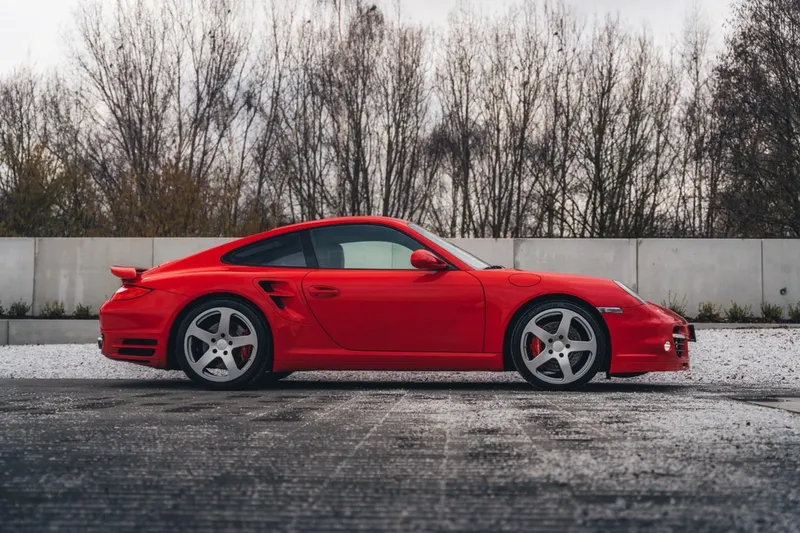
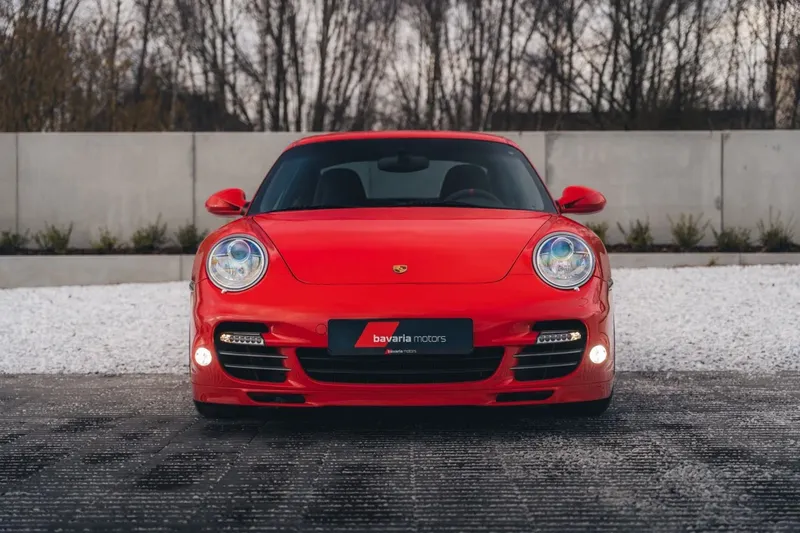
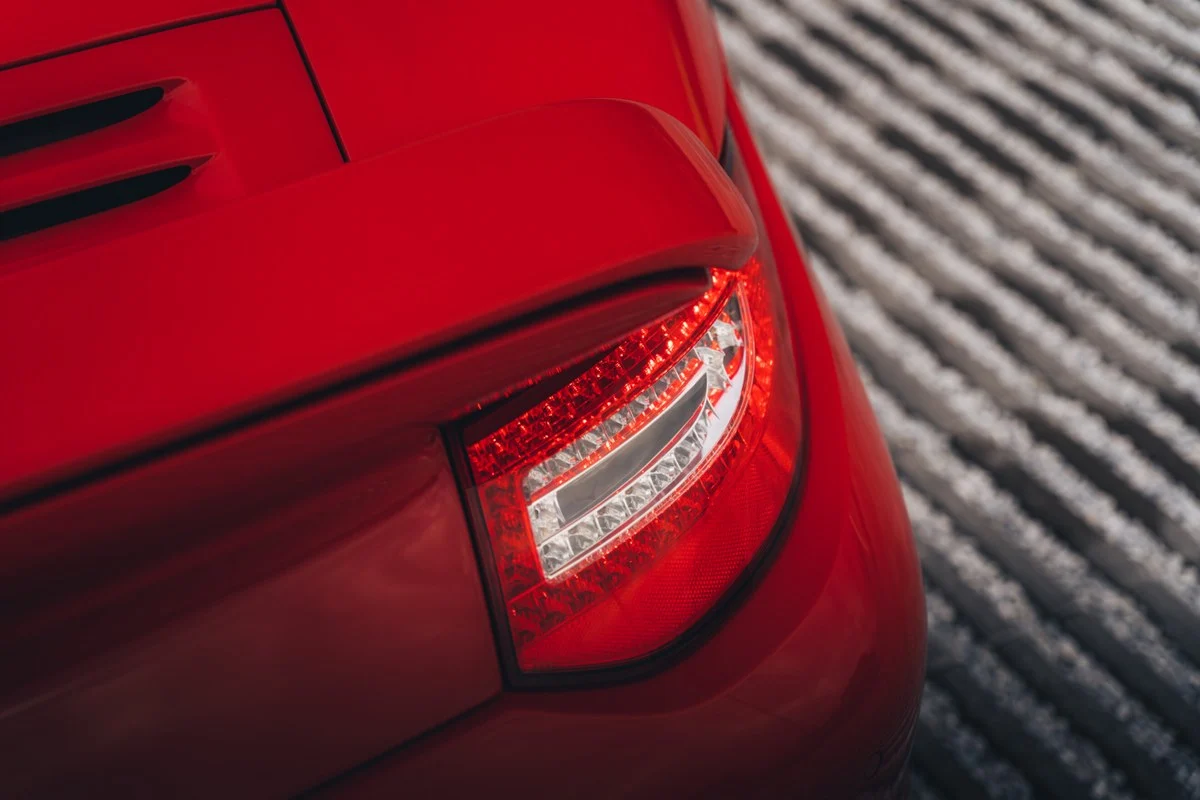
The 997 Turbo used the widebody 911 Carrera 4 shell, measuring 1,852 mm wide with flared rear haunches to accommodate those sticky 305-section rear tyres and their associated AWD hardware. Bi-xenon headlamps were standard, but the 997.2 added LED daytime running lights within the headlamp housings. It also introduced revised front air intakes with larger apertures to improve intercooler airflow for the more powerful DFI engine, and a restyled rear diffuser integrating the exhaust outlets in a horizontal arrangement.
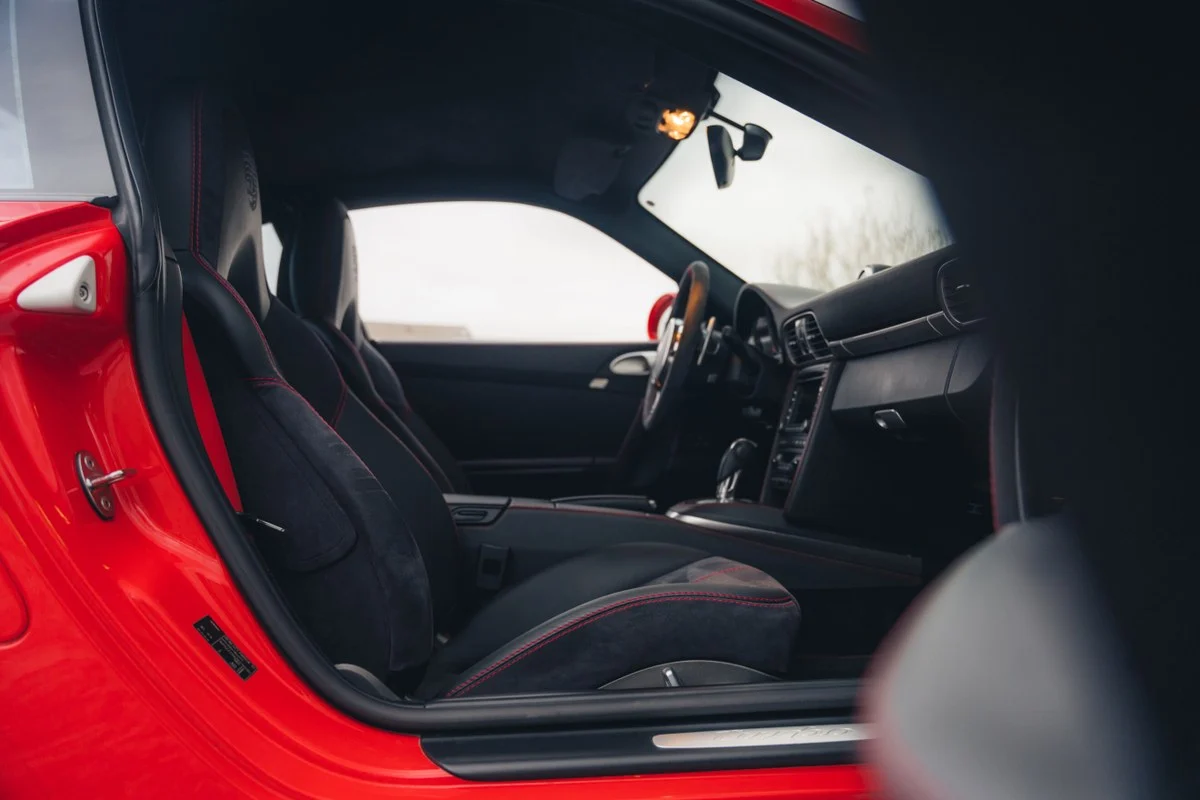
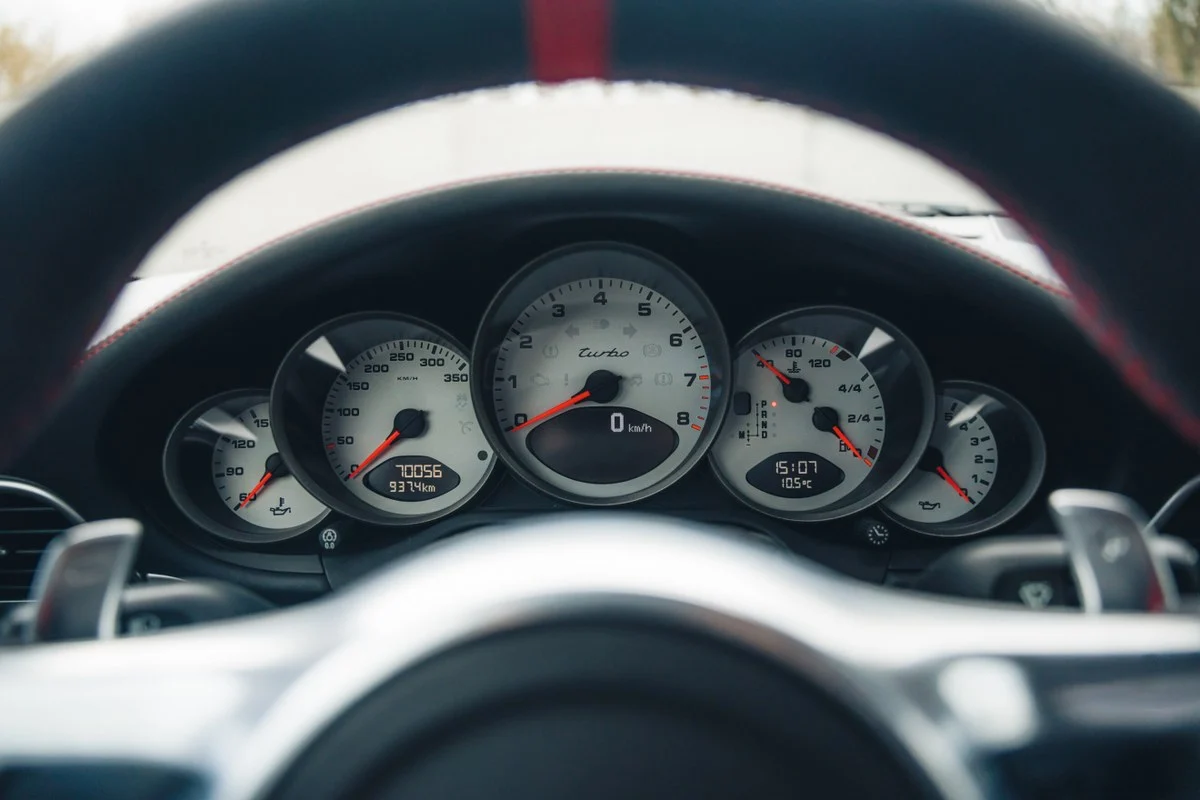
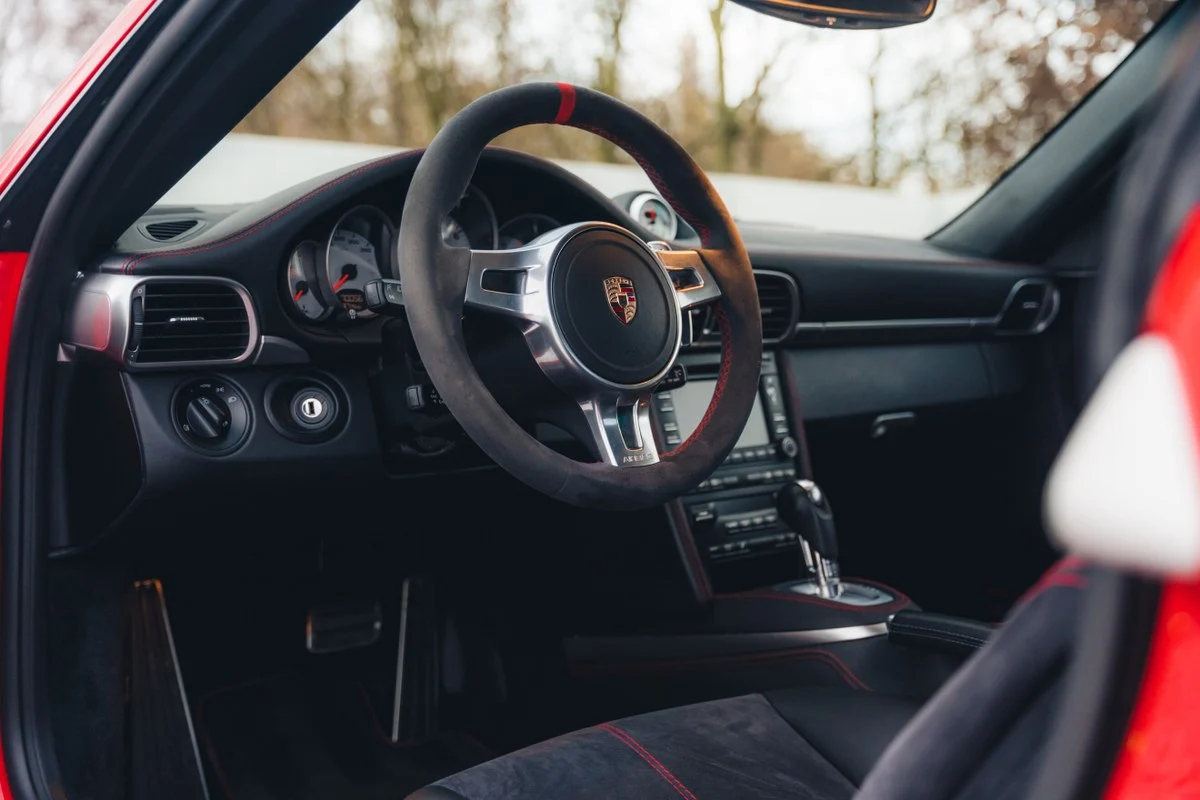
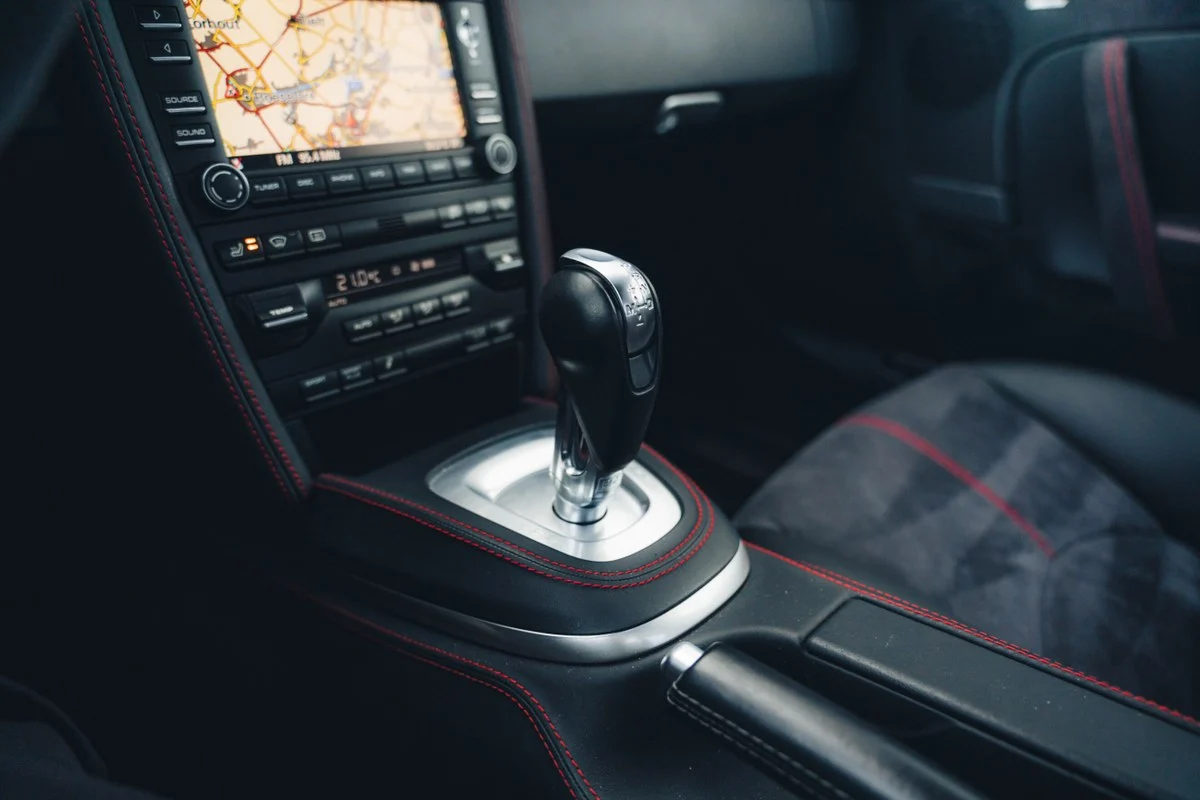
The 997 Turbo interior followed the broader 997 platform upgrade over the 996, with a reshaped instrument binnacle, redesigned centre console and improved material quality throughout. Full leather, satellite navigation and heated seats were standard on UK-market cars.
The 997.2 introduced a revised PCM3 system with improved navigation mapping, enhanced Bluetooth audio streaming and a revised instrument cluster layout. The 997.2 Turbo S added an Alcantara headlining and carbon fibre interior trim inserts.
No dedicated Euro NCAP test was conducted for the 997 Turbo, but standard safety equipment included ABS with Bosch four-channel control, PSM stability management, all-wheel drive traction management and adaptive suspension. The 997.2 Turbo introduced torque vectoring as an optional extra, providing active brake-based differential action at the rear axle.
PCCB ceramic composite brakes are something of a mixed blessing on used 997s, but they were optional on the 997.1 and standard on the 997.2 Turbo S. Cracked PCCB discs cost £5,000 per corner to replace, so steel-braked cars are advisable for buyers seeking lower running costs.
Bodywork and crash history
Inspect panel gaps and paint depth across all panels. The 997 Turbo's wide rear haunches are vulnerable to repair from stone impacts and minor reversing impacts
Confirm VIN, engine number and Porsche build specifications via official records. Cars modified from standard are more common in the Turbo range than in the GT3 range, and should be approached with caution
997.1 Turbo (3.6-litre Mezger) engine
Inspect the turbocharger housings for corrosion, as deterioration of the cast-iron housings is a documented 997.1 Turbo issue with replacement costs of £8,000–£10,000 per pair
Check the front crossmember coolant pipes for corrosion. They run along the front chassis rail and are subject to the same debris and moisture-induced degradation as the 997 GT3
Confirm power steering rack for seeping fluid at the rack body. Leaks are a documented 997.1 Turbo fault and indicate an imminent rack replacement
997.2 Turbo (3.8-litre DFI) engine
Confirm direct injection valve carbon build-up assessment. The 3.8 DFI unit has no port wash, and intake valve deposits build up without periodic cleaning
Verify oil service history against Porsche's recommended annual or 20,000 km schedule. The DFI unit is sensitive to extended oil change intervals, which accelerate camshaft and bore wear
Cooling system (both generations)
Inspect the front central radiator for collapse or damage visible through the front bumper aperture
Confirm the air conditioning condenser works, since condenser failure is a documented 997 Turbo fault
Check front shock absorber top mounts for rust accumulation, visible at the upper piston area when viewed from the wheel arch
Brakes
If PCCB brakes are fitted, inspect each disc face for radial cracking or stone impact damage. Crazing within the friction surface is acceptable, but through-cracks are not
Confirm brake fluid change history, as the 997 Turbo's substantial braking loads accelerate fluid degradation beyond the standard two-year interval
Transmission
On Tiptronic S cars, assess shift quality at all speeds. Sluggish upshifts in Sport mode indicate deteriorating valve body solenoids
On PDK 997.2 cars, confirm there’s no shudder at low speeds. Clutch pack wear on high-mileage PDK units is the most common 997.2 Turbo transmission complaint logged by Porsche specialists
In manual cars, confirm clutch engagement height and weight, but bear in mind the 997.1 Turbo’s clutch is a heavier unit than the GT3 equivalent
Price trends
Venta más reciente
13.800 £
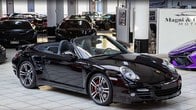
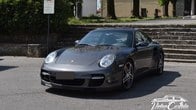
2011 Porsche 911 Turbo 997 Coupe
Actual en venta
26
0 subastas en marcha
26 anuncios


Total vendidos
58
Precio de venta más alto
150.000 €
Precio promedio
86.156 €
Precio más bajo
12.900 €
FAQs
The 997.1's five-speed Tiptronic S was a conventional torque-converter automatic with shift times measured in hundreds of milliseconds, and it delivered the 997.1 Turbo to 62 mph in 3.7 seconds. The 997.2 Turbo's seven-speed PDK was a dual-clutch unit with shift times under 100 milliseconds, reaching 62 mph in 3.3 seconds. The PDK also provided rev-matched downshifts in Sport mode and a launch control function not available on the Tiptronic.
Manual 997.1 Turbos are rarer than Tiptronic equivalents and command a five-figure premium in the current UK market. This reflects both their rarity and a widespread buyer preference for hydraulic steering, which was only available in manual form before the 997.2 era ushered in electric steering.
The 997.2 Turbo S produces 530 bhp against the standard 997.2 Turbo's 500 bhp, thanks to higher-flow turbochargers and a revised ECU mapping, with peak torque of 516 lb-ft against 479 lb-ft. It adds PCCB ceramic composite brakes as standard, a sport exhaust with titanium end pipes, alcantara headlining and carbon fibre cabin inserts. Do bear in mind that a full set of replacement brakes can cost £20,000.