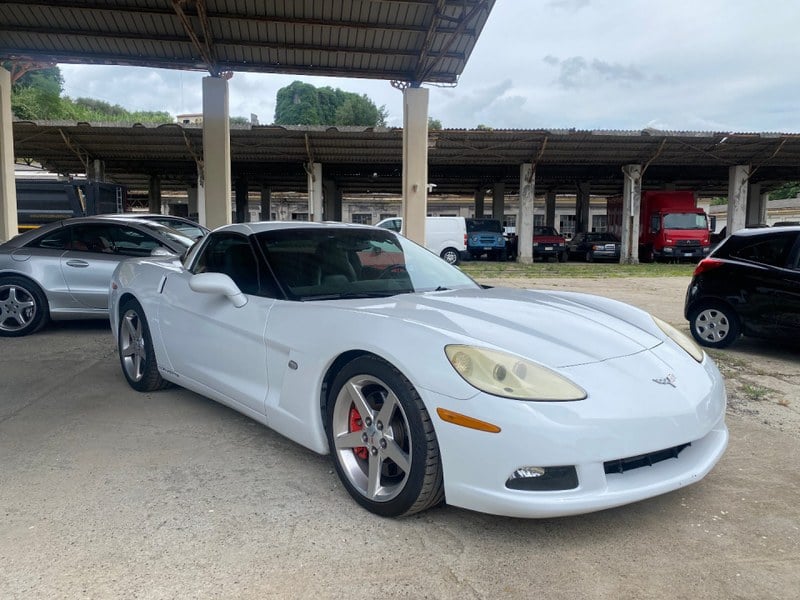
Beschreibung
1. die Aufhängung: Die werksseitige Federung war sehr hart, verursacht durch die serienmäßigen Bilstein-Federbeine. Dies führte dazu, dass das Auto bei Kurvenfahrten auf unebener Fahrbahn aus dem Gleichgewicht geriet. Bilstein und GM erkannten dies und boten Ersatzfederbeine an, die die Steifigkeit reduzierten und somit mehr Stabilität boten. Diese sind nun im Auto eingebaut und machen es handlicher, so dass die Füllungen in Ihren Zähnen bleiben. Auspuff: Ich ersetzte die gegossenen Auspuffkrümmer durch lange 1 7/ 8"-Rohrkrümmer von American Racing. Dies erforderte eine zusätzliche Wärmeabschirmung unter dem Boden im Bereich der Krümmer. 2. Auslassventile: Die serienmäßigen natriumgefüllten Auslassventile wurden durch Monel-Auslassventile ersetzt, da die serienmäßigen Ventile bei einigen Motoren versagten. Damals und auch heute noch bin ich der Meinung, dass das Versagen der Auslassventile vor allem auf die Unerfahrenheit der Fahrer zurückzuführen ist, die Hochleistungsmotoren mit Stößelstangenantrieb fahren, mit denen ich aufgewachsen bin. Ich tat dies als vorbeugende Maßnahme, um Unsicherheiten zu beseitigen. 3. Dyno-Tuning der Nockenwelle: Die serienmäßige Nockenwelle in der LS7 ist für ein Straßenauto sehr aggressiv, da sie einen hohen Hub und eine längere Dauer hat, wie es für einen Rennmotor erforderlich ist. Das serienmäßige Tuning/ Timing war eine frühe Vorverlegung, um das Rollen des Motors im Leerlauf zu reduzieren, das dem durchschnittlichen Nicht-Benzinliebhaber missfallen würde. Im Serienzustand konnte dies aufgrund des Verdichtungsverhältnisses von 11:1 erreicht werden, wodurch Leistung und Drehmoment reduziert wurden. Das aktuelle Profil entwickelt ca. 525 PS an den Hinterrädern (ca. 615 am Schwungrad) in Calgary-Höhe (3. 300' über NN) mit Shell V-Power Premium. Mit anderen Zylinderköpfen (Markenname Fast) kann man die Steuerzeiten aggressiver einstellen, um 650-665 PS zu erreichen, wenn man das möchte, allerdings mit einem rauen Leerlauf. 4. Bremsen: Die serienmäßigen Bremsen wurden von einer australischen Firma namens PBR entwickelt. Es handelt sich um 6-Kolben-Bremszangen mit einzelnen Bremsbelägen pro Kolben und gebohrten Bremsscheiben. Sie waren/ sind kompliziert mit ungleichmäßigem Belagverschleiß und bruchanfälligen Rotoren. Die aktuellen Bremsen sind von Baer, einem US-amerikanischen Hersteller von Hochleistungsbremsen, obwohl die Bremssättel die Marke des Tuners Davenports tragen. Die Bremsscheiben stammen ebenfalls von Baer und sind geschlitzt. Diese Bremsen sind den Serienbremsen weit überlegen.
5. die Luftansaugung: Ich habe die serienmäßige Luftansaugung und den Drosselklappenstutzen/ Luftmassensensor durch eine Einheit von Lingenfelter (einem bekannten texanischen Tuner) ersetzt, um die Ansaugbeschränkung zu verringern. (Anmerkung: GM hat die LS7 für die Straßenfahrzeuge umgestimmt, daher die 505 PS). Geschichte seines Lebens ! Zunächst einige Informationen über das Auto selbst. Wie Sie vielleicht wissen oder auch nicht, hat General Motors seit über 25 Jahren Corvettes in Le Mans als werksunterstütztes Team eingesetzt. Dieses Auto ist eine Corvette der 6. Generation, oder C6, wie sie in Nordamerika genannt wird. Die Plattform für die GT1-Klasse des ACO war damals wie heute ein Serienfahrzeug. Die Plattform für den C6R GT1-Rennwagen, der für das Le Mans-Rennen 2006 eingeführt wurde, war die C6 Z06 von 2006. Um mit dem C6R in Le Mans antreten zu können, musste General Motors eine bestimmte Anzahl von Straßenautos homologieren, die mit dem C6R-Rennwagen übereinstimmten. Dieses Auto wurde für die Homologationsserie gebaut. Es wurde im Oktober 2005 im Corvette-Montagewerk in Bowling Green, Kentucky, in einer Serie von C6 Z06-Fahrzeugen gebaut. Zu dieser Zeit nahm General Motors keine direkten Bestellungen entgegen, sondern lieferte die Fahrzeuge an ausgewählte Händler mit werksseitigen Spezifikationen, wobei in diesem Fall die Farbe und die entweder verchromten oder lackierten Räder variierten. Alle anderen Spezifikationen waren konstant. Nach den damaligen GT1-Regeln des ACO mussten das Straßenauto und der Rennwagen folgende Teile gemeinsam haben: 1. den Motor, abzüglich der Zylinderköpfe und des Ansaugkrümmers. Für die C7 Z06 führte General Motors den LS7 (7-Liter)-V8 speziell für die Rennen in Le Mans ein. In den folgenden Jahren begrenzte der ACO den Hubraum, so dass die Zylinderbohrung bei kürzerem Hub konstant blieb. Für die Jahre 2006, 2007 und 2008 war der Rennmotor 7 Liter groß. Der Motorblock (Legierung), die Kurbelwelle, die Pleuelstangen (Titan), die Kolben, die Nockenwelle und die Ventilstößel (massiv) waren/ sind mit dem C6R-Rennmotor identisch. 2. Die vorderen Kotflügel des Straßenwagens bestehen aus Kohlefaser und sind mit denen des Rennwagens identisch. 3. Das Dach besteht aus Magnesium und ist mit dem Rennwagen identisch. 4. Der Fahrzeugrahmen, der aus einer von Alcola für den Rennwagen entwickelten Aluminiumlegierung besteht, ist die Plattform für den Straßenwagen C6 Z06 von 2006. Dies ist wichtig, da der Rennwagen eine hohe Torsionssteifigkeit benötigt. 5. Der Motor hat eine Trockensumpfschmierung, wie der Rennmotor. Die Aufhängung des Rennwagens ist anders, obwohl viele Enthusiasten ihre Straßenfahrzeuge auf Spiralfederung umgerüstet haben, um die Verbundquerblattfedern hinten zu ersetzen, gab es keinen spürbaren Unterschied im Fahrverhalten auf der Straße oder auf der Rennstrecke. Zu der Zeit gab es nur eine begrenzte Anzahl dieser Autos, die kanadischen Händlern zugeteilt wurden, wobei die Händler die Autos mit einem erheblichen Aufschlag auf den UVP anboten. Also machte ich mich auf die Suche nach einem in den USA. Dieses Auto wurde im Januar 2006 an einen Händler in Lake Forest, Illinois, geliefert, der es anschließend an einen Händler in Las Vegas, Nevada, verkaufte, da sich Autos wie dieses im Winter in Chicago nicht verkaufen lassen. Ich kaufte dieses Auto durch einen kanadischen Händler