Beskrivning
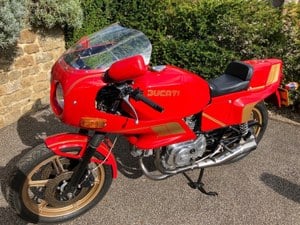
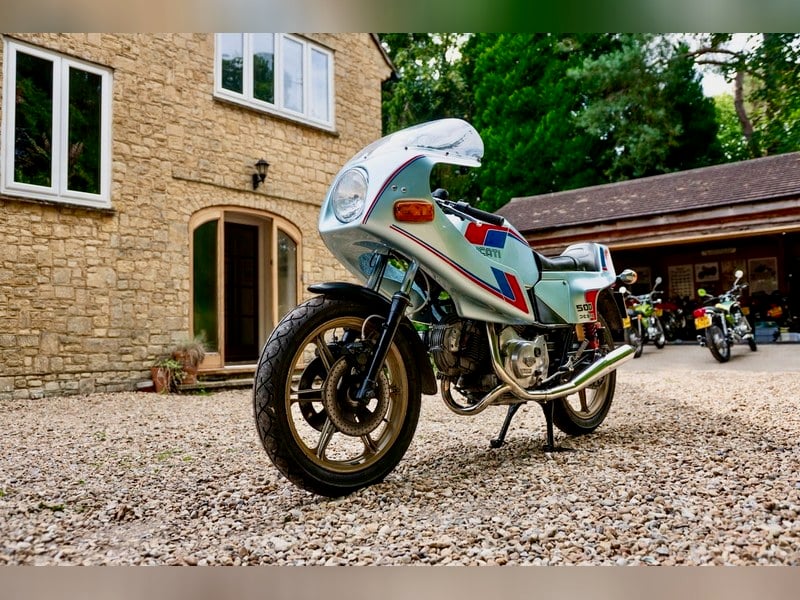
1983 Ducati Pantah 600 Rayner Special – sällsynt klassiker, Harris 2-1 avgassystem, i utmärkt skick.
Ett av ett litet antal vägregistrerade Harris-ramade Rayner Specials byggda runt Ducati Pantah 600-motorn i början av 1980-talet. Dessa handbyggda maskiner tillverkades i mycket små mängder och tillhör bland de mest samlarvärda och mest gåtfulla delarna av brittisk-italiensk motorcykelhistoria.
Det här är ett mycket omsorgsfullt bevarat exempel som har underhållits noggrant och alltid förvarats i ett uppvärmt garage. Motorcykeln framträder vackert och går som den ska, vilket gör den till en ideal maskin för en samlare, entusiast eller klassisk Ducati-fantast.
En framstående aspekt är Harris 2-into-1 racingavgassystemet, som ger motorcykeln ett fantastiskt ljud och en periodisk racingkaraktär. Maskinen är också utrustad med dubbla strålkastare och levereras med rostfria muttrar och bultar överallt.
Motorcykeln har försiktigt visats upp under flera år vid Coupes Moto Légende på Prenois-banan i Frankrike, vilket speglar den omsorg och uppskattning den har fått genom åren.
Huvuddetaljer
Modell: Ducati Pantah 600 Rayner Special
År: 1983
Mätarställning: 35 000 km
Motor: 600cc
Skick: Utmärkt
Funktioner & extravaror
Verkligt superb Harris 2-into-1 racingavgassystem
Dubbla strålkastarsuppsättning
Rostfria muttrar och bultar överallt
Original glasfiber-racingtank ingår
Historikfil
Vissa reservdelar ingår
En sällsynt möjlighet att äga en distinkt och samlarvän Pantah med stor proveniens.
? Plats: London SW4
? Endast upphämtning
Mer information om Rayner-specialerna:
The Harris Rayner Ducati Pantah Specials
Dessa var ett fascinerande stycke av tidig 1980-talets brittiska motorcykelkultur — i huvudsak vägreglerade racing-mekanismer byggda runt Ducati Pantah 600-motorer.
Bakgrunden
Harris Performance Products byggde fler än 50 kopior av de tävlingsramar som användes av Ducati-raceteamet, och två företag — Sports Motorcycles och Dave Rayner Motorcycles — tillverkade vägmaskiner från dessa tävlingsramar. Harris-ramen var inte en originaldesign; den var en kopia av Ducati's racing-original, producerad av Hertford-företaget till deras vanliga höga standard av hantverksskicklighet. Rörens diameter var en tum, 17-galvsrör av Reynolds 531, sammanfogat med bronserödsfogar. Ramarna målades sedan av Dave Rayner, en process som innebar uppvärmning av ramen i en ugn och doppning i ett bad av aeratiserade plastpartiklar.
Motorn
Motorn för Rayner Special kunde levereras i olika amalgam av trim för att passa köparen. Testmaskinen hade borrats upp till 643cc, med kompressionsförhållandet höjt från 9, 5:1 till 10, 5:1, och insugsventilerna förstorar till 41 mm från 38 mm. Den andades genom två 36 mm Dell’Orto PHM-kolvar och använde Boschs elektroniska tändsystem.
Prestation
Maskinen kunde uppnå en topphastighet av 123 mph, och i den farten verkade motorn inte särskilt stressad och kördes inte i rött. Den tangerade stående kvartsmile i 12, 6 sekunder och vägde endast 147 kg.
Körupplevelsen
Rayner-Ducati beskrevs som en racingmaskin som man kan köra på vägen — om du vill ha en civiliserad medelvikt roadster, glöm det. Men om du vill ha den enastående hanteringen och bromsningen som bara en riktig racer kan erbjuda, så får nackdelarna inte avskräcka dig.
Bromsar var en höjdpunkt: dubbla Brembo-skivor gav oslagbar stoppkraft, och maskinen skapade en kuslig känsla av att det skulle vara omöjligt att krascha på grund av markfrigång eller väggrepp.
Fjantigheter och brister
Bensintappen behövde låsas om till reserv efter bara halva fyra-gallon-tanken hade använts och satt precis ovanför avgaskretsens framkammare — en fara för den som inte bär tjocka handskar. På testmaskinen passade cam-belt-skydden inte heller i ramen, eftersom racarna alla körde med exponerade körremmar.
Ljudet var också anmärkningsvärt: hojen var ansedd som alltför högljudd — för entusiaster gav den ett superb ljud, men för varje entusiast gladde den flera hundra andra och avgassystemet riskerade att dra till sig myndigheternas uppmärksamhet.
Pris och dom
Som testad kostade maskinen £3 500 inklusive moms. Recensentens slutsats var att en standardmotor med ett tystare avgas — som Rayner kunde leverera — skulle vara snabb nog och mer användbar än det fulla racingtrimmet.
Sammanfattning ärligt talat, var Rayner Ducati ett mycket speciellt, handbyggt kitt: en riktig klubbracer inbäddad i en av de mest tekniskt intressanta italienska motorerna från eran, såld till dem som ville uppleva den ultimata väglicens-erfarenheten med full racing-proveniens. De förblir mycket mystiska och samlarvärda än i dag.