Beschreibung
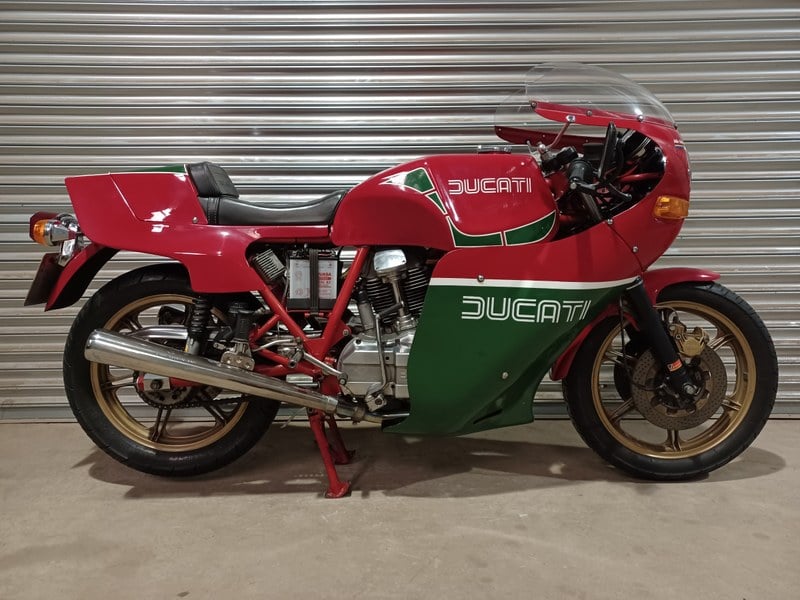
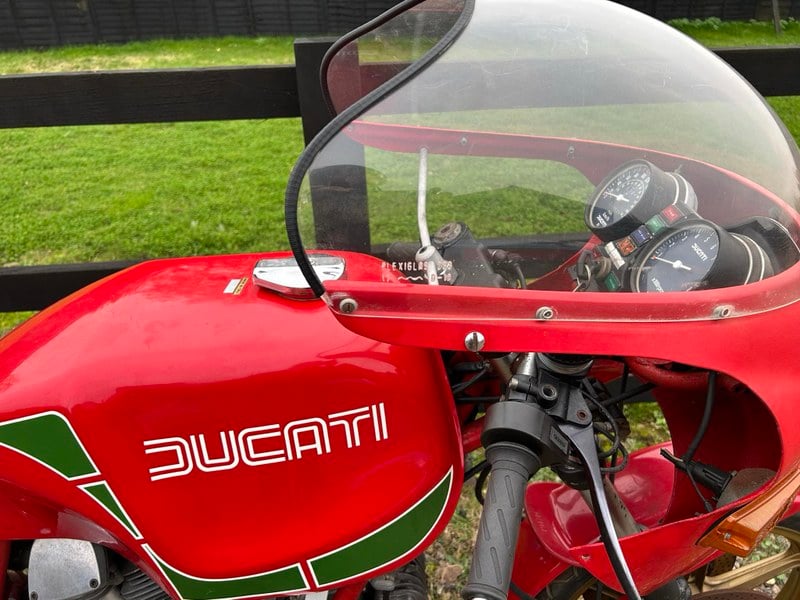
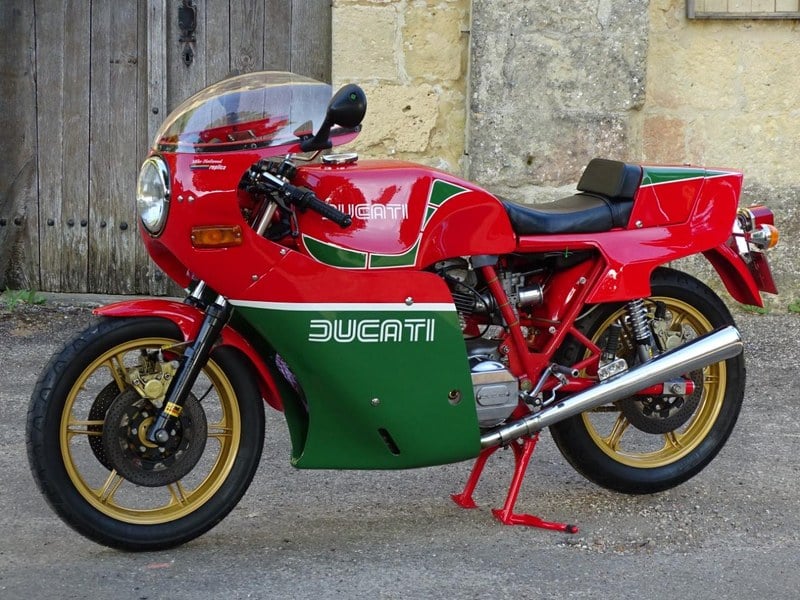
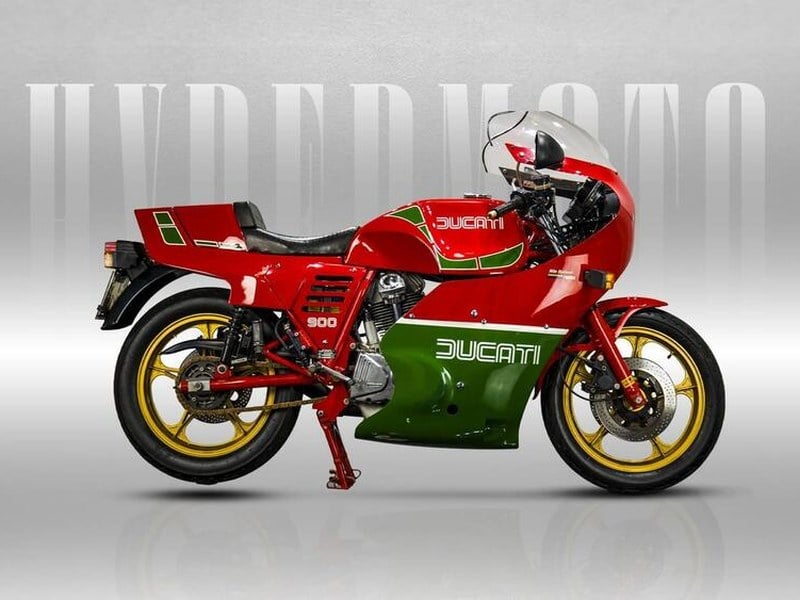
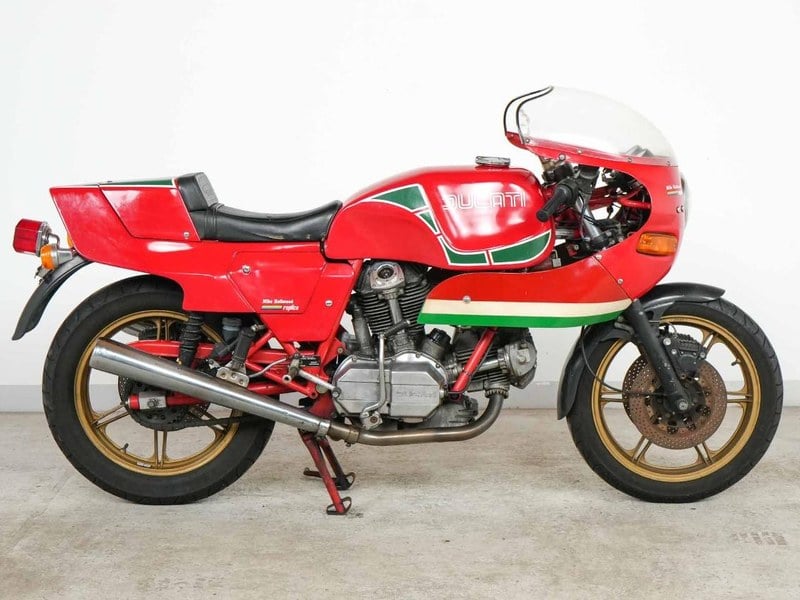
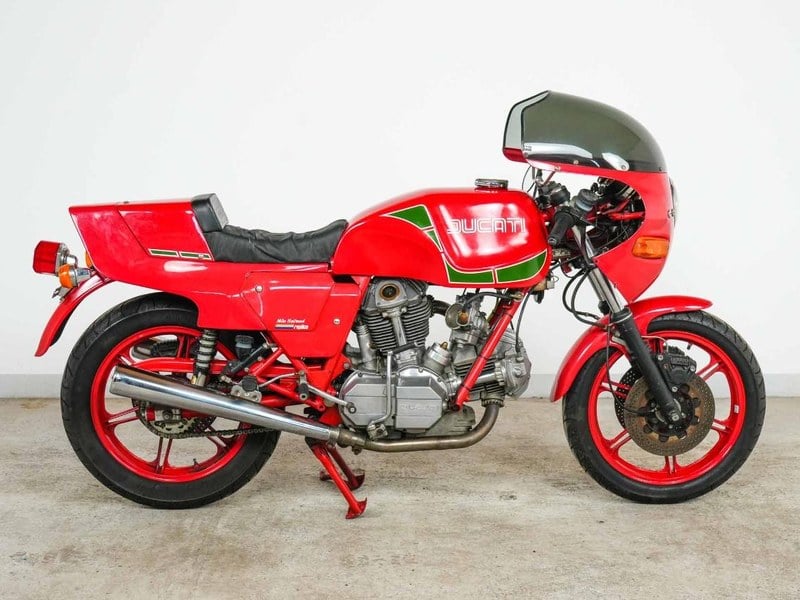
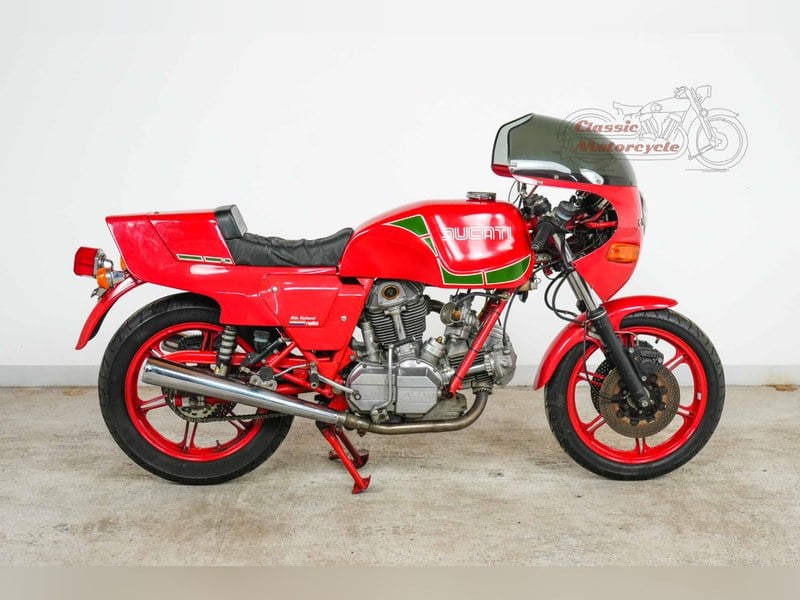
Ducati 1979 Mike Hailwood Replica. Die Legende des großen Mike Hailwood wurde 1979 als limitierte Tribut-Maschine von Ducati Wirklichkeit.
Für die Isle of Man TT-Rennen war 1978 ein herausforderndes Jahr. Nach dem tödlichen Unfall seines Freundes Gilberto Parlotti im 125cc TT 1972 führte Giacomo Agostini einen Boykott an, der dazu führte, dass der TT 1976 aus dem Grand-Prix-Kalender gestrichen wurde. Stattdessen kam der Automobil- und Motorradverband Großbritanniens (Auto-Cycle Union) mit einer großartigen Idee: Formula TT. Donnernde Produktions-Rennmaschinen würden gegen Zweitakt-GP-Bikes antreten. Es war so erfolgreich, dass es sich bis 1984 zu einer weltweiten Serie mit acht Rennen entwickelte und die Inspiration für World Superbike bot.
In seinem ersten Jahr, 1977, stoppte schlechtes Wetter das Formula-1-Rennen (1000cc Vierzylinder-Viertakt/ 500cc Zweitakt) nach vier Runden, während der führende NCR-Ducati von Roger Nicholls im Boxenstopp auftankte. Hondas Phil Read fuhr durch und lag vor Nicholls, als die rote Flagge geschwenkt wurde. Doch NCR hatte fristgerecht gekündigt…
Ducati 1979 Mike Hailwood Replica
Mike Hailwood wurde effektiv Ende der 1960er Jahre aus dem obersten Rennzirkus gedrängt, als Honda sein Engagement im GP beendete und eine No-Compete-Klausel in seinem Vertrag durchsetzte, um sicherzustellen, dass er nicht mehr für irgendjemanden fuhr. Also wurde Mike the Bike stattdessen zum Autogänger und fuhr in der Formel 1. 1974 trat er nach einer schweren Fußverletzung beim Nürburgring zurück. 1978, damals in Neuseeland lebend und der Pensionierung überdrüssig, ließ Hailwood durchblicken, dass er wieder fahren könnte.
Aber warum sollte sich irgendein Rennteam, sogar das kleine Sports-Motorcycles-Unternehmen mit Sitz in Manchester, England, einen über Jahre herumgereiften Fahrer mit angeschlagener Fuß- und einer sichtbaren Wampe holen, der seit 11 Jahren keinen klassischen Rennsieg eingefahren hatte?
Stanley Michael Bailey Hailwood wurde 1940 in eine Motorradfamilie geboren und stand früh auf dem Bike, fuhr sein erstes Rennen mit 17. Bei seinem ersten Isle of Man-Besuch 1958 trat er in allen vier Soloklassen an: dem Ultra-Lightweight (125cc), Lightweight (250cc); Junior (350cc) und Senior (500cc). Seine schlechteste Platzierung war der 13. Platz im Senior, und er wurde Dritter im 250cc-Rennen hinter Carlo Ubbiali und Tarquino Provini. Bis Saisonende war Hailwood britischer Champion in drei Klassen, Vierter in der Weltmeisterschaft der 250cc und Sechster in der Klasse 350cc. Er hatte 74 Siege errungen und 38 neue Runden- oder Rennrekorde aufgestellt. Er war 18 Jahre alt.
1961 war ein Ausnahmewertjahr. Beim Isle of Man war er Erster in den 125cc- und 250cc-Rennen auf Hondas (dies gab dem japanischen Hersteller seinen ersten IoM-Sieg), danach fuhr er eine Manx Norton zum ersten Platz im 500cc-Ereignis. Bis Jahresende war er 250cc-Weltmeister auf dem Honda Vierer. Hailwood unterschrieb 1962 bei MV Agusta, gewann vier aufeinanderfolgende 500cc-Weltmeisterschaften. Nachdem er MV Agusta für Honda verlassen hatte, gewann Hailwood die Weltmeisterschaften in den Klassen 250cc und 350cc in den Jahren ’66 und ’67, verlor aber die 500cc-Klasse an Agostini auf der MV.
Aber wahrscheinlich war es Hailwoods herausragender Erfolg auf der Insel, der ihm 1978 den Comeback-Sitz im Formel-1-Rennen verschaffte. Neben dem Dreigespann von 1961 gewann Hailwood neun weitere TT-Titel: 1962 Junior; 1963, 1964 und 1965 Senior; 1966 Lightweight und Senior; und 1967 gewann er Lightweight, Junior und Senior in einer Saison. Seine Bestzeit im Senior auf dem gummierten Honda 500-Vierzylinder blieb acht Jahre unangefochten, bis Mick Grant sie 1975 mit einer ebenso böse-handhabbaren Kawasaki-Triple brach.
Der TT ist sowohl für Motorräder als auch für Fahrer eine harte Prüfung: Er wird auf öffentlichen Straßen mit all ihren Gefahren, Hindernissen und Unzulänglichkeiten ausgetragen; es ist nicht unbedingt das schnellste Motorrad, das auf dem nahezu 38-Meilen langen Kurs am schnellsten ist. Langstreckenrennsport bedeutet genau das: Das Wichtigste ist zuerst, die Strecke zu beenden. Motorräder mit robuster Bauweise und langem Bein kommen oft besser zurecht als flinke, empfindliche Maschinen.
Ducati 1979 Mike Hailwood Replica
Bis 1978 war Fabio Taglioni’s großes Bevel-driven desmo Twin so gut wie altmodisch neben Hailwood. Aber der große Duc war hart: Der Motor war unkaputtbar, und der lange Radstand des Motorrads sorgte für hervorragende Geradeausstabilität. Er hatte sich im Langstreckenrennen bewährt, angefangen mit Paul Smarts und Bruno Spaggiaris gefeierter Doppelsieg in der Imola 200 1972. Und während Hailwood 11 Jahre lang aus dem Motorradsport verschwunden war, blieb er dennoch „Mike the Bike“, eine lebende Legende.
Der Chef-Rennmechaniker von Ducati, Franco Farné, hatte sich mit Ex-Fabrik-Rennmechanikern Giorgio Nepoti und Rino Caracchi von Scuderia NCR zusammengetan, um das effektiv wie eine Werksrennfabrik außerhalb des Werks zu schaffen.
Hailwoods Bike nutzte einen speziellen Daspa-Rahmen, der nur 25 Pfund (11, 3 kg) wog, in den ein Motor aus 750er- und 900SS-Teilen mit einem speziellen schmalen Ölwanne eingebaut wurde, um die Passung des Auspuffsystems zu ermöglichen. Nach weiterer Modifikation durch Steve Wynne bei Sports Motor Cycles tauchte Hailwoods NCR-Ducati mit Lucas-RITA-Zündung, Überkreuz-Gangschaltung für Linksfuß-Bedienung auf (Hailwood konnte nach dem Nürburgring-Unfall nicht mehr mit dem rechten Fuß schalten), Ein extrem originales Exemplar mit sehr seltenem Original-Tempomotiv.
Dieses Exemplar wurde aus Japan importiert, nachdem es in einem Museum und einer Privatsammlung ausgestellt wurde