Beskrivning
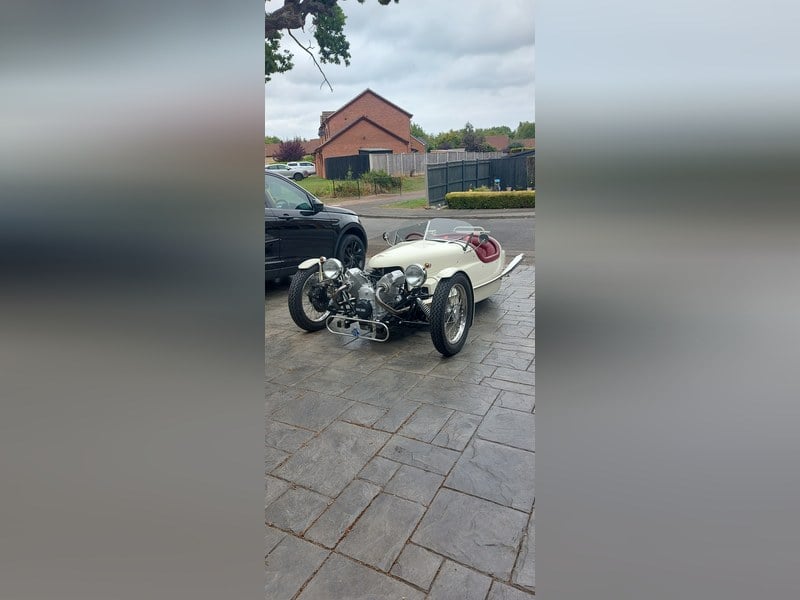
Type 1 Triking är märkespuristens val—en riktig hyllning till de tidiga Morgan-trehjulingarna, i den mån det handlar om enkelhet och grundläggande ergonomi. Att äga en trehjuling har alltid stått på min bucket list, så när tillfället dök upp att köpa bilen nedan för affär blev det gjort. Jag har varit involverad i racecar engineering sedan tidigt 1980-tal, och jag beundrade Trikingens formgivning, särskilt Type 1 med dess likheter med Lotuss Elan: frontchassi/ bärbensram och hjulupphängning. Allt detta är givetvis personliga preferenser, och Type 1:s minimalistiska karaktär tilltalade mig. Med en stadig stomme på 1, 70 m och med fötter i normalstorlek är komfort och körkänsla helt okej, men min bil är inte till för någon som har större dimensioner än så.
När det gäller bilen har jag en pärm som beskriver dess spännande tidiga historia och relationen mellan ägare/ byggare och Tony Divey. Jag köpte bilen av dess andre ägare—en vän till den förste—med bara 5800 miles på mätaren sedan den byggdes 1985. Ännu en gång handlade det om personliga preferenser: jag ville anpassa bilen efter min smak. Jag har alltid tyckt att de tidiga Morgan-trehjulingarna och andra i samma stil var en billig form av motoring, så jag ville återskapa utseendet med mer strama nivåer av klädsel och instrument. Jag ville också få in periodkorrekt instrumentering, strömbrytare och övriga reglage. Till sist ville jag göra mig av med den smart konstruerade bakre formsprutade/”tail moulding” i ett stycke, men med dess släpvagnsinspirerade bakljus—jag har alltid tyckt att den där delen drog ner helhetsintrycket.
En nackdel med det tidiga chassit är kravet att plocka bort kraftpaketet för att byta olja—knappt praktiskt—så vi har konstruerat ett avtagbart tvärstag som ger helt ohejdad åtkomst till sumpen. Jag har precis genomfört ett oljebyte i processen, samt bytt smörjmedel i växellådan och bevel-drevet.
Det bakre locket i ett stycke fästs med 4 st. Dzus-glidspännen plus 4 lyfthandtag, så demontering av panelen förenklas kraftigt.
De ursprungliga stänkskydden som var navmonterade—och vars stag ständigt gick av—har bytts mot strömlinjeformade vingar som är monterade på karossen.
Aluminiumkapslade avgasboxar i periodutförande är monterade, matade av rostfria rör från omförkromade/ nypläterade grenrören.
Nya gas- och choke-kablar är monterade.
En yttre handbroms används, vilket ger betydligt mer tydlig känsla och kraft, och aktiverar både främre och bakre huvudcylindrarna—vilka dessutom får ny och förbättrad balansbalk/ kompensationsbalk.
Trampdynorna är försedda med expanderade metallöverdrag för bättre grepp.
Styrningen har nu ett periodkänsligt ratt-/ styrhjul som i stort sett liknar en tidig Morgan. Det är försett med nav för snabb demontering, vilket underlättar insteg och utsteg och ger en användbar stöldsäkerhetsfördel. Ta den med dig när du lämnar fordonet—förutsatt att du kan få ner den i väskan eller ryggsäcken, annars får du bära den löst!
Växlingen är unik med ett spakarrangemang som nästan sitter i en pelare—bokstavligen inom fingertoppsräckhåll när du styr. En upp, fyra ner, med en mycket mer positiv känsla och respons än originalutförandet. Men eftersom det är en Guzzi med en lantbruks-/ agricultural-typ växellåda behöver du fortfarande vara bestämd. Det finns ingen backväxel, men det är en del av charmen.
All instrumentering och all strömbrytarkapsling är av periodtyp, med originalkronometriska varvräknare och hastighetsmätare som är professionellt renoverade och korrekt kalibrerade. Allt detta är monterat i en specialbyggd instrumentpanel i massivt trä och fenol-laminat.
Förvaringsfacket/”glove cubby” har en ljusbox-lösning och en dubbla USB-laddare, diskret monterade. På instrumentbrädan finns dessutom ett klassiskt tvåpoligt strömuttag (power take-off). Säten och ryggstöd är omklädda, återigen i en klassisk 1930-talsperiodlook. Golvplåtarna är lackad plywood och ventiler i sidofotutrymmet är tillagda för periodkänsla och ventilation. Det finns det vanliga utrymmet för förvaring bakom sätena, plus en batteriavskiljare. När det gäller bakpartiet är chassit förlängt med boxsektioner och aluminiumpaneler, och ett praktiskt bagageutrymme har skapats. Det är stort nog för att rymma hela huven, huvens ramar och tonneau som följer med bilen—plus extra, användbart utrymme för ytterligare förvaring. Åtkomst sker via en topp som fälls upp, även den i aluminium, samt en bakre bagagelucka som inkluderar ett användbart korgstativ. Inuti bagaget finns en större aluminiumtank fylld med skum, med periodkorrekt påfyllning, samt en bakre hjulklämare/ hugger. Huggern har ett inspektionshål för att kontrollera däcktrycket.
Den bakre huggern kan tas bort för att underlätta den plywoodklädda golvytan i bagaget, som hålls på plats av sex bultar—vilket ger full åtkomst till svängarmen och hjulet för service om det skulle behövas. Oljebyten i bevel-lådan kan göras utan att ta bort någon av dessa delar. Nya uppgraderade bakre Hagon dämpare är monterade, vilket ger en aningen högre bakre markfrigång—och Trikingen får dessutom nya däck runtom. Mekaniskt är bilen sund, men den är inte ”concours” och man ser spår av ålder på vissa komponenter, till exempel förstärkningar/ plåtning på wishbones—men om en ny ägare vill förbättra de här delarna är det relativt enkelt.
Jag har en omfattande pärm som redovisar allt som köpts in.