Beschreibung
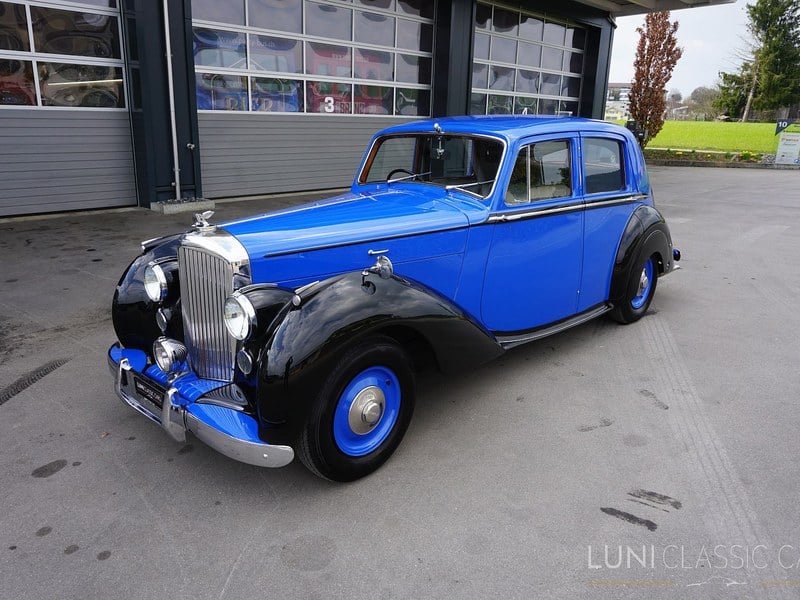
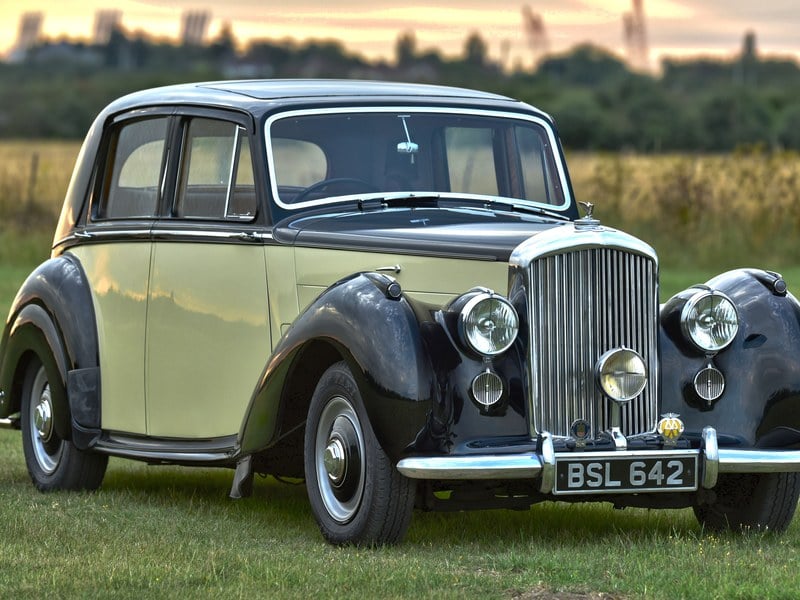
Einzigartigkeit des Exemplars FIVA-Identitätskarte Geschichte und Rechnung Vollständige Renovierung 1980 Unser Bentley Mark VI Sports Saloon wurde als Neuwagen in Frankreich ausgeliefert und am 29. September 1949 in Betrieb genommen. Er hat 4 Besitzer, darunter seit 2017 seinen aktuellen Besitzer. Seine Zulassung ist derzeit die Schweiz.
Dieses Exemplar befindet sich in einem sehr guten Allgemeinzustand, insbesondere dank einer vollständigen Renovierung in den 1980er Jahren. In einer Champagner-Metallic-Farbe, kombiniert mit einer kompletten Chromverkleidung, einem Fernlicht, einer braunen Lederausstattung mit leichter Patina, Holzverkleidungen und einem bordeauxroten Teppichboden, ist dieser Bentley Mark VI Sports Saloon frei von Mängeln.
Seine mechanische Funktion ist ebenso gut. Angetrieben von einem 4, 3-Liter-Sechszylinder mit einer als "ausreichend" beschriebenen Leistung und einem Viergang-Schaltgetriebe, bietet dieser Bentley mühelos die Geschmeidigkeit und Kraft vergangener Zeiten. Der Bentley ist mit zahlreichen Rechnungen, regelmäßiger Wartung und einer FIVA-Identitätskarte ausgestattet.
Der Bentley Mark VI Sports Saloon verfügt über folgende Optionen und Ausstattungen: Original-Linkslenkrad Zentraler Fernscheinwerfer Make-up-Spiegel hinten Dreispeichen-Lenkrad aus schwarzem Bakelit Schiebedach Modellgeschichtlicher Überblick Der Bentley Mark VI Sports Saloon war das erste Nachkriegs-Luxusauto von Bentley. Er wurde im Mai 1946 angekündigt und von 1946 bis 1952 produziert. Er war auch das erste Auto von Rolls-Royce mit einer Ganzstahlkarosserie und das erste komplette Auto, das in ihrer Fabrik zusammengebaut und fertiggestellt wurde. Diese sehr teuren Autos waren ein echter Erfolg, wobei ihre Schwäche langfristig in den minderwertigen Stählen lag, die von den staatlichen Kontrollen der Nachkriegszeit vorgeschrieben wurden, während die Fahrgestelle weiterhin an unabhängige Karosseriebauer geliefert wurden. Dieses in der Fabrik fertiggestellte Bentley-Auto erhielt den Namen Bentley Mark VI standard steel sports saloon (Standard-Sportlimousine aus Stahl). Dieses Fahrgestell und der Motor mit kürzerem Radstand waren eine Variante des Rolls-Royce Silver Wraith von 1946 und wurden mit der gleichen Standard-Stahlkarosserie und einem größeren Kofferraum zum Silver Dawn von 1949. Der Mark VI 4 1⁄4 Liter nutzte einen 4, 3-Liter-Straight-6-F-Head-Motor (4. 257 cc/ 259 cu in). Der Hersteller weigerte sich, einen Leistungswert für das Auto zu veröffentlichen (außer der Steuerleistung von 29, 4 PS nach der alten RAC-Formel), aber eine 1950 abgedruckte Probefahrt des Autocar-Magazins berichtete, dass der höhere Gang "Geschmeidigkeit bis zu 6 mph (10 km/ h)" und die Fähigkeit bot, "einen Hügel mit einer maximalen Steigung von 1 zu 9, kompliziert durch Kurven, zu erklimmen". Diese Aussage bestätigte das von der Marke hervorgehobene Adjektiv "ausreichend".