Descrição
A Morgan Plus 8 nasce em 1968, inicialmente quase como uma «experiência»: a Morgan decide instalar o novíssimo V8 Rover de 3, 5 litros, em alumínio, sob o longo capô da sua Plus 4. O resultado é fulgurante: um peso pluma de cerca de 900 kg e uma potência de cerca de 160 cavalos. O automóvel mantém o chassis estreito da Plus 4 e a sua suspensão dianteira de tirantes que data de 1910. É rústico, mas muito rápido, com um comportamento vivo.
Em 1969, o carro está ainda quase idêntico ao de 1968. Os ajustes são ligeiros: algumas melhorias de pormenor no arrefecimento e nos freios, mas sem mudanças maiores. Continua a ser uma Plus 4 superpotente, com um estilo de anteguerra mas com desempenho de desportivo contemporâneo.
Em 1970, a Morgan começa a fiabilizar um pouco o conjunto. O painel de instrumentos é revisto, aparecem novos interruptores e instrumentos. A caixa Moss mantém-se inalterada, mas o montador mecânico ganha robustez. As primeiras modificações no chassis surgem, muito ligeiras, para suportar o binário do V8.
Em 1971, surgem algumas alterações de equipamento: bancos ligeiramente redesenhados, melhoria do aquecimento e da estanqueidade da capota, mas continua sem qualquer evolução estrutural significativa. A Plus 8 mantém a via estreita e as rodas de aros finos.
Chega então 1972, que corresponde à plenitude da maturidade desta primeira geração estreita. O motor Rover V8 de 3, 5 litros com carburadores SU desenvolve cerca de 155 cavalos, e o carro mantém um peso inferior a 900 kg. A caixa Moss de quatro velocidades permanece em uso. Esta versão de 1972 é frequentemente considerada o auge da Plus 8 «original»: ágil, bruto, extremamente leve, com o charme artesanal das primeiras séries e um estilo intacto herdado da Plus 4.
Em 1973, a Plus 8 continua quase inalterada, mas recebe algumas melhorias discretas nos freios e nos elementos de tracção. A estética permanece idêntica, sempre com a carroçaria fina e as aletas curvas em volta das rodas.
Em 1974 e 1975, a Morgan começa a preparar-se para um alargamento do chassis, pois os pneus modernos mais largos exigem mais espaço e estabilidade. São adicionados alguns reforços e alguns modelos já recebem rodas ligeiramente mais largas, mas a silhueta geral mantém-se igual.
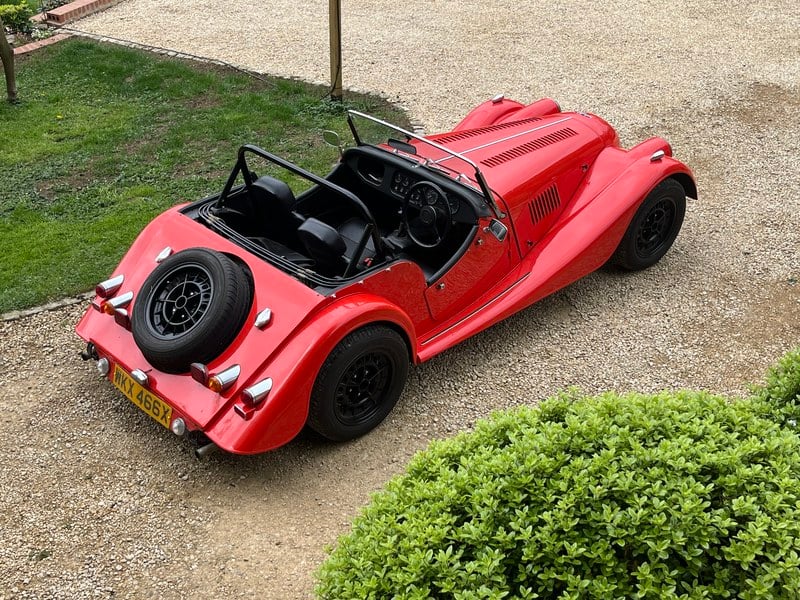
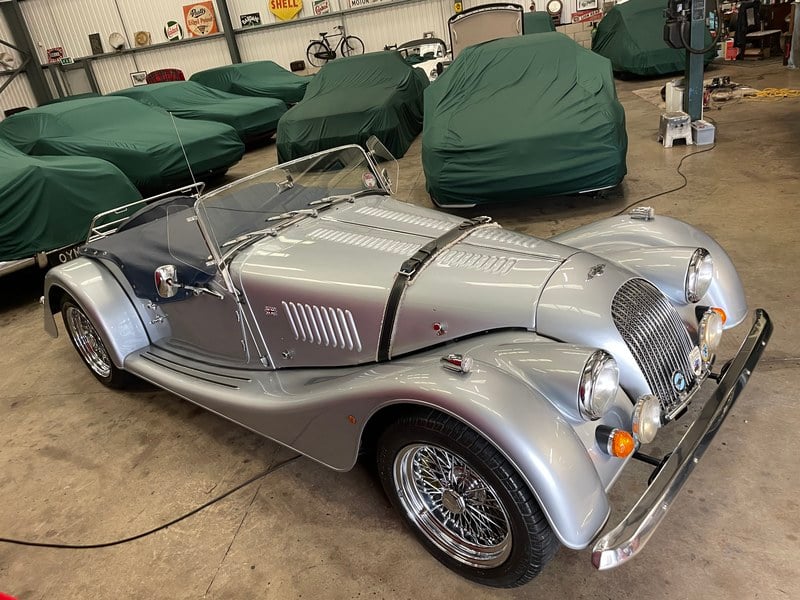
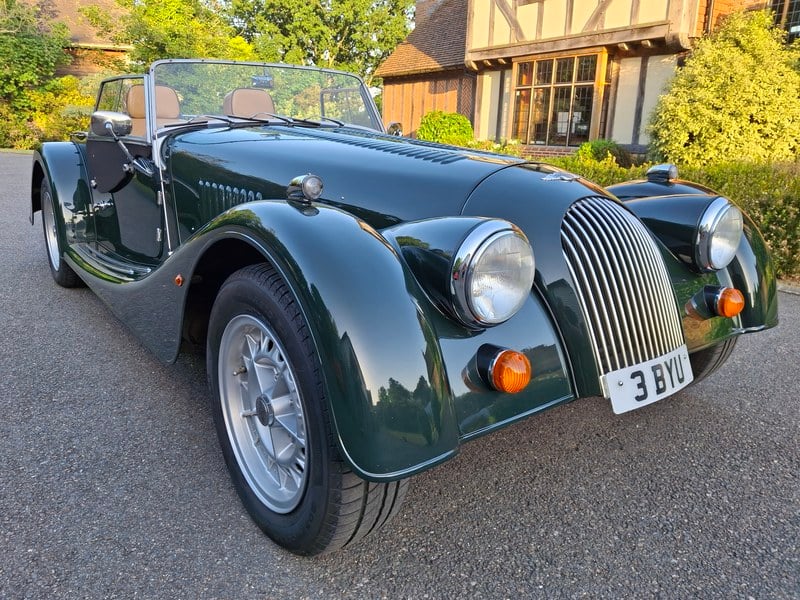
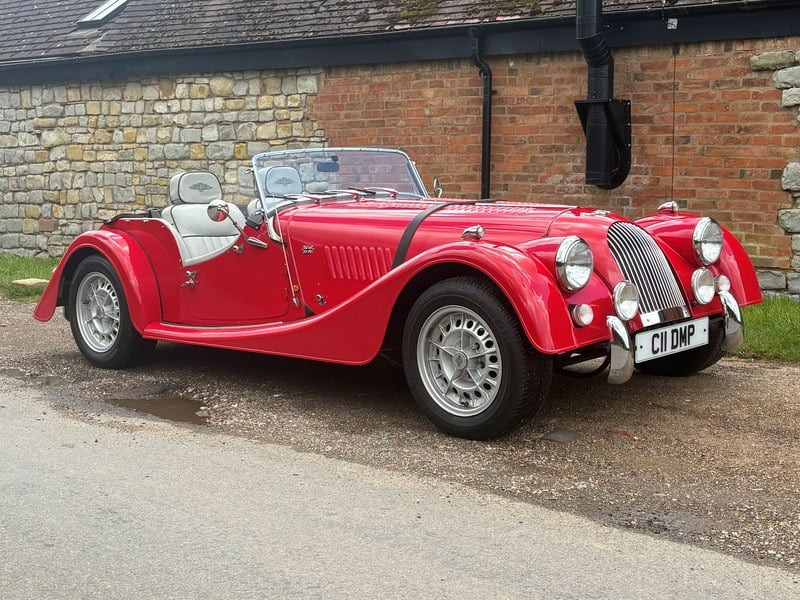
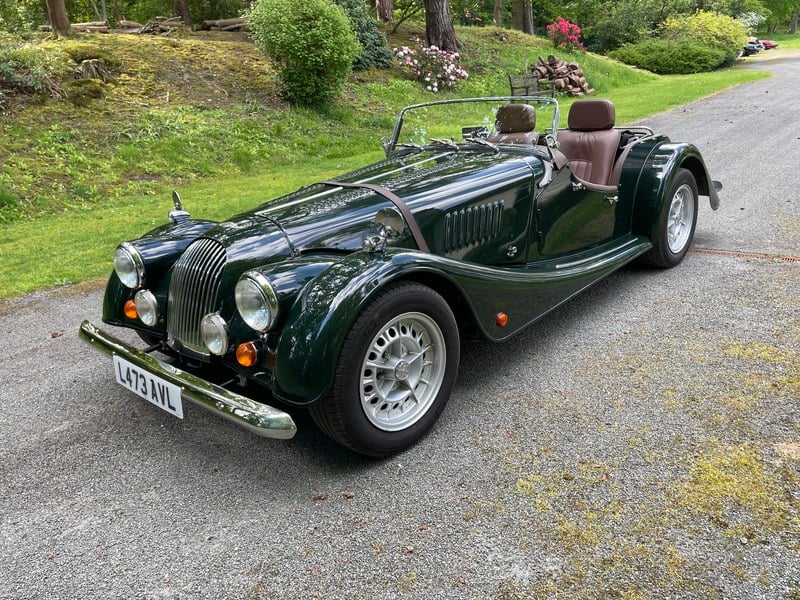
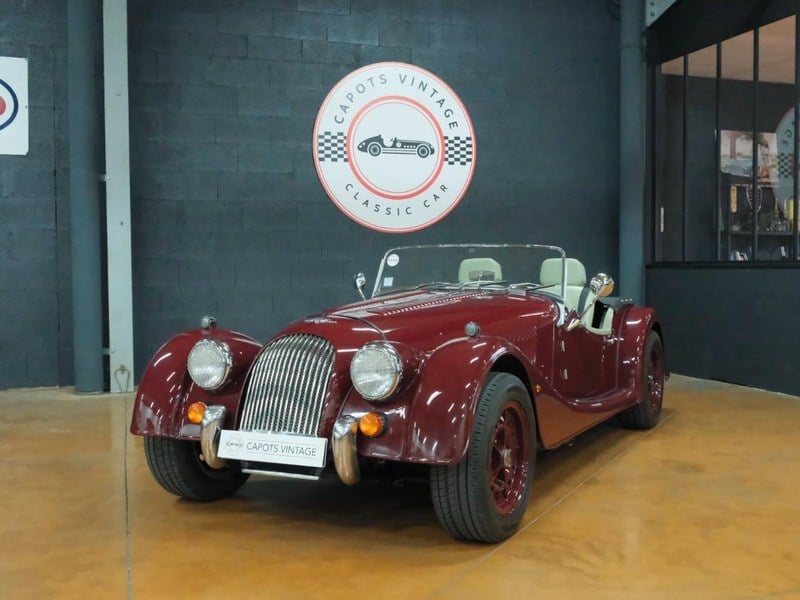
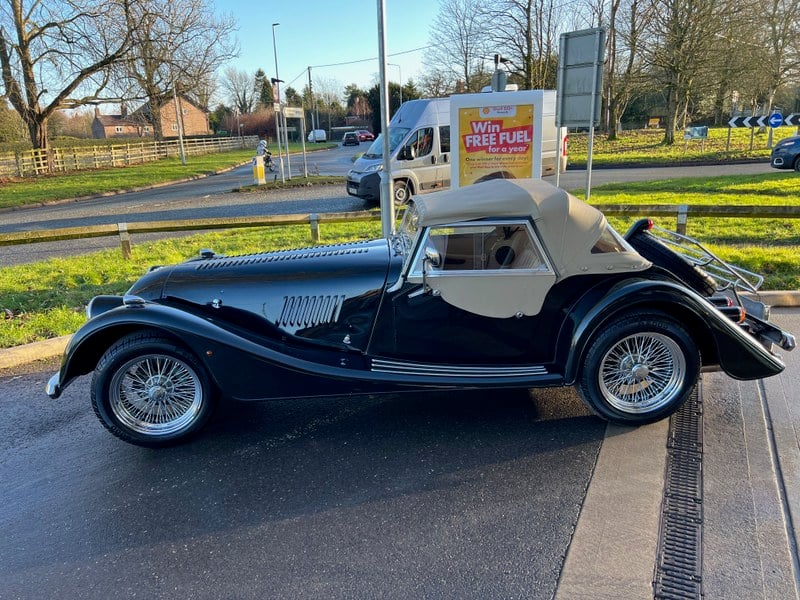
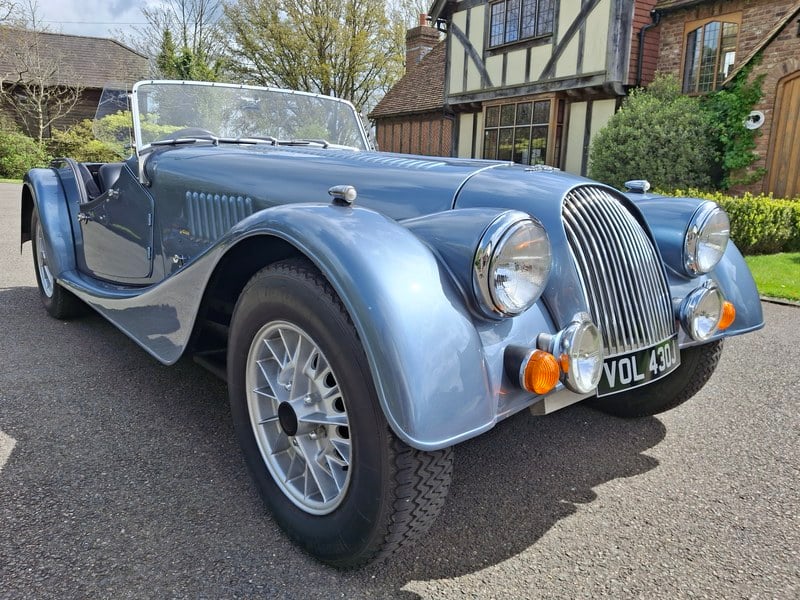
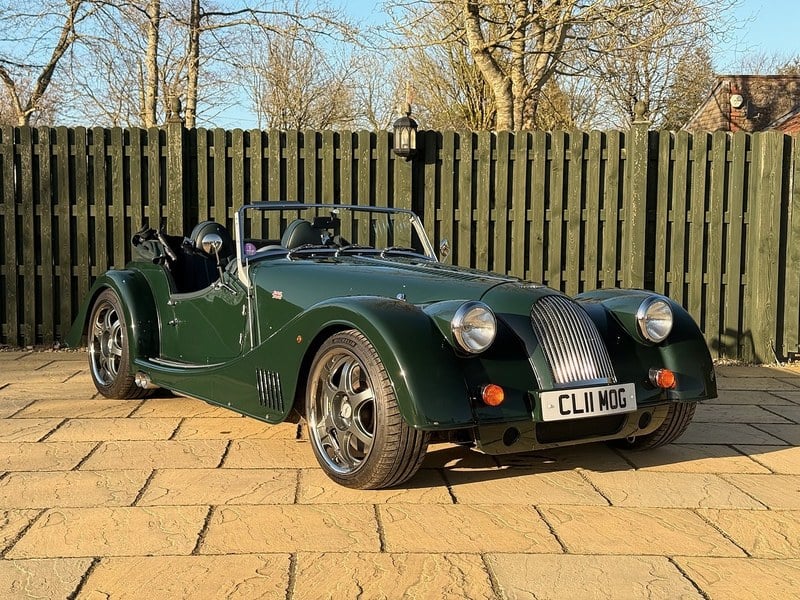
Este exemplar foi entregue novo na Alemanha a 14 de fevereiro de 1973 e percorreu desde então pouco mais de 81. 000 km. É, portanto, uma versão rara com condução à esquerda e instrumentação métrica. Encontra-se em muito bom estado e beneficiou de uma preparação de motor que levou a potência para cerca de 170 cv. Acompanha capota, vidros laterais e capa para o tonneau.
O carro funciona muito bem, o motor é contundente e potent e os travões estão em muito bom estado.