Patina – Are Classics Best Enjoyed Warts ‘n All?

September 16, 2024
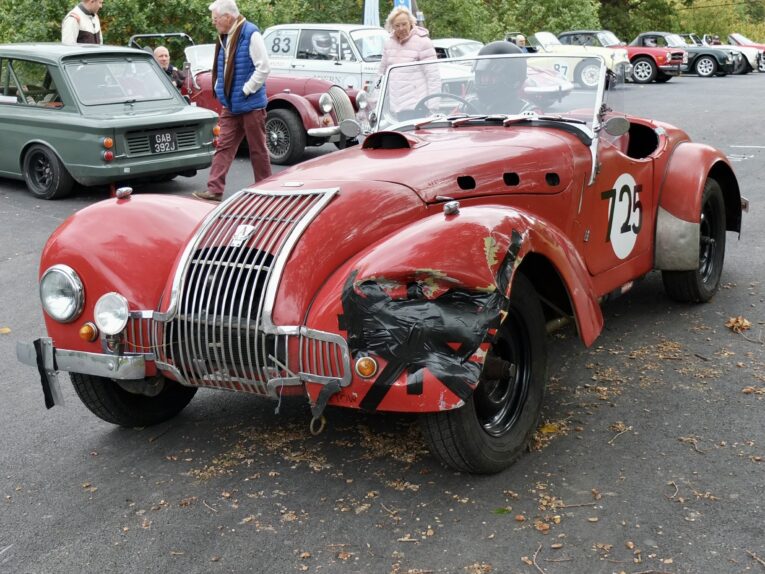
Change is afoot in the classic car world. Restoration was once the only answer, but we’ve developed a taste for the imperfect; falling hook, line and sinker for something we like to call ‘patina’. It’s easy to dismiss patina as a feeble and overused excuse for a down-at-heel scrapyard dodger but if you’re someone who rolls your eyes whenever the dreaded ‘p’ word is mentioned, allow us to persuade you otherwise.
As with all loaded terms, precise definitions are important and it may come as a surprise to some that the word patina has been with us for a while. Besides the aqueducts, sanitation, roads, irrigation, education, wine and public baths, we’ve got the Romans to thank. Early uses of the word denote “a shallow layer of deposit on a surface” and it has since evolved to mean just about any form of wear or deterioration.
The antique trade has been harking on about it for years, deeming the sheen of age to woodwork and oxidised brass attractive and preferable to restored finishes. It’s only more recently that it’s made its way into the petrolhead lexicon and today, talk of patina is more prevalent than ever.
You’ll doubtless have noticed that careworn classics increasingly attract the most attention at even the most prestigious concours events. Where perfect paint and flawless chrome once reigned supreme, it seems judges are now more interested in a car’s history than the lustre of its paintwork. Whether you like that or not, you have to concede that the traditional Concours d’Elegance lawn isn’t exactly a level playing field. Inevitably, those with the deepest pockets will be taking home the silverware. And that doesn’t seem right when the most interesting cars aren’t necessarily those that have tugged hardest on their owners’ purse strings.
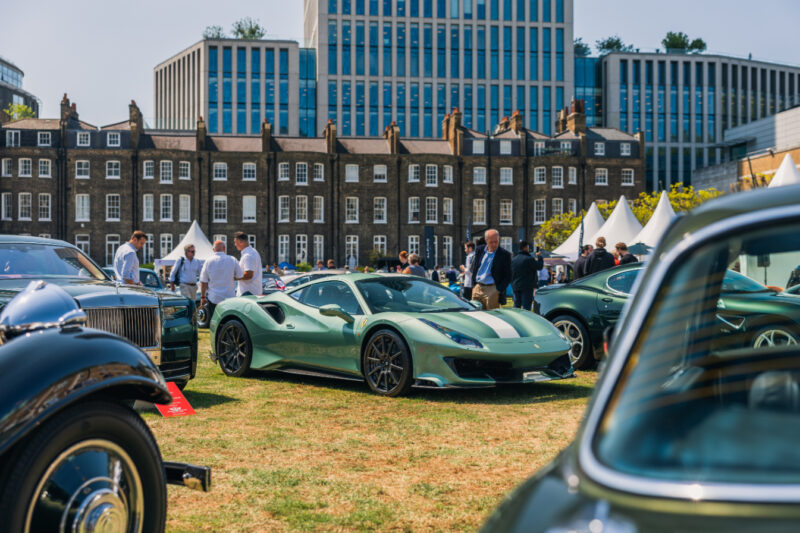
Top-level competition aside, this normalisation of patina is making our hobby a lot more inclusive, which we are all for. While we grassroots enthusiasts would once have been ashamed to drive a ‘scruffy’ classic, we’re now welcomed by a community that appreciates a roadworthy survivor for what it is. Whether you like the patina look or not, we can surely agree that increasing the accessibility to our frankly frivolous pastime can only be a good thing. You just have to look at events like Festival of the Unexceptional to see what we mean.
There are benefits for us drivers too. Cars are built to be driven and as much as we enjoy our time spannering in the shed, the occasional polishing session and sneaking the odd moment to simply admire an old car over a mug of tea, we’re at our happiest behind the wheel. The sad truth is that heavily restored cars are arguably too good to use. Every inevitable stone chip is going to hurt and however careful you are, these older vehicles will pick up wear and tear if they’re used regularly (as they should be). So you may as well spare yourself the heartache and start with something that already sports a few dings, chips and scratches.
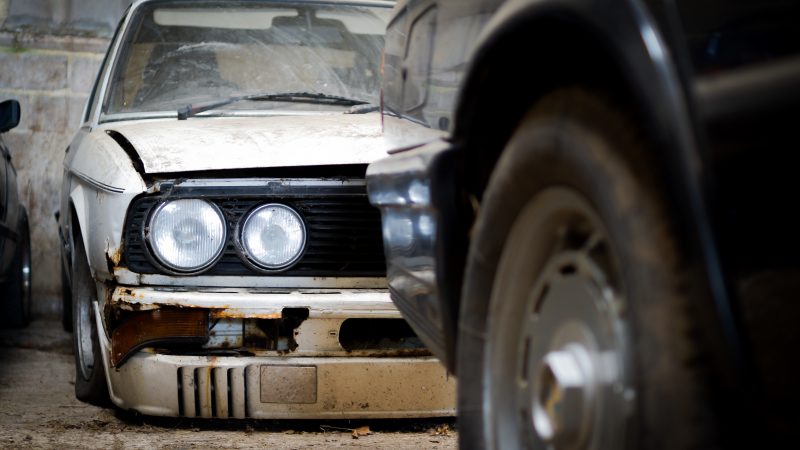
So where do you draw the line – if indeed a line needs to be drawn? Here’s what I presume irks the patina sceptics. In truth, we’re too trigger-happy with ‘patina’ and have stretched the term to mean just about anything from a smattering of paint chips to a dangerous rot box. Here in the UK, some will take advantage of our forty-year exemption rule for MOT testing and drive around in cars that really shouldn’t be on the road. That’s not on, frankly. I still favour a fluid definition of patina, but it’s important to note that while rich patina could be the result of neglect, if we want to enjoy these cars, that neglect needs to come to an end. Safety aside, we owe it to the cars to preserve their careworn state and stop any further deterioration in its tracks.

There’s such a thing as artificial patina too – and I’m not sure I’m a fan. You’ll find specialists that can recreate patina in the body shop and as clever as this is, one can’t help but question whether things have gone too far. If you’re going to go to all that effort and fake your own rust, you may as well repaint it properly, right?
When all’s said and done, the way you go about it is your choice, but here’s how I returned my 1983 Land Rover Series III to the road and preserved its hard-earned patina in the process:
The old workhorse had reached a crossroads when I acquired it in 2018. It could have been a candidate for a full restoration, but enamoured by its originality and, to be quite honest, lacking the budget to go the whole hog, I opted for preservation.
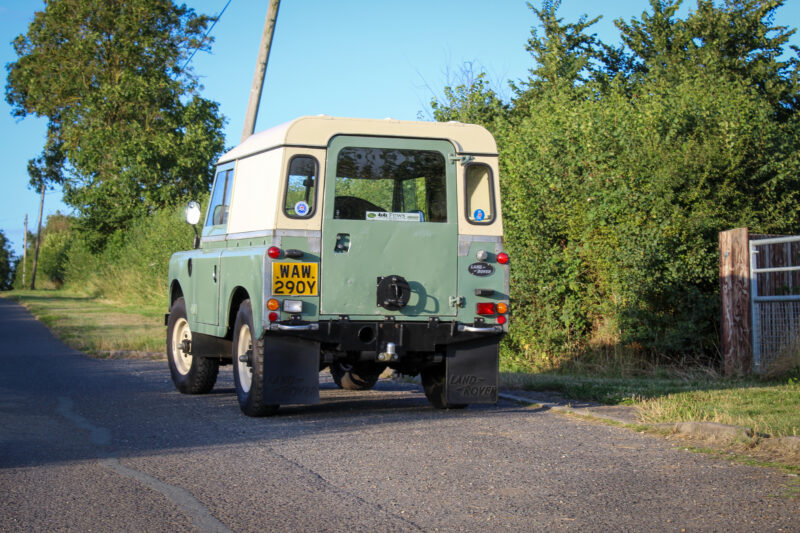
While lacking an extensive history file, I know that it spent over three decades on Gloucestershire dairy farms and I dare say many a Cotswold drystone waller owes their livelihood to the trail of destruction wreaked by my Land Rover. There wasn’t a straight panel to be found, it had clearly worked hard – and I wanted to keep that. As it transpires, there are few nuts and bolts I haven’t touched on the car, but I don’t want it to look that way.
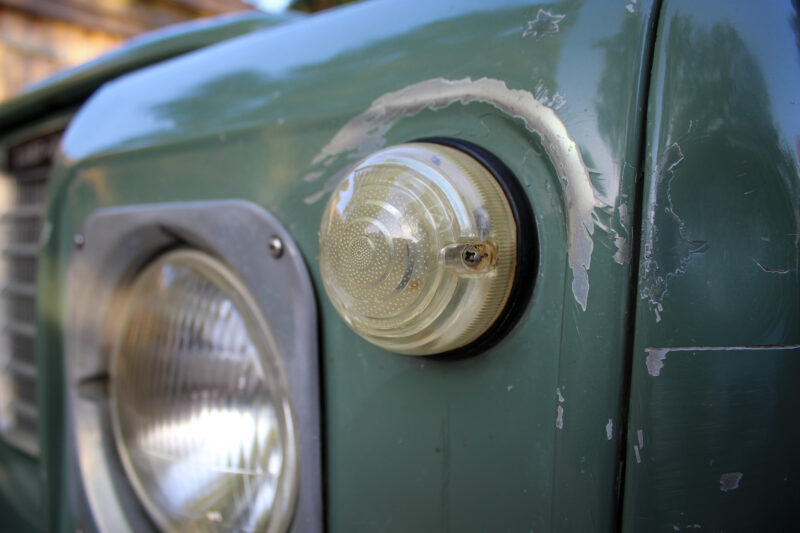
As a long-term working vehicle, the ‘let’s off-road’ community were never given the opportunity to rivet tread plate to it, or swap a Defender engine in. More remarkably still, most of the forty-year-old ‘Pastel Green’ and ‘Limestone’ paintwork had survived. It was worn, faded and in some areas missing altogether, but with bodywork made from an aluminium alloy called Birmabright, repainting is not strictly necessary to keep corrosion at bay. A good cut and polish worked wonders to bring its shine back from the brink, and a deep clean under the arches unearthed various factory chalk marks which are now proudly on display for all the rivet counters to salivate over.

While much of its wonkiness survives to this day, I concede that some localised body and paint restoration was required. There comes a point when cars become too far gone for an appointment with the oily rag and there were aspects of my Landy that unequivocally required more than a bit of spit and polish. The footwells had some unwanted ventilation courtesy of our old friend the tin worm and the offside rear wing was mangled almost beyond recognition. Various repairs were made before small areas of paintwork were carefully blown in, skirting around historic dings and scratches, so that it’s harder to tell that it has been altered. Steel components were refinished where required too, with small areas of bulkhead surface corrosion rectified and the passenger footwell replaced. Ideally, I’d love to boast the paint was entirely original, but I’ll settle for eighty per cent.
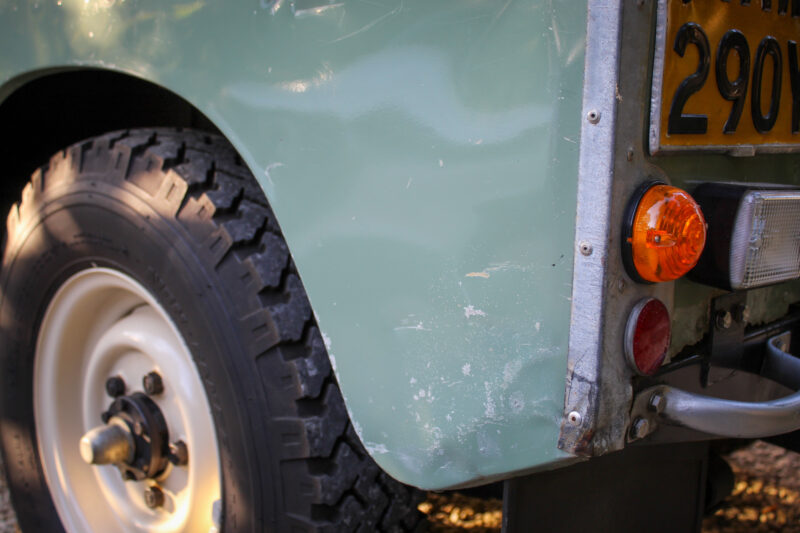
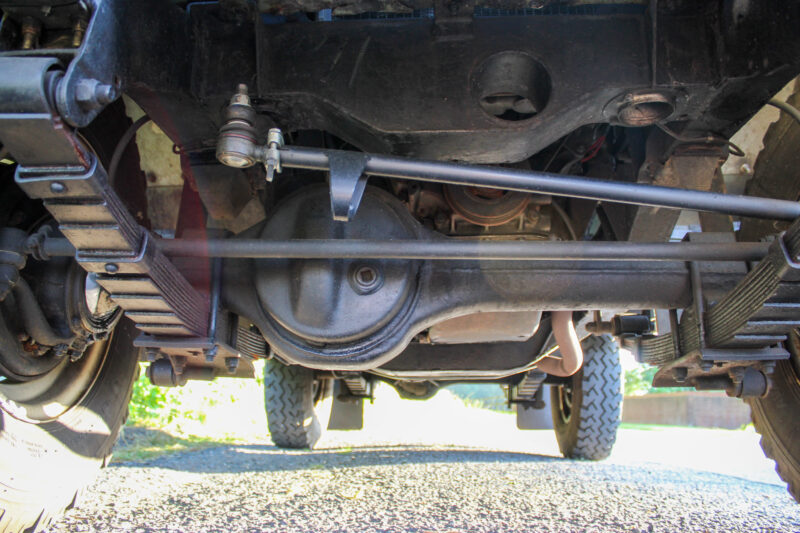
Any rust had to go of course and I was lucky to discover all was fairly solid underneath so I’ve only had to wheel out the MIG welder a few times. The rear quarter chassis – a common weak point – had already been replaced by a previous keeper, while various other areas had been patched up to a reasonable standard. Following any repairs, the chassis was painstakingly rubbed down, painted and liberally wax-protected over the course of many a weekend. I repeat this pickling process every year.
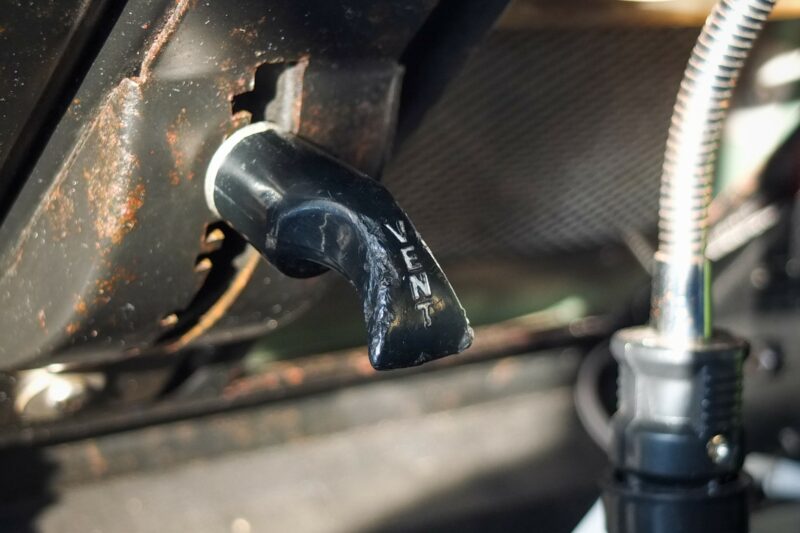
The interior was definitely on the wrong side of the patina/scruffy line. It was fresh from the farmyard – smells and all. And while the evidence of an excitable dog is still visible on the scratched interior glass and the slightly chewed passenger-side vent knob, the cabin has been overhauled more than any other part of the car. Period-correct ‘Hardura’ matting was sourced to line the seat box and bulkhead while I enlisted my dad to fabricate new door cards – a small concession to originality as I was underwhelmed by the quality of aftermarket replacements available at the time.
So was it all worth it? I sometimes wonder if it would actually have been easier in the long run to restore the bodywork – but I’m glad I didn’t. A small defect or blemish on an otherwise perfect car is, I’m sure you’ll agree, absolutely infuriating. I don’t worry about resting spanners or a mug of tea on the wingtops and it really doesn’t matter if it picks up a few more dents and scratches down a narrow country lane.
While I admire an arrow-straight example that’s spent thousands of hours in the body shop, I’d struggle to enjoy it in the way Land Rover originally intended. Built forty years ago in the dying embers of British Leyland, my Series III was never designed to last as long as it has, and its patinated condition is a testament to the fact it has stood the test of time.

Who knows? Maybe I’ll decide to restore it from the ground up one day. But somehow, I don’t think that’s likely. It looks like patina is here to stay, and I for one am glad.