Famous Firsts – The Matra Rancho

December 23, 2024
Today’s roads are teaming with so-called ‘crossovers’ – compact SUVs ostensibly marketed to those “chasing an active lifestyle”. Don’t be fooled by their elevated stance and chunky appearance; these wannabe off-roaders are little more than jacked-up versions of regular hatchbacks and saloons without an iota of off-road ability. To make matters worse, with added height comes an elevated centre of gravity, dashing any hope of decent handling and resulting in a car that’s neither at home on the tarmac nor off it. From our experience, most ride badly, are pig-ugly to look at, have surprisingly cramped passenger compartments and are ludicrously expensive to buy.
You’ve probably gathered that we don’t like crossovers.
It’s miraculous anyone puts up with them, but the sad reality for us petrolheads (lamenting the lack of new cars we’d actually like to own) is that they sell like hotcakes. Buyers cite the commanding driving position, greater perceived safety and better fuel economy over a full-size SUV.
The car-buying public’s affair with the “softroader” may well be a fairly recent phenomenon, but the crossover concept has been around far longer than you might think. It just didn’t take off as it has today and we wonder if that’s because there were other viable options. There was a time you could go out and buy a proper off-roader like a Range Rover and insure it without having to chain the thing to a lamppost every night and sell a kidney to keep up with the repayments.

So what was the first crossover SUV? As with any search for origins, a debate of chicken vs egg profundity is bound to lie at the heart of the matter. But we’d wager the first crossover didn’t come from any mainstream brands that revel in its vast profits today. No, it seems to us that we have to thank (or rather blame) a company most people have probably never heard of…
We are, of course, talking about the Matra Rancho.
The now-defunct French industrial conglomerate Matra had made a name for itself building the rather unconventional Murena and Bagheera – both uniquely un-sporty sports cars. This wasn’t the sort of company that did things by the book. These and the Rancho were the vision of Antonis Volanis, the Greek industrial designer who’d later go on to pen the Renault Espace – the world’s first MPV, so he had previous as it turns out.
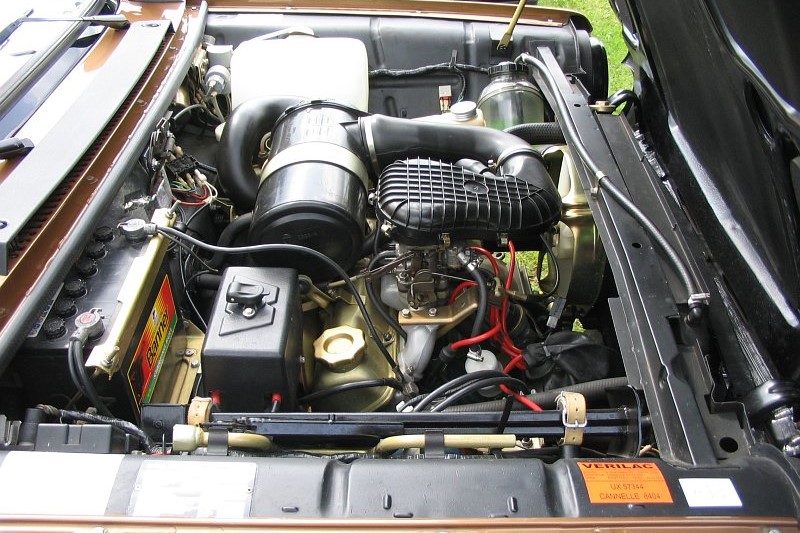
Like today’s crossovers, the Rancho was based upon a popular supermini; in this case, the transverse-engined and in several ways rather brilliant Simca 1100; the pick-up version to be exact. The wheelbase remained unaltered but the chassis was extended behind the rear axle, facilitating the Rancho’s beefy-looking bodywork which was hewn from fibreglass and polyester.
The results were visually fantastic. The Rancho looked ready to cross the Darién Gap but it was lumbered with the unsavoury truth that its off-road credentials were only skin-deep. It was still front-wheel drive only and power came courtesy of the ‘60s “Poissy” engine in rather an asthmatic state of tune. It made a mere eighty brake horsepower. Hold on to your hats…
The unbelievably excitingly named ‘Grand Raid’ edition claimed greater capability with its limited-slip differential and electric winch and underbody protection. It looked the part with a roof-mounted spare wheel and matte green paint but failed to tempt farmers out of their Land Rovers, Jeeps and Toyotas. There had been plans to develop a 4×4 system and fit a larger, fuel-injected engine but sadly these ambitions were never realised. Later models gained electronic ignition and slightly lower gearing, but the Rancho never became the off-roader that its aesthetics teased. If it had, this would perhaps be a very different story.
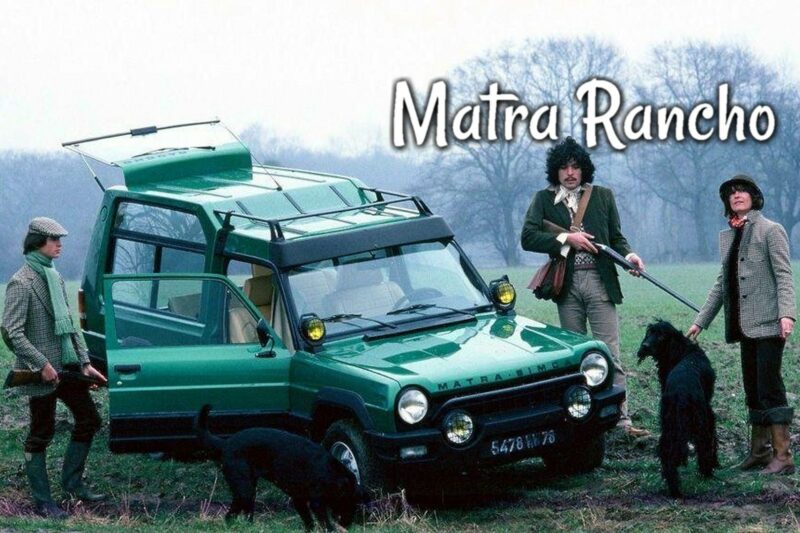
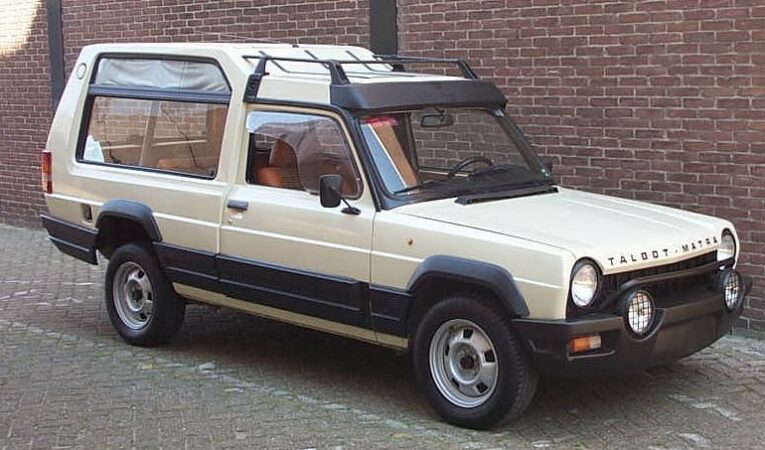
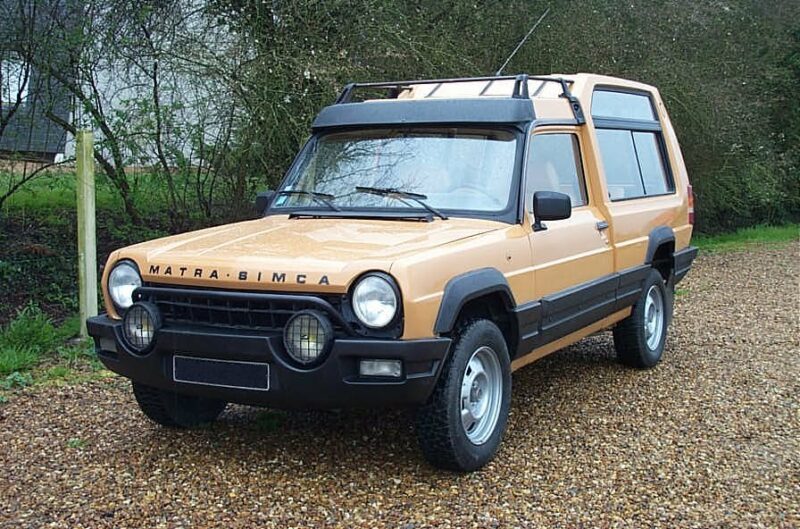
So it was never going to sell on its merits as an mud plugger. That meant targeting (i.e. hoodwinking) those with a love of the outdoors. Seems familiar… They tried to sell the Rancho to tweed-clad shooting parties prompting hilarious publicity photographs depicting what looked like an early incarnation of Pink Floyd fumbling antique firearms. Amazingly, it worked, in spite of the fact its makers kept renaming it. Initially launched in Europe as the ‘Matra-Simca Rancho’, it was later rebranded as the ‘Talbot-Matra Rancho’, reflecting the complex interplay of business partners Simca, Matra, Chrysler Europe and later, Peugeot-Talbot. Sounds confusing (and it was).

Sales were double the number projected, amounting to around 57,000 in all and making the Rancho Matra’s most profitable car. Around 6,000 made their way to the UK in right-hand drive which wasn’t too shabby given the hefty purchase price similar to that of a Citroën CX Familiale or Volvo 245 – both of which objectively offered far more bang for your buck. The Rancho sold especially well in its native France where small vans like the Renault Kangoo and Citroën Berlingo Multispace are still found on most driveways in rural areas. You could order the Rancho ‘X’ with such luxuries as alloy wheels and metallic paint, but French buyers favoured the comparatively lowly ‘AS’ which swerved the hefty passenger car tax by omitting a rear seat. By far the best seller though seemed to be the Corgi toy (with opening tailgate). Everyone seemed to have one and I’m admiring a rather fine example sitting on my desk next to me as I write these words.
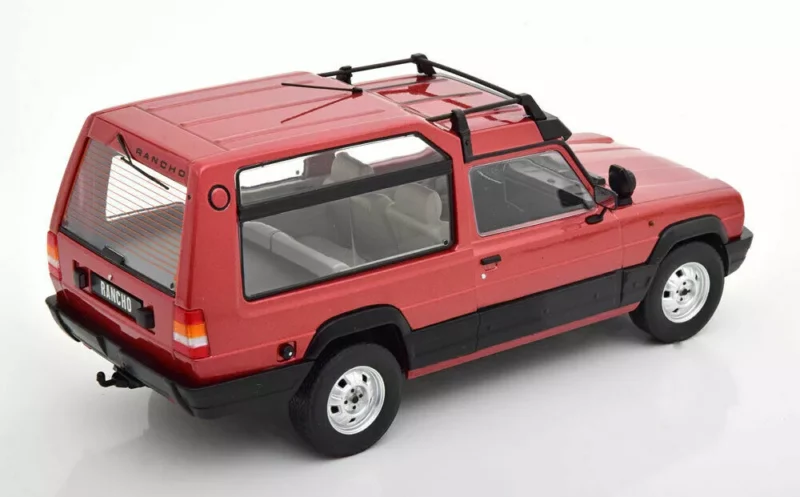
We’ve established that the chassis and drivetrain were nothing to write home about, but you have to concede that the Rancho’s strange bodywork was a stroke of genius. Here’s where it differs from the disappointing cramped cabins of modern crossovers. The Rancho’s notably stepped roofline set the rear seats ten centimetres higher than those in the front allowing an excellent view of the road and flanked by huge side windows providing a commendably airy cabin. The popemobile-esque silhouette was cleverly disguised by a set of forward roof bars, something you’ll never get Land Rover to admit it borrowed heavily from the ridiculed Rancho when devising the enormously successful Discovery 1. Perhaps the Rancho’s most novel feature was the two swivelling spot lamps that perched erect at the base of the windscreen. And yes, we know what you’re thinking, “how can those possibly be road-legal?” Answer: They weren’t. So the factory wired them up not to work when the ignition is on. How very Matra…
So, should we love or loathe the long-forgotten Rancho?
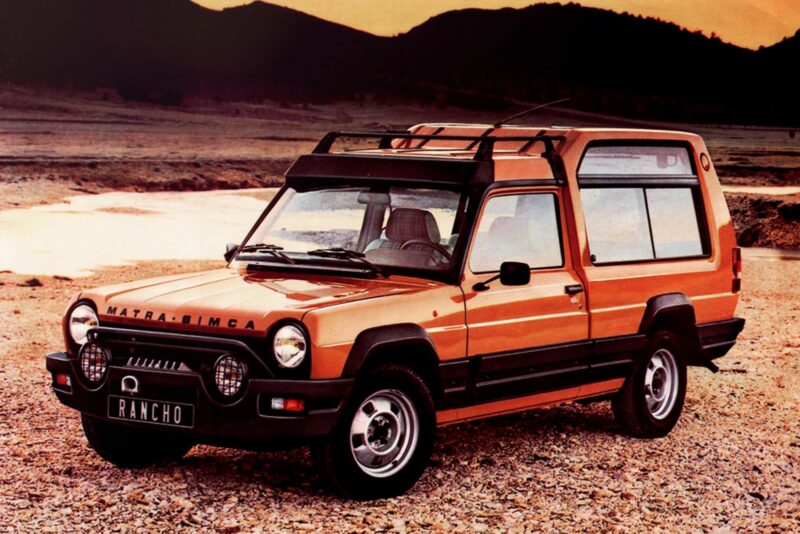
It’s curious how it managed to be so successful in its day while failing to spawn a successor or throw down the gauntlet to any rival manufacturers.
Promising an aspirational lifestyle it was gravely ill-suited to deliver, the Matra Rancho is surely the genesis of the crossover. Its resemblance to 21st-century softroaders and the tactics used to sell them is uncanny. And yet, it doesn’t seem fair to blame the Rancho for the crossover crisis we find ourselves in today. The Rancho was ambitious in a way its modern counterparts aren’t. You get the impression that the team behind it were onto something and with a bit more funding and a proper four-wheel-drive system, who can say what the Rancho would have become?