Herbie – The Car’s the Star

March 31, 2025
Herbie the Volvo anyone? Were it not for human nature and a very observant film producer, the world might be awash with a very different sort of Swedish-based Love Bug…
The idea of a car with a life of its own won’t be new to any classic car enthusiast. We’re thinking about our cherished motors that work one day, refuse to start the next or develop mysterious faults that equally mysteriously disappear whenever a mechanic approaches, all of which may explain why we have a soft spot for Herbie, The Love Bug. Not, of course, the run of five films between 1968 and 2005 that were universally awful, unfunny and hopelessly acted. No, we’re all about the car itself, the lovable, exceptionally naughty, ridin’-to-the-rescue ‘63 Beetle with the Porsche engine and the ‘53’ racing decals. When people are asked to name their favourite movie car – no, we don’t know why they do that either – time after time Herbie, the lovable bug, tops the list.
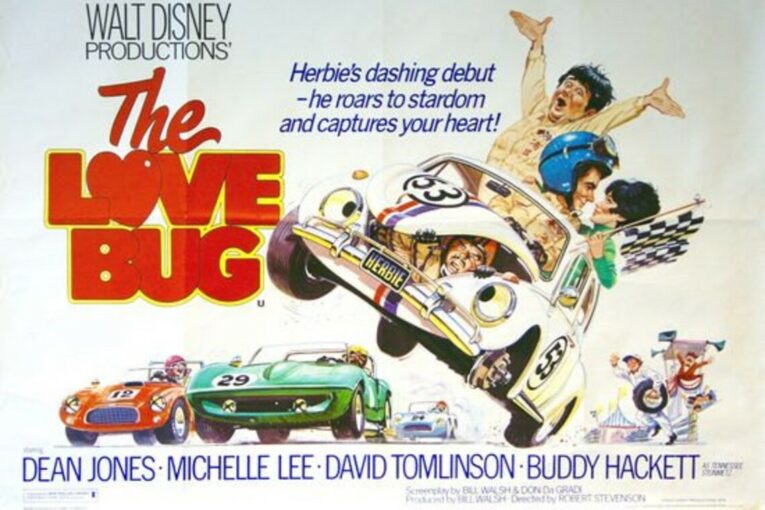
The Herbie story begins with a book with a somewhat less creative name – Boy-Girl-Car by Gordon Burford – to which Disney acquired the rights in the mid-’60s. The idea of a sentient car was central to the premise but what apparently wasn’t initially obvious was what seems to be the most obvious choice of all – what car to use.
To select said steed, producer Bill Walsh lined up several models in the car park outside his office in the Disney film lot. They included a Volvo, a TVR and a Toyota. Then he sat back, almost certainly behind a very big desk and munching on a stogy, and, no doubt looking out over big square-framed glasses, waited to see what happened. When people walked past the Beetle, it seemed they couldn’t resist patting it. Walsh realised that the Bug had the personality required and the rest then, is history – although we really can’t help wishing it had been Herbie the Volvo.
With the car selected, Walsh needed a back story to explain why a German car now had a mind of its own. If you haven’t seen any of the films – and we don’t recommend starting now – then here’s a taster of what to expect.

During World War II a German engineer – naturally, he had the uber-Germanic name of Dr Stumpfel – was making Beetles. And, this being a Disney film rather than anything closely approximating the realities of wartime Beetle production, he dropped a picture of his late wife into a vat of molten metal. This, of course, was being ‘cooked’ – because, after all, that’s how we make metal and cars – to create Herbie’s chassis. And, just like that – all of this is making us feel a bit Tommy Cooper – dear old Dr Stumpfel inadvertently infused the car with the love he had for his late wife and Herbie was born. Quite why Herbie, i.e. Mrs Dr Stumpfel, was quite so flighty, naughty and generally keen to upset the applecart of life, is never quite explained but was presumably familiar to Dr Stumpfel. His thoughts, sadly, do not form part of the Disney narrative arc and are perhaps better off that way.
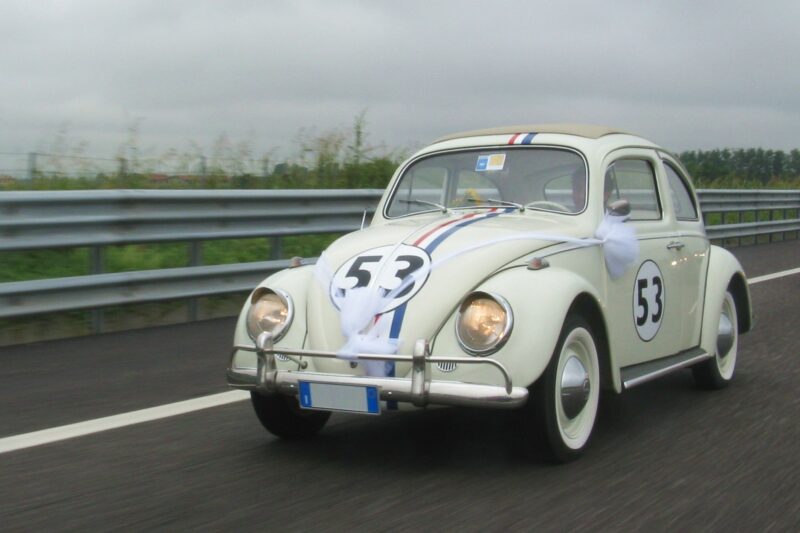
The Herbie name was inspired, albeit from an odd source. It comes from the punchline to a joke in movie star Buddy Hackett’s Las Vegas act, about a Swiss ski instructor. It involves some questionable xenophobia so we’ll resist retelling it here. Also it wasn’t funny at all. Today the name has a neat, androgynous charm that might not quite fit the car’s original story but lends Herbie appeal across the gender divide.
The Love Bug part of Herbie’s name took a little longer. Options considered ranged from the highly questionable to the quite silly. We wonder how a German car called Beetlebomb would have played to worldwide audiences 20 years after WWII. WonderBeetle, Bugboom, Thunderbug, Runaway Wagon and Magic Volksy were all contenders. This at least goes to prove that creativity can be a hit-and-miss affair, even amongst big-shot movie makers.
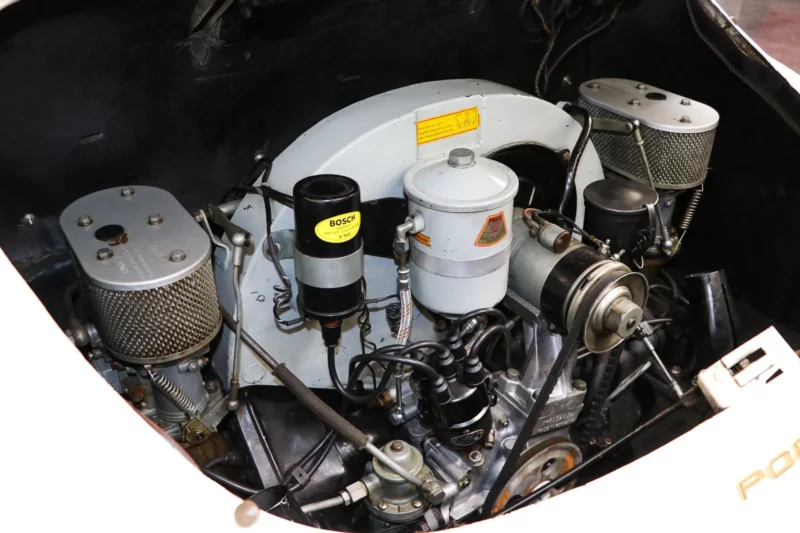
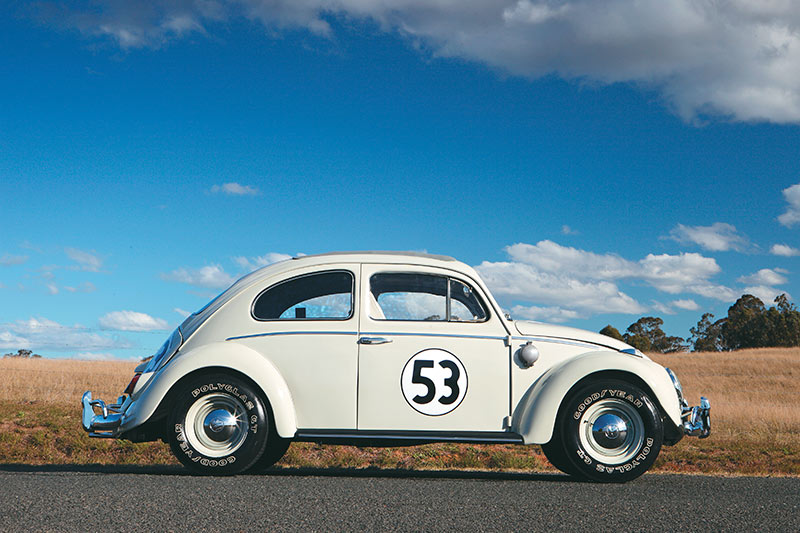
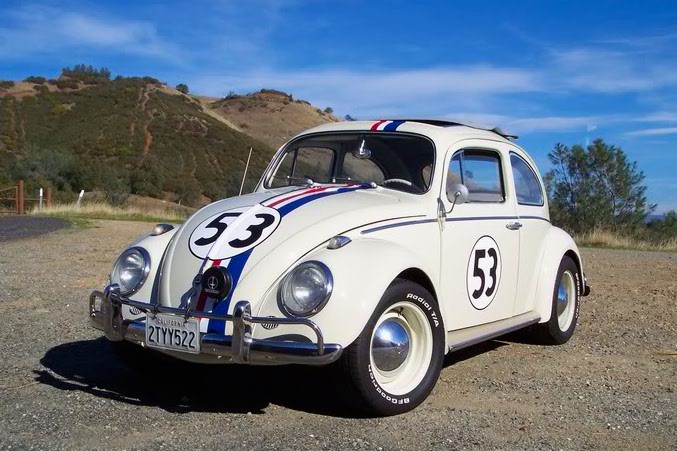
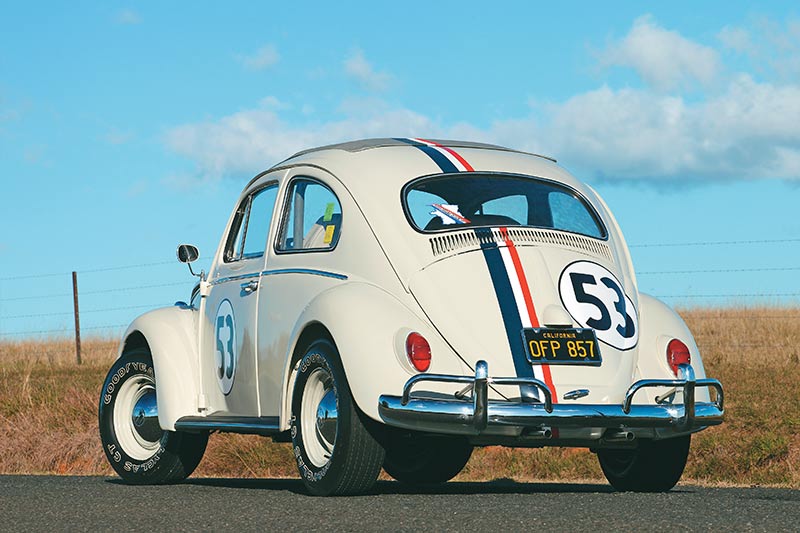
Disney based the car on a 1963 sunroof-model 1200 Beetle, but with certain key differences. Specifically a 90bhp, 1600cc twin carburettor Porsche engine from the 356 Super 90 – tuned by EMPI – that was good for 115mph. There were Koni shocks and racing tyres too. 50 cars were used throughout the films, of which few survive.
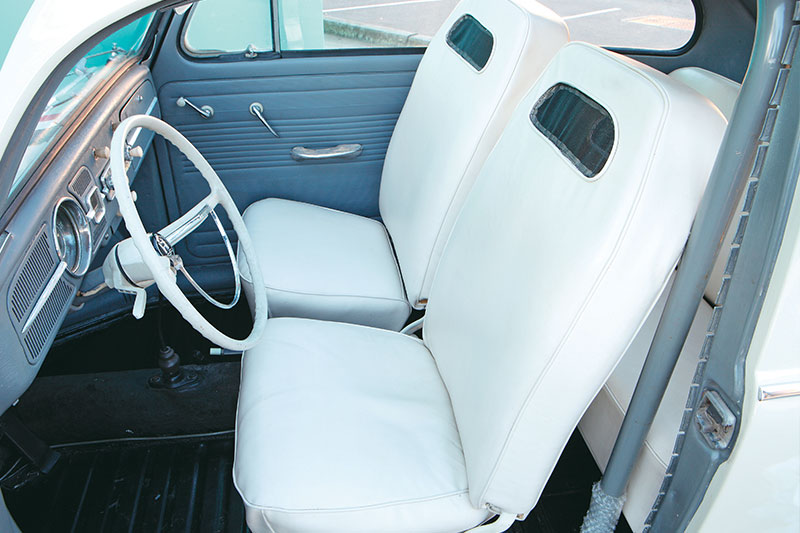
The car was finished in L87 Pearl White with a bespoke non-reflective, camera-friendly grey interior. The ‘53’ decals were chosen by Walsh as a tribute to his favourite Los Angeles Dodgers pitcher, Don Drysdale and director Peter Stevenson contributed the OFP857 licence plate – it stands for ‘Our First Production 8-57’, the month and year he joined Disney.
Flush from the success of effervescent comedies like Mary Poppins in ‘64, everyone was excited about the concept. Except, that is, Volkswagen, which refused to sanction the use of its logo in the first film. If you’re prepared to put yourself through the visual purgatory of watching The Love Bug – it really is terrible – you’ll notice that Herbie’s VW badges have been removed. For the subsequent films, VW saw the error of its ways, and indeed the marketing potential, and got behind the films.
There were five films, four of them in the ’60s and ’70s and then a reboot in 2005 that achieved the almost impossible goal of being even worse than the originals. Thankfully, the sheer awfulness of the plots, dialogue, acting and lighting has never detracted from the affection we all seem to feel for the lovable Beetle Bug. The car’s irrepressible effervescence perhaps explains its appeal, conveying an infectious enthusiasm for life that we all want to tap into. And there’s something of that in the execrable films too – for all their terribleness, they have an innocence and enthusiasm that feels very ‘un-American’ right now.
All of which may explain the huge number of Herbie replicas available, including official models built by Volkswagen. It no doubt helps that Herbie looks so good, and the mix of wider stance and racing decals delivered something other than the flower-power or ratrod style of many a classic Beetle.
My own connection with Herbie is a bit more complex. Non-Herbie’d Beetles were our family wagons in my childhood, which took me to the films. In the late ’90s I was driving a white Beetle when I was arrested in Mexico, ostensibly, as it turned out, mainly for driving a Beetle. No Herbies or indeed herbs were involved, for the record. Despite the incarceration-adjacent life experience, Herbie to me is freedom. It’s nostalgia too. And, comfortingly, it’s confirmation that my nagging sense that my recalcitrant, frustrating, challenging, temperamental classic cars really are sentient could actually be, finally, entirely correct…