The Homologators – Fiat 131 Abarth

August 21, 2025
Before the four-wheel drive Audi Quattro came along and spoiled everybody’s fun, the World Rally Championship was dominated by Italian constructors from 1974 through to 1980.
With Gianni Agnelli at the helm, Fiat seemed an unstoppable force. The auto giant was assuming control of vast swathes of Italy’s carmaking industry during the late ’60s, absorbing both Ferrari and Lancia into its operations in 1969. The acquisition of these two great sporting marques strengthened Fiat’s motorsport arm significantly, ensuring the next decade would be among the most illustrious in its long competition history.
The first Fiat-badged car to achieve notoriety on the rally stage was the 124 Spider. It challenged the front-wheel drive Lancia Fulvia and ultimately won the Italian National Rally Championship in 1970. From then on, privateers desperately wanted factory-prepared Spiders. Spurred on by this burgeoning demand, Fiat acquired celebrated tuning specialist Abarth, and with its support, developed its own 124-based Group 4 car. The works entries went on to win a string of victories during the 1972 season, including the European Rally Championship, which they won again in 1975.
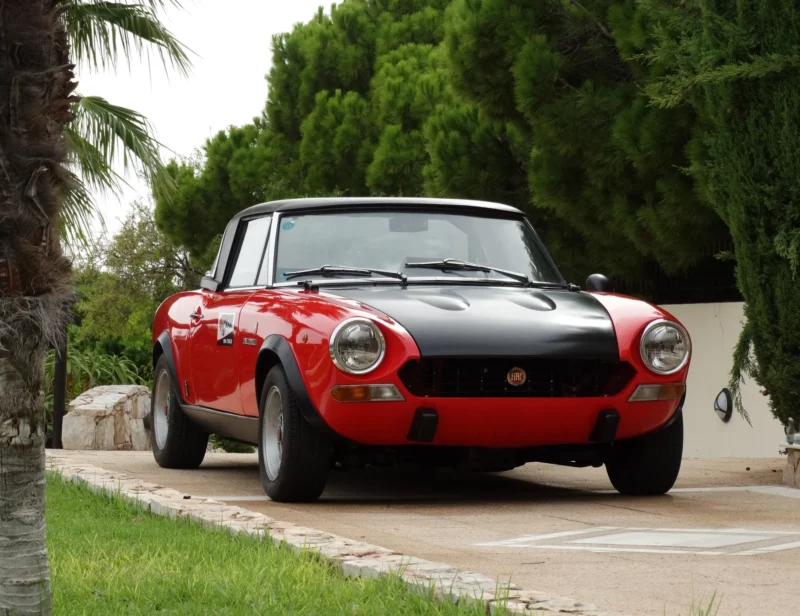
By 1976, Fiat’s motorsport division decided to replace its ageing 124 Spider, and the car they chose was the 131.
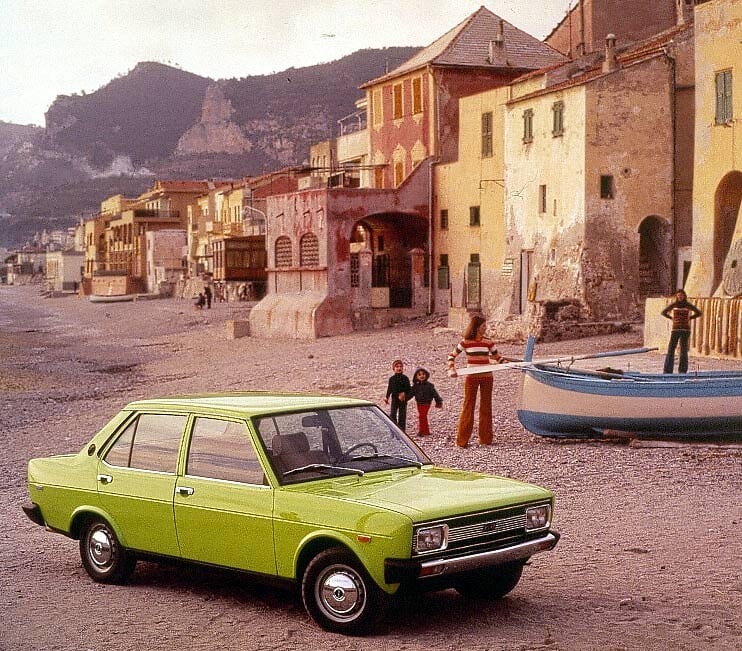
On paper, the Fiat 131 looks like a terrible basis for a rally car. A mid-sized three-box saloon marketed to hardworking Italian families, it was perfectly adequate for the road, but was hardly what you’d call ‘sporty’. Launched with a series of fairly lacklustre four-cylinder engines which ranged between 54 and 74 horsepower, the 131 wasn’t remotely fast. There was no five-speed manual option, it had a live rear axle, and you only got drum brakes at the rear.
So why did Fiat choose this most unlikely of cars to be its next star of the rally stage? The answer lies not in the 131’s perceived hidden potential, but simply because Fiat wanted to sell more of them.
The mid-’70s were not a good time to be in the automotive business. The Oil Crisis of ‘73 was pricing people out of car ownership altogether, and those who could afford one usually wanted something small and cheap to run. Subscribing to the old adage that those who “win on Sunday, sell on Monday”, the Fiat 131 was duly transformed into a rally car in a joint effort by the Bertone Style Centre and in-house tuning specialists Abarth.
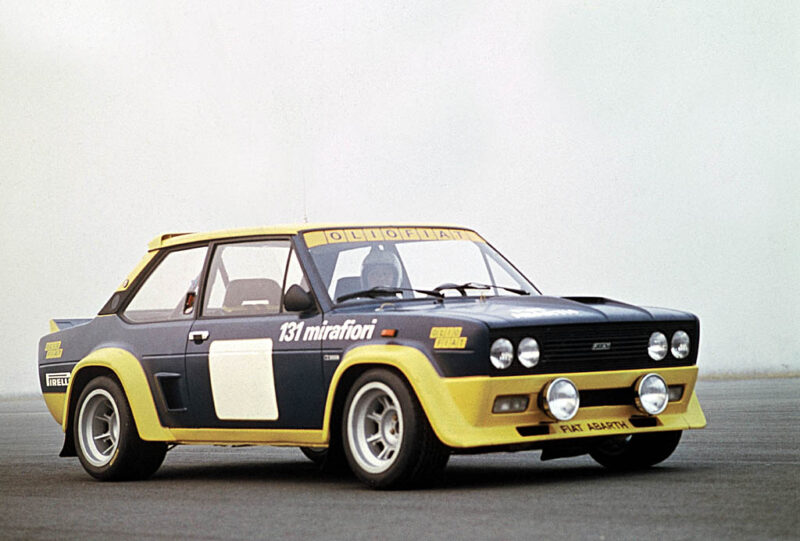
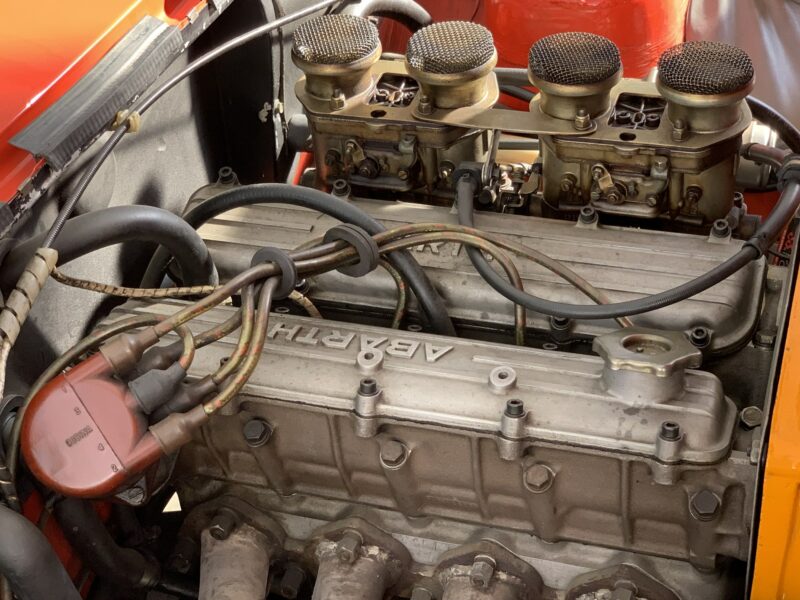
Modelled on the two-door Mirafiori, the bodywork was lightened by remanufacturing its various panels in aluminium, fibreglass and resin. Blistered arches made way for the extra-wide track, while other changes were made to the car’s lines to optimise airflow and increase downforce. Abarth took the tried and tested Lampredi twin-cam, lightened and balanced the bottom end, and fitted a sixteen-valve alloy cylinder head with fuel injection. It started out with a healthy 225 horsepower, which was later increased to 245. All that power was transmitted to the rear wheels via a five-speed manual gearbox and ZF self-locking differential.
FIA Group 4 rules specified that four hundred ‘Homologation Specials’ would need to be built; cars that Joe Public could go out and buy. Thus, the Fiat 131 Abarth Stradale was born.
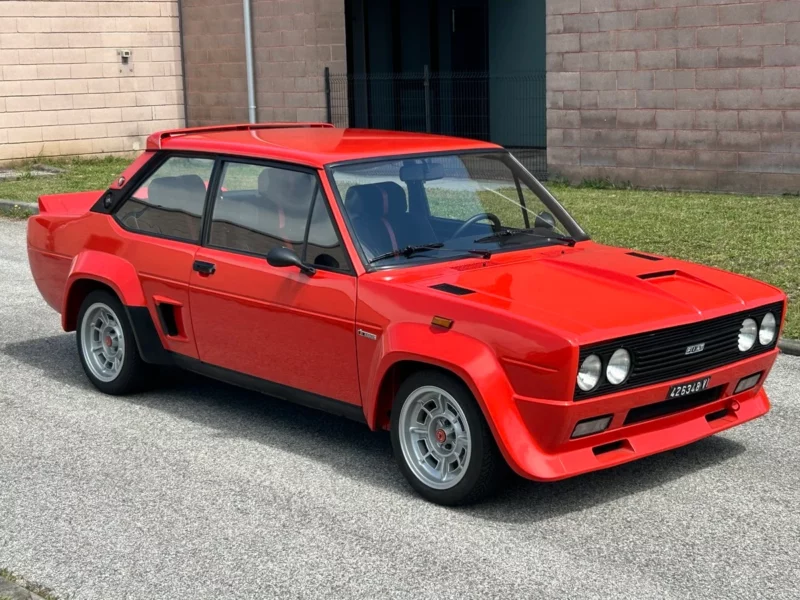
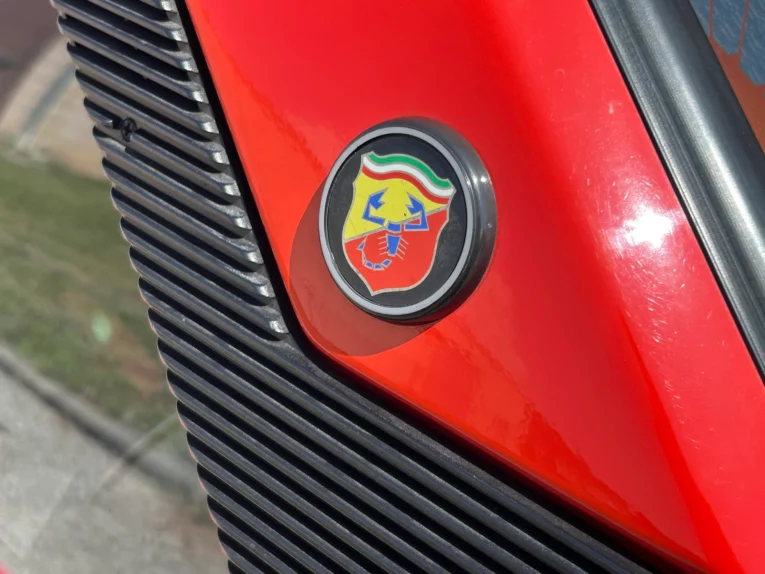
While watered down lightly with only 140 horsepower, and lacking a few of the Corsa’s features like the ZF self-locking diff and Kugelfischer mechanical injection, the Stradale was still, in essence, a road-going version of the works rally car. With the required four hundred (and some say a handful more) Stradales put into production between 1976 and 1978, the 131 Abarth Corsa was ready to have its mettle tested in the World Rally Championship.
Much to the surprise of Fiat’s competitors, the Corsa wasted no time in asserting its dominance. Sent into battle with Ford’s RS1800s, the Fiat 131 Abarths won the 1977 Rallye de Portugal, the South Pacific Rally, the Critérium du Québec, the Rallye Sanremo and Tour de Corse. This was enough to secure an overall win in the Constructors’ Title, while Lancia (also of the Fiat family), produced the winner of the inaugural Driver’s Cup – Sandro Munari at the wheel of a Stratos.
Fiat would go on to repeat this feat in 1978, except this time they won seven events instead of the five the previous year. Ford clinched the title in 1979, but a repeat of the 131’s 1977 performance ensured Fiat’s 1980 Constructors’ Title was in the bag.
The advent of Group B in 1982 ushered in the fire-breathing monsters that would dominate the sport for the next four years. While Lancia’s rear-wheel drive 037 kept the Quattro at bay one final time in 1983, it was clear thereafter that rally had well and truly entered the four-wheel era. Therefore, the Fiat 131 Abarth will be remembered as not only the final Fiat to win the World Rally Championship, but also among the last rear-wheel drive cars to make their mark on the rally stage.
So what of the four hundred or so Fiat 131 Stradale Homologation Specials?
Well, one of them is for sale, and it’s up for auction right here on Car & Classic.
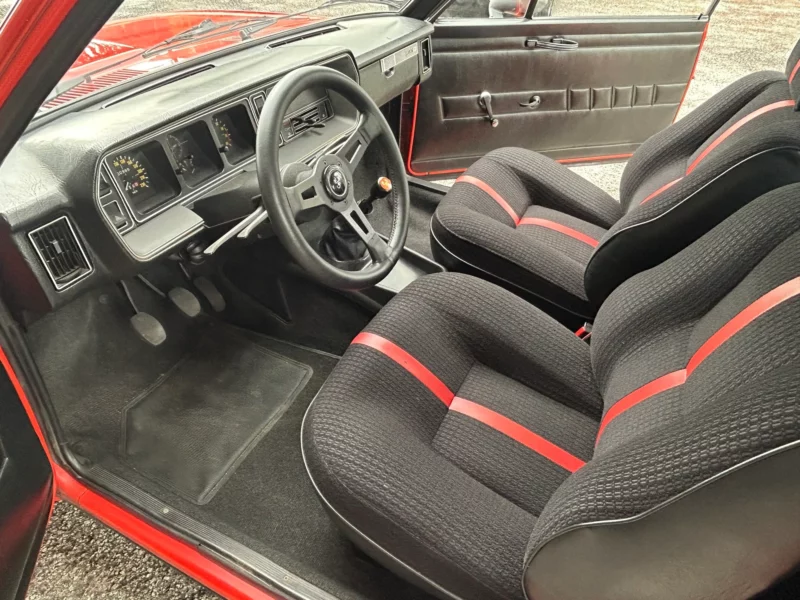
The seller of this very special 131 really knows their stuff, to the extent that they were telling us what colour the original wiper motor is supposed to be. (Black, by the way)… They also understand this 131 to be among the most original, well-preserved examples of the Abarth Stradale still in existence, and when you see the car for yourself, you’ll appreciate where they’re coming from.
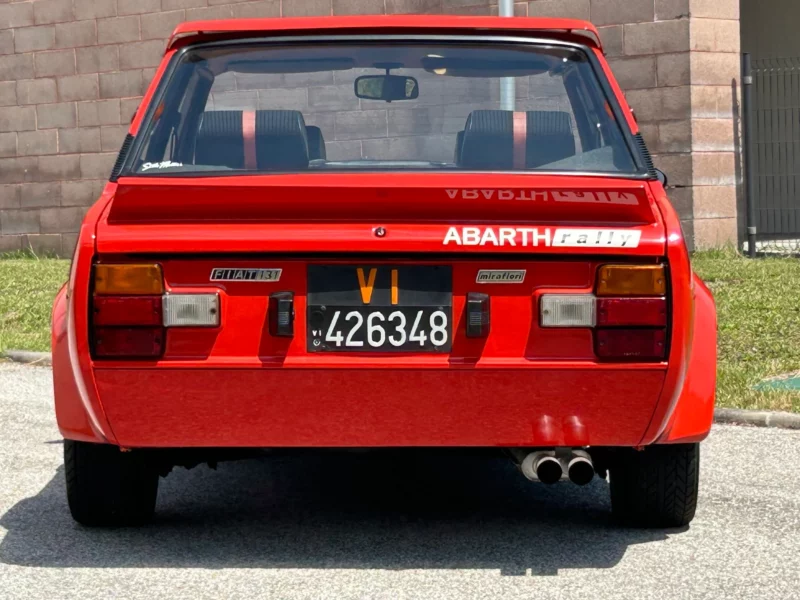
Unsurprisingly, many of these coveted Homologation Specials were pressed straight into motorsports duties, whereas this one has been spared the fate of any high-speed altercations with trees or lampposts, remaining a cherished and seldom-driven road car all its life. Delightful period details such as the correct steering wheel, gear knob, badges, glass and even the wiper arms are all present and correct, while unobtainable original materials like the seat fabric have survived in remarkably good condition.
For more details, you can read the full listing here. The auction starts on the 4th of September. Good luck!