UK Road Trip – In Search of Great Roads in the Welsh Borders

September 1, 2025
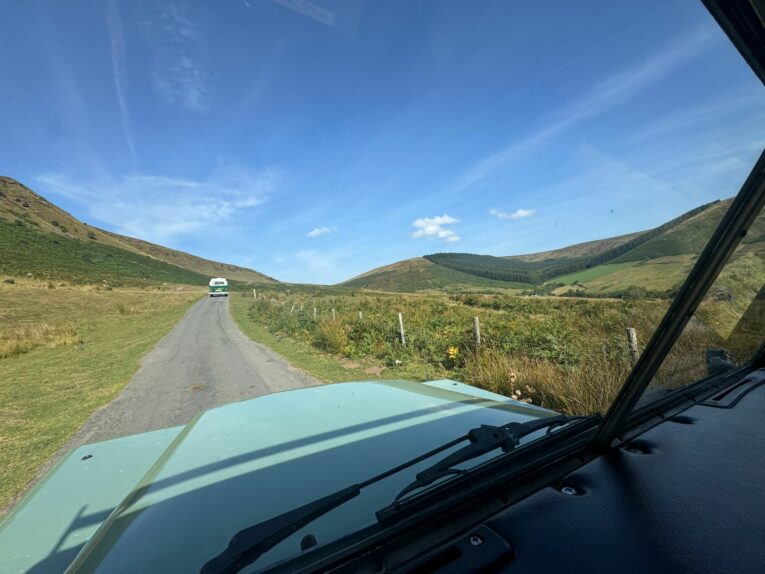
I’ll be the first to admit that I’m not the biggest fan of Britain’s roads. You’ll often catch me grumbling about traffic, salt spreading, twenty-mile-per-hour speed limits and cavernous potholes. But, with my failed attempt to drive my Alfa Romeo to France back in July, I decided that my next road trip would be a trifle less ambitious. By that I mean, a good deal closer to home. When my cousin Will invited me on a camping holiday with a group of friends in the Welsh Borders, we both agreed to load up our two slowest vehicles and make it a classic car road trip.
The vehicles in question? Will enjoys an air-cooled Volkswagen, and nothing on four wheels suits a classic camping excursion quite so readily as a Type 2. His is a 1973 ‘Bay Window’ Microbus with a period Devon interior. I do not own a camper van, classic or otherwise. However, my trusty Land Rover Series III seemed like the perfect companion for an expedition into the Welsh wilderness.
With hardly a hundred horsepower between us, Will and I weren’t likely to be held up by the August Bank Holiday traffic. On the contrary, we were probably the cause of it as we trundled westward down the M50. Despite their rectilinear silhouette, Type 2s are surprisingly aerodynamic, and geared for Germany’s Autobahns. In contrast, my Series III is built to go just about anywhere – albeit rather slowly.
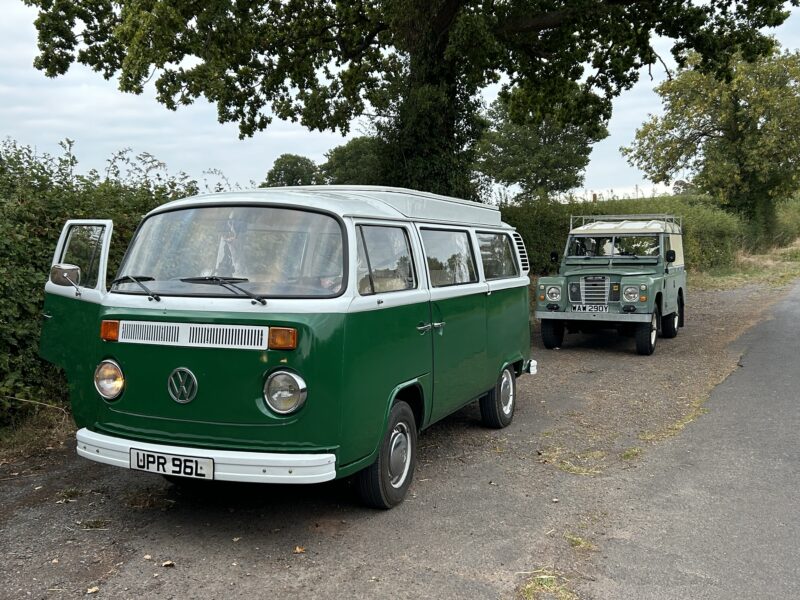
Winding up the old Landy to its optimum cruising speed of forty-seven miles per hour, I kept an eye trained on my often overzealous temperature gauge as I began my steady voyage down the slow lane. Will did his best to wait for me in the VW, slowing to thirty-five miles per hour at one point (so he tells me), but thirty or so cacophonous minutes later, we crossed the border into Monmouthshire.
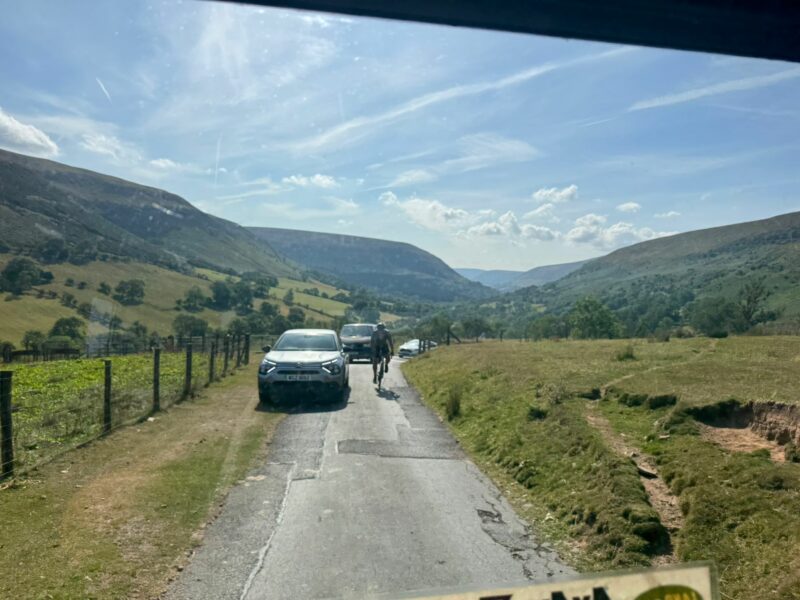
On the winding B roads, the Land Rover felt much more at home, now able to keep pace with the Type 2 and proving the quicker of the pair uphill. Soon, B roads dwindled to single-track lanes, lined with ferns, bracken and stone walls. The Series III was in its element. The elevated driving position provided an excellent view over the tall hedgerows, while the low gearing and torquey two and a quarter litre engine was well-matched to the constant changes in elevation, requiring minimal use of the brakes and clutch.
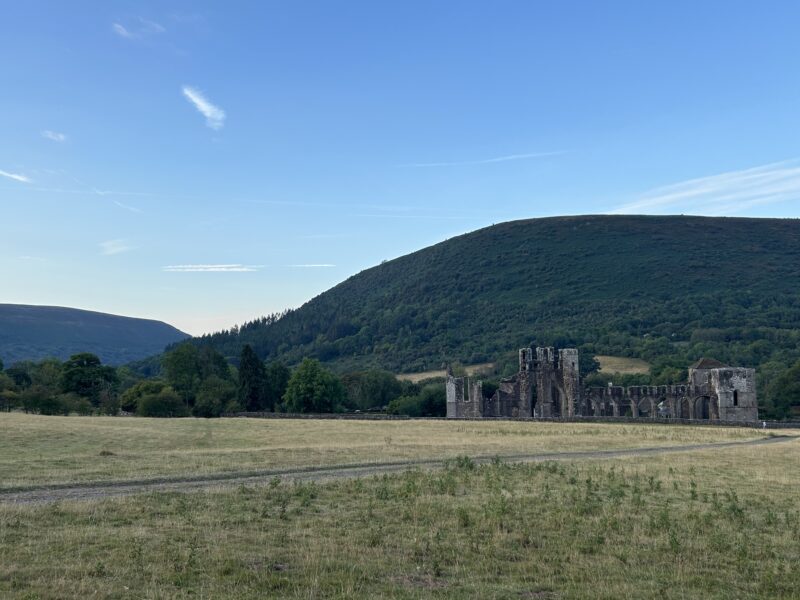
The last ten or so miles were properly remote, devoid of main roads and without a hint of mobile phone signal,. This did leave me wondering how I was going to call the breakdown wagon… Still, the two old commercials soldiered on through the borderlands as the sun dipped behind the mountains. My dim glow of my Lucas lights did their best to illuminate the final few miles towards our destination: the remains of Llanthony Priory – a victim of the Tudor Dissolution.
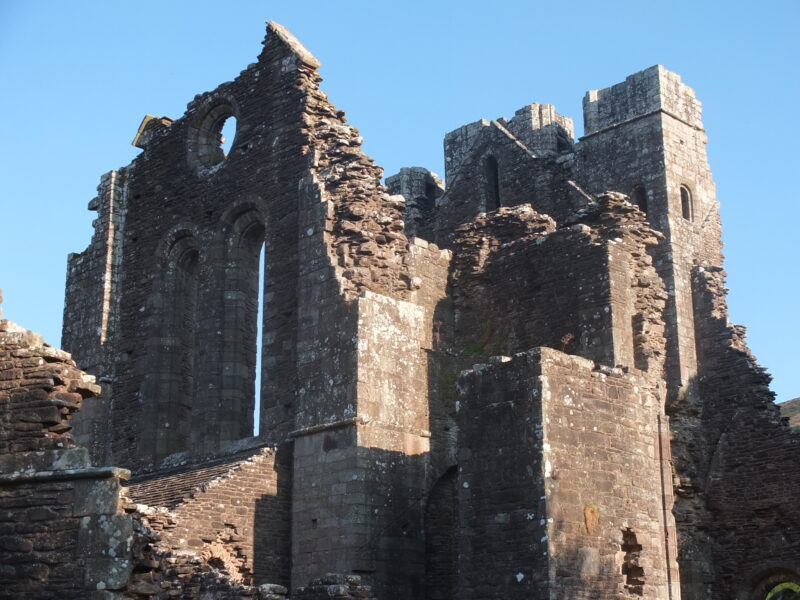
“I think that went rather well” I announced, alighting from the Land Rover upon arrival at the campsite. It was at this point I remembered that there was no reservation at some cosy country inn waiting for me. Visions of a welcoming fire glowing in the grate and a pint of robust ale atop some well-weathered bar vanished in an instant as I came face to face with the harsh reality of a night under canvas. Channeling my inner Ray Mears, I nobly oversaw the erection of my tent, a task carried out rather deftly I thought by my fellow campers, who clearly did this sort of thing for fun. I went to bed that night dreaming of overland adventure, for the next day we would be traversing the Gospel Pass through the Black Mountains en route to Hay-on-Wye.
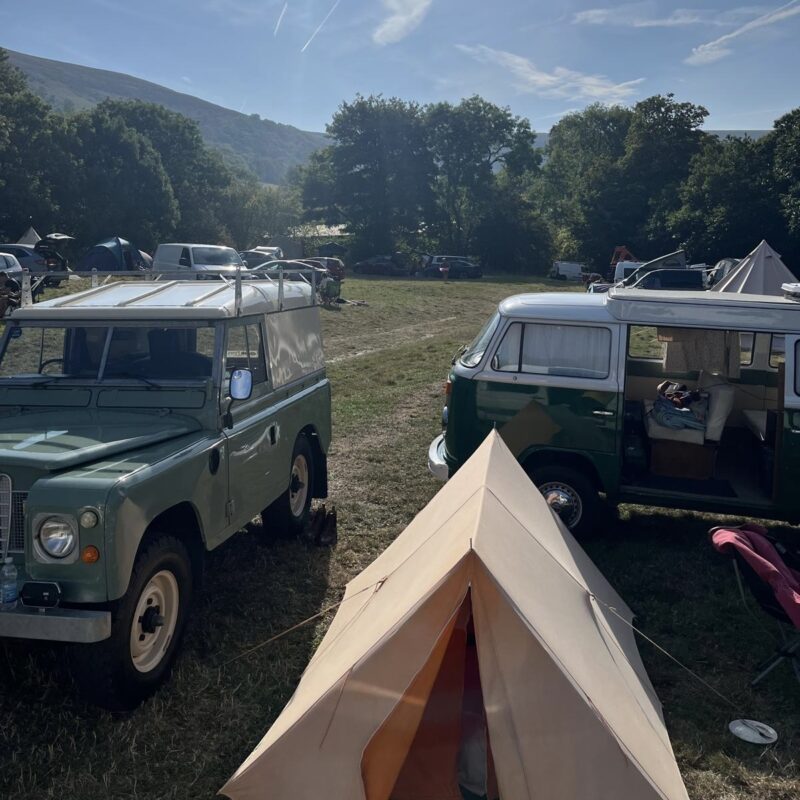
Awoken somewhat prematurely by the farmyard’s ruthlessly efficient cockerel, I set about checking the Land Rover’s fluid levels in readiness for the next stage of our adventure. All seemed in good order, so with the whole party of campers loaded into the two classics, we set forth into the unknown. The first part of the drive was a repeat of the night before, but in time, meandering lanes gave way to huge vistas as we found ourselves on Wales’ highest paved mountain pass. Here, the Series III was working well, ascending steep inclines with impunity and descending them equally deftly using its immense engine braking. Will’s well-loaded Volkswagen was a little more taxed, especially the brakes, which overheated on one particularly acute down-hill stretch. Nevertheless, we made it to Hay in one piece having thoroughly enjoyed the journey and the decidedly un-Welsh sunshine.
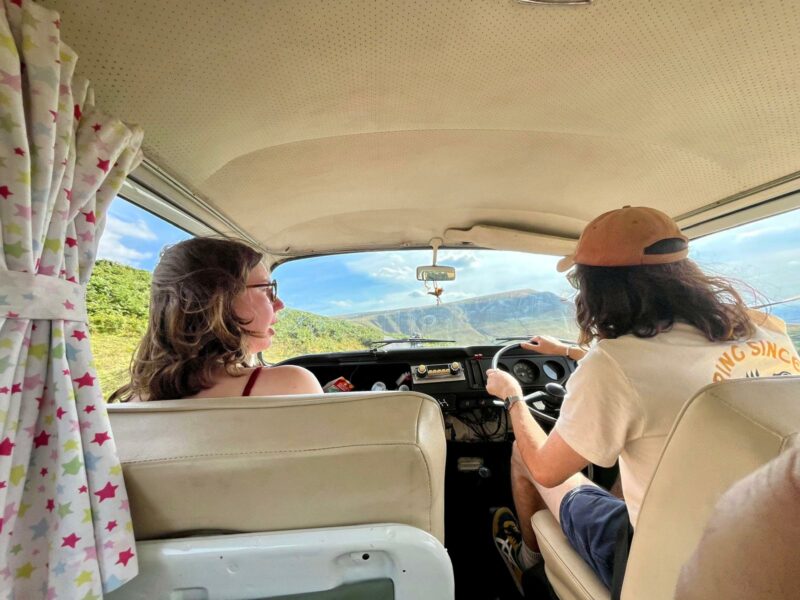
The Gospel pass is hardly a match for Bolivia’s ‘Death Road’, nevertheless it does provide a challenge for drivers of older vehicles. Many flock to Wales for its fast mountain passes, yet this is not the road on which to stretch the legs of your GT3. It’s probably best enjoyed on an enduro motorcycle, as they’re what you tend to see up there. If you are taking a car, ideally it needs to be something a little more on the rugged side, or at least something you’re not too precious about. The road surface is generally OK – at least as ‘good’ as anywhere else in Britain these days. You will have occasion to reverse to make way for oncoming traffic, and you will catch the occasional bramble and stone chip. At under eight miles long, it’s not exactly epic in duration either, but we did get to enjoy it a second time on our way back to camp.
Two nights of tenting should be enough for anyone, and pining for civilisation, not to mention a good bath, the next day I left the wilds of Wales behind me and set off down the A40 for home.
Old cars like to be used, and I find my Land Rover gets better and better the more I drive it. After a couple of days working the old thing quite hard, the engine seemed to tick over all the more strongly with every mile that went by, while the gears seemed to slot in more readily as if thanking me for the exercise I had given them. The only component to fail was my left leg, cramping up quite severely as I tackled the Bank Holiday Monday Oxford traffic. Nearly home.
The day after my road trip, I was pleased to discover that not so much as a drop of oil or coolant appeared to have been used. Pretty good for an old Land Rover. I’d covered fewer than three hundred miles in all, and yet it felt as if returning from some momentous expedition. Proof then that classic cars (and camper vans) turn every journey into an adventure.
Next time you’re planning a road trip, I’d urge you to consider what Great Britain has to offer. I don’t take back what I said about traffic, potholes and the like, but we are blessed with some outstanding countryside here in the UK. It all comes down to choosing the right vehicle for the job. On paper, my old Land Rover is far from the ideal road trip car. It’s downright hard work to drive and not at all well-suited to long-distance cruising. But, faced with the rough single-track lanes that criss-cross this green and pleasant land, it’s the perfect tool for the job.