The Best 90s Cars

January 22, 2026
For many, the best cars of the 90s are also the best cars of all time. This was the era of glow sticks, grumpy Mancunians versus floppy-haired Londoners, grey politicians tanking the economy, of lovin it, lovin it and also lovin it, of E’s, of whizz, of lad mags and Cool Britannia.
When it comes to cars, though, the 90s was the decade when cars, virtually all of them, became good. No more obviously quirky, flawed, useless or plain bad cars, instead we had good, very good and not very good motors. 90s cars got reliable and well-engineered. This was the era when technology supported rather than swamped driver engagement. Picking our favourites from this decade has been tough, but here they are.
Best 90s Coupés
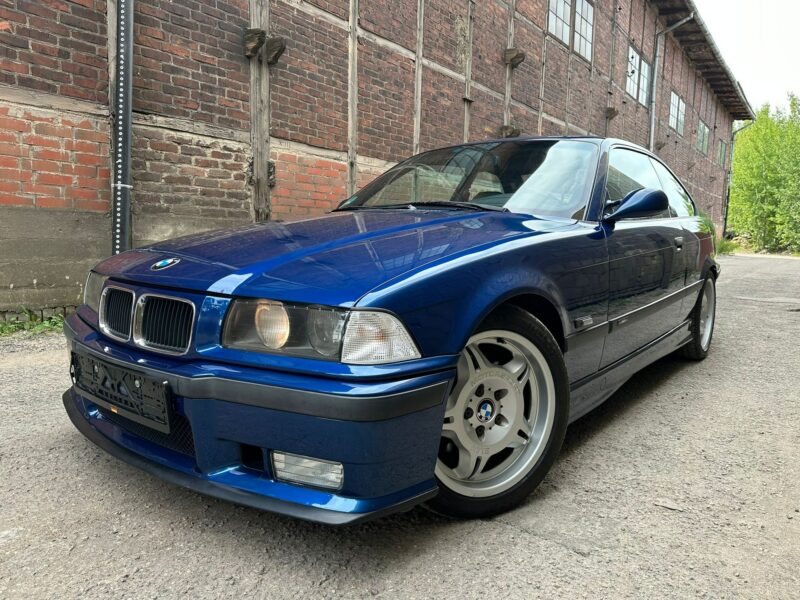
BMW E36 M3
- Average Price Range: £12,000-33,000
- Production Run: 1992-1999
- Number Built: 71,242
- Horsepower: 282-317bhp
- Top Speed/0-60mph: 155mph/5.3-5.6 secs
The E30 created the concept but the E36 took it mainstream, in the process redefining what a high performance coupe could and should do. Claus Luthe’s styling meant it looked brilliant, the BMW dynamics provided the agility and the VANOS-equipped 3L S50 straight six delivered the punch. The E36 was a strong argument for never needing to waste money on a supercar.
BMW’s competitors tried, and largely failed, to replicate the E36 M3 magic, which only goes to prove just how difficult a trick it is to pull off and how good the car is. For modern buyers, the car’s Achilles Heel is rust. And many have been thrashed to within an inch of their lives. But find a good one, or sort an average one, and you get a truly superlative modern classic.
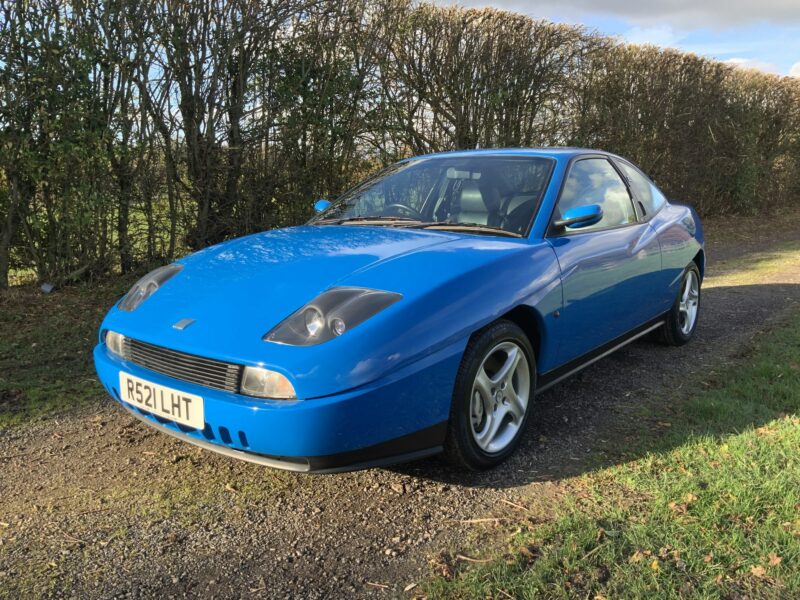
Fiat Coupe
- Average Price Range: £3,000-16,000
- Production Run: 1993-2000
- Number Built: 72,762
- Horsepower: 13-220bhp
- Top Speed/0-60mph: 127-155mph/60-9.5secs
The Coupe is a very Fiat sort of car, as its name indicates. Despite producing one of the best and warbliest two door cars of the 90s, Fiat clearly couldn’t be bothered to give it a name. The sense of a car that is not quite finished pervades the Coupe.
Not that it isn’t brilliant, in fact, the foibles are, as with most Italian cars, part of its appeal. Clothed in slashy and unmistakable Chris Bangle bodywork and with an interior centred around a lovely body-coloured dashboard, the Coupe is an arresting design and, depending on your view, amongst the prettiest cars of the 90s. Early cars got the Lampredi twin cam while later ones got the firm’s new 5-pot motor, which in turbocharged 220bhp form delivered a tyre-scrabbling, torque-steering motoring wunderkind. Other coupes drive better, but few have the looks and character of the Coupe.
Best 90s Sedans
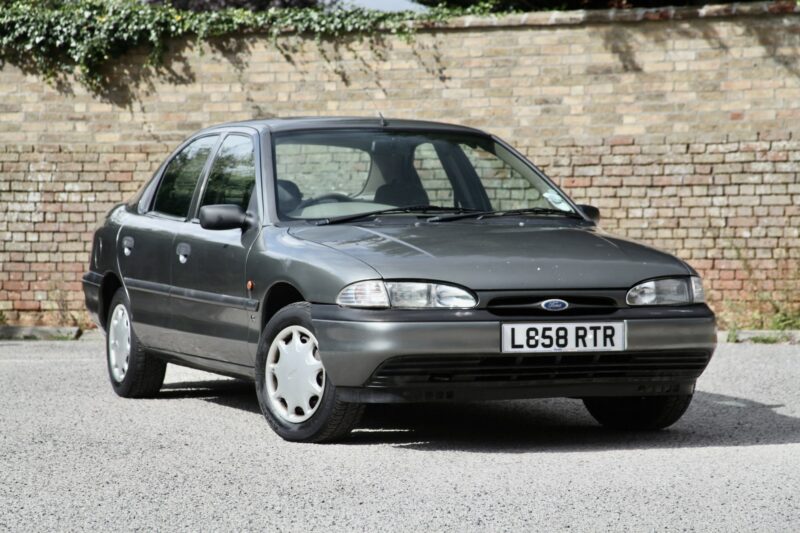
Ford Mondeo Mk1
- Average Price Range: £700-£3,000
- Production Run: 1992-1996
- Number Built: 5,000,000,000
- Horsepower: 88-170 bhp
- Top Speed/0-60mph: 122-1349mph/8.0-10.2secs
The Mondeo makes this list because of one man: Richard Parry-Jones. As executive engineer of its development, his insistence that the new ‘world car’ should offer class-leading dynamics transformed what would have been another bland, also-ran Ford saloon into something altogether more magical.
It was a masterstroke. The Mondeo was widely lauded as one of the best-handling front wheel drive cars of its generation. That helped it become the defining saloon of the 90s, so much so that Tony Blair coined the term ‘Mondeo Man’ to sum up a whole social group of aspirant suburbanites. Its success helped Ford stave off the fleet market onslaught from BMW, Audi and Mercedes. There was a Mondeo for everyone, from humble LX to gilded V6 Ghia X, although trying to find one now may prove remarkably difficult as so few survive.
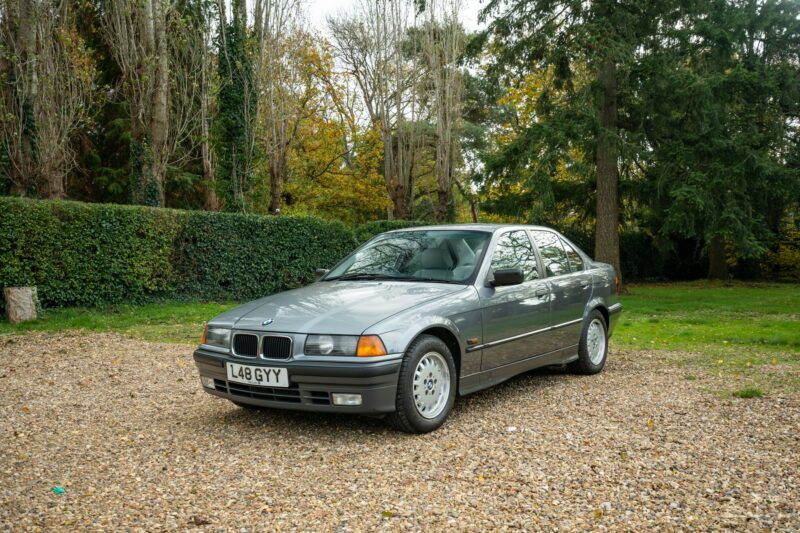
BMW E36
- Average Price Range: £1,500-20,000
- Production Run: 1990-2000
- Number Built: 2,700,000,000
- Horsepower: 90-321bhp
- Top Speed/0-60mph: 111-155mph/5.3-10.9secs
We make no apology for the E36 appearing twice on this list. No car defines the 90s quite like BMW’s third generation 3-Series. This was the era of brands and brand-based one-up-manship, and no car personifies that undignified rush for status quite like the E36.
Yet the E36 really makes this list because, beyond the desirable propellor badge, it was seriously good. Middle managers, previously fobbed off with stodgy Sierra Ghias and Cavalier CDs could now enjoy an engaging and agile rear-drive saloon, even if it was only a 316i with cloth seats and keep-fit windows. Debadged and optioned with alloys, that 316 looked pretty much like a six-cylinder 325.
Best 90s Hot Hatches
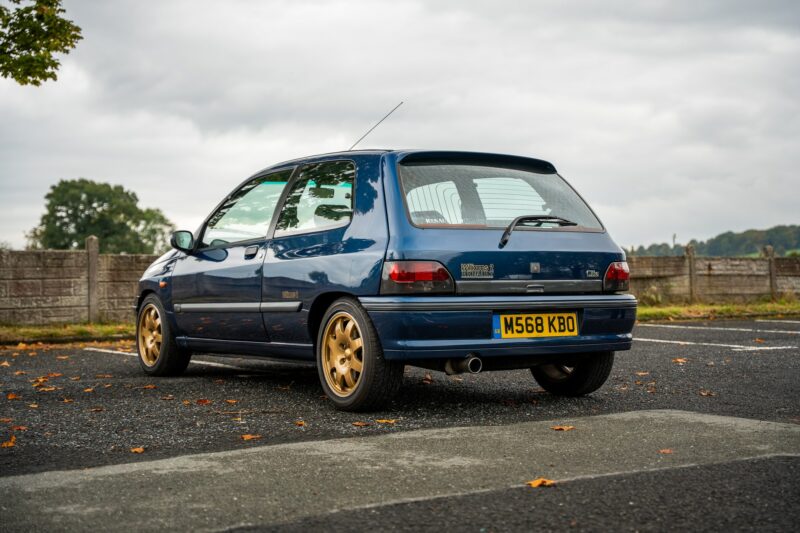
Renault Clio Williams
- Average Price Range: £18,000-25,000
- Production Run: 1993-1996
- Number Built: 12,100
- Horsepower: 148-150bhp
- Top Speed/0-60mph: 134mph/7.6-7.8secs
In the early 90s, the hot hatch king fumbled the ball. The Mk3 Golf GTI was lardy and, frankly, not very good. Instead, there was a new boy in town: Renault. La Regie had hot hatch previous, with the bonkers Gordini and the 5 GT Turbo, but the Clio Williams was altogether more rounded and sorted.
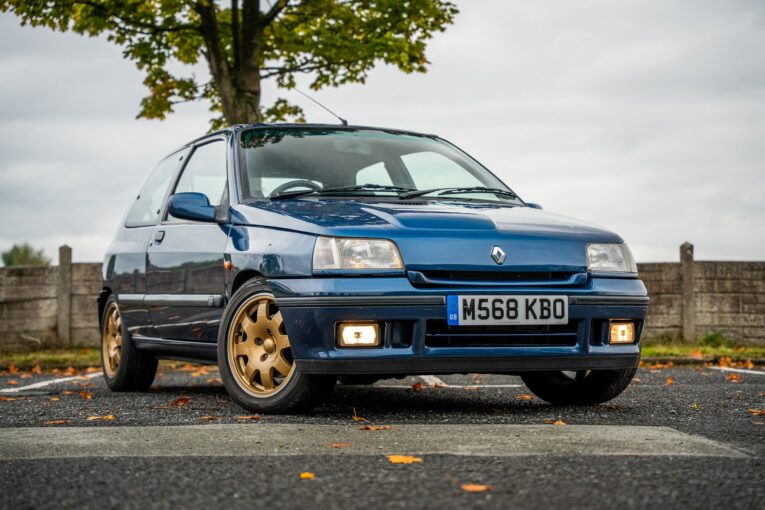
Unlike its badge-engineered rivals, the Williams was a proper homologated car, built for the road with input from Williams F1, which was then in ascendancy, to enable Renault to go rallying. Beneath the blue metallic paint and gold alloys lay the 16V 150bhp F7R 2L engine, which made the most of the Williams’ stripped-down, light weight spec. Initials plans were to build 2,500 but 12,100 were sold across three phases, which tells you something about how good it was. And is.
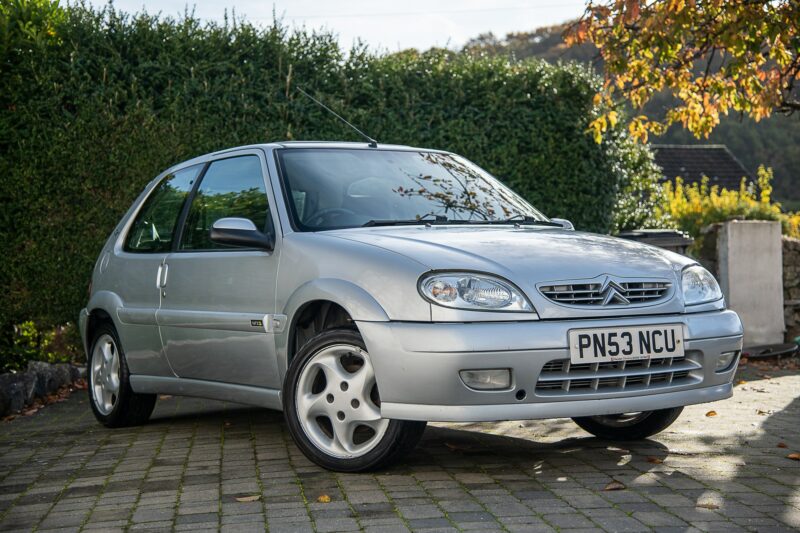
Citroen Saxo VTS
- Average Price Range: £1,500-6,000
- Production Run: 1996-2003
- Number Built: 2,700,000,000 (all Saxo models)
- Horsepower: 120bhp
- Top Speed/0-60mph: 127mph/7.6secs
We could, in fact nearly did, pick the Peugeot 106 Rally for this list, but instead its close relation makes the cut because, well, in the 90s nobody really expected Citroen to deliver one of the best hot hatches of the era.
The Saxo VTS is, essentially, a 106 in disguise, and therefore exceptionally good. Agile, pointy, tactile and engaging like the Peugeot and its 205 big brother, the VTS is also quick thanks to its TU5J4 1.6L 120bhp engine, shared with the quick Pug hatches. This is simple, light and analogue motoring the like of which we may never see again.
Best 90s Convertibles
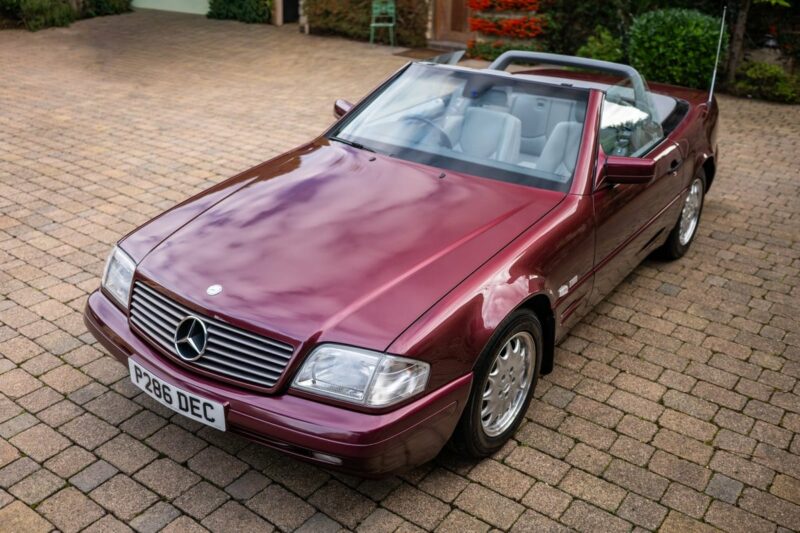
Mercedes R129
- Average Price Range: £5,000-35,000
- Production Run: 1989-2001
- Number Built: 204,940
- Horsepower: 188-525bhp
- Top Speed/0-60mph: 142-155mph/4.5-9.3secs
The R129 is from a time at Mercedes when, it seems, profitability took second place to engineering brilliance. Like its predecessors, the new ‘Sport- Leicht’ SL was developed to perfection and built equally well. You sense everyone involved from designer to tyre fitter genuinely cared about the end result.
Beyond its quality, the R129’s excellence lies in its ability to munch miles without ruffling feathers. It’s comfortable, luxurious, practical and spacious, and thanks to Bruno Sacco’s direction, it looks timeless too. Whether you choose a straight six, V6, V8 or V12, the R129 delivers the reward and relaxation in abundance that is essential to the GT convertible experience.
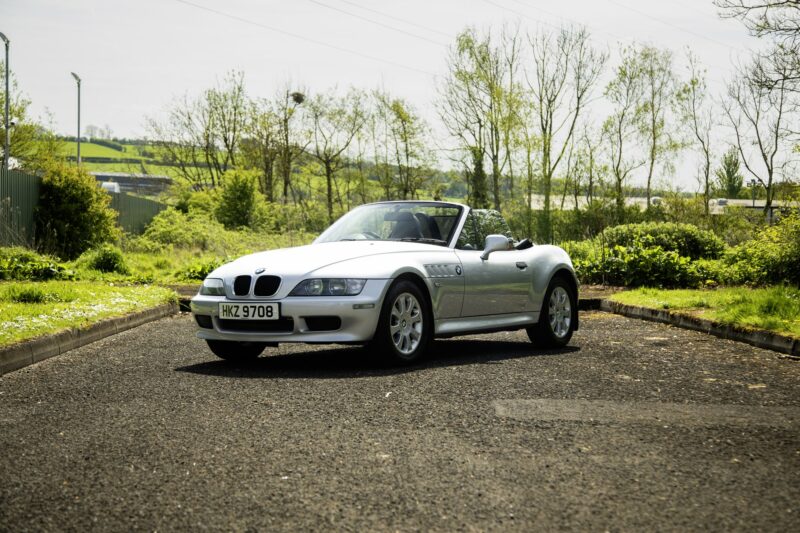
BMW Z3
- Average Price Range: £1,500-35,000
- Production Run: 1995-2002
- Number Built: 297,088
- Horsepower: 114-325bhp
- Top Speed/0-60mph: 122-155mph/5.1-10.1 secs
In the 90s it seems every car maker was rushing to capitalise on the ‘MX5 effect.’ BMW’s response was the Z3. It makes this list not because it was the best two-seater convertible of the 90s, but because it’s arguably the best modern classic convertible you can buy today.
The Z3 was a sort of parts-bin amalgamation clothed in a stylish shark-nosed retro body. Since those parts came from BMW bins, it’s great to drive and, in straight-six form, torquey too. It makes the perfect classic convertible buy because it’s usable, reliable and comfortable in a way few 60s or 70s drop tops are, yet is still as characterful as those earlier cars. As an added bonus, whether four cylinder or six cylinder floats your boat, the Z3 is still surprisingly good value.
Best 90s Supercars
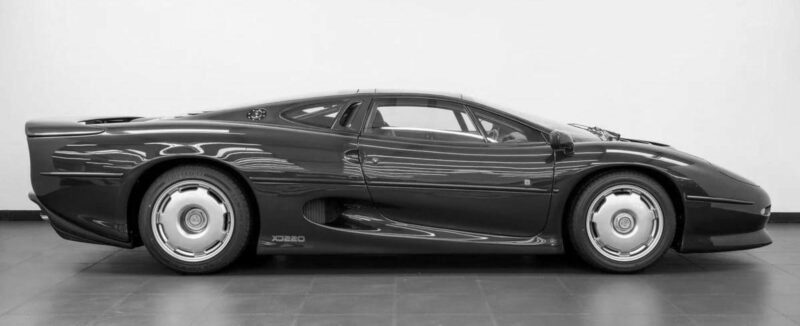
Jaguar XJ220
- Average Price Range: £350,000-500,000
- Production Run: 1992-1994
- Number Built: 282
- Horsepower: 550bhp
- Top Speed/0-60mph: 217mph/3.6secs
Perceived wisdom is that the XJ220 was a failure because it didn’t have the promised V12, and nobody wanted it because the economy tanked just as buyers were expected to stump up their money. That’s not really the full story: the original plans were for 350 cars, and in the end, 282 were built. So not quite the disaster of folklore.
True, a twin turbocharged V6 engine derived from a rallying Metro didn’t quite have the provenance of Jaguar’s silky V12 – even if it also powered the firm’s Group C racers – but equipped with twin turbos and engineered by Jaguar guru Jim Randle, it was good for 550bhp and 217mph. Then there was the styling, penned by Keith Helfet, which was both fully Jaguar-esque and one of the most beautiful supercars of the era. Not bad for a part-time ‘Saturday Club’ project.
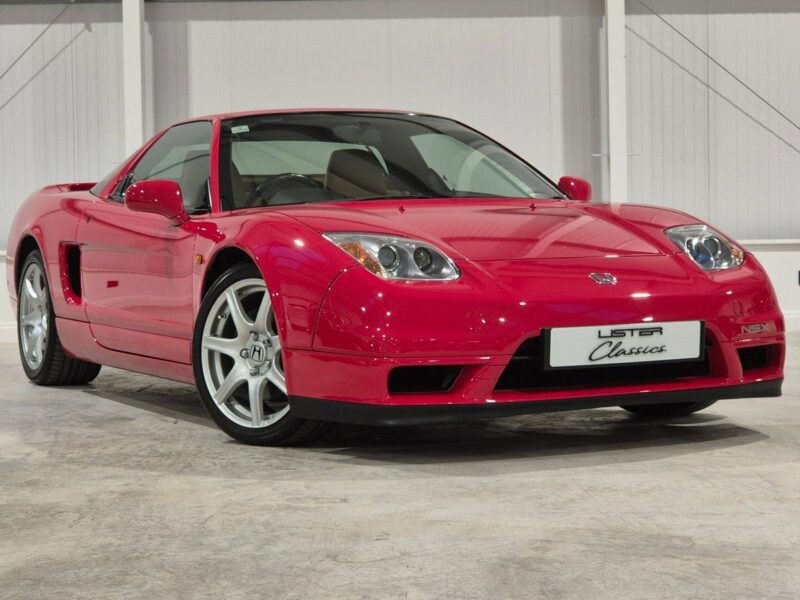
Honda NSX
- Average Price Range: £55,000-150,000
- Production Run: 1990-2005
- Number Built: 18,000
- Horsepower: 270-290bhp
- Top Speed/0-60mph: 168-175mph/4.5-5.7secs
Where the XJ220 was a typically Jaguar-esque sort of DIY hobby project, the NSX had one clear, stated objective: to beat Maranello at its own game. It was a pure statement of intent, driven by Honda’s desire to be taken seriously.
Famously developed with input from Ayrton Senna, who owned several, the NSX achieved its goal. Where Ferraris were febrile and fragile, the NSX was virtually invincible: it drove better than anything from Italy and, unlike any temperamental Italian supercar, you knew at the start of any trip that you would definitely reach your destination. The NSX is the ‘have your cake and eat it’ supercar, with surprisingly few alternatives.
Best 90s Sports Cars
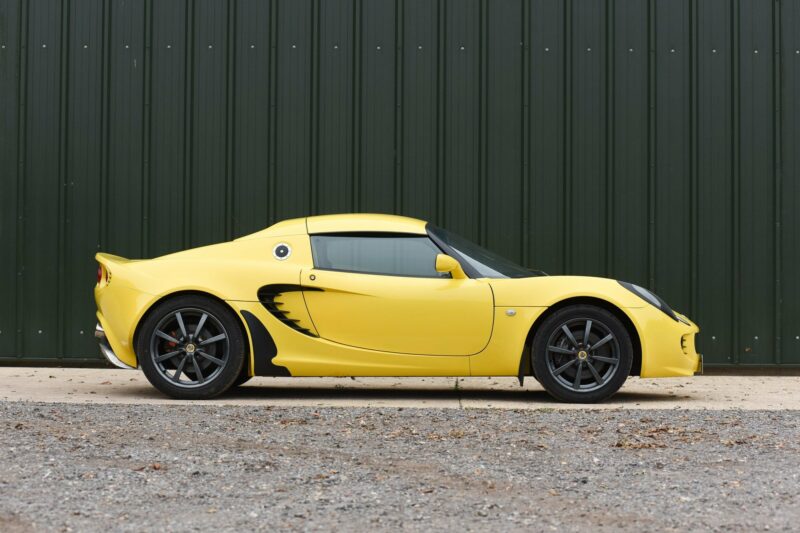
Lotus Elise
- Average Price Range: £10,000-60,000
- Production Run: 1996-2021
- Number Built: 35,124
- Horsepower: 118-240bhp
- Top Speed/0-60mph: 124-151mph/3.9-6.0 secs
By the 90s it seemed as if Lotus had given up on the ‘small and light’ sports car market. There was the M100 Elan, which was brilliant, but it was also – heretically – FWD, expensive and prone to disintegrate. The Elise changed all that. It also reset expectations of what a modern, inexpensive sports car could do.
Pretty, ultra light, deliciously basic and utterly engaging, the Elise was the Seven reinvented for 90s drivers. Unbothered by nannying technology and driver aids, the Elise set the benchmark for sports cars, whether obvious rivals like the MX5 or rarified alternatives like the 911 or anything from Maranello. It may be, quite possibly, the best 90s driver’s car you can buy.
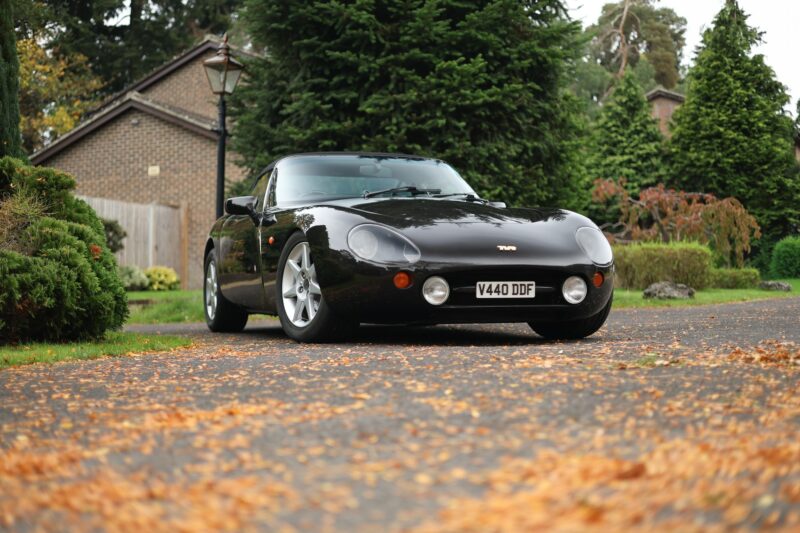
TVR Griffith
- Average Price Range: £178,000-40,000
- Production Run: 1991-2002
- Number Built: 2,600
- Horsepower: 240-340bhp
- Top Speed/0-60mph: 152-169mph/4.1-4.9secs
There is a fine line between madness and brilliance, and it is one that TVR hasn’t always walked with surefooted alacrity. However, with the Griffith, it certainly did.
Where the Chimaera was perhaps a little too conventional, the handsome and outwardly conventional Griffith retained just enough bonkers to be brilliant. In came the Rover-derived V8 in various capacities, out went anything that might be vaguely termed ‘driver aid.’ This is a car for committed pilots who value true skill over car-enabled capability. That it’s also quite dependable for a TVR means it should be high on any enthusiast’s wish list.
Best 90s SUVs
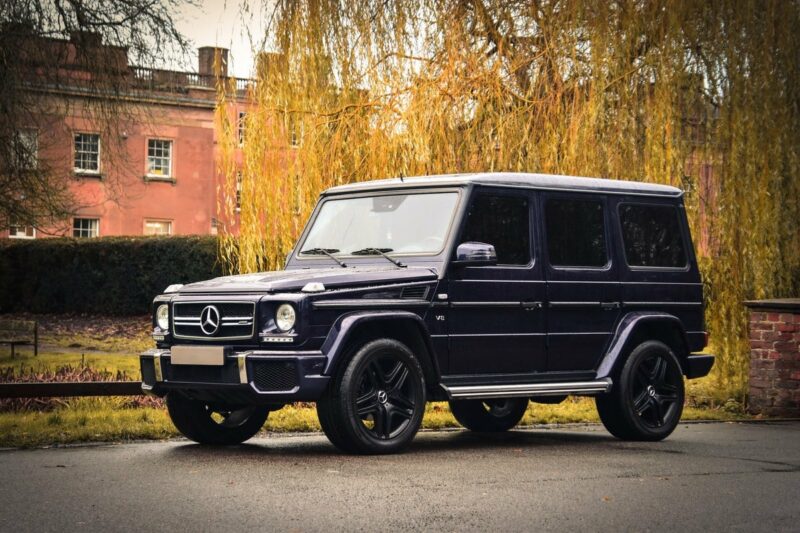
Mercedes W461 G-Wagon
- Average Price Range: £5,000-£50,000
- Production Run: 1992-2022
- Number Built: Approx 200,000
- Horsepower: 100-190bhp
- Top Speed/0-60mph: 84-120mph/12.3-20.0 secs
With Range Rover taking a miss-step with the P38, it was down to Mercedes to nab the Top SUV mantle with the new W461. Channelling the utilitarian aesthetic of the W460 but with its sights set more on the urban elite than the world’s battlefields, the new Mercedes set the template for the G-Wagon’s 90s and Noughties ascendancy.
Much of the W461’s appeal is that there is an example for everyone, from parsimonious diesel to full fat V8. And if even those multifold options don’t quite hit the spot, there is an army of specialists on hand to tailor, bespoke and indeed personalise your W461 to meet your every whim. Go anywhere for virtually anyone – or anyone with deep enough pockets – that is the W461’s calling card.
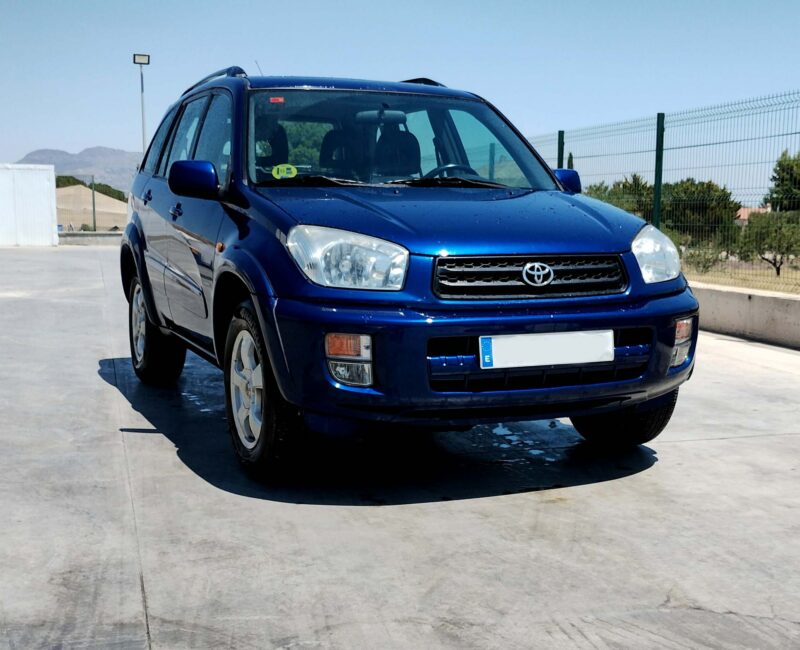
Toyota RAV4 Mk1
- Average Price Range: £700-£4,000
- Production Run: 1994-2000
- Number Built: Circa 1,000,000,000
- Horsepower: 127bhp
- Top Speed/0-60mph: 106mph/8.8-11.6secs
Toyota’s Recreational Active Vehicle pioneered the crossover SUV, a car that took the aesthetic and at least some of the ruggedness of a proper road-going offroader and made it altogether more palatable and easier to live with for those city and suburban dwellers who were less mud-oriented.
The RAV4 kicked off the SUV’s route to market dominance because it was so blinkin’ good. Since it was a Toyota, it was well engineered, utterly reliable, as comfortable as any saloon and admirably capable if the surface got slippery. Yet it had more space than a hatchback and was easier to get in and out of. Then there was the piece de resistance which has proved so irresistible to SUV buyers: the birds-eye driving position. As a piece of automotive design, the RAV4 is amongst the very best of the era.
Best 90s Japanese cars
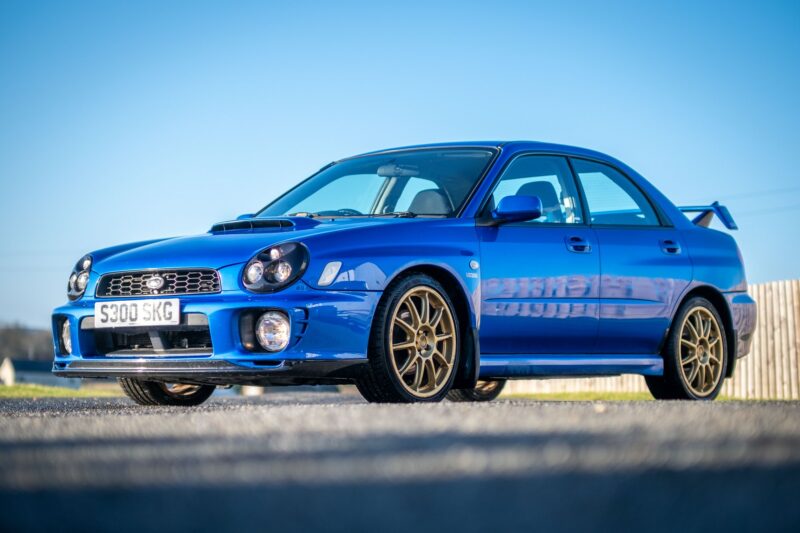
Subaru Impreza WRX GC8
- Average Price Range: £9,000-40,000
- Production Run: 1992-2000
- Number Built: 200,000
- Horsepower: 215-276bhp
- Top Speed/0-60mph: 130-152mph/5.2-5.9secs
There are many extremely good Japanese cars from the 90s, but none has blue paintwork, gold decals, impeccable rally provenance, and Colin McRae as its hero. Step forward the Impreza, the saloon car that is to driving what champagne is to celebration.
Part of the joy of the Impreza WRX is that Subaru quickly spotted its showroom potential. Few other performance cars are available in quite the multitude of models and variations that you can find for an Impreza. Then there are the modifications, from Prodrive-approved to JDM specialist-enhanced. To drive an Impreza WRX is to experience a scintilla of what made this humble saloon such a gravel-scattering behemoth. And that bluechip DNA, that visceral connection, is what makes it onto this list.
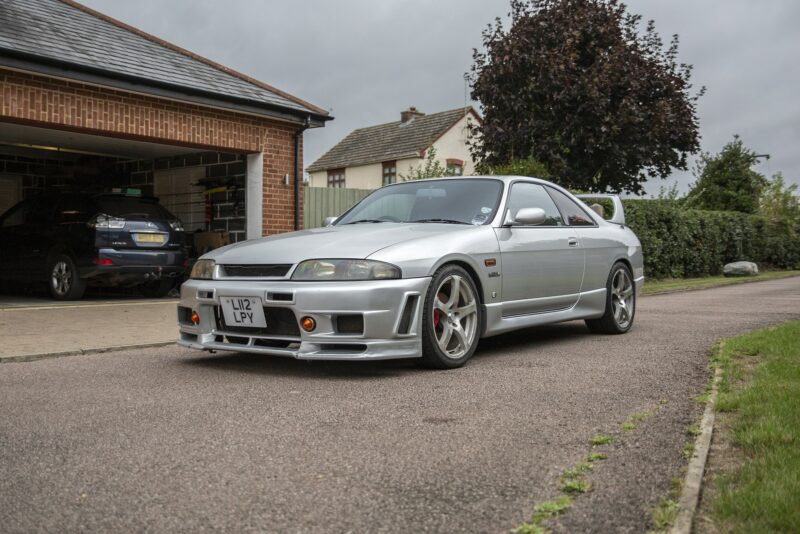
Nissan Skyline R34
- Average Price Range: £80,000-350,000
- Production Run: 1999-2002
- Number Built: 11,578
- Horsepower: 276-330bhp
- Top Speed/0-60mph: 155mph/4.8-5.0secs
A standard R24 is excellent, a quick coupe with decent balance and understated style. A modified R34, however, is in an entirely different league. Nissan extensively raced the R34 and did a good job of upgrading the road-going model, but it is the array of aftermarket enhancements that catapults it into the ‘best of’ superleague.
Few cars have had their potential eked and furrowed quite like the R34. Helped along by Hollywood stardom, developing one is not so much about how it drives, because few will ever manage to reach its limits, but about choosing, fitting and specifying the list of mouthwatering improvements. This is the stuff of car show conversations, of discovering connection with others by delving into dump-valve detail and supercharging ephemera. The modifying culture is at the heart of JDM motoring, and few cars embody it like the R34.
Best 90s Executive Cars
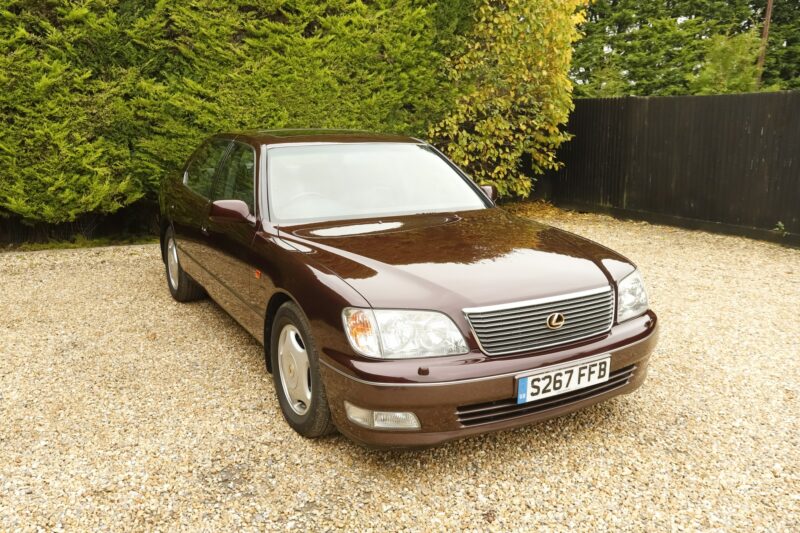
Lexus LS XF20
- Average Price Range: £1,500-£10,000
- Production Run: 1994-2000
- Number Built: Circa 300,000
- Horsepower: 260-272bhp
- Top Speed/0-60mph: 155mph/6.7-7.1secs
Strictly speaking, the original LS was a child of the 80s, but it was in the 90s when the second generation car cemented its legacy. Just as Mercedes was dropping the quality ball, Toyota was making the LS even better with the XF20.
Correctly regarded, by a certain Norfolkian TV personality and, indeed, many others, as the ‘Japanese Mercedes’, the LS400 is arguably better than that epithet suggests. The LS didn’t just copy Mercedes’ quality ethos, it bested-it, resulting in a handsome and understated luxury saloon that was more comfortable and more reliable than anything else on the market. Toyota even limited production to 50,000 units per year to ensure consistent quality. Later versions leaned more firmly into the ‘gin palace on wheels’ vibe, but the XF10 and XF20 struck just the right balance between subtle and luxurious.
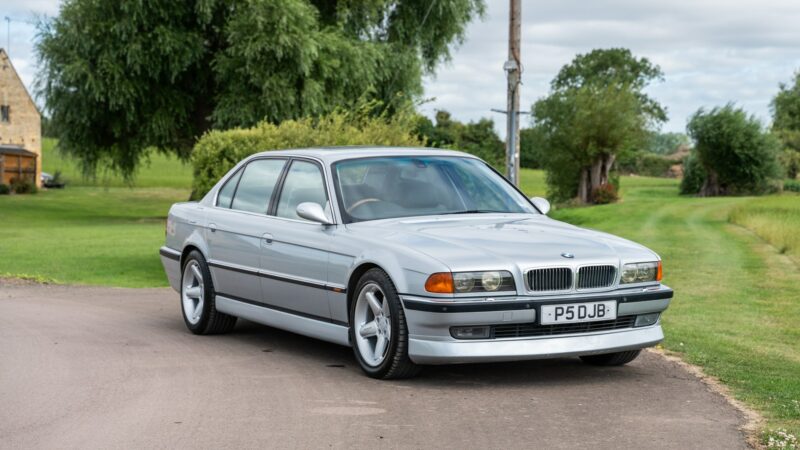
BMW E38 7 Series
- Average Price Range: £2,000-25,000
- Production Run: 1994-2001
- Number Built: 327,106
- Horsepower: 141-325bhp
- Top Speed/0-60mph: 127-155mph/6.0-10.4secs
While Lexus was nibbling away on one side of Mercedes’ executive home turf, BMW was taking vast bites out of the other. The E38 7 Series cemented the idea that when they weren’t relaxing between meetings in the chauffeur-driven back seat, barrel-bellied boardroom behemoths could have fun behind the wheel on the way to and from work.
While the S-Class conveyed a sense of its owners sitting back and contemplating their success, the 7 Series was the executive car for career hard-chargers with a drive-and-go attitude. There was an E38 for virtually every high flyer, from the 728 for those on their way to the V12 750 LWB for those who’d arrived, and apparently had very long legs.
Best 90s British Cars
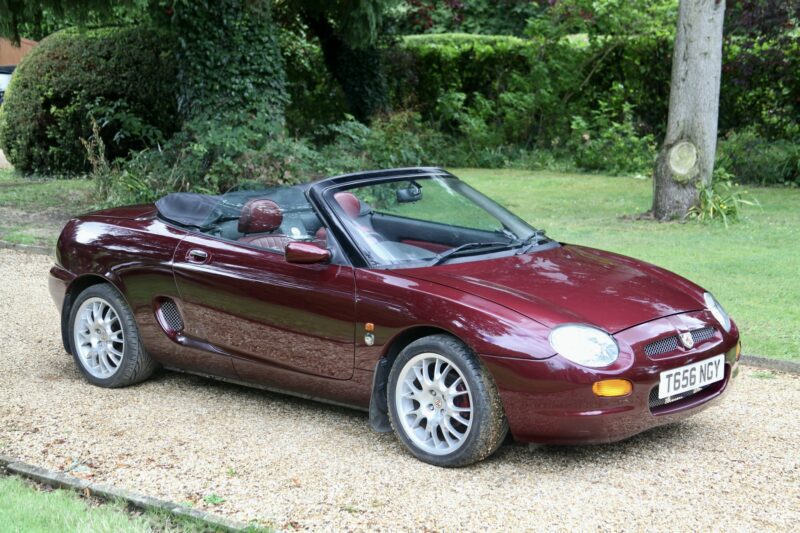
MGF
- Average Price Range: £700-7,000
- Production Run: 1995-2002
- Number Built: 77,269
- Horsepower: 118-160bhp
- Top Speed/0-60mph: 120-131mph/7.0-8.5secs
The MGF could have stolen a march on the MX5, because Austin Rover had been contemplating an MGB replacement since the early 80s. Naturally, this being Britain and the British motor industry, it was launched six years after the MX5, in 1995.
Despite being late to the party, the F was technologically much more innovative than the Mazda. Mid-engined and equipped with the clever K-Series engine, which also powered the Elise, the MGF was a sales success, outselling the MX5 in the UK and Europe. Today, its legacy is surprisingly mixed for such a good car, partly due to the usual British bugbear of poor build quality, but find a good, sorted car and you get a really comfortable and entertaining two seater classic.
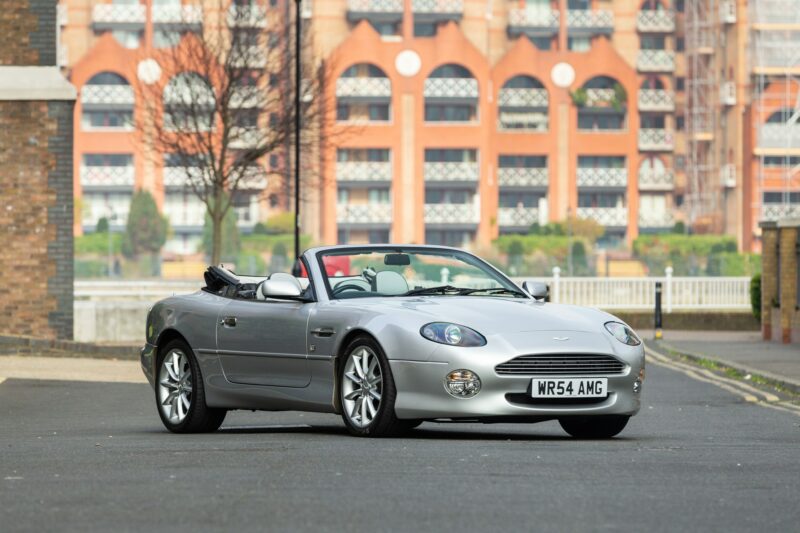
Aston Martin DB7
- Average Price Range: £16,000-60,000
- Production Run: 1994-2004
- Number Built: 7,091
- Horsepower: 335-435bhp
- Top Speed/0-60mph: 165mph/4.8-5.7secs
It began life in the early 1980s as a Jaguar before the design was ‘stolen’ by TWR and refined by Ian Callum or Keith Helfet, or both, who created one of the most beautiful cars of the 90s. Whatever its gestation, the sinuous, smooth DB7 could only have ever been an Aston Martin.
This is the car that arguably saved the firm and paved the way for its current success. Naysayers chatter about the Jaguar bits and, by Aston Martin’s terms, the volume production, but supercharged or V12-powered, the DB7 is rewarding and refined in a way that few GT cars of the era can muster. Interest is gathering for good cars, but with collectors gravitating toward V12s, the canny buy is a supercharged car with its powerful and robust 3.2L straight-six.
That’s our shortlist of our best cars of the 90s. You can dive into our classic car auctions here or peruse our classic car classifieds right here.