When Was ‘Peak Car’?
Has the greatest era for drivers’ cars been and gone?

January 1, 2026
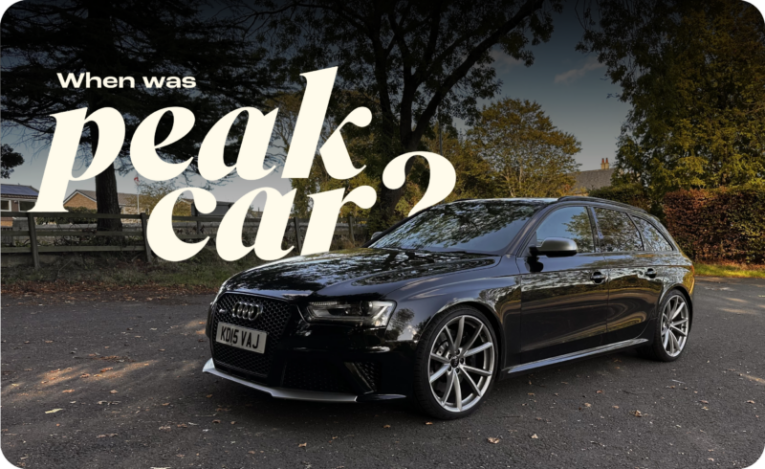
About a year ago, I bought my 2015 B8 RS4. It was not an impulse purchase, nor was it driven by nostalgia. It was a deliberate decision shaped by a growing sense that something fundamental had changed in the way cars are designed, sold, and experienced. I wanted a car that I could genuinely own, not lease or subscribe to. Something that felt complete rather than compromised. Something modern enough to live with every day, but still rooted in the values that made driving enjoyable in the first place.
The B8 RS4 stood out to me because it sat at a very specific point in automotive history. It came from the last moments when an older philosophy still held real influence, and it occupies a fascinating place in Audi’s own lineage. The B7 RS4 that preceded, which I initially preferred, offered a manual gearbox and is rightly celebrated for its purist appeal, but it also carried compromises, including notorious carbon build-up issues and more temperamental mechanical systems. The B8 traded the manual for a dual clutch transmission, a decision some purists still lament, yet it also gained significant reliability, consistency, refinement and everyday usability.
Crucially, it is also the final naturally aspirated V8 Audi ever produced. That fact alone anchors it firmly in a closing chapter. Fire it up, and the engine responds with a voice and personality that forced induction and heavy filtration simply cannot replicate. The steering carries weight and intention. The controls feel designed for human interaction rather than for navigating software layers. It fits seamlessly into modern life, yet holds tightly onto the values that once defined performance cars.
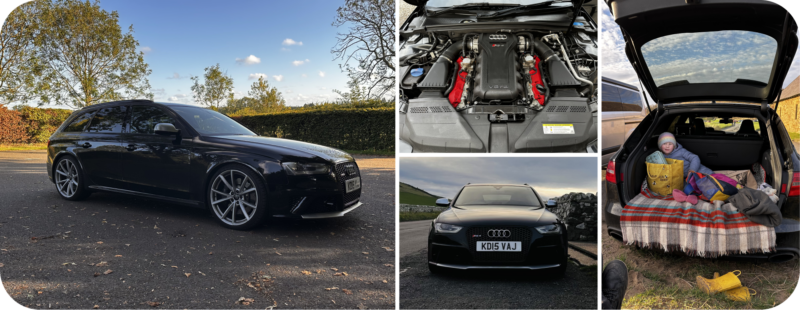
But the reasons I was drawn to it were not unique or isolated. They echoed a much broader sentiment that has been building quietly across the enthusiast community.
It’s an idea that has shifted from online forums to something approaching accepted truth. The realisation that we have probably already witnessed the greatest era of the automobile. Not the most technologically advanced, not the quickest, and not the cleanest by regulatory standards, but the era when the experience of driving reached its most complete and satisfying form.
‘Peak Car’ was the point at which manufacturers had finally mastered the blend of reliability, refinement, and performance, before consumerism and legislation led them to bury a car’s true potential beneath layers of software, sensory alerts, touchscreen interfaces and fully electric power units. These cars were modern without being lifeless. They were machines designed around human involvement rather than digital prediction.
This period roughly spans the first two decades of the 21st century, and it is what many now refer to as the ‘Peak Car’ era. With the benefit of hindsight, it is clear that it emerged in stages that now look remarkably cohesive.
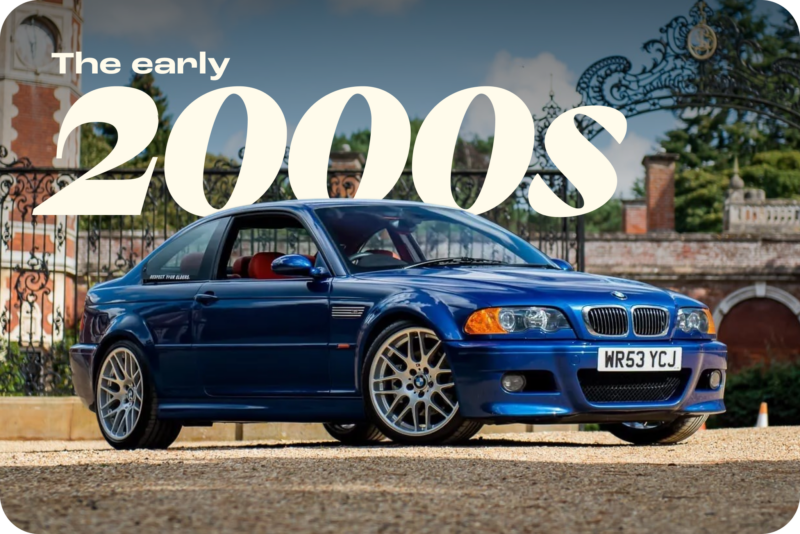
The early 2000s were the beginning of the ascent. By this point, manufacturers had achieved a level of durability and sophistication rarely seen in the 1990s, but had not yet replaced analogue systems with electronic surrogates. The result was a unique balance. Steering systems were hydraulic and communicative. Cabins were filled with real buttons and switchgear rather than virtual sliders. Engines were naturally aspirated, high-revving, and full of character.
Supercars such as the Porsche Carrera GT, Mercedes SLR McLaren, and Lamborghini Murciélago were intimidating and exhilarating in equal measure, demanding respect and rewarding commitment. The more attainable performance cars of the period were no less compelling. Cars like the BMW E46 M3, Porsche 996 911, Mercedes E55 AMG, Audi RS6 C5, Subaru Impreza WRX STi, Honda S2000, and Nissan 350Z gave everyday drivers direct access to genuine engagement and feedback. These cars felt alive even at moderate speeds, helping establish the defining qualities of what would become the Peak Car era.
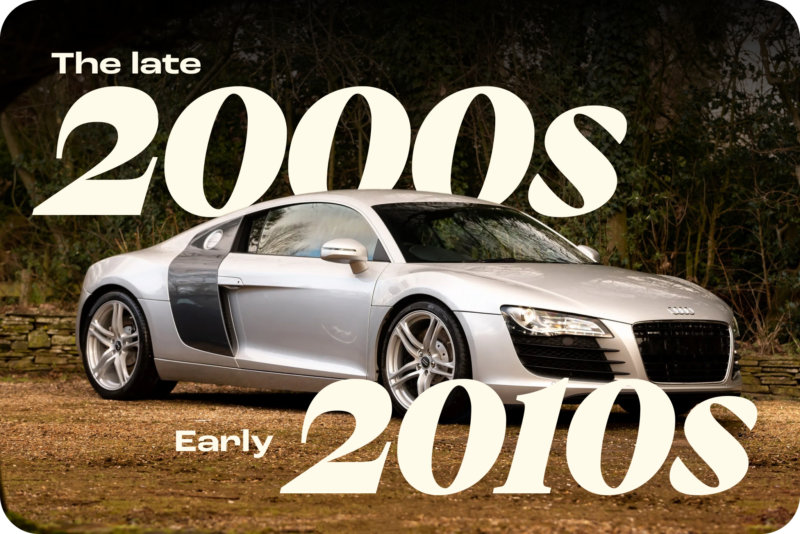
By the late 2000s and early 2010s, the era had reached its zenith. Variety was at its absolute peak. Compact saloons could be specified with naturally aspirated V8s. Executive models were often wafted along by V10s. Grand tourers still featured free breathing V12s. Hot hatches offered four, five, or six-cylinder engines, each with its own distinct voice.
Manual gearboxes remained widely available because they were still the natural choice for drivers who valued involvement. At the same time, automatic transmissions had matured to the point where they enhanced performance without dulling sensation. This was the age of the BMW E92 M3 with its operatic V8, the thunderous 6.2-litre AMG cars, the Ferrari 458 and F12 with their intoxicating blend of texture and precision, and the gated-manual Audi R8 that instantly became a benchmark for purity. Even more modest offerings, such as the BMW F21 M135i, Renaultsport Clio models, the Mk5 Golf R32, and the Mk2 Ford Focus RS carried a level of depth and individuality that feels increasingly rare today. Internal combustion had reached its creative peak.
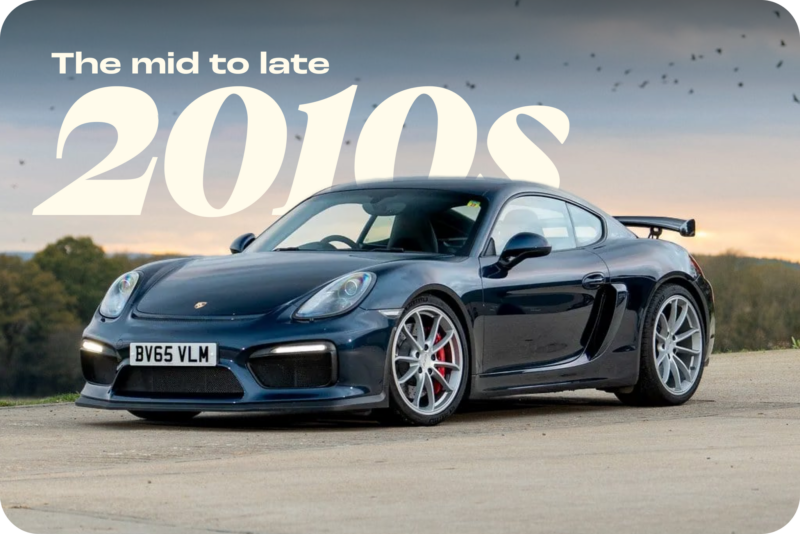
The swan song. The late 2010s were the point at which the digital shift accelerated noticeably. Touchscreens expanded, electric steering became widespread, driver assistance systems were no longer optional, and emissions regulations tightened.
Yet even during this transition, many cars remained faithful to the values that had defined the previous decade. Examples like the BMW M2 F87, Porsche’s 981 Boxster, Civic Type R FK2, Alfa Romeo Giulia Quadrifoglio, Jaguar F-Type, Mercedes-Benz C63 AMG and, of course, my B8 RS4 continued to prioritise feel, response and engagement. Even models that were not the most powerful in their class, like the lightweight Alpine A110 2nd Gen, proved that pure dynamics and balance still mattered, while cars such as the Cayman GT4 carried the spirit of analogue driver focus forward into an increasingly digital age. These cars delivered modern comfort and reliability while still allowing the driver to play an active role in the experience.
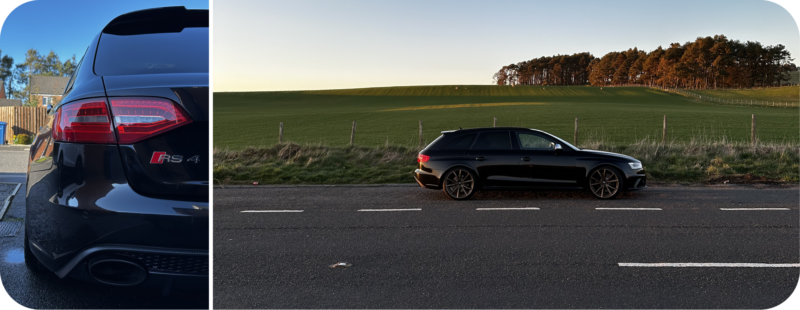
Owning and, more importantly, using, my RS4 has highlighted to me the contrast between that era and what has come since. Newer cars are astonishingly capable and increasingly clinical. They accelerate harder, manage energy more efficiently, and place enormous computing power between the driver and the road. Yet many feel detached. They deliver performance without texture. Their refinement is impressive, but their personalities are faint. They behave like appliances rather than companions. They are cars to operate and forget, rather than cars to experience.
All of this makes the value proposition of these 10+ year old cars even more compelling. Many of the best examples have now depreciated as far as they realistically ever will. Prices have stabilised and in some cases already begun to rise. They represent genuine, tangible value for money. These are not subscription products, not three-year finance agreements, and not part of the modern trend toward temporary ownership. A well-cared-for example is a legitimate asset, offering both emotional and financial substance.
There are many different opinions of when the greatest era of automobile design and construction was; it’s subjective and depends on your priorities, preferences and loyalties. But to me, and many others, ‘Peak Car’ was this final chapter before an entirely different philosophy took over. It was a time when engineering excellence and emotional engagement were still treated as equal priorities. My RS4 is a usable artefact from that era. It reminds me that driving once felt tactile and human, that engines once spoke with unmistakable identity. That involvement was once valued more than digital perfection. Yet it also starts on the button, does not dissolve like a Rich Tea in a cuppa, plays my music without wires, and has the space and comfort to function properly in modern family life.
So, the lamentable truth is that yes, in many ways, the best era for cars and drivability, ‘Peak Car’, has been and gone. But the reassuring fact is that many of its finest examples remain accessible and represent a genuine alternative to the sterile, homogenised devices available now. You can still find them, still own them, still use them, and still experience the qualities that made that period in automotive history truly important.