The Beautiful, Glorious Lunacy of TVR

April 11, 2025
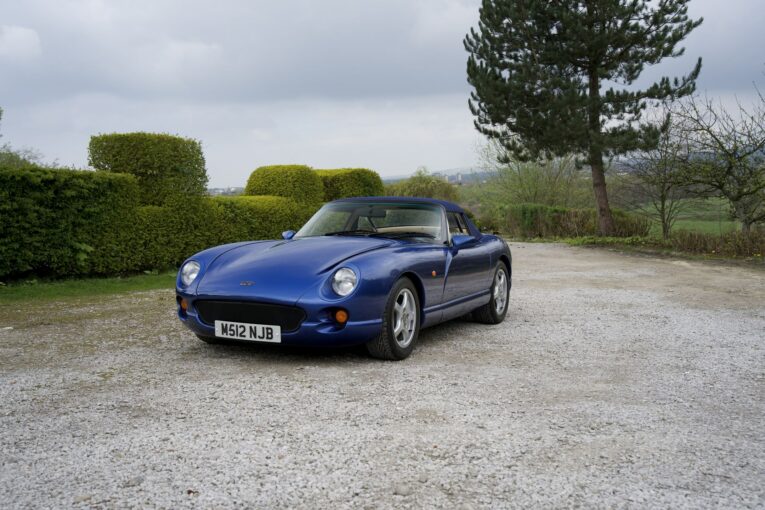
“Owning a TVR in the past was like owning a bear, I mean it was great, until it pulled your head off, which it would. One day, it would pull your head off.” – Jeremy Clarkson
Some things in life are great simply because they just… well, work. A central heating timer that doesn’t require a PhD in atomic physics. A coffee machine that doesn’t need an instruction manual thicker than War and Peace. The bliss of something functioning exactly as it was intended—truly a rare and underrated pleasure.
But then, in an alternate, far more entertaining universe, some things are great precisely because they are imperfect, nonsensical, or downright idiotic. And if there’s one place where this law of chaotic genius thrives, it’s in the world of cars.
When buying a car—much like some of you reading will consider when choosing a classic car from Car & Classic auctions—most sane humans might consider certain factors: ergonomics, practicality, maybe (and we’re whispering this) reliability. But if you value any of those things, even remotely, then look away now—because what follows may cause actual distress, nausea, and possibly a deep-seated fear of fibreglass. You have been warned.
Throughout automotive history, various manufacturers have dared to do things differently. We’re glaring at you, Citroën.
But then, standing like an absolute madman in the middle of the road, grinning and waving a shotgun, exists a small British carmaker that decided logic was for the weak, and that its vehicles should first confuse their owners, before actively try to murder them.
Yes, we’re talking about TVR.
TVRs are not like other cars. They are not sensible. They are not refined. They are not safe. And that’s exactly why we love them. So, let’s fail miserably in our attempts to find the seatbelt, try to work out why the car’s angry at us, and dive headfirst into the glorious, unhinged, absurd and confusing fiberglass world of the ‘Trevor.’
Why Use Someone Else’s When You Can Build Your Own Questionable One?
In the world of car manufacturing, sharing technology is standard practice. It saves time, money, and headaches. Aston Martin uses Mercedes engines. Pagani’s been on the Mercedes train since the first car rolled out. Rolls-Royce borrows BMW’s finest. It makes sense. It’s practical. It’s logical. It’s also about as exciting as a Tuesday afternoon in a dentist’s waiting room.
TVR, on the other hand, looked at this perfectly rational, safe path, and then gleefully set it on fire with a flamethrower.
For years, TVR happily used engines from Ford, MG, and later Rover’s reliable V8. But when it came time to release the Cerbera, did they stick to this sensible, reliable formula? Oh no, no, no. Instead, they cracked open an entire bottle of Scotch, stood on the table, and proclaimed:
“Let’s build our own engine. From scratch. For no reason. For Blackpool. FOR SCIENCE.”
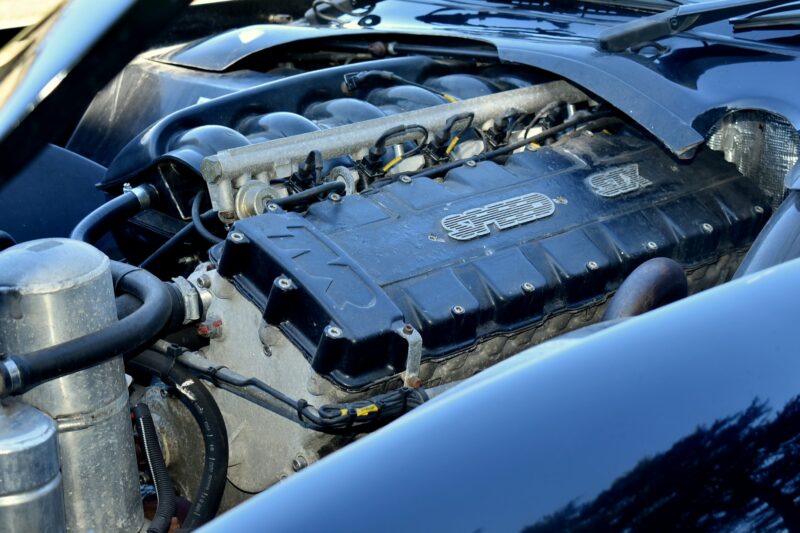
The result? A high-strung, flat-plane-crank V8 that, when wedged into a featherweight fibreglass body, had enough power to launch a moon mission. And because one self-destructive new engine wasn’t enough, TVR thought, “Let’s just throw in a straight-six too. For the fun of it.”
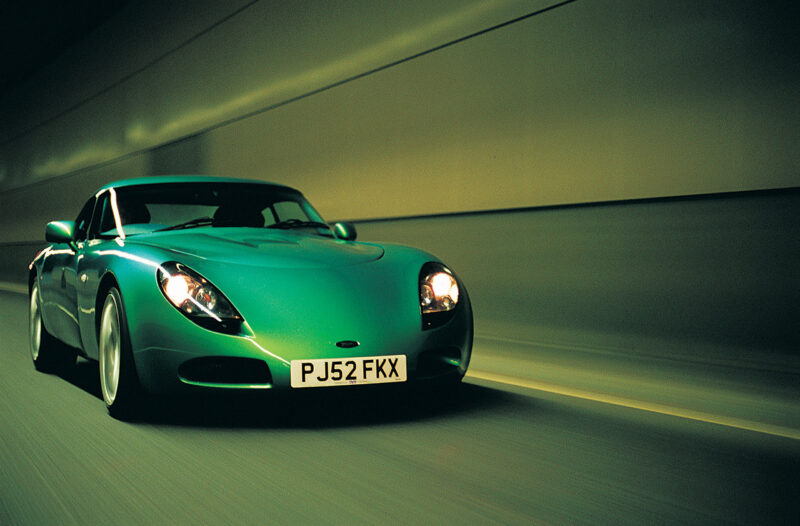
This straight-six was later shoved into the Tuscan, but you’d never know because TVR, in a moment of pure insanity, and potentially drawing some influence from Schrodingers Cat, bolted the bonnet shut. Classic TVR move. Then, in a final act of chaotic madness, someone thought, “Hey, let’s bolt two of these engines together and drop them into a Cerbera.” And everyone just nodded like, “Yep, that makes perfect sense.”
TVR didn’t make engines because they had to. They made them because they wanted to. They saw the sensible choice and threw it out the window. Sensible? No. Magnificent? Absolutely.
A Drunken Alien With A Shotgun?
Speaking of the Tuscan, we can only assume its styling came from a drunken alien having an existential crisis during a tequila-fueled rampage. Or perhaps it was a disgruntled design intern who attacked a clay model with a shotgun. There’s no logical explanation for its front light arrangement, nor for the bumper that looks like some Emmantael cheese had a baby with an aggressive salad spinner. And yet… it’s breathtaking.
However, the Tuscan looks like a yoga retreat next to the absolute psycho that is the Sagaris. Why did its exhausts exit through the side of the rear bumper like they were trying to escape? Why did the bodywork have vents on top of vents on top of… more vents? No one knows. TVR certainly wasn’t going to explain itself. If the Sagaris were a person, it would be the kind of person who sets off fireworks indoors just “to see what happens.”
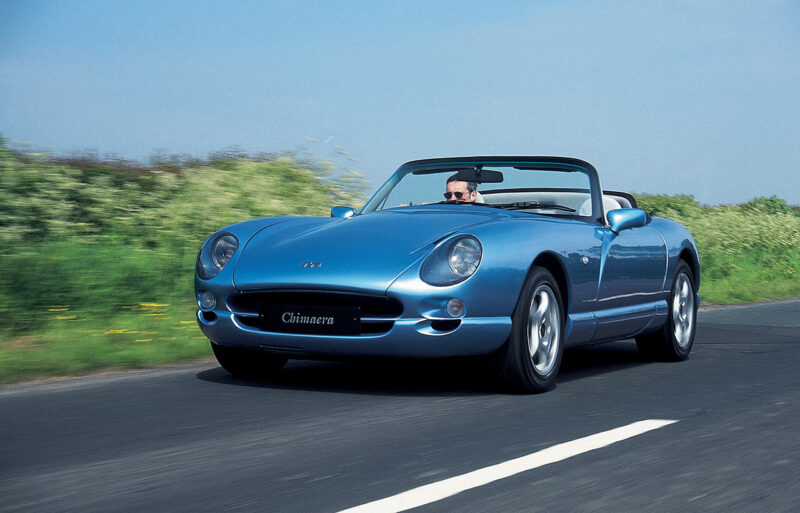
Then there’s the Chimaera. It looks pretty, right? Like a refined sports car. Well, it was partly designed by a dog. Yes, that’s right: a dog. One day, Peter Wheeler’s infamous Labrador, Ned, got hungry, or perhaps bored and took a bite out of the Chimaera clay model.
Instead of fixing it, Wheeler looked at the damaged model, nodded approvingly, and said, “That’ll do.” And just like that, the indicator recesses were born.
So yes, officially, a Labrador had more influence on TVR design than any focus group or wind tunnel.
TVR: the only car company to use reverse animal testing.
Where’s the Door Handle? Who Knows?
If you thought TVR’s design madness stopped at the exterior, you’re in for a delightful surprise. TVR didn’t just make cars that could possibly kill you at high speeds—they made sure you couldn’t even start the damn thing without playing an impromptu game of Where’s That Function?
Want to open the door? Good luck. The button’s somewhere, but it’s probably not where you think. Need to adjust the headlights? Maybe that switch is under the seat. Hazard lights? Don’t even get me started. They’re probably activated by performing a rain dance while singing The Song Remains the Same backwards. The glovebox? Who knows if there even is one.
It’s as though the interior designer was both a devoted Agatha Christie fan and a prankster with the sole motivation of gaslighting the owner. TVR didn’t design interiors—they created insane treasure hunts for their owners. Who needs straightforward controls when you can make your car a puzzle designed by a maniac?
TVRs don’t have interiors. They had escape rooms long before they were cool.
Safety? What’s That?
At TVR’s Blackpool factory, the use of words like “airbags,” “traction control,” and “stability control” was punishable by immediate expulsion from the company and possibly a dunk in a bucket of tar. The company motto was simple: If you don’t want to crash, just… don’t?
Want ABS? Don’t lock up the brakes. Need stability control? Grow some skills. Airbags? Who needs them when you have a dashboard?
Driving a TVR isn’t just an experience—it’s an extreme sport. It’s like being a test pilot for the first-ever supersonic plane, except the plane has a will of its own and is actively trying to kill you. Will you survive today’s flight? Maybe.
Even when a TVR is parked in your garage, it’s not resting. It’s scheming. It’s plotting. It’s thinking of new and exciting ways to send you to Valhalla the next time you take it out for a spin.
And that’s why we love them.
In Conclusion: A Beautiful Disaster
TVRs are not normal cars. They do not make sense. They were never designed with logic in mind. But that’s exactly why they are magnificent. They exist purely to be exciting, dramatic, and slightly homicidal.
You know that child who refuses to do what they’re told and instead does the exact opposite? Or the one who does something so utterly random and insane that it leaves you questioning reality? Well, that’s TVR.
These are cars with attitude, personality, and a complete disregard for health and safety. If you’re looking for a car that says, “Go on, try me. See what happens”—TVR is your answer. They’re gloriously, wonderfully, and unapologetically mad.
And you know what? The world is a much better place because of them. Without TVRs, where would we be? Probably in some boring, sensible world full of cars that go from point A to point B without causing any chaos. Maybe they’d even be powered by electricity… oh wait.
Never mind.