Highlights
- Supplied by Harrods and delivered new to Argentine by Buenos Aires
- Full mechanical overhaul and recommissioned by specialist pre-war engineer completed October 2025 and is ready to use
- Outright winner of the 1999 VSCC Bowland Rally
- Extensive event heritage including Irish Gordon Bennett Rally
- Extensive history file with documentation dating back to 1985
- Engine recently overhauled by specialists Formhalls in 2023
- Late example of the well-regarded and robust D-Type
The Appeal
Vauxhall’s D-Type was an evolution of Laurence Pomeroy’s brilliant Prince Henry, the changes focusing on delivering a stronger chassis. The result was a car as adept as a military staff car - 1,500 were supplied during World War I - as as a quick and robust rally and touring motor.
This much-storied 1922 D-Type Tourer is reported to have been originally supplied new by Harrods to a buyer in Argentina. Since then, over its illustrious 103 years, it has led a fascinating life that has included competing in many highly respected rally and touring events. This included winning the 1999 VSCC Bowland Rally and competing in the Irish Gordon Bennett Rally.
The car is reported to have returned to the UK some years ago and arrived with the current keeper in 2009. We are told that the 4L 70bhp sidevalve engine was overhauled in 2023 by specialist Formhalls.
The vendor tells us that this magnificent vintage Vauxhall is in outstanding mechanical order and ready to be used by its new custodian. With its remarkable history and robust design, this well-kept D-Type would offer the buyer plenty of future adventures.
The vendor says:
“This 1922 Vauxhall 25hp D-Type Tourer, a quintessential high-class vintage car, boasts a remarkable early history, believed to have begun in Argentina under the prestigious banner of Harrods of Buenos Aires. Retaining much of its original character, it has undergone sympathetic restoration and mechanical work over the years, ensuring its preservation. The car saw extensive use in the 1990s, competing in rallies such as the Irish Gordon Bennett, Beamish Reliability Trial, and multiple VSCC events, including a triumphant outright win at the 1999 Bowland Rally. As Michael Sedgwick noted in Vauxhall (Dalton Watson, 1981), “The years from 1908 to 1925 mark Vauxhall’s golden age,” a period when the marque rivalled Bentley and Sunbeam for engineering excellence and elegance.
“With its Argentine origins, rally pedigree, and exceptional documentation, this Vauxhall D-Type Tourer offers a rare opportunity to own a piece of Vauxhall’s golden era. Its journey from Buenos Aires to British rally fields underscores its enduring appeal, ready for a new chapter of vintage motoring adventures.”
History and Paperwork
- Registered in 1922
- Supplied and delivered new to Argentina via Harrods of Buenos Aires
- First documented in the UK reported to have been in January 1985 with the Clarendon Carriage Co. in London
- Acquired by the keeper in Croydon in April 1985
- Later owned by a vintage enthusiast who used it extensively in rallies
- Reregistered as 'SV 6997'
- Chassis No: D3433
- Seven registered UK keepers
- In current ownership since March 2009
- MOT exempt due to age
- Facsimile Vauxhall Instruction Book
- 30-98 Contemporary Owner's Manual
- Magazine articles
- V5s
- Tax discs from 1985
- Invoices and MOTs from 1992
- 1993 VSCC eligibility form
- Records of participation in 1990s rallies
- These include the Irish Gordon Bennett and Beamish Reliability Trial
- Introductory book from the Vauxhall A-D Type Register included
The vendor says:
“Acquired in 2009, the Vauxhall has been sparingly used and thoughtfully cared for, benefiting from a comprehensive 2023 engine overhaul by Formhalls. Its well-preserved presentation makes it a striking example of a very rare and classic vintage tourer. An extensive archive accompanies the car, including a facsimile Vauxhall Instruction Book for 23-60 HP and 30-98 HP models, a 30-98 Contemporary Owner’s Manual by John Stanford, magazine articles, V5s, tax discs from 1985, invoices and MOTs from 1992, a 1993 VSCC eligibility form, and records of 1990s rallies. An introductory book from the Vauxhall A-D Type Register further supports future maintenance.
“The 1922 Vauxhall 25hp D-Type Tourer, chassis number D3433, boasts a captivating early history that reflects both its international origins and its significance as a high-class vintage car. While definitive records prior to 1985 are limited, the vehicle is understood to have been delivered new to Argentina, supplied by Harrods of Buenos Aires, as indicated by the supplier’s plaque from Harrods (Buenos Aires) Ltd., located at Florida, Buenos Aires. This aligns with the global reach of Vauxhall’s prestige vehicles in the early 20th century, when the British manufacturer exported its finely engineered cars to affluent markets across the British Empire and beyond.
“Harrods of Buenos Aires, an offshoot of the famed London department store, operated as a luxury retailer in Argentina from 1914 to 1998, catering to the country’s elite with goods ranging from fashion to automobiles. In the early 1920s, Argentina’s booming economy and wealthy landowning class created a strong market for European luxury vehicles, and Vauxhall’s D-Type—known for its robust engineering and elegant design—was a natural fit for such clientele. The D-Type, with its four-litre, four-cylinder sidevalve engine producing around 70bhp, was capable of exceeding 70mph with lighter coachwork, making it ideal for touring the vast Argentine landscapes or serving as a status symbol for Buenos Aires’ high society.
“While the exact first owner in Argentina remains undocumented, it’s plausible the car was purchased by a prominent individual or family, possibly a landowner, industrialist, or expatriate, given Harrods’ clientele. The D-Type’s design, with its open tourer body, would have suited both practical travel and ceremonial use in Argentina’s temperate climate. Its journey back to the UK is unclear, but it likely returned after decades in South America, possibly in the mid-20th century when vintage car collecting gained traction among British enthusiasts. The car’s well-preserved condition suggests it was cherished and maintained, avoiding the heavy wear that befell many vehicles of the era.
“Given its military heritage—approximately 1,500 D-Types served as staff cars for the British Army during the Great War—it’s conceivable this civilian example was used in a similar prestigious capacity in Argentina, perhaps for official or ceremonial duties. Alternatively, it may have been a private tourer for long-distance travel across the Pampas or for social events in Buenos Aires’ elite circles. The lack of early documentation leaves room for speculation, but the car’s survival in such original condition implies careful stewardship, possibly stored or sparingly used after its initial years.
“The Vauxhall’s documented history resumes in January 1985, when it was in the possession of the Clarendon Carriage Co. at 2-4 Queen’s Gate Mews, Kensington, London, registered as ‘5 KYY’. This specialist dealer, known for handling luxury and vintage vehicles like Rolls-Royce and Bentley, likely acquired the car as part of its curated stock, recognizing its historical value. The Clarendon Carriage Co.’s involvement suggests the Vauxhall had already returned to the UK, possibly through a collector or importer, and was being prepared for resale in the burgeoning classic car market. Its next owner, Brian Middleton of Croydon, acquired it in April 1985, marking the start of its well-documented life in the UK, including its active participation in rallies during the 1990s under enthusiast Stewart Skilbeck.
“The Vauxhall’s Argentine origin adds a layer of intrigue, reflecting Vauxhall’s global prestige during its pre-1925 “golden age,” as described by historian Michael Sedgwick. Its journey from Buenos Aires to London mirrors the era’s transatlantic automotive trade and the growing fascination with preserving pre-war vehicles. The Harrods plaque serves as a tangible link to this international past, enhancing the car’s provenance and appeal to collectors.
“Supplied new by Harrods (Buenos Aires) Ltd. at Florida, Buenos Aires, this D-Type was likely delivered to Argentina’s affluent elite in 1922, a time when Vauxhall’s reputation for finely engineered vehicles appealed to international markets. Harrods’ Buenos Aires branch, a beacon of luxury from 1914, catered to Argentina’s wealthy landowners and industrialists, suggesting this tourer was acquired by a prominent figure for touring or ceremonial use. Powered by a four-litre, four-cylinder sidevalve engine producing approximately 70bhp, the D-Type could exceed 70mph with lighter coachwork, making it ideal for Argentina’s vast landscapes or Buenos Aires’ social scene. While its earliest owner remains unknown, the car’s exceptional condition suggests careful maintenance, possibly stored or sparingly used after its initial years. Its return to the UK, likely mid-20th century, aligns with the growing classic car movement, bringing it into the hands of collectors.
“Vauxhall Ironworks Ltd., initially famed for marine engines, entered the automotive world in 1903 with a single-cylinder runabout. By 1904, wheel-steered three-cylinder models emerged, and under Chief Engineer Laurence Pomeroy, Vauxhall produced iconic Edwardian designs, starting with the 1910 20hp Prince Henry. The D-Type, its successor, featured a robust engine derived from the Prince Henry, with around 1,500 units serving as British Army staff cars during the Great War. This civilian example embodies the marque’s pre-1925 prestige, before its acquisition by General Motors.
“The car’s documented history begins in January 1985 with the Clarendon Carriage Co. in Kensington, London, registered as ‘5 KYY’. This specialist dealer, known for luxury marques, likely acquired the Vauxhall as a prized collectible. In April 1985, it passed to Brian Middleton of Croydon, then to enthusiast Stewart Skilbeck of Selby, under whose ownership it became a rally star. Skilbeck campaigned it in the Irish Gordon Bennett Rally, Beamish Reliability Trial, and various VSCC events, culminating in a 1999 Bowland Rally victory. Maintenance records from this period, including new valves, suggest a top-end engine rebuild. Reregistered as ‘SV 6997’ in 1998, the car received minor repairs in 2000–2001, including seat squab work and wing touch-ups.
“The Clarendon Carriage Co. was a specialist dealer in luxury and classic automobiles, particularly Rolls-Royce and Bentley models, based in London during the 1970s and 1980s. Operating from premises at 2-4 Queen’s Gate Mews in Kensington—a historic mews area known for its carriage houses and proximity to upscale neighborhoods like Kensington and Knightsbridge—the company catered to enthusiasts of pre-war and vintage vehicles. It functioned as a boutique showroom and sales outlet, emphasizing high-end British marques, and was part of the vibrant London classic car scene at the time.
“While exact founding details are sparse in public records, the company was active by at least 1977, as evidenced by surviving stock lists and advertisements from that year showcasing available cars for sale. It specialized in sourcing, restoring, and retailing prestigious vehicles, aligning with the growing interest in classic motoring during the late 20th century. The business model focused on personal service for discerning buyers, including private collectors and international clients. By the mid-1980s, it had established a reputation for handling notable examples, such as a 1922 Vauxhall 25hp D-Type Tourer, which was documented in its possession in January 1985 (registered then as ‘5 KYY’).
“The company was run by Jeffrey Pattinson, a prominent figure in the London motor trade. Jeffrey’s brother, Richard Pattinson, later founded Paradise Garage in Parsons Green, another specialist in classic and luxury cars, highlighting the familial connections within the industry. A notable early employee was Charles Prince, a future renowned dealer in pre-war thoroughbreds (e.g., Alvis, Lagonda, Alfa Romeo, and Bentleys). Prince joined Clarendon Carriage Co. in the early 1970s after a chance pub encounter led to a starting role as a floor sweeper at the Rolls-Royce and Bentley dealership. He progressed to sales, where his first car sale took eight months, but he remained for three years before moving to Paradise Garage. Prince later credited his time at Clarendon for launching his career, eventually establishing his own venture focused on collector-grade vintage cars stored in the English countryside.
“Clarendon Carriage Co. exemplified the niche, owner-operated dealers that bridged the post-war classic car revival with modern restoration practices. It appears to have ceased independent operations by the late 1980s or early 1990s, possibly winding down as the classic car market evolved toward larger auctions and specialist firms. No formal dissolution records are readily available, but its influence persisted through alumni like Prince, who continued trading in high-value pre-1960s vehicles. The company’s Kensington location underscores its ties to London’s automotive heritage, where mews garages once housed horse-drawn carriages before transitioning to motor vehicles.
“Today, remnants of its history survive in auction provenance (e.g., vehicles like the aforementioned Vauxhall tracing back to its ownership) and oral histories from the classic car community. For enthusiasts, it represents a bygone era of hands-on, personality-driven dealing in Britain’s golden age of motoring icons.
There may be more info on the vehicle or archival ads (like the 1977 stock list), resources such as the Vintage Sports-Car Club (VSCC) or Bonhams auction archives may yield further details but I can’t find any with an initial search.
“Laurence Henry Pomeroy (1873–1941) was a pivotal figure in Vauxhall’s early automotive history, serving as Chief Engineer from 1906 to 1919 and driving the company’s reputation for engineering excellence during its pre-1925 “golden age.” His innovative designs, particularly for the Prince Henry, C-Type, and D-Type models, positioned Vauxhall as a rival to Bentley and Sunbeam, blending performance, reliability, and elegance. Below is a detailed exploration of his key contributions to Vauxhall, with a focus on innovations relevant to the 1922 Vauxhall 25hp D-Type Tourer (Chassis D3433).
1. Development of High-Performance Engines
Pomeroy’s most significant contribution was his advancement of Vauxhall’s engine technology, emphasising power and efficiency for both road and competition use. His work began with the 1908 Vauxhall A-Type, but his reputation was cemented with the 1910 20hp Prince Henry, a landmark model that set the stage for the D-Type.
• Prince Henry Engine (1910): Pomeroy designed a 3-litre, four-cylinder sidevalve engine for the Prince Henry, delivering approximately 40–60bhp (depending on tuning). This engine prioritised high-rev performance and durability, drawing inspiration from Vauxhall’s early success in motorsport, including the 1908 RAC 2,000-Mile Trial. The Prince Henry’s engine featured innovations like a high-compression design for the era, optimised valve timing, and robust crankshafts, enabling speeds up to 65mph—remarkable for a pre-war touring car.
• D-Type Engine Evolution (1912–1922): For the D-Type, Pomeroy scaled up the Prince Henry’s engine to a 4-litre, four-cylinder sidevalve configuration, producing around 70bhp in civilian models like the 1922 Tourer. Key innovations included:
◦ Increased Displacement: The larger bore and stroke (95mm x 140mm) boosted torque for long-distance touring and military applications, making it ideal for heavy coachwork or rugged conditions.
◦ Improved Lubrication and Cooling: Pomeroy introduced a pressurised oil system and enhanced cooling to ensure reliability under stress, critical for the approximately 1,500 D-Types used as Great War staff cars.
◦ Flexible Power Delivery: The engine’s design allowed for tuning variations, with competition versions reaching up to 100bhp in models like the 30-98, while civilian D-Types balanced performance with refinement.
These engine advancements made the D-Type a versatile platform, capable of exceeding 70mph with lighter bodies, as seen in the 1922 Tourer’s design, and laid the groundwork for Vauxhall’s reputation for robust, high-performance vehicles.
“2. Chassis and Suspension Innovations
Pomeroy’s engineering extended beyond engines to chassis design, ensuring Vauxhall’s cars handled well despite their size and weight. For the D-Type:
• Rigid Chassis Design: The D-Type inherited a ladder-frame chassis from the Prince Henry, optimised for rigidity to handle the stresses of high-speed touring and wartime use. Pomeroy’s focus on structural integrity allowed the chassis to support various body styles, from open tourers to military staff cars.
• Semi-Elliptic Leaf Springs: He refined the suspension with long, semi-elliptic leaf springs, paired with friction dampers, to balance comfort and stability. This setup suited the D-Type for Argentina’s varied terrains (as with Chassis D3433) and later rally use in the 1990s.
• Steering and Braking Improvements: Pomeroy introduced precise wheel-steering mechanisms (replacing early tiller systems) and enhanced rear-wheel drum brakes, improving control and safety compared to earlier Vauxhalls.
These chassis refinements ensured the D-Type was both a capable tourer and a durable platform for military and civilian applications, contributing to its longevity and appeal in modern rallies.
“3. Motorsport-Driven Design Philosophy
Pomeroy’s passion for competition shaped Vauxhall’s engineering ethos, and his designs were often tested in trials and races, directly influencing production models like the D-Type.
• 1908 RAC Trial Success: Pomeroy’s early A-Type cars excelled in reliability trials, proving Vauxhall’s engineering mettle. This success informed the Prince Henry and D-Type’s designs, emphasising durability under punishing conditions.
• Prince Henry Trials (1910–1911): The Prince Henry model was named after the German Prince Henry Trials, where Vauxhall prototypes competed successfully. Pomeroy used feedback from these events to refine engine tuning and chassis dynamics, benefits that carried over to the D-Type.
• 30-98 Development: While the 30-98 (introduced 1913) was a direct evolution of the Prince Henry, its high-performance ethos influenced the D-Type’s civilian iterations. Pomeroy’s competition tuning—higher compression, improved carburetion—trickled down to make the D-Type’s engine more responsive than typical tourers of the era.
The D-Type’s rally success in the 1990s (e.g., the 1999 Bowland Rally win for Chassis D3433) reflects Pomeroy’s foresight in designing a car that could endure decades of demanding use.
“4. Design for Versatility and Export
Pomeroy’s foresight in creating adaptable vehicles suited Vauxhall for global markets, as evidenced by Chassis D3433’s delivery to Argentina via Harrods of Buenos Aires.
• Export-Friendly Design: The D-Type’s robust engine and chassis were engineered for diverse climates and road conditions, from European cobblestones to Argentina’s rural expanses. Pomeroy’s emphasis on reliability ensured the car could withstand long-distance travel, appealing to affluent buyers in markets like South America.
• Modular Body Configurations: The D-Type’s chassis supported various coachwork styles, from open tourers to enclosed bodies, making it versatile for both private buyers and military use. This flexibility likely attracted Harrods’ clientele in Buenos Aires, who valued both prestige and practicality.
“5. Legacy and Influence on the D-Type
Pomeroy’s tenure at Vauxhall (ending in 1919, before the 1922 D-Type was built) left a lasting imprint. The D-Type, produced until 1922, was a direct beneficiary of his engineering principles:
• Durability: Its wartime service and survival in Argentina reflect Pomeroy’s focus on rugged construction.
• Performance: The 70bhp engine, derived from his Prince Henry designs, offered spirited performance for a 1920s tourer.
• Elegance: The D-Type’s refined aesthetics, with flowing lines and quality materials, echoed Pomeroy’s vision of Vauxhall as a luxury marque.
“Chassis D3433, with its well-preserved condition and rally pedigree, embodies these qualities, remaining a testament to Pomeroy’s ability to blend engineering innovation with timeless appeal.”
The Condition
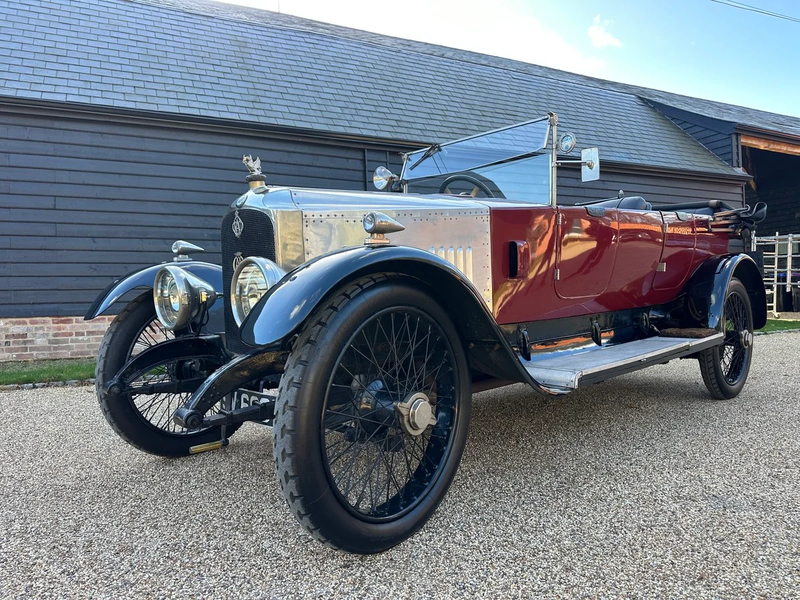
- Beautiful burgundy paintwork/black fenders in very good condition
- Correct unpainted bonnet in aluminium as shown
- Black 20 inch wire wheels with rare optional two spare wheels fitted with 6 brand new vintage tyres
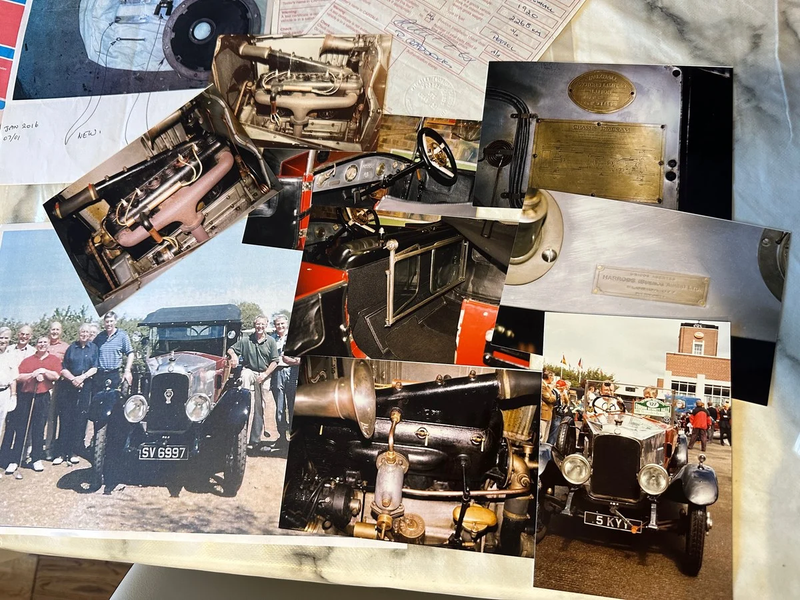
- Original Harrods (Buenos Aires) Ltd. supplier's plaque still present
- Bodywork presents as a outstanding well-preserved example of a vintage tourer
- Period-appropriate (potentially original) black upholstery with seat squab work in the early 2000s
- Dashboard houses original instrumentation in what we are told is working condition
- Open tourer configuration ideal for vintage rallying and events
- Factory tool kit as shown

The Mechanics
- Full mechanical overhaul and recommissioned by specialist pre-war engineer completed October 2025 and is ready to use
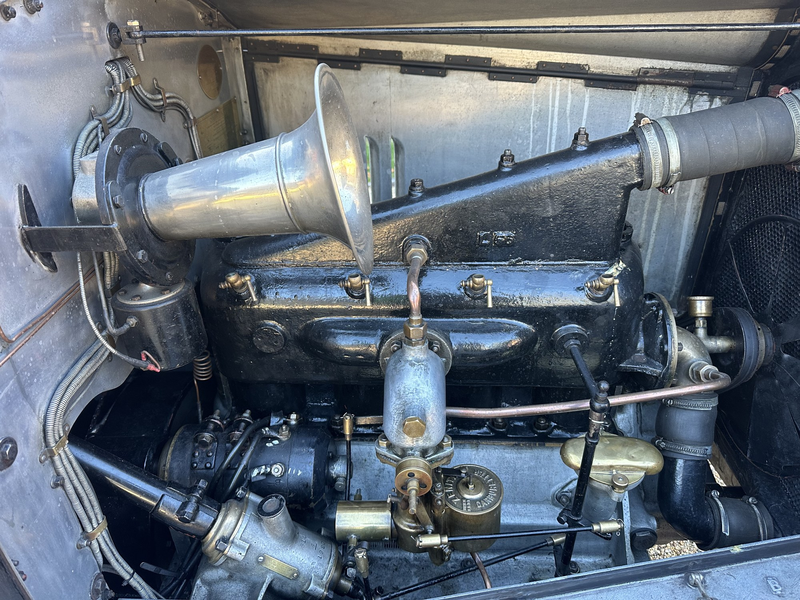
- 3,970cc 70bhp four-cylinder sidevalve engine
- Manual transmission
- Engine overhauled by specialists Formhalls in 2023
- Vendor states there is evidence of a top-end engine rebuild during the 1990s
- We are told that this work included new valves
- Braking system typical of the era with rear-wheel drum brakes
- Suspension features semi-elliptic leaf springs with friction dampers
This sale is subject to the Car & Classic Terms and Conditions. By bidding and/or making an offer, you also agree to the following:
✓ The seller is registered as a private seller which means consumer rights stemming from EU consumer protection law do not come into effect. However, you are still covered by Car & Classic’s own Terms and Conditions..
✓ We request that a non-refundable fee be paid if you are the lucky winning bidder at auction or if your offer is accepted Please refer to our helpful FAQs and T&Cs for specific rates.
✓ This vehicle is “Sold As Seen”, on an “As Is Where Is’ basis and without warranty. Photos and descriptions are solely for guidance purposes and it's customary to carry out a full inspection of the vehicle prior to purchase for your own peace of mind.
✓ VAT is included in the buyer's fee. VAT may or may not be included in the final bid or offer price, as specified in the listing.
✓ We want a smooth transaction just as much as you do and as such we run all UK-registered cars and motorbikes for sale on Car & Classic through an online HPI check to verify that they show no insurance database markers for damage or theft, and have no finance owing, allowing you to bid with confidence.
✓ We also check whether vehicles are recorded as being written off as part of an insurance total loss claim at the time an advert is placed on Car & Classic and we helpfully provide write-off category labels (Cat C/D/S/N) for your assistance. However, the presence or absence of a label does not guarantee the vehicle’s status and it is always worthwhile carrying out your own full vehicle history check before making an offer on a vehicle.
✓ Buyers are responsible for vehicle collection
or delivery. Importing vehicles may result in additional customs duties and import taxes so it's worth checking beforehand. It is the bidders responsibility to confirm import eligibility prior to purchase.