Beskrivning
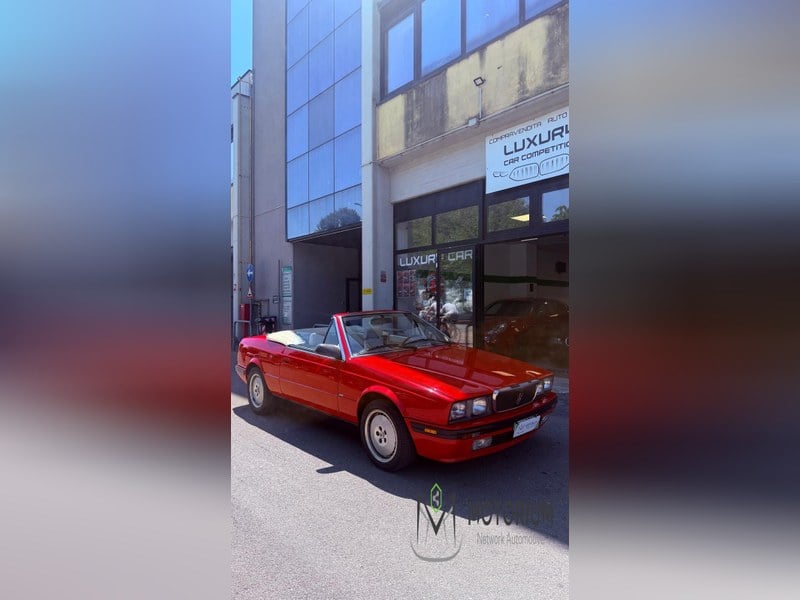
Såld Maserati Spider Biturbo Zagato 2. 0i V6. Alltid förvarad i garage.
Gott allmänt skick.
Byte av växellåda och koppling, mekaniskt felfri.
Original lack, rostfri botten.
Priset är inte förhandlingsbart.
Karaktäriserad av en klassisk och elegant trevolym coupé-linje (vars upphov ligger hos Maseratis interna formgivare Pierangelo Andreani, Chefdesigner Maserati, delvis influerad av Giugiaro, som ritade Quattroporte från 1979 som Biturbo inspireras av[1]) och med en teknisk uppsättning som är klassisk (framåtriktad longitudinell motor, bakhjulsdrift, framvagnar med oberoende hjul, bakvagn med pendelarmar och bromssystem med skivor fram och bak), Biturbo lanserades 1982.
Motorn, en dubbelcambers V6 förgasad, härstammade från Merak och skiljde sig genom antalet ventiler (3 per cylinder i stället för 2) och genom turbo-systems med två turboaggregater, en per bank ( därav namnet Biturbo).
Motor från en Maserati Biturbo från 1985 på 2, 5 liter med 18 ventiler och IHI-biturbo[2]. Det var en av de första gatbilarna som använde ett multi-turbo-system[3].
För att möta den planerade produktionen av 35 exemplar per dag, monterades endast motor och fjädring hos Maserati i Modena; resten av bilen tillverkades hos Innocenti i Milano Lambrate.
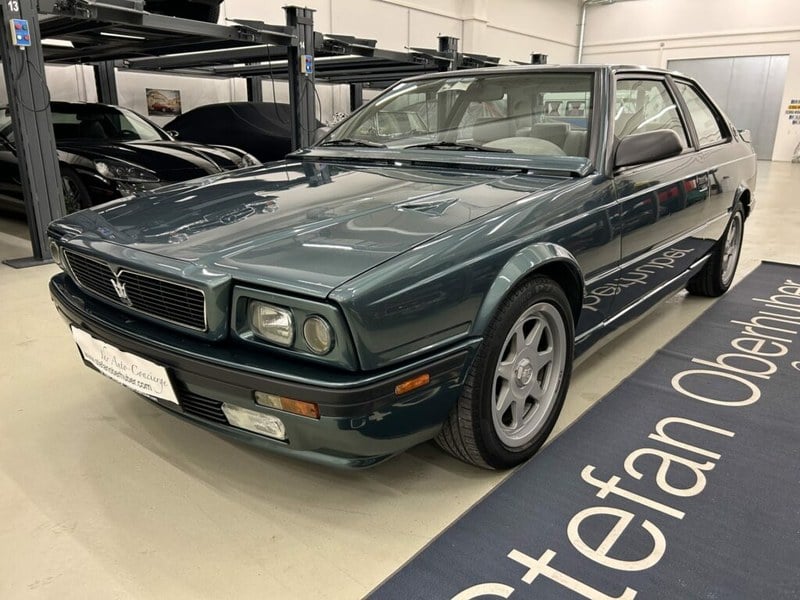
År 1984 presenterades Biturbo S, varav 1 038 exemplar byggdes fram till 1986, med en 2-liters motor som förbättrats genom införandet av en intercooler som kunde öka trycket i turborna, till 205 hk, 4 skivbromsar, interiörer med olika Missoni-tyger för sätena, olika instrumentering och sportigare lack med svart nätdesign i fronten, mörkade karmar, lättmetallfälgar, NACA-luftintag på motorhuven (för att kyla intercooler), bakvinge, svarta stötfångare och fasersidor med sidor i minilace.
Å andra sidan infördes samma år ett turbostyrningssystem kallat M. A. B. C., Maserati Automatic Boost Control, som tvingade att begränsa övertrycket i turbinerna.
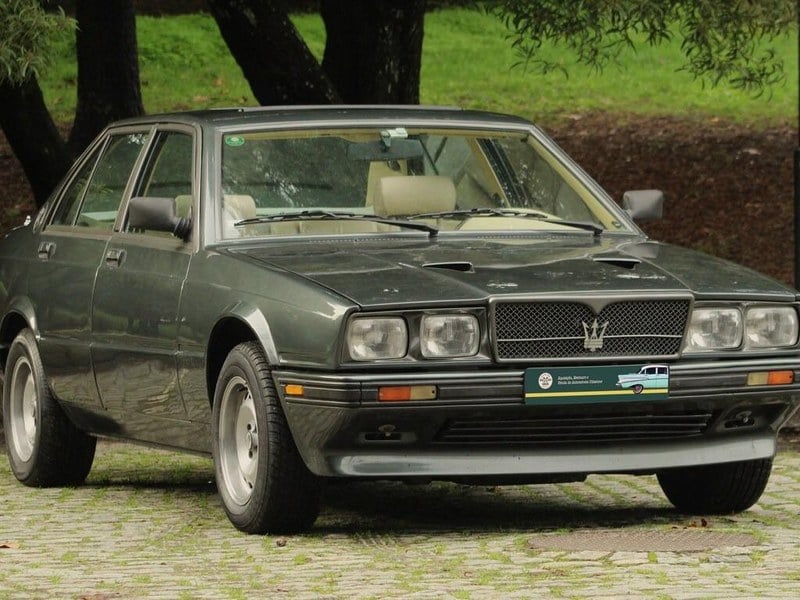
En Maserati Biturbo 420i från 1986
År 1985 presenterades även Biturbo 425 och Biturbo Spyder. Den första var tvåhv siya sedank sedan baserad på coupé-plattformen förlängd, medan den andra var en tvåsits spider baserad på den förkortade plattformen, född ur Zagatos skiss. Båda drevs av en 2, 5-liters V6 biturbo på 192 hk. Några månader senare blev Biturbo 420 och Biturbo Spyder 2. 0 tillgängliga, bara i Italien, med en 2. 0 V6 reducerad cylindervolym till 1996 cm³ och effekt 180 hk.
1986 introducerades även Biturbo 420 S, med estetiska varianter liknande coupé S och motor på 205 hk. Endast 2810 exemplar av 420 och 254 av 420 S producerades innan nya motoriseringar.
1987 antog alla motorer elektronisk bränslepåfyllning Multipoint, vilket gav jämnare gång och något högre effekt men tappade den karaktäristiska leveransen från förgasarmotorer: 187 hk för Biturbo 2. 0i (coupé och Spider) och Biturbo 420i, 220 hk för Biturbo 2. 0 Si och Biturbo 420 Si som även fick bredare fälgar (samma diameter 7x14) och 196 hk för Biturbo 2. 5i (coupé och Spider) och Biturbo 425i.
1988 en restyling av designern Marcello Gandini[6] revolutionerade serien. Alla versioner fick en mjukare front, nya stötfångare, olika fälgar, nya interiörer med ändringar i instrumentbräda, säten, dörrpaneler och betydligt förbättrad finish. Omskalade eller nya motorer: i grunden var det 1996 cm³ V6 biturbo med tre ventiler per cylinder och bränsleinjektion på 223 hk som drev Biturbo 222 (coupe), Biturbo 422 (sedan) och Spider 2. 0i.