The Homologators – Renault Clio Williams

October 18, 2024
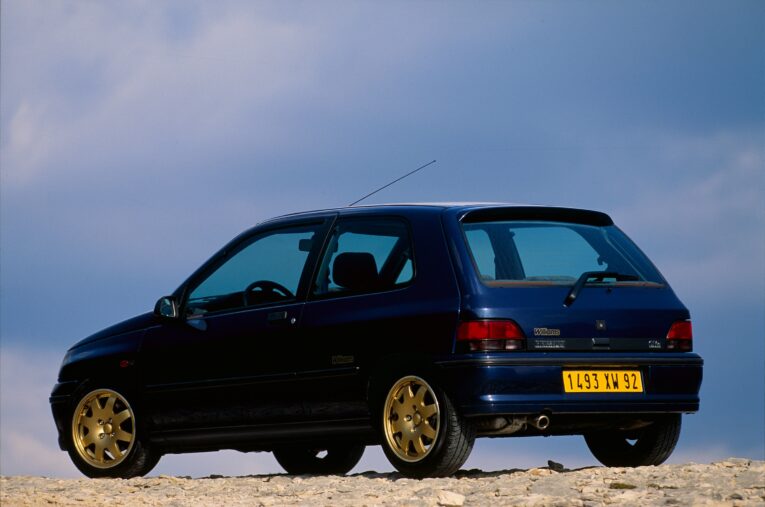
Nicole? Yeah, Papa’s on the phone. He says you can keep your 1.4 Gallic grocery getter, he’s just picked up a Clio Williams and buggered off to the Nürburgring.
Most normal folk will remember the Renault Clio from that famous ad featuring an incredibly French father and daughter as they each steal away in their respective Renault runabouts – it was the most popular series of car advertisements ever aired in Britain after all. But we’re not normal people, far from it, and the Clio that we recall most fondly will always be the Williams edition, in all its hot hatch glory.
Oh Renault. You used to be so cool. Making spicy versions of your small family cars for decades, cementing the idea of brilliant yet practical little French go karts in the hearts and minds of the petrolhead public, beginning with the truly excellent Renault 5 Turbo and then later with the aforementioned Clio Williams, proving that the hot hatch phenomenon wasn’t just the reserve of the ’80s.
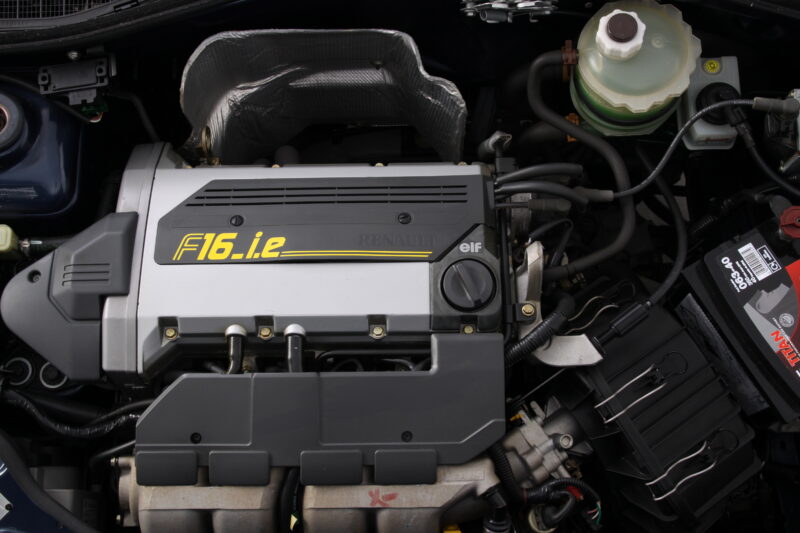
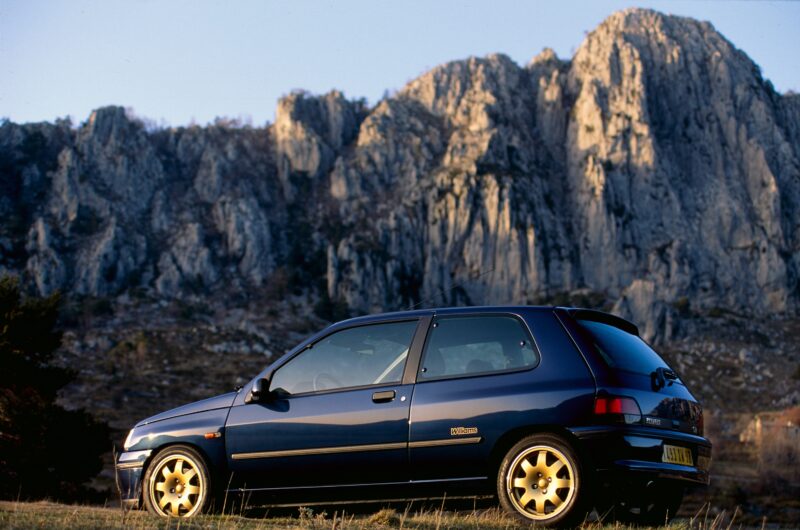
Bolstered by the success of the Renault 5 Turbo, the French auto maker would have another crack at the mad mini game in ’93, taking its then current supermini and sticking a naturally aspirated 2.0-litre DOHC multipoint fuel injection inline-four cylinder engine under the bonnet. Good for a 0 to 60 time of around seven-and-a-half seconds and a top speed of circa 135mph the Clio Williams was certainly quick enough, but power is nothing without control and Renault ensured the car was plenty agile, too, by binning off anything it deemed as unnecessary. Things like ABS, for instance, and a stereo system, ensuring that the Clio Williams tipped the scale at well under a tonne. 981kg to be precise.
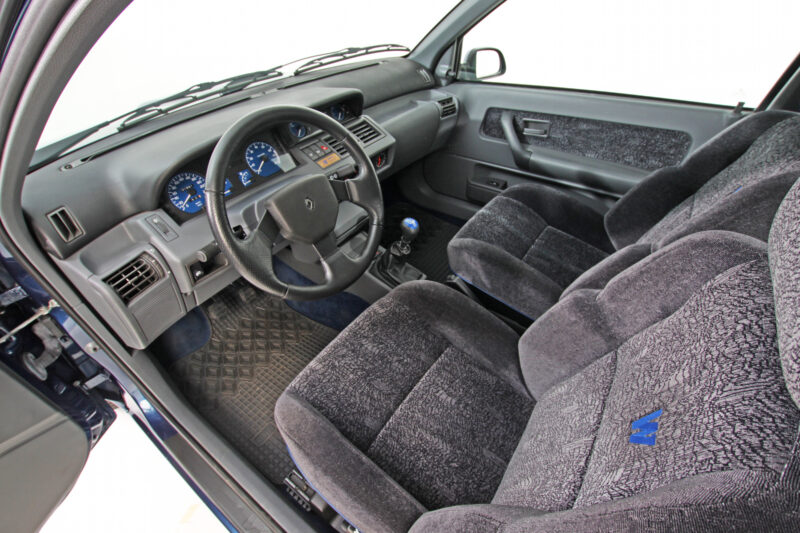
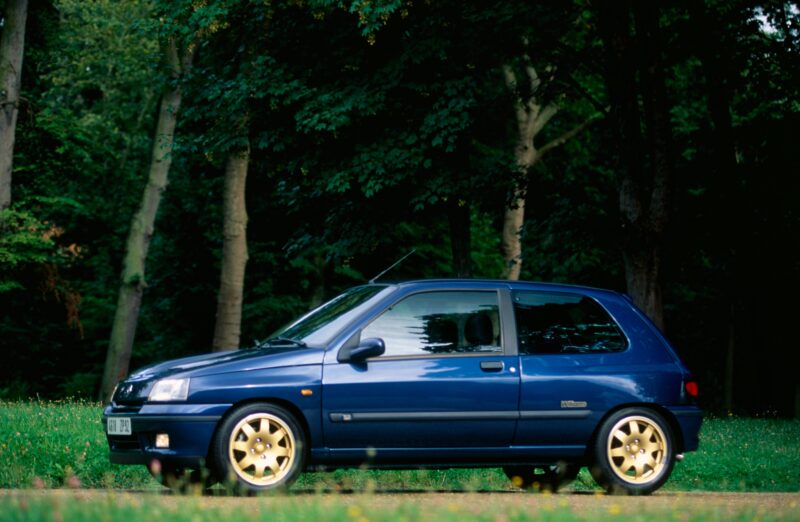
It’s common knowledge that all hot hatchbacks have to look the part, it’s par for the course, and not subtly altering the styling of said quick carriages just isn’t cricket, and so with that in mind, and in a frankly genius bit of marketing, Renault (more specifically Renault Sport, the firm’s motorsport division) slapped a load of Williams F1 badges on the thing, gave it some swanky gold Speedline alloy wheels and called it done.
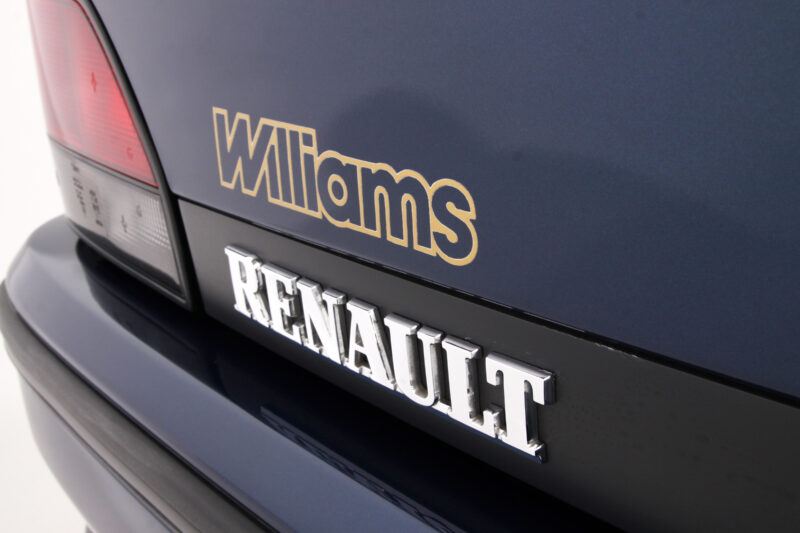
The thing is, Williams had absolutely nothing to do with the development of the car. But we didn’t care, none of us did. The mere existence of the nomenclature was enough and the initial, limited production run of 3,800 individually numbered cars sold like the hottest of gateaux, forcing Renault to build a whole 1,600 more to satisfy demand, such was the car’s popularity.
That initial production run was the result of Renault wanting to go rallying again and due to homologation requirements it had to build 2,500 road going examples. For some reason they overshot by over a thousand but as we’ve just mentioned, it had no trouble selling them to an eager public.
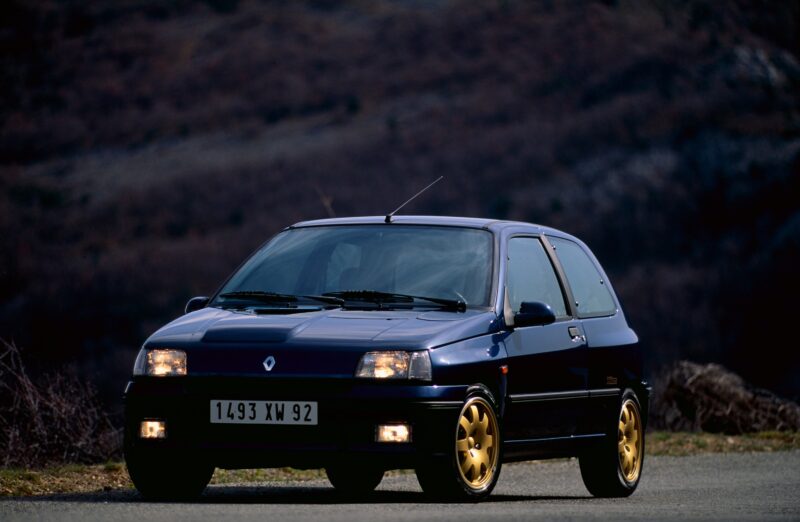
OK, so we may have been a little glib earlier on when mentioning the specs of the car because the Clio Williams is so much more than a 16S with an extra bit of displacement. The engine, producing 148bhp and 126lb ft of torque, features a longer stroke, larger bore size, bigger valves and a stronger diesel crankshaft than the 16v lump upon which it was based. New pistons, camshafts and conrods and a lightweight four-to-one exhaust manifold complete the package.
The suspension, too, features a reinforced front subframe (nicked from the Clio Cup race car), beefier springs and dampers, as well as thicker anti-roll bars. The JC5 gearbox was also uprated and features revised ratios, ensuring all of that eminently usable power gets to where it needs to go.
But just like the movie studio that knows it has a cash cow on its hands and so churns out a bunch of sequels knowing full well they’ll make just as much money as the original, Renault, somewhat unfairly in the eyes of those who purchased an original Williams Clio under the (as it turns out false) promises of exclusivity, quickly put a second version into production a year later.
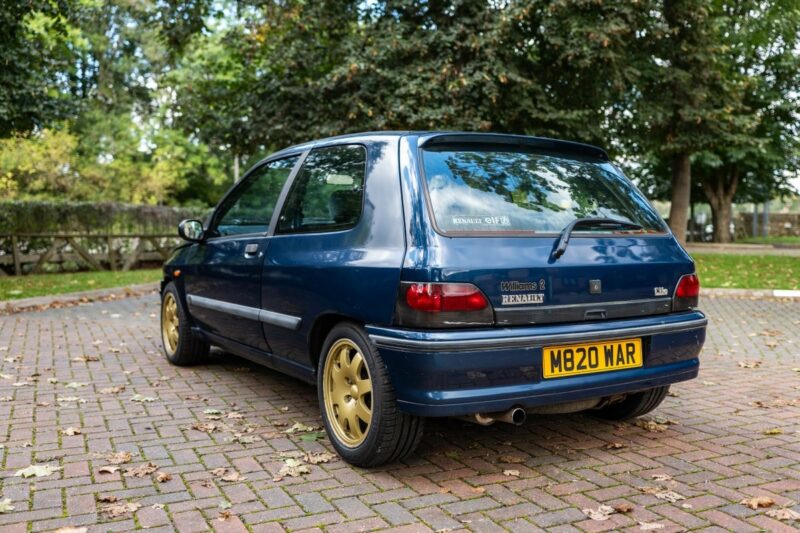
Based on the phase-two Clio Mk1, the Williams 2 was pretty much identical to its predecessor and owners of the OG cars were not happy. Feeling that this new model somewhat diluted the exclusivity, and indeed the value of their cars, a bad taste was left in the mouths of many a Clio connoisseur. Renault didn’t seem to care though and in ’95 it brought out a third iteration of the Clio Williams. It knew it could sell them and so forged ahead, regardless of how its customers felt about the matter and in total, just over 12,000 Clio Williams were made between ’93 and ’96.
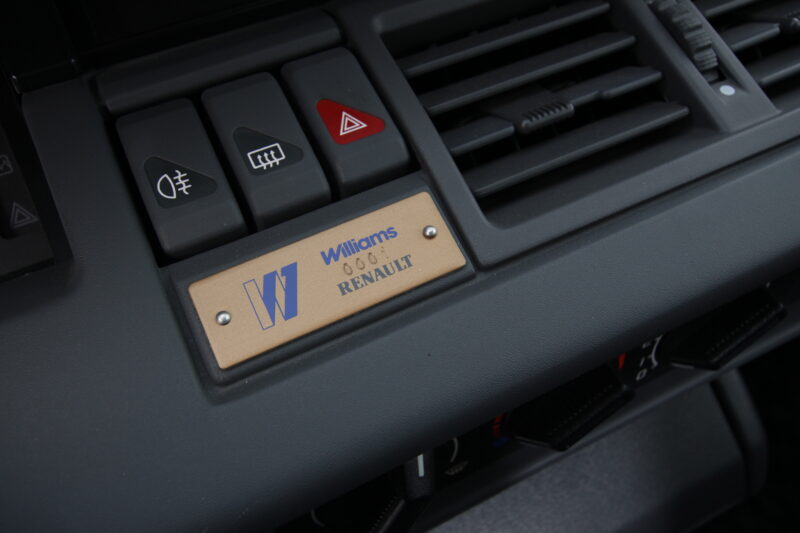
Today it’s that first batch of cars that are the most desirable, which means they don’t come to market as often as the later phase 2 and 3 cars and so it’s these models that you’re more likely to find for sale, but surprisingly, prices aren’t that disparate between the three. Expect to pay around £25,000 for phase 2 and 3 cars in top condition and perhaps £2-4,000 more for an original, plaque-on-the-dash phase 1 in similar shape.
Whichever you choose though you’ll be in for a treat because even today a good Renault Clio Williams, regardless of its year of manufacture, still makes for an incredibly capable, hugely enjoyable and inherently engaging hot hatch that can still cut it with more modern fare. You’re not going to lose money on it either. Unless you bin it into a tree, or let it rust into oblivion.
Have we just convinced ourselves to pick one up? I spy with my little eye, something beginning with “sod it, why not?”…