Monte Marketing – and the Mini!

October 18, 2023
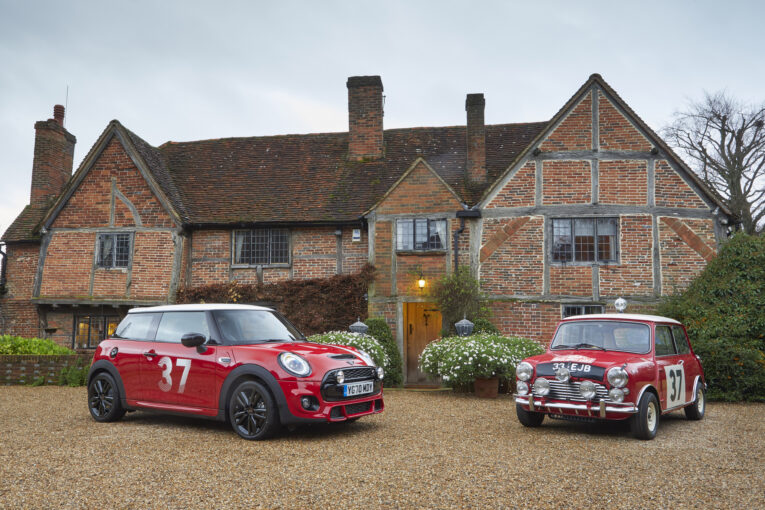
For decades, the idea of an iconic rallying legend, whether that’s Burns, McRae, Loeb or Ogier, has seemed very much like part of the motorsport landscape. Manufacturers have long since worked out that taking a talented wheelman and co-driver, sticking them in something that resembles a showroom product, and then winning gruelling rallies with it, is a tried-and-tested formula for selling the more vanilla model line-up fayre, as was the case with the Mini.
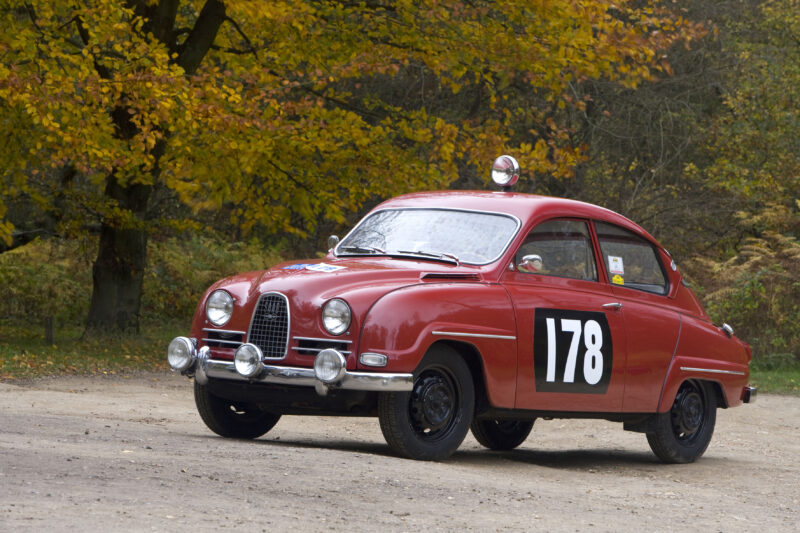
Saab arguably invented the concept of the rally superstar for the showroom and it’s fair to say that the charismatic Eric Carlsson set the template, winning the Monte Carlo rally in ’62 – and catapulting the weird little FWD Swedish car into the public’s imagination. Saab’s marketing team deftly launched the ‘Monte Carlo’ high performance special edition, with extra carbs, extra power and your chance to drive like Mr. ‘On the Roof’ himself, and the public quickly responded – with their wallets. Carlsson would take the title again in ’63, leaving the way open for another ‘underpowered’ FWD superstar to (literally) come and steal the limelight. Enter stage left – the Mini.
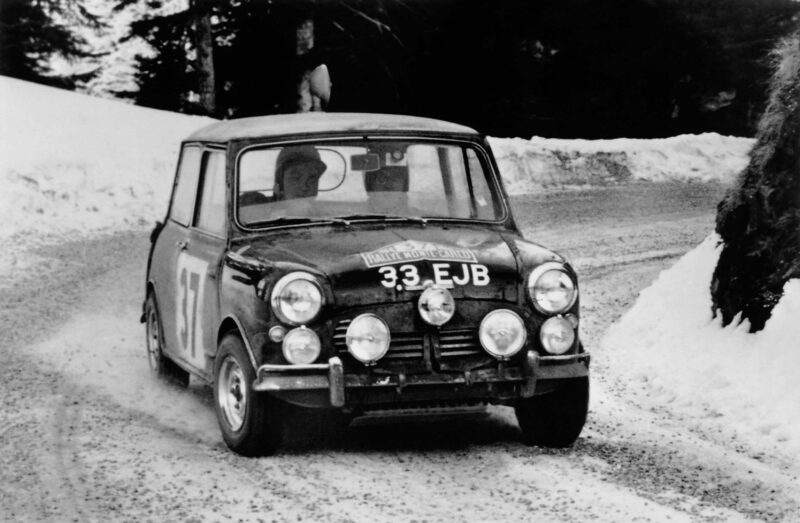
The hat-trick of exploits between ’64 and ’67 are the well-known stuff of legend, of course, and we all love the narrative. Plucky Brit teams takes an A-Series-powered David to a rally of Goliaths – and gives them all a bloody nose. It was the stuff of public relations fantasy made real. Overnight, the humble Mini – and its wheelmen – became national heroes. Paddy Hopkirk and his co-driver Henry Liddon were front page stars, and EVERYBODY wanted a Mini in their driveway.
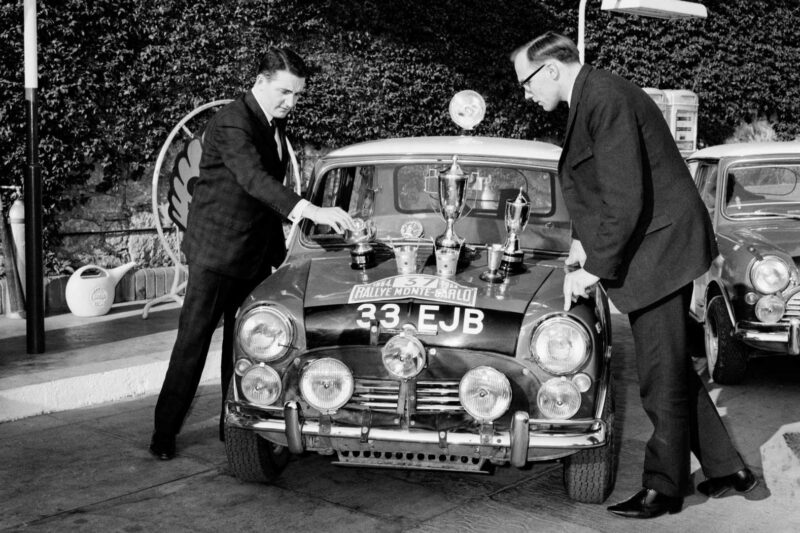
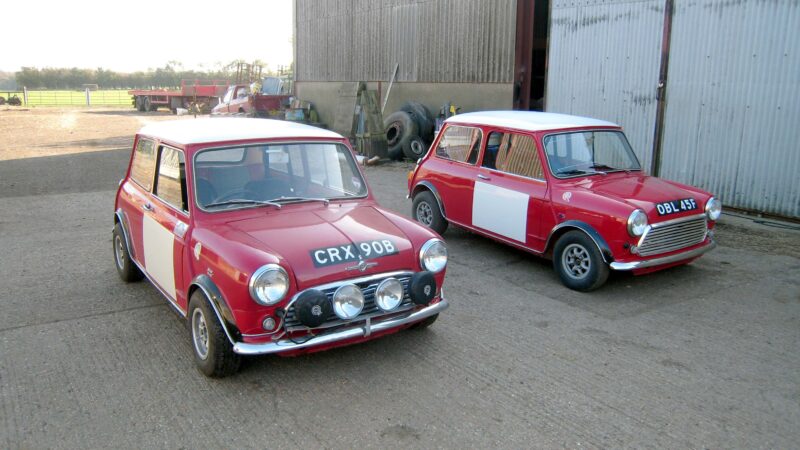
Hopkirk’s Finnish team-mates Timo Mäkinen and Rauno Aaltonen would add two further overall victories in 1965 and 1967 to the BMC trophy cabinet, despite the petty regulatory issues that saw the organisers strip the ’67 car of its title on a lighting technicality. Nonetheless, the images of a Tartan Red Mini Cooper with a white roof were by now seared onto the retinas of the buying public. It’s a motif that Rover – and subsequently BMW – would return to many times afterwards. Whenever the marketing team needed to tug on the heartstrings of would-be owners, a dash of red paint, a white roof, and maybe a Cooper stripe or two would always do it. The run-out classic cars were often shown in this hue, with many press and brochure shots perpetuating the legend – and when you think that we were already some THIRTY years after the event at this point, you have to admire the staying power of the whole marketing spin.
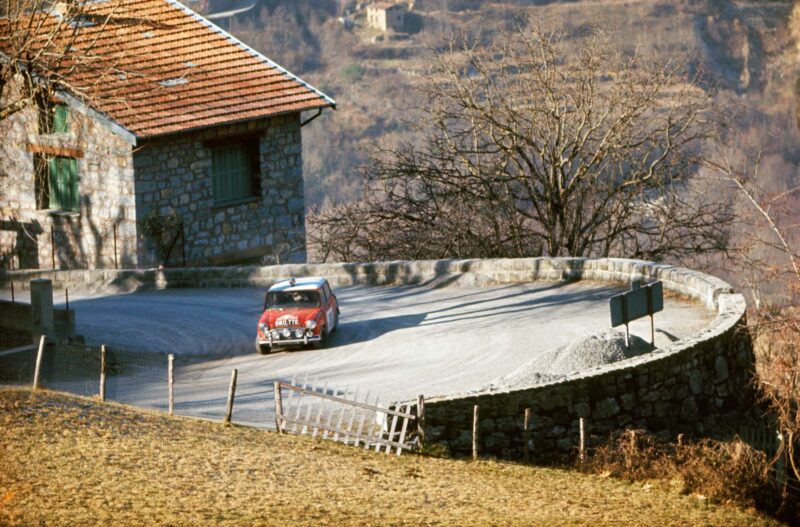
It was far from over yet though; the 1997 ACV30 concept car, then heralding the future direction of the forthcoming ‘new’ Mini, was unashamedly launched actually AT the Monte Carlo rally of the same year, and although the Frank Stephenson design that was ultimately chosen perhaps looked much nicer, even this concept was, you’ve guessed it, red, with a white roof – and had a bunch of spot lamps on the front, naturally. Also, no prizes here for guessing the colourways chosen for the launch shots of BMW’s new baby Cooper when that eventually hit the press, either.
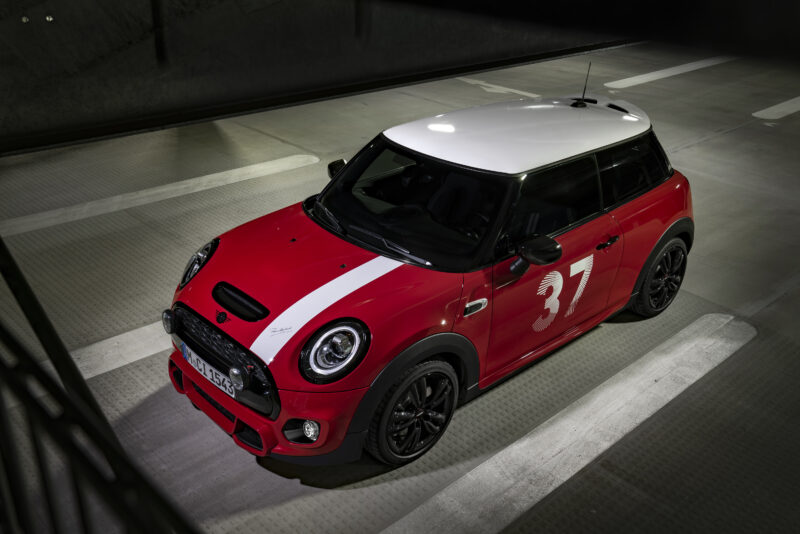
It’s a tried and tested formula that will doubtless be with us for as long as the Mini will. Every decade or so, BMW brings out a new ‘Monte Carlo Edition’ for Europe or the US, and even last year, a Paddy Hopkirk commemorative model for our Stateside friends. Always red. Always a white roof. But then, when it works so well and looks so good, can you really blame them?
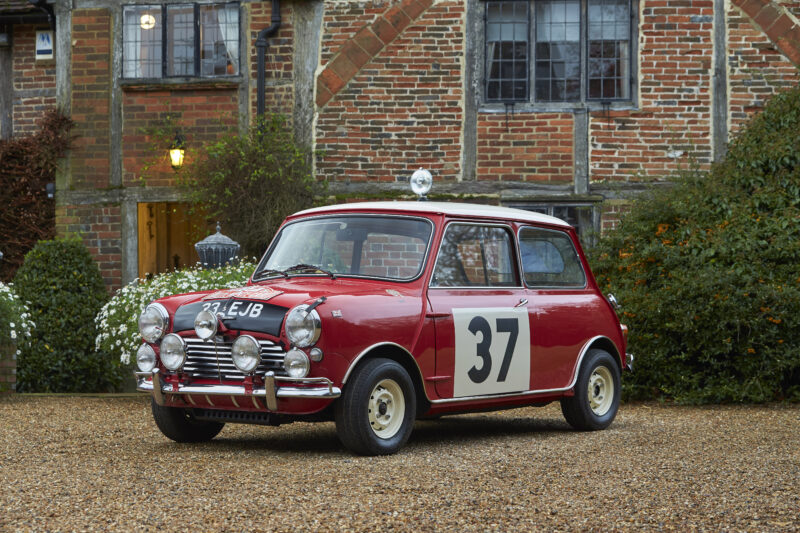
As we now approach almost six decades since that first sensational result, it’s good to look back and see what the original BMC Mini did for its BMW offspring with that fabled win. Issigonis may have given the humble Mini an ethic, a profile and a design. John Cooper may have given it its sporting credentials. But, it’s been the Monte Carlo Rally that has truly provided the Mini with its indelible identity. Fancy one of your own? Whether you favour classic or modern, click here.