
Beschrijving
LHD
Located in the USA... dry no salt on roads....
- US-specs... a clean and solid driver coming soon and on request please...
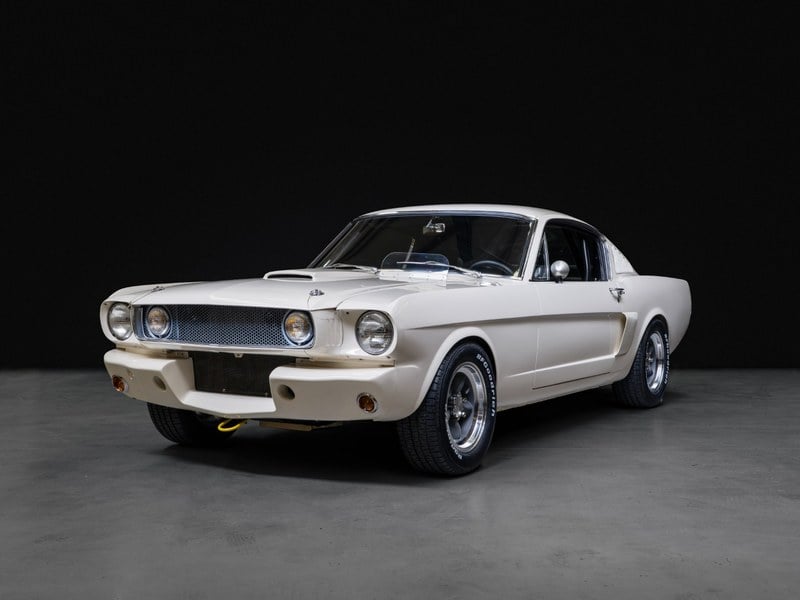
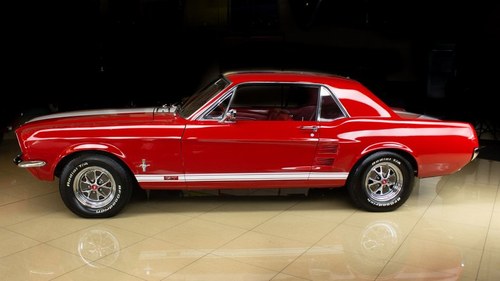
1967 Ford Mustang GT Coupe - US-specs... Full Restored + Marti Report... S code 390
Price:$Best offer please.... USD dollars...
Engine
ENGINE SIZE
V-8 S code 390
Body
BODY STYLE
Coupe
Basic
YEAR
1967
MAKE
Ford
MODEL
Mustang
Interior
..................
Specs and history
- details above
The first-generation Ford Mustang was manufactured by Ford from March 1964 until 1973. The introduction of the Mustang created a new class of automobile known as the pony car. The Mustang’s styling, with its long hood and short deck, proved wildly popular and inspired a host of competition.
It was initially introduced on April 17, 1964, as a hardtop and convertible with the fastback version put on sale in August 1964. At the time of its introduction, the Mustang, sharing its platform with the Falcon, was slotted into a compact car segment.
1967–1968
Mustang 1967–1968
Nationale oldtimerdag Zandvoort 2010, 1968 FORD MUSTANG, DL-16-53 pic2. JPG
1968 Ford Mustang hardtop
Overview
Production August 1966 – August 1968[43]
Assembly Dearborn, Michigan
San Jose, California
Metuchen, New Jersey
Valencia, Venezuela
Mexico City, Mexico[2][3]
Lima, Peru
Designer Ross Humphries (1965)[citation needed]
Don Kopka[44]
Body and chassis
Body style 2-door hardtop
2-door fastback
2-door convertible
Powertrain
Engine 200 cu in (3. 3 L) Thriftpower I6
289 cu in (4. 7 L) Windsor V8
302 cu in (4. 9 L) Windsor V8
390 cu in (6. 4 L) FE V8
427 cu in (7. 0 L) FE HiPo V8
428 cu in (7. 0 L) Cobra Jet V8[45]
Transmission 3-speed manual
4-speed manual
3-speed automatic
Dimensions
Wheelbase 108 in (2, 743 mm)
Length 183. 6 in (4, 663 mm)
Width 70. 9 in (1, 801 mm)
Height 51. 6 in (1, 311 mm)
Curb weight 2, 758 lb (1, 251 kg) (base)[46]
The engine, with open hood
(view as a 360° interactive panorama)
The 1967 model year Mustang was the first significant redesign of the original model. Ford's designers began drawing up a larger version even as the original was achieving sales success, and while "Iacocca later complained about the Mustang's growth, he did oversee the redesign for 1967."[47] The major mechanical feature was to allow the installation of a big-block V8 engine. The overall size, interior and cargo space were increased. Exterior trim changes included concave taillights, side scoop (1967 model) and chrome (1968 model) side ornamentation, square rear-view mirrors, and usual yearly wheel and gas cap changes. The high-performance 289 option was placed behind the newer 335 hp (250 kW; 340 PS) 390 cu in (6. 4 L) FE engine from the Ford Thunderbird, which was equipped with a four-barrel carburetor. During the mid-1968 model year, a drag racer for the street could be ordered with the optional 428 cu in (7. 0 L) Cobra Jet engine which was officially rated at 335 hp (250 kW; 340 PS) all of these Mustangs were issued R codes on their VINs.[48]
The 1967 Deluxe Interior was revised, discontinuing the embossed running horse motif on the seatbacks (the source for the "pony interior" nickname) in favor of a new deluxe interior package, which included special color options, brushed aluminum (from August 1966 production) or woodgrain dash trim, seat buttons, and special door panels. The hardtop also included upholstered quarter trim panels, a carryover from the 1965–1966 deluxe interior. The 1967 hardtop also had the chrome quarter trim caps, carried over from 1965–1966, but these were painted to match the interior in 1968 models. The 1967 deluxe interior included stainless steel-trimmed seat back shells, similar to those in the Thunderbird. These were dropped at the end of the 1967 model year and were not included in the woodgrain-trimmed 1968 interior. The deluxe steering wheel, which had been included in the deluxe interior for the 1965–1966, became optional, and could also be ordered with the standard interior. The 1968 models that were produced from January 1968 were also the first model year to incorporate three-point lap and shoulder belts (which had previously been optional, in 1967–1968 models) as opposed to the standard lap belts. The air-conditioning option was fully integrated into the dash, the speakers and stereo were upgraded, and unique center and overhead consoles were options. The fastback model offered the option of a rear fold-down seat, and the convertible was available with folding glass windows. Gone was the Rally-Pac, since the new instrument cluster had provisions for an optional tachometer and clock. Its size and shape also precluded the installation of the accessory atop the steering column.[49] The convenience group with four warning lights for low fuel, seat belt reminder, parking brake not released, and door ajar were added to the instrument panel, or, if one ordered the optional console and A/ C, the lights were mounted on the console.
Changes for the 1968 model increased safety with a two-spoke energy-absorbing steering wheel, along with newly introduced shoulder belts. Other changes included front and rear side markers, "FORD" lettering rem...
To learn more about this vehicle, please email us from the message seller form on this ad ... rcc
- Shipping is at the buyers added cost....
............