
Description
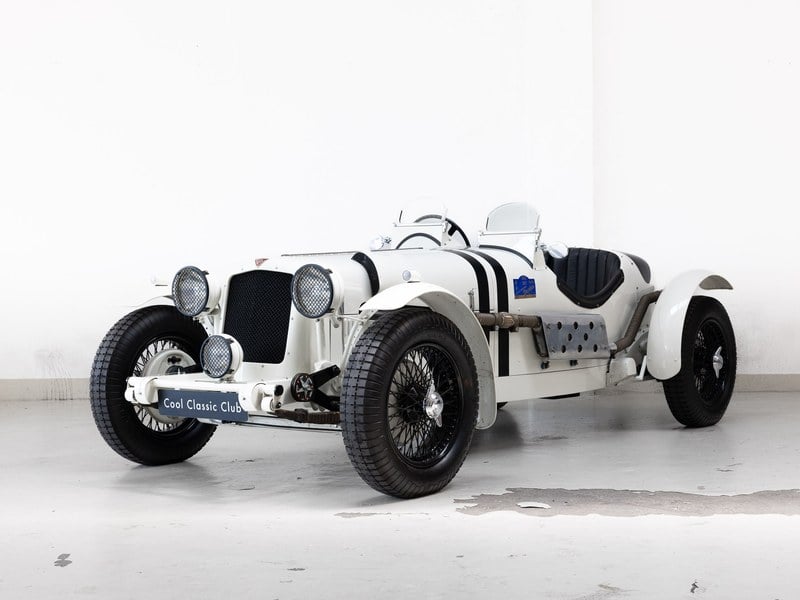
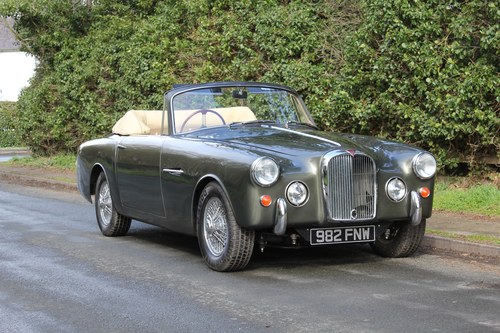
A completely unique, beautifully re-modelled Alvis TD21 S2 in the style of Swiss Coachbuilder Hermann Graber’s stunning, bespoke Alvis creations.
Carrosserie Hermann Graber built their first Alvis body in 1946 and by 1953 were the Swiss distributor for Alvis Cars. In 1955 they produced the first Graber-bodied prototypes based on an Alvis chassis. After Alvis designer G. T. Smith-Clarke left the company, in 1955 Graber showed his Alvis TC 21/ 100 ‘Grey Lady' to the company, a design which combined classical elegance with a modern ponton style body. Alvis were impressed by the design and similar bodies went into series production, built under licence by two British firms, initially Willowbrook and later the famous Rolls-Royce coachbuilder Park Ward. With their much larger production capacity, Park Ward took the Swiss drawings and adapted them to produce a car with more interior space than the Graber original. The Alvis TD21 and all subsequent models – TE, TF saloons and drophead couples all followed the basis of Graber's original design.
In Switzerland Graber continued to build to customer order special-bodied cars based on Alvis chassis at a rate of not more than ten per year. These included four seater coupe-bodied cars, cabriolets, and four-door specials. Graber's bodies were lower than the standard-bodied Alvis cars and featured more steeply raked A and C pillars. Graber was also able to carry out individual bespoke designs and modifications to suit particular customer requirements.
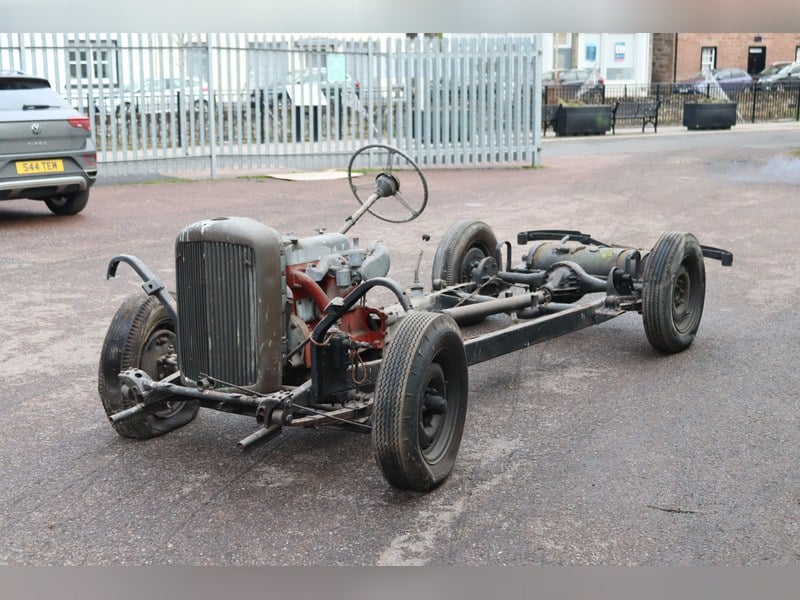
The vehicle we present here started out as a Leeds-registered TD21 saloon requiring total restoration. The owner decided on an ambitious bespoke conversion to a short-chassis roadster, in the style of Graber's one-off designs. The concept for the project was of creating a car one of Graber's customers might have originally desired. Using design clues from iconic cars of the period such as the roofline of a Ferrari 250 and the ‘bumperless' look of Austin Healey, Aston Martin and Ferrari race cars, the design was envisioned as giving this Alvis a sportier look. The original dimensions would be kept apart from shortening the chassis and removing 6” from the space behind the B post door shut and the rear wing fold line which continues down from the top of the wing. A Graber styling detail on the front wing mimics the side air intake which was a Graber hallmark.
The build involved saving and restoring wherever possible the original structure of the car, replacing all worn out components with new or quality refurbished standard items. Body panels were made in the traditional way and the completed body was given a very high quality paint finish. It was very important to keep the original underpinnings of the car so the engine and gearbox combination was kept in period for a TD21 S2 with the ZF S5-17 gearbox, which at the time was a key development in ZF's history as the first production 5 speed gearbox. All body fittings, trim and dash configurations were kept to the model standard but with full restoration and using quality materials - again in keeping with the standard expected of an Alvis at the time. Subtle improvements to some components were made when replacing items such as bottom wishbones on the suspension with rally quality copies of the originals and with both radiator and fuel tank being made to a higher specification than original using lightweight aluminium. Other improvements included electronic ignition, alternator upgrade, LED lighting in the dash and a new wiring loom built to the original Lucas pattern. The hood was an interesting challenge but the finished design has the ‘quality feel' an Alvis Graber owner would have expected and features a superb inner lining. The hood was trimmed to a very high standard by a Rolls-Royce trained artisan using traditional techniques and materials. He also undertook the restoration of the seats and carpet trim using superb Ulster Wilton wool carpets and high quality hide. The front bottom wishbones are made from high tensile steel to the original pattern by a company who designed and built Paris-Dakar race cars so the strength and quality of these items is superb. New rear springs were fitted and suspension bushes were upgraded to polyurethane for better durability and ride comfort. The car has new front suspension components and features the familiar period Dunlop front disc brakes and rear drum setup.
The chassis was rebuilt and strengthened using high quality steel and shortened in the mid-section to accommodate the body modification. This kept the original front and rear geometry design.
All the tub steelwork was refurbished and replaced where necessary, preserving the original integrity of the structure. All body panels were built onto to the tub using traditional methods including lead loading to achieve the high quality and period feel of the car.
The engine was totally stripped and crack tested before being fitted with all new internal components, the machining introducing upgrades such as hardened valve seats. The flywheel was balanced and slightly lightened to achieve a livelier feel and quicker pickup than with the standard setup. The carburettors were sent for total refurbishment by Burlen Fuel Systems to ‘as new' specification. The exhaust manifold is wrapped in heat protective cloth to reduce engine bay heat but with a period race adaption rather than a modern coating. A light, high-strength bespoke propshaft delivers the power to the fully rebuilt rear axle.
A huge amount of attention was paid to the refurbishment and engineering of the original ZF S5-17 gearbox. With the help of some rare original ZK drawings, some new gears and components have been made and fitted to return this gearbox to the original feel of the day.
In all, £120, 000 has been invested in this unique car plus countless hours of dedicated work. There is a huge amount of information in the history file for this truly impressive machine which makes a glorious six-cylinder sound. We have described the Alvis as a ‘Graber Evocation' and it is a one-off ‘special' in every sense of the word. The restoration and conversion work has been completed to a very high standard indeed and it would not look out of place amongst a collection of the world's finest classic cars.