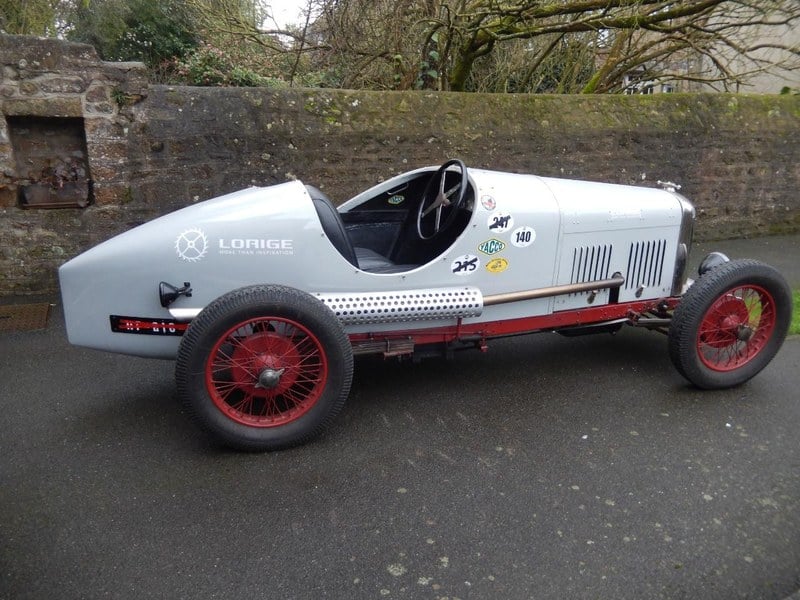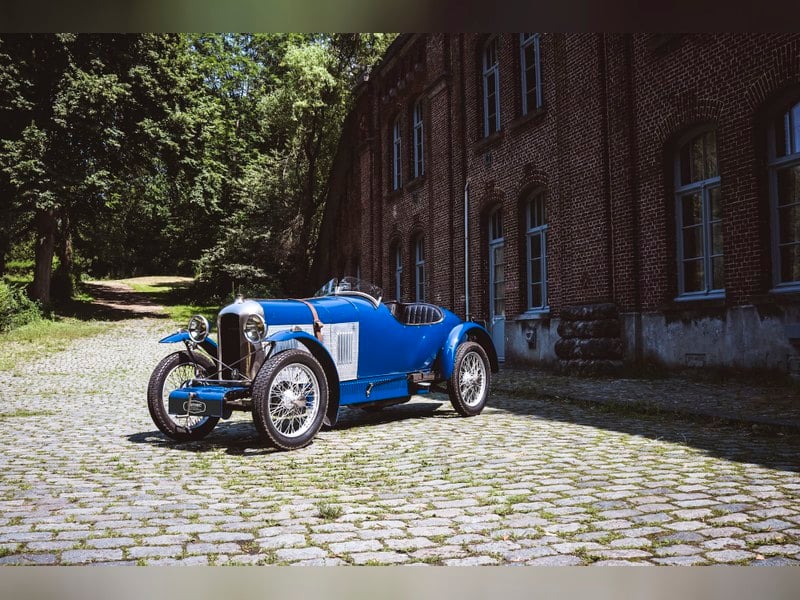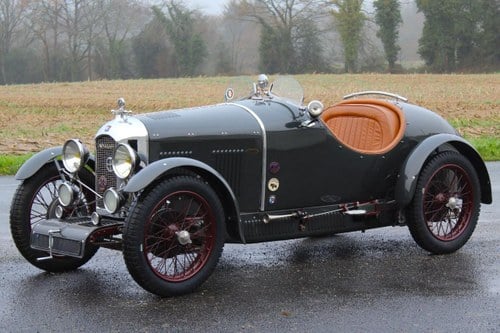

Description
French registration document
Full restoration by a professional workshop
Engine: inline-four
Displacement: 1100 cm3
Maximum speed 120 km/ h
- details above
The Amilcar CGSS is one of the most iconic and sought-after models of the French marque, produced between 1926 and 1929. Here are its main features and its history:
History and positioning:
The CGSS (Châssis Grand Sport Surbaissé) is an upgraded and lowered version of the CGS, designed to be more sporting and exclusive.
It was introduced in 1926 and quickly established itself as the favourite of the ‘gentlemen drivers’ in competition, thanks to its shorter wheelbase, its lower and more aerodynamic bodywork, and its more powerful engine.
The CGSS is famed for its victory at the Monte Carlo Rally in 1927 and for its role in the tragic accident of Isadora Duncan in 1927, whose scarf became caught in the spoked wheels.
Technical specifications:
Engine: 4 cylinders, 1, 074 cm³ (bore 60 mm x stroke 95 mm), 33 hp at 3, 800 rpm, enabling a top speed of 120 km/ h.
Transmission: 3‑speed gearbox (then 4 speeds from late 1928), rear‑wheel drive.
Chassis: Short wheelbase, tandem two-seater bodywork, with the characteristic doors and flared side panels.
Design: Slender line, rib on the nose and wings, fuel filler cap on the right side of the hood.
Braking: Brakes on all four wheels, an innovation for the era.
Production and rarity:
The CGSS was produced in small numbers, making it a very rare model and prized by collectors.
It is often regarded as one of the finest examples of French ingenuity in the realm of cyclecars and lightweight sports cars of the 1920s.