
Description
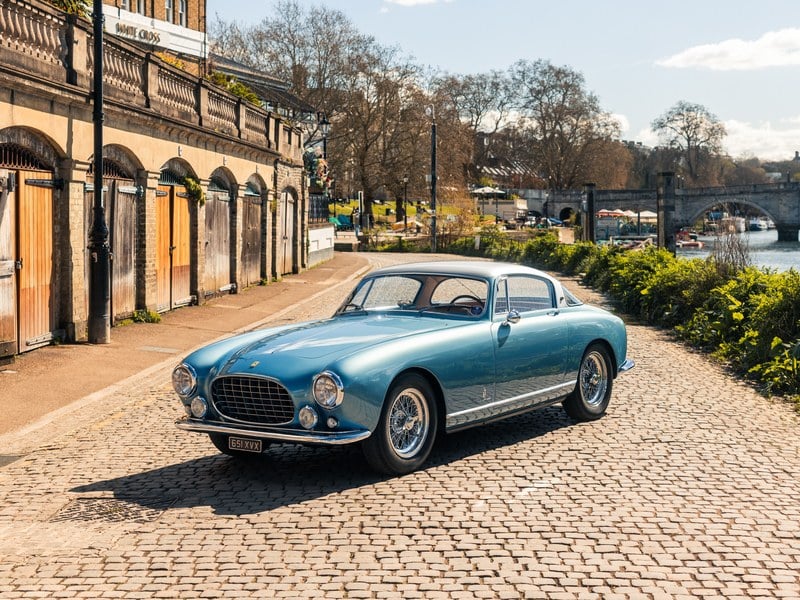
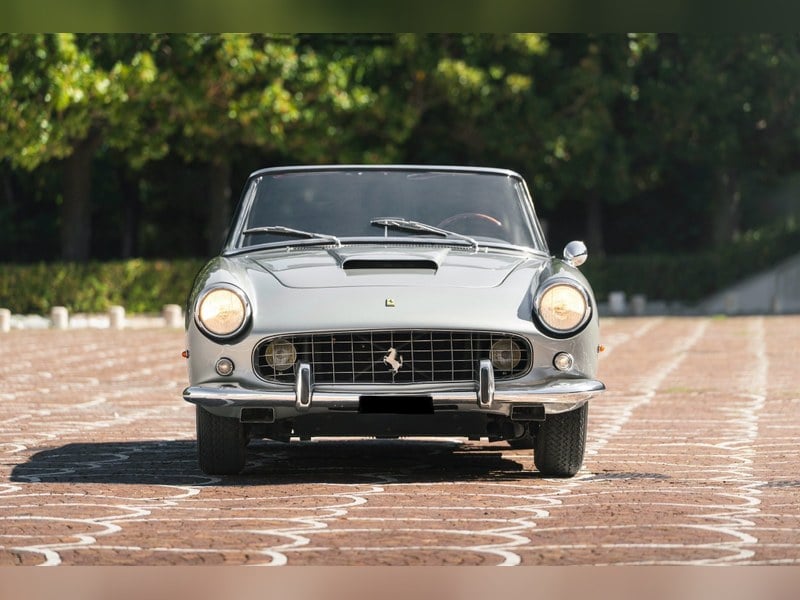
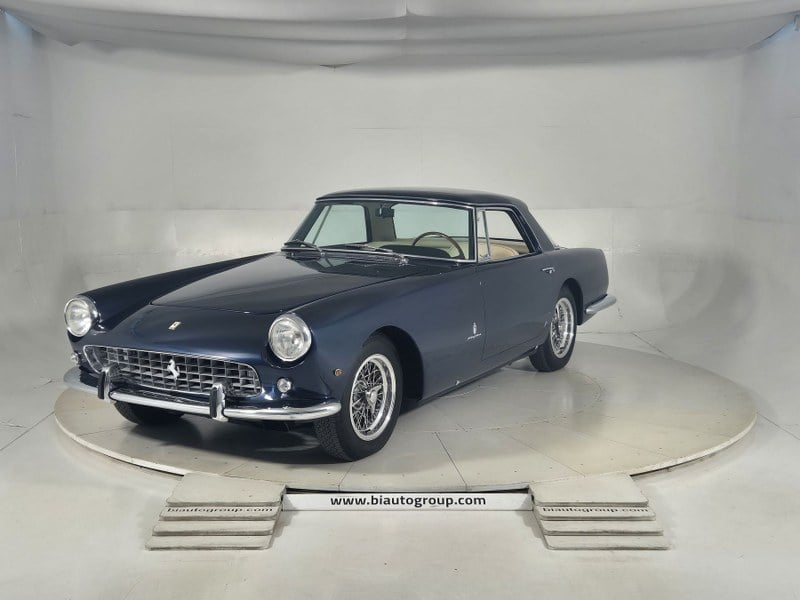
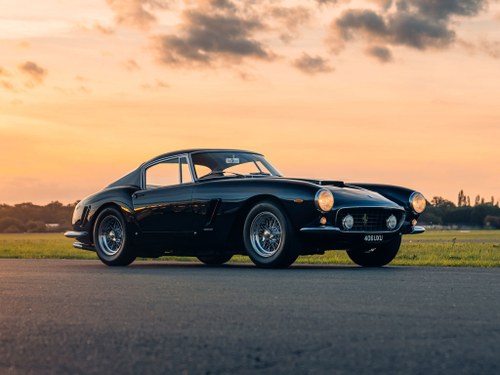
Price Upon Request The ultimate “supercar” of its day, a wonderfully balanced driving experience combined with stunningly beautiful bodywork One of just 77 SWB Berlinettas constructed in steel-bodied LHD form Desirable late-production example delivered new to Ferrari agents Martinelli & Sonvico of Lugano, Switzerland, in the distinctive colour scheme of Bianco Polo Park with Rosso leather interior; believed to be the only steel example delivered new in this colour combination Retained by only three careful UK-based owners between 1973 and today Restored to its current striking Blu Notte Metallizzato over Rosso interior and maintained to concours standard during current ownership by the UK’s top specialists with over £350, 000 in receipts Class winner at the 2014 Salon Privé Concours d’Elegance and winner of Best of Show at the 2015 Ferrari Owners Club Concours Ferrari Classiche Red Book certification, confirming its full matching-numbers chassis, body, engine, gearbox, and rear axle Extensively documented, including copies of factory build sheets, restoration invoices, and an accompanying historical report by marque expert Marcel Massini Further accompanied by an owner’s manual with leather pouch, tool set with leather roll, spare set of wheels and tyres as well as bespoke seat covers The 250 GT Short Wheelbase, or Passo Corto, represents one of the most significant, as well as one of the most accomplished of all Ferrari Berlinetta models built, arguably occupying the same ground as the 250 GTO. Indeed, without the SWB, there may not have even been a GTO, for the former’s basic chassis and 2400mm wheelbase—shortened by 200mm relative to its predecessor, the 250 GT Tour de France—underpinned the evolutionary design of the GT Omologato, affording it the benign handling so critical to its ultimate success. Just 165 SWB chassis were constructed in both alloy and steel body form; their Tipo-539 chassis clothed in exquisite Pininfarina-penned, Scaglietti-built coachwork. Power was provided by a 250 Testa Rossa-derived Tipo-168 3-litre V-12 engine to which a four-speed gearbox was mated, while, significantly, the model was the first production Ferrari to feature four-wheel disc brakes. Available in either track-oriented Competizione or roadgoing Lusso specification, the SWB was truly a car for all seasons; one equally as at home on the winding roads of the Amalfi Coast as at Le Mans. Ferrari constructed 90 examples in the more solid steel body form which were ideally equipped to become the most impressive roadgoing “supercar” of their day, with only 77 of those being built in LHD configuration; the remaining 75 being alloy-skinned examples aimed principally at those for whom racing loomed large. Of course, to suggest that the origins of the SWB lay in anything other than competition is fatuous: this was assuredly a racing car capable of conversion into an exhilarating road car, rather than the other way around. Indeed, the involvement of three of the greatest Italian racing engineers of their generation—Giotto Bizzarrini, Carlo Chiti, and Mauro Forghieri—from the project’s inception made Ferrari’s intentions abundantly clear. Such a potent back-room team translated into immediate results, with the SWB registering back-to-back class wins at Le Mans, consecutive outright wins in the Tourist Trophy, a class win in the Sebring 12 Hours, and a hat-trick of outright victories in the gruelling Tour de France Automobile— all within a glorious three-year period between 1960 and 1962. In fact the 250 GT SWB Berlinetta is second only to the 250 GTO with nearly 250 class and overall international victories during its period racing career, placing it firmly in the pantheon of the greatest race cars to come out of Maranello. The refreshingly transparent history of this particular car, chassis number 3367 GT, begins in early 1962; its chassis having been completed at Maranello on 10 January, prior to despatch to master craftsman Sergio Scaglietti’s coachworks in Modena. As a late production, second series chassis designated for completion to “Lusso” specification, the car was fitted with a steel body, albeit with an aluminium bonnet, doors, and boot lid. As with other Series 2 cars, 3367 GT featured a distinctive horizontal roof vent, wider radiator grille, and reprofiled rear wheel arches; the latter, on the driver’s side, accommodating the filler cap previously recessed into the boot lid on earlier cars. It appears that 3367 GT returned to Maranello some time in February or early March, for its factory build sheet states that the rear axle, engine and gearbox were completed on 20 March, 27 March, and 28 March respectively, with official factory sign-off eventually forthcoming on 30 March. Interestingly, the car had officially been sold to official Ferrari agents Martinelli & Sonvico of Lugano, Switzerland, on 9 March, some three weeks prior to this, although it was evidently only delivered in early April 1962. Whether...