Men Behind the Motors – Kevin Beattie and the Jensen Interceptor

February 20, 2025
Before a certain electric car mogul began ‘over-reaching,’ there were men like Kevin Beattie. Unassuming, low-key motor-men who went about their jobs, made stuff happen and changed things without seeking fanfare-backed acclaim. Beattie gave the world the Jensen Interceptor and, perhaps less illustriously, the Jensen-Healey. Yet he doesn’t even have a Wikipedia page.
It was Beattie’s sheer drive and genius that got the Jensen Interceptor from design sketch to motor show stand in six months. He evolved Donald Healey and Jensen investor Kjel Qvale’s loose collection of ideas for an Austin Healey 3000 replacement into the Jensen-Healey, delivering prototypes in barely 18 months from scratch. Yet you’ll struggle to discover anything about this unassuming man.
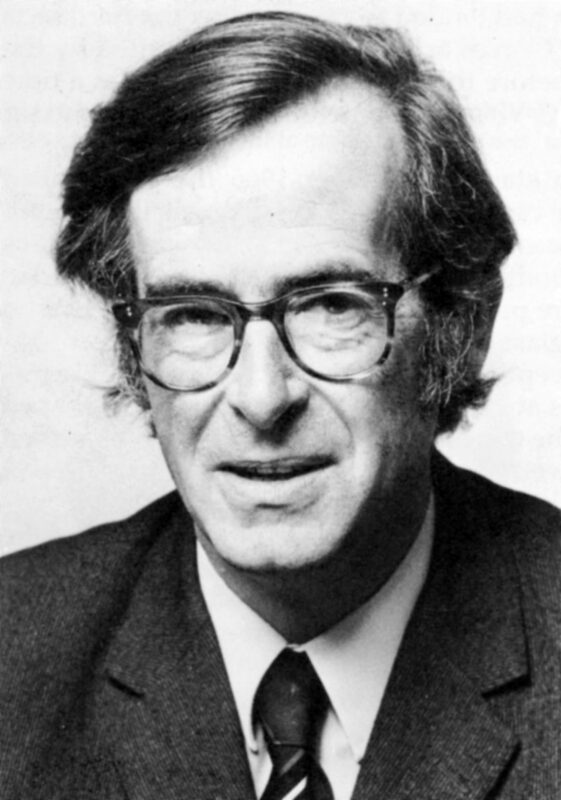
Beattie made his name – except, of course he didn’t really – at Jensen, but developed his engineering chops at Rootes. He joined the West Bromwich firm in 1960. It wasn’t an obvious move for an ambitious and talented engineer. At the time Jensen was a motoring minnow with a broad range of products across trucks, vans and cars, none of which sold in volume. Perhaps the breadth appealed to this restless man.

Certainly he appears to have envisaged an opportunity to make his mark and deliver change. In which he perhaps misjudged the nature of Jensen. It was still run by its founding brothers, Alan and Richard, who had fixed ideas on what the world needed in terms of four-wheeled conveyance. Their singular approach was shared by chief designer Eric Neale. Together with Richard Jensen, he had crafted the ‘distinctive’ styling of the firm’s big GTs, including the 541 and more recently the CV-8. Today these cars are valued for their individuality. But when new they were divisive and Jensen sales always lagged a long way behind its more classically handsome rivals like Aston Martin.
Beattie knew this. He hated the way the CV-8 looked and wasn’t slow to make his views known to the Jensen brothers. He also wasn’t keen on Neale’s proposed ‘P66’ sports car. This ungainly, dull-looking two seater was intended to be a replacement for the car Jensen had been building under contract – the Austin Healey 3000. The directors and Neale hoped it would fill Jensen’s factory again and meet a perceived gap in the market. Beattie, with his background in the commercially-focussed Rootes Group, didn’t share their optimism.
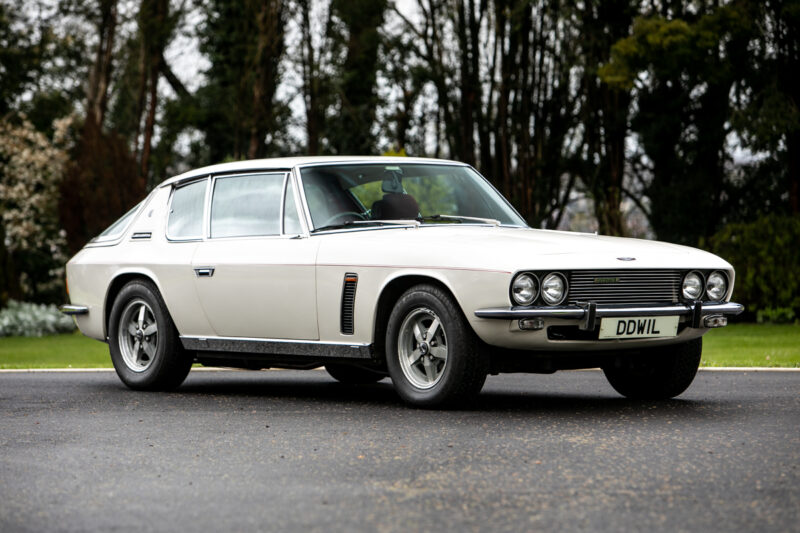
The Jensens and Neale resisted Beattie’s argument for more stylish cars that would be better suited to market needs. But Beattie wasn’t to be deterred, and in this he had an ace up his sleeve. In the early ’60s, when Beattie joined Jensen, the firm was undergoing one of its regular financial rough patches. It had secured vital funding from Norcros Bank, which brought some stability but at a loss of board room control. The Jensen brothers were rather more keen on the former than the latter.
Beattie petitioned Norcros with his thoughts. He wasn’t alone in his views on Jensen’s direction, but he was their main proponent. Whether he acted from self-interest or recognition that cars like the CV-8 were likely to dig Jensen further into the mire, we’ll never know. Whatever the case, Norcros was all ears. A boardroom battle ensued, which Beattie and Norcros won. Henceforth, Jensen would build the cars buyers wanted. First target: the CV-8.
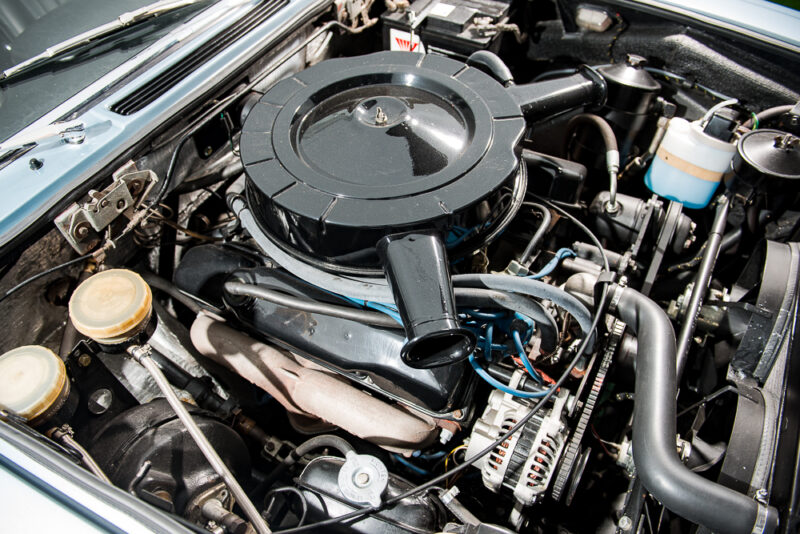
The pressure was on. Financial demands meant that if Beattie’s plan was to succeed, he had to act fast. The new car had to be ready for the stand at the 1966 Earls Court Motor Show in six months time. Fortunately, the CV-8 was a good basis for building a much better car. It was rapid – thanks to its Chrysler V8 – and its chassis was strong and well-engineered. Perhaps over-engineered. As a body-on-chassis design, revamping the styling was relatively straightforward.
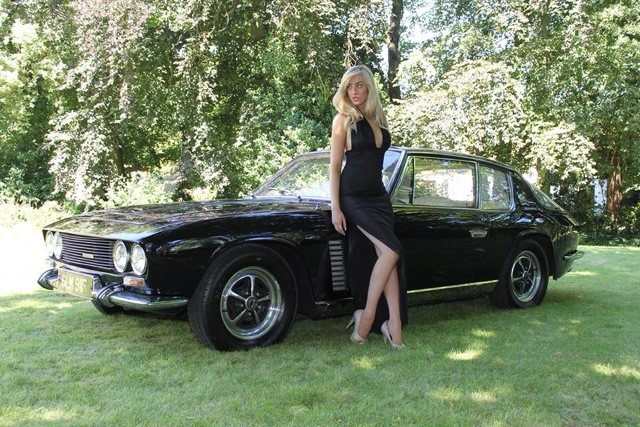
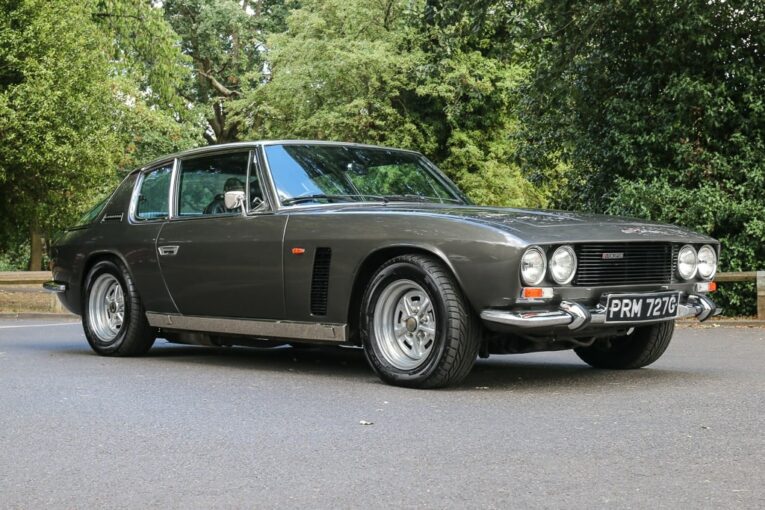
Designing and building a car from scratch is no small task. But Beattie had a template for what would become the Interceptor in the form of Italy’s legion of beautiful 2+2 GTs. To keep his idea fresh and avoid being bogged down in company politics, he approached Carrozzeria Touring to create a GT in the style of Maserati and Ferrari. Considering how little time Touring was given, the resulting design – which went from sketch to production with few changes – is stunning. The sweeping rear deck, with its innovative hatchback, is a masterpiece. It is typical of the Interceptor’s rushed gestation that nobody knows who actually penned its iconic shape.
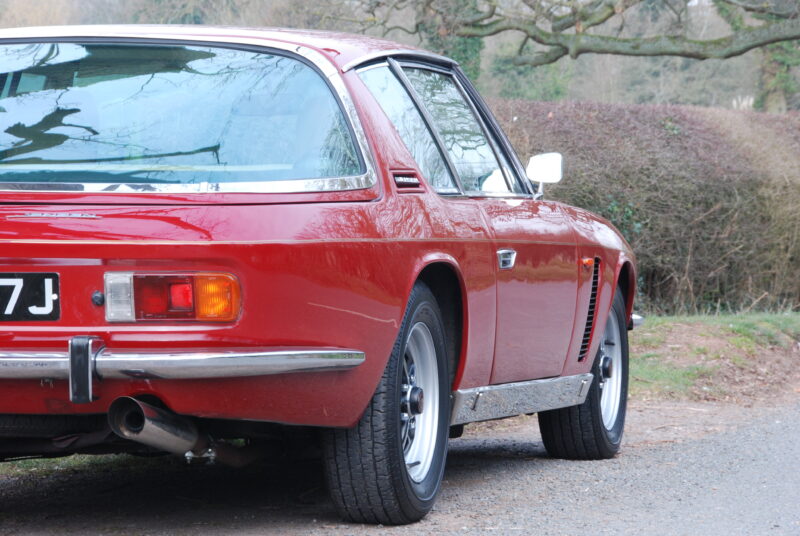
Ever mindful of those West Brom naysayers, Kevin Beattie tasked Vignale with building the cars. While the project was designed to keep Jensen’s elderly production line busy, this was considered the quickest way to productionise the car and get it on the stand.
He succeeded. The Interceptor was the star of the show. Yet it is perhaps indicative of the internal wranglings and the directors’ disinterest in the new car that it was shown alongside a CV-8. It had been an arduous few months for Kevin Beattie. He flew backwards and forwards to Italy every few days and undertook much of the prototype testing himself in the Alps and around northern Italy, but even with the new car launched, there was no rest. Production of the Jensen-built Austin-Healey was winding down and the firm had a hungry factory to fill. With the P66 project dead in the water, Donald Healey and Jensen’s American importer, Kjel Qvale, began work on a replacement – a sports car to replace the Healey and fill the factory.
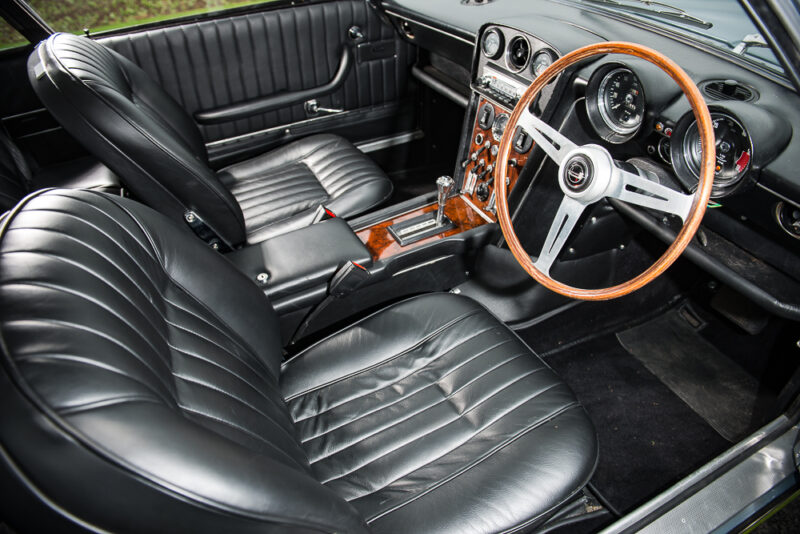
It took Kevin Beattie to bring clarity to the pair’s woolly proposals. All the shillying and likely shallying with the P66 while Healey production drew to a close meant that the matter was now pressing. He set to work developing what became the Jensen-Healey in record time. Once again, he had help to press his ideas through. Qvale had replaced Norcros as Jensen owner and assembled a new board team with a more united vision. He had the backing he needed.
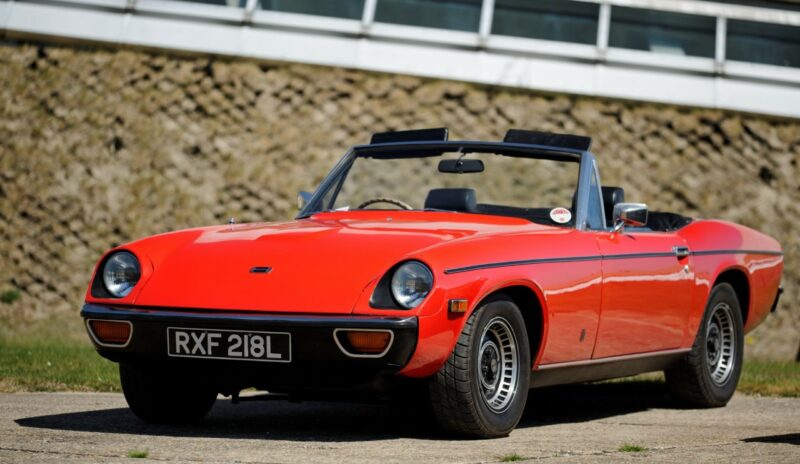
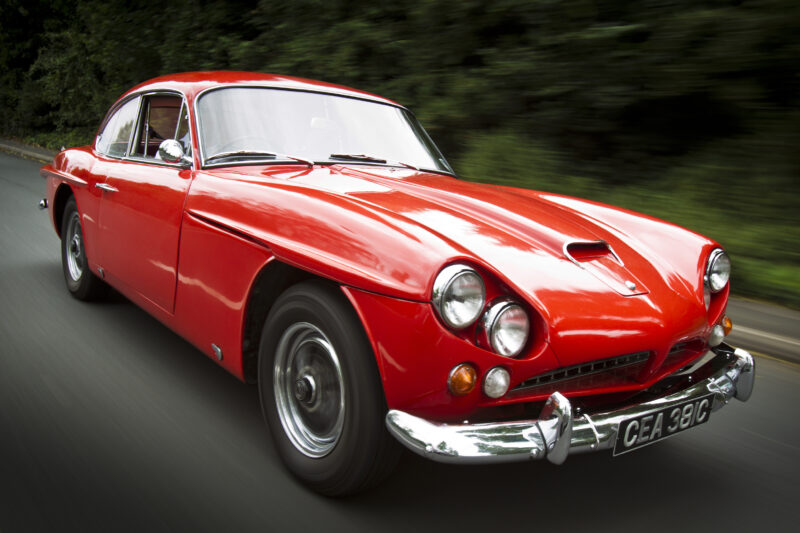
The story of the Jensen-Healey is a tortuous one. The first cars were unreliable and badly built. It’s a tale that doesn’t necessarily cast the man who created the car in the best of light. But let’s consider some facts. In 18 months Kevin Beattie took a half-formed proposal and made it a production-ready car. He delivered a brand new, Lotus-powered sports car. It was the first production multi-valve car, spearheading an idea that became de rigueur for car makers over the following 20 years. The new car was a worthy successor to the rather more aged and conventional Austin Healey 3000. Yes, quite a lot went wrong and was wrong with those early cars. Later cars did solve the problem, but the scene had been set and sales never recovered.

Perhaps Kevin Beattie wasn’t a match for the mercurial Colin Chapman, who used Jensen as a test bed for his new race-derived engine. Maybe Jensen’s creaking old factory, with its workforce more used to building big GTs in low volume, wasn’t the right setting for a volume sports car. Perhaps if the financial Sword of Damoclese hadn’t been hanging perennially over Jensen at the time, Kevin Beattie would have had more time to get the Jensen-Healey – and the Interceptor – right.
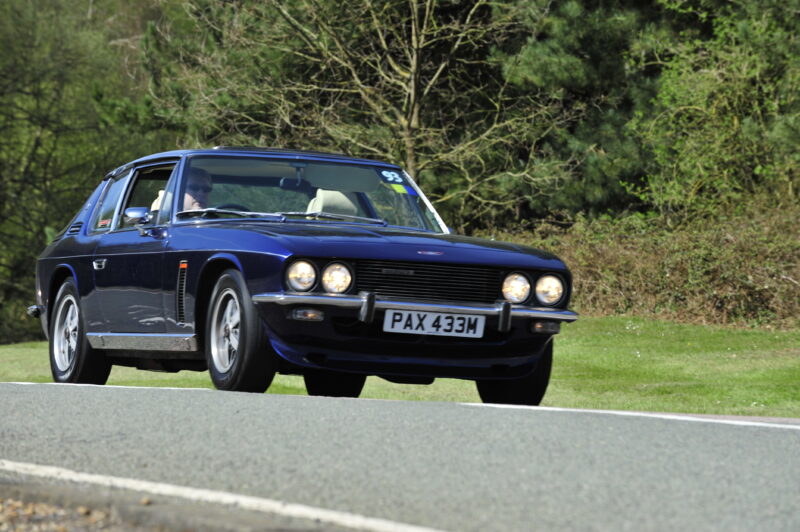
All those buts and ifs, though, don’t detract from what Beattie achieved. Twice. He appears to have put his absolute all into it. Despite his driven nature, colleagues talked of a very likeable, personable, kind man, but one who worked too hard. They say he never lost his temper, despite the obvious stress he must have been under. Stress that, perhaps, did for him. Kevin Beattie was promoted to Managing Director of Jensen in July 1973, a fitting reward it seems for a man who did so much for the company. But it was to be short-lived: he resigned due to ill health in late 1974. He died of organ failure in autumn 1975, coincidentally just a few days after Jensen finally called in the receivers. He was just 48.
Our classic car culture was built on the backs of dedicated men like Kevin Beattie. He gave us one truly great, iconic car and one clever, flawed car. For that he deserves recognition.