R129 SL vs Jaguar XJS Convertible: Which 90s GT to Buy?

October 5, 2026
You can learn a lot about a country from its cars.
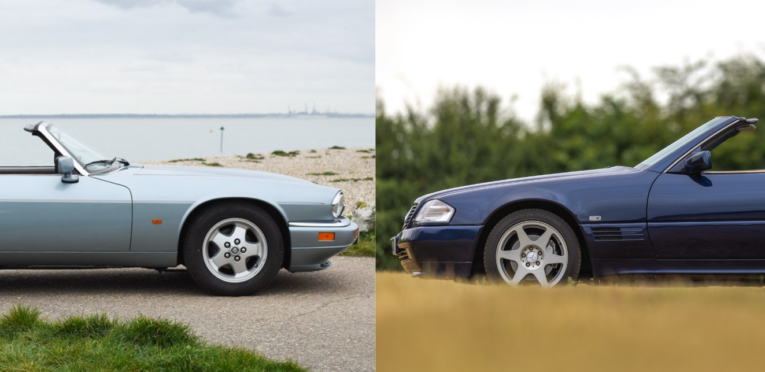
A Mercedes-Benz is German to a T: obsessively engineered, beautifully made, and wholly uncluttered in its design. Likewise, a Jaguar is quintessentially British: utterly charming, supremely comfortable, and punching well above its weight in performance.
These two very different approaches to carmaking explain how, when tasked with creating the ultimate convertible grand tourer, Germany and Britain arrived at two very different cars. That makes the Mercedes R129 SL vs Jaguar XJS one of the great debates among modern classic convertibles.
Today, the Mercedes R129 SL and Jaguar XJS convertible both haunt the classifieds and command similar prices. Both are 90s convertible GTs with big engines, plush interiors and a roof that (should) disappear at the touch of a button.
So which is the better buy: R129 SL or XJS? Join us for an R129 SL vs Jaguar XJS showdown, German vs Great Britain, fought not over the skies of Kent but on the roads. We compare how they drive, what they cost to run, where they bite back, and what they’re worth now, to help you pick the best 90s convertible for your garage.
Origins and design: R129 vs XJS
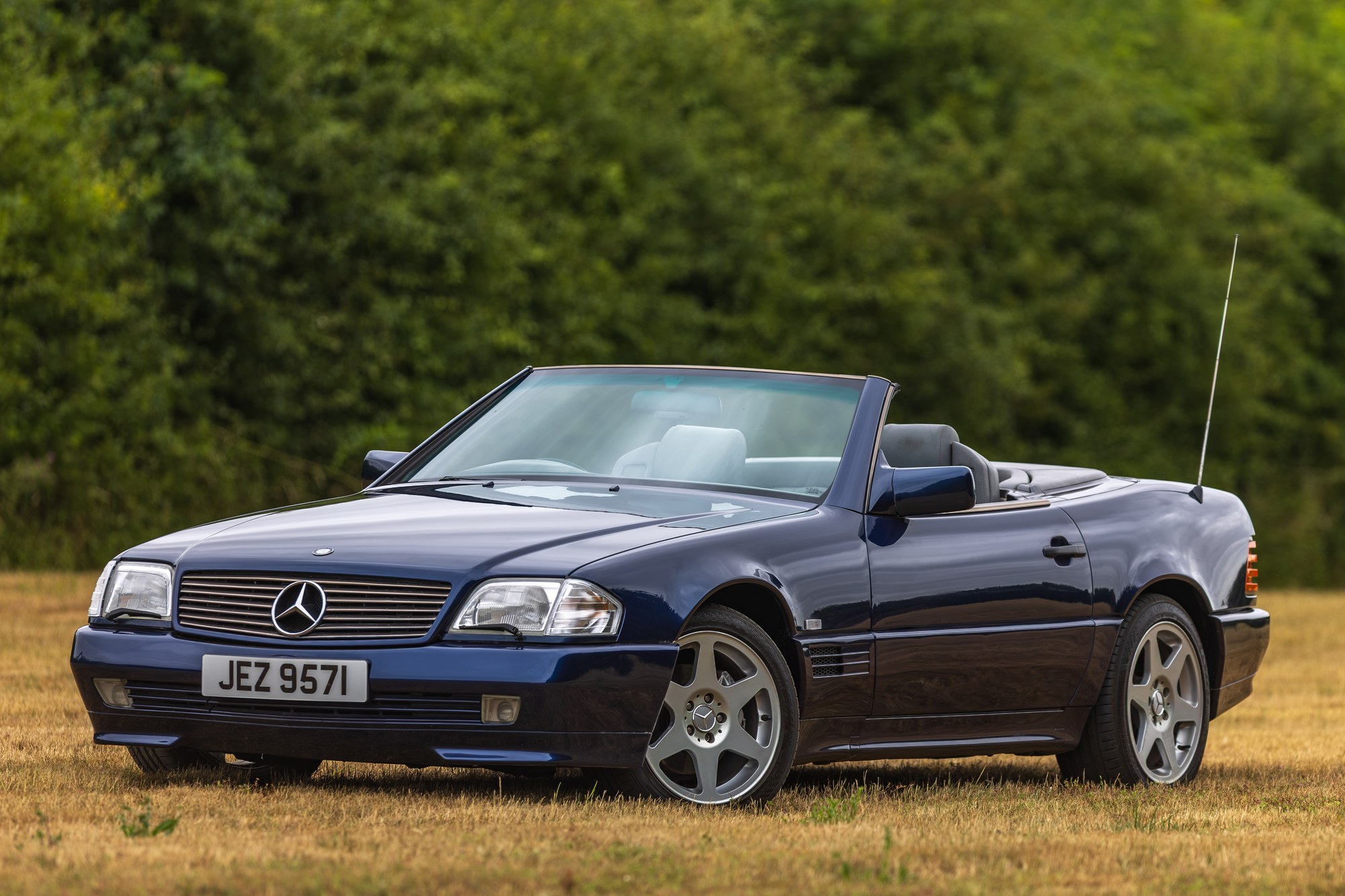
‘SL’ stands for ‘Sport Leicht ’, which is a touch ironic when even the lightest R129 tips the scales at 1,650 kilograms… Once you get over the apparent misnomer, you arrive at the conclusion that Mercedes’ long-lived SL lineage is one of the greatest models in the history of motorised transport. No SL has ever been a dud, and in this pantheon of great convertibles, there’s a strong case for the Bruno Sacco-penned R129 as the best of the bunch.
Not one to rush things, Mercedes began work on the R129 as early as the late 1970s, finalising the design in 1984 and launching the car in 1989.
Bruno Sacco exercised what he called “horizontal homogeneity”, a fancy way of saying that a Mercedes-Benz should look like a Mercedes-Benz. This sounds straightforward, but in practice, it takes countless hours of painstaking effort to ensure every line could only belong to the three-pointed star. Sacco was also a fan of “vertical affinity”, longevity against obsolescence to the likes of you and me, hailing the R129 as the purest expression of his work and his favourite design. Love it or hate it, the R129 is undeniably a landmark design, almost Bauhaus in its geometric simplicity. There’s no sense of “that’ll do” about it, which brings us on to Coventry’s finest…
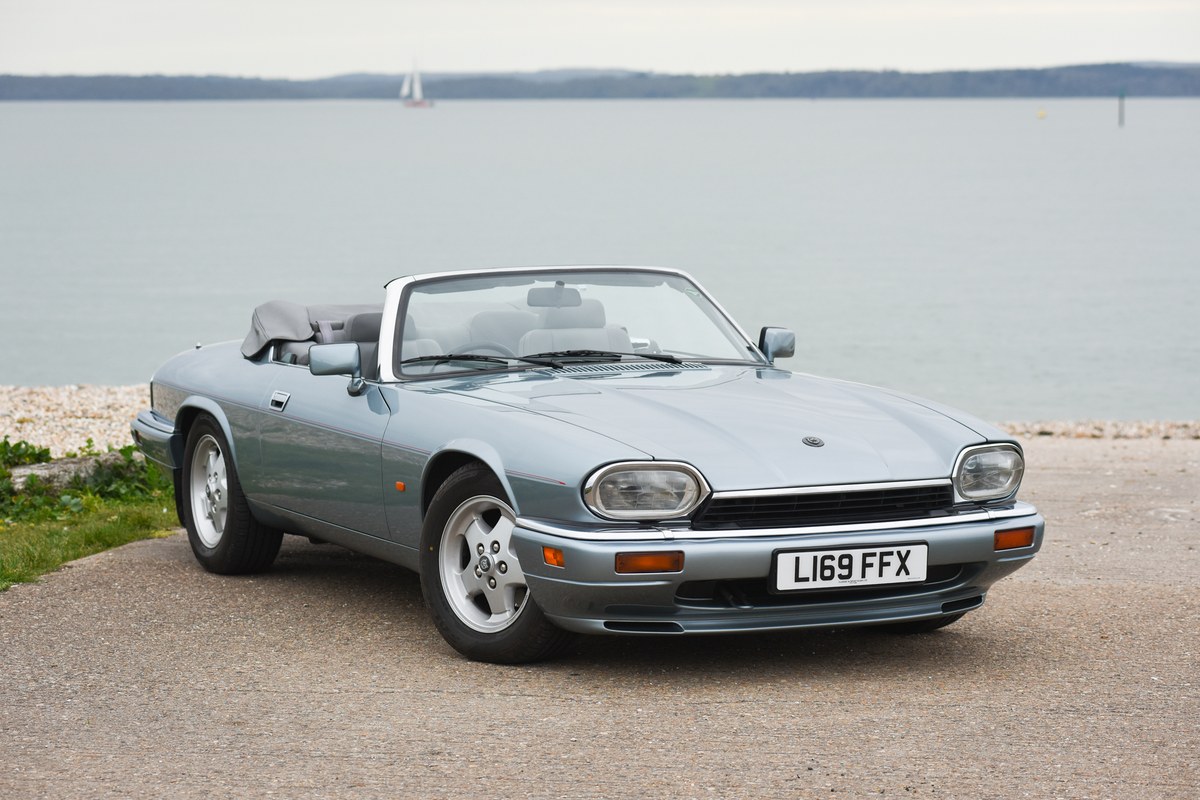
Aerodynamicist extraordinaire Malcolm Sayer created the initial sketches for the Jaguar XJ-S. The word “initial” is important here, because a sudden heart attack robbed the world of one of the greatest automotive designers of all time just shy of his 54th birthday in 1970. Sayer’s untimely death meant Jaguar’s in-house design team, led by Doug Thorpe, plus input from company founder Sir William Lyons, had to complete the sleek grand tourer.
Following the E-Type was a near-impossible task, so it’s no surprise the somewhat radical XJ-S was not a great success at launch. A sub-10-MPG sporting V12 coupé that cost the same as an average UK house was not the car the world needed in the midst of the 70s oil crisis. But despite a shaky start, XJ-S sales gathered momentum in the mid-80s under the stewardship of Sir John Egan, and they truly blossomed following the introduction of the Karmann-engineered full factory convertible in 1988. Geoff Lawson’s May 1991 facelift brought fit and finish up to modern standards thanks to a healthy injection of Ford cash, and so the aged XJS (latterly minus the hyphen) lived on to April 1996.
Equipment and features
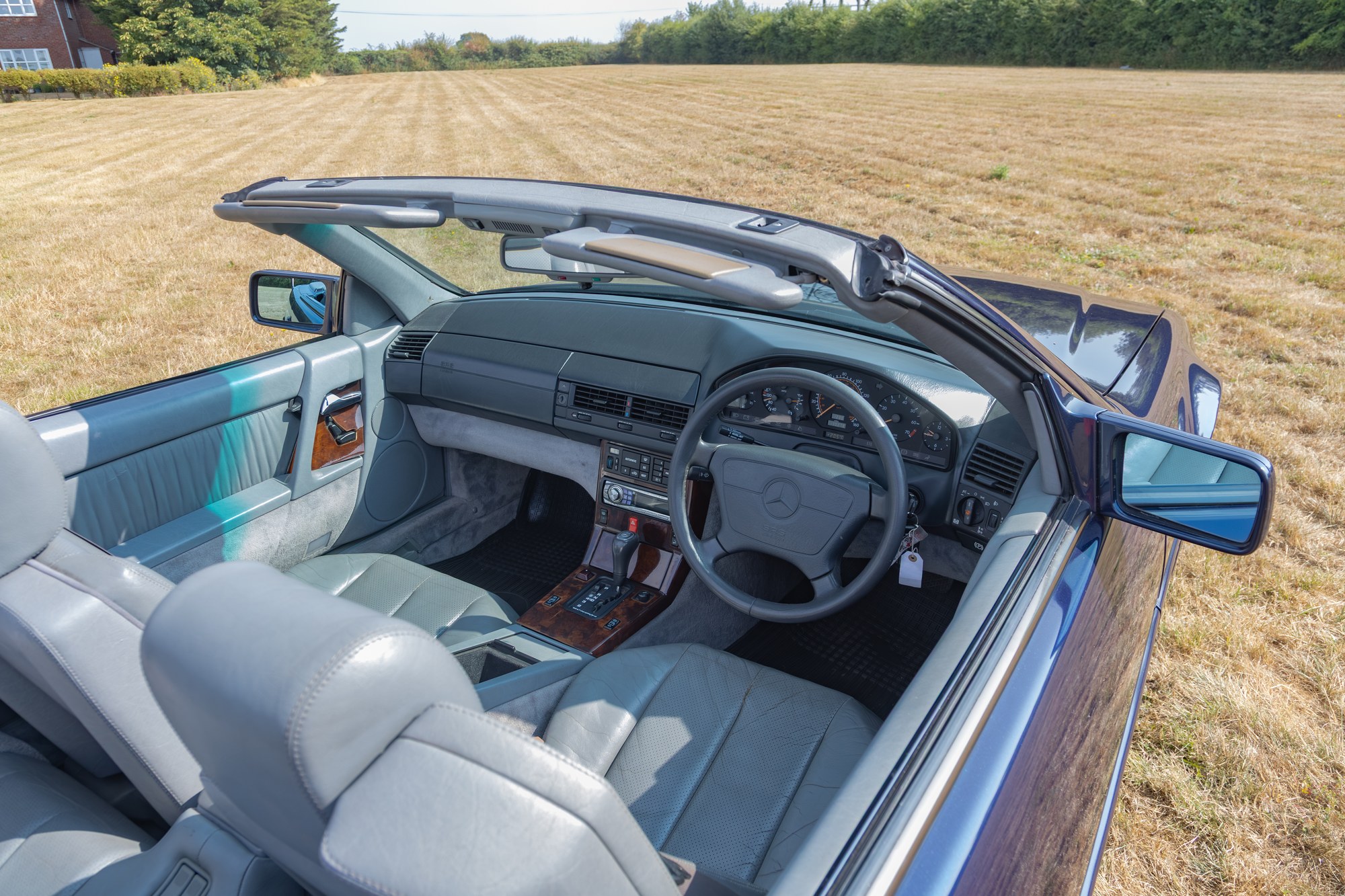
The R129 was a technological tour de force, positively brimming with the latest and greatest in automotive technology. The cleverest feature of them all was its sensor-controlled automatic roll bar, which deploys in milliseconds if a rollover is detected. The R129 also came standard with an electrically operated hydraulic soft top, an aluminium detachable hardtop, and integral magnesium-framed seats with built-in seatbelts. Inside, the cabin offered multi-way power leather seats with memory functions, automatic climate control, and optional features like orthopaedic pneumatic backrests, adaptive damping suspension (ADS), the “Draft-Stop” wind deflector, and upgraded Bose sound systems.
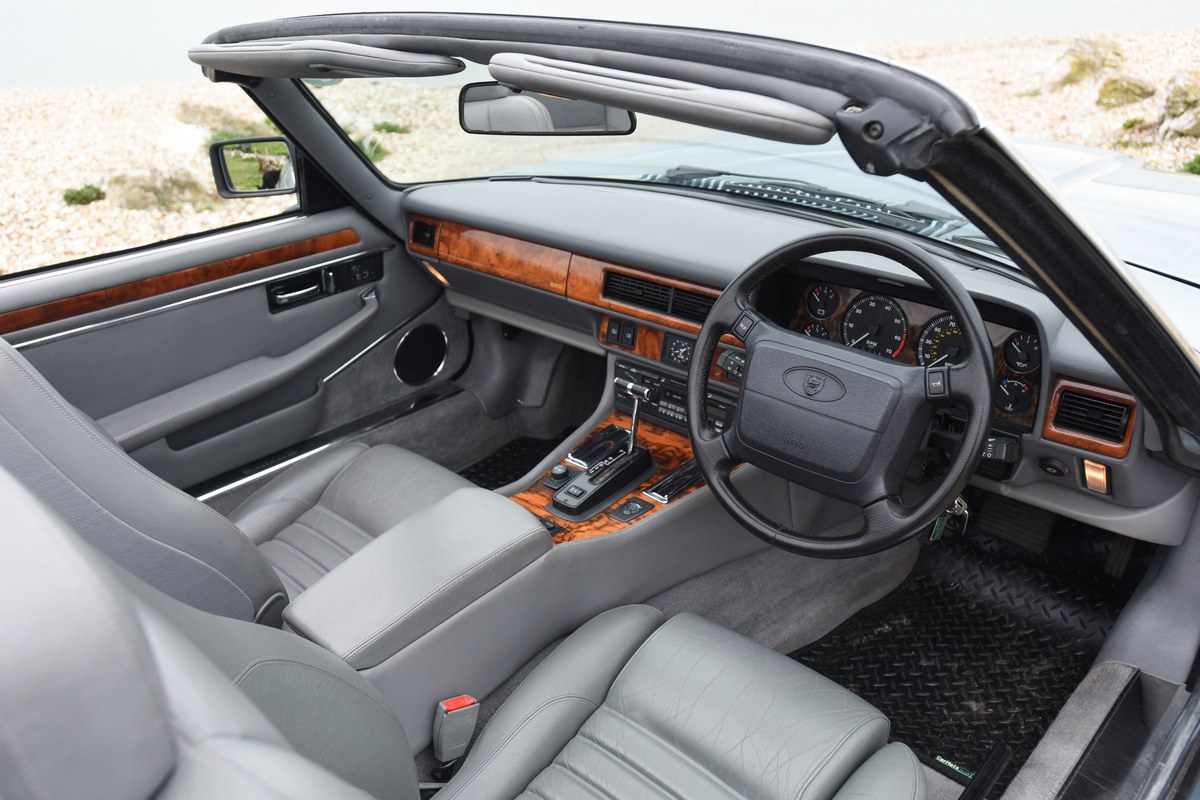
The XJS may be the elder statesman of the pair, but the post-facelift open-top model still didn’t lack features. It boasted an electrically operated, fully lined soft top with a heated glass rear window, delivering coupé-like refinement when closed. Inside, the Jag offered Connolly leather upholstery, hand-finished walnut veneer trim, power-adjustable seats with lumbar support, automatic climate control, and a premium audio system. Later 1990s models introduced dual airbags, anti-lock brakes (ABS), speed-sensitive power steering, trip computers, and revised outboard rear disc brakes for improved serviceability.
Engines: XJS vs 6-cylinder and the SL range
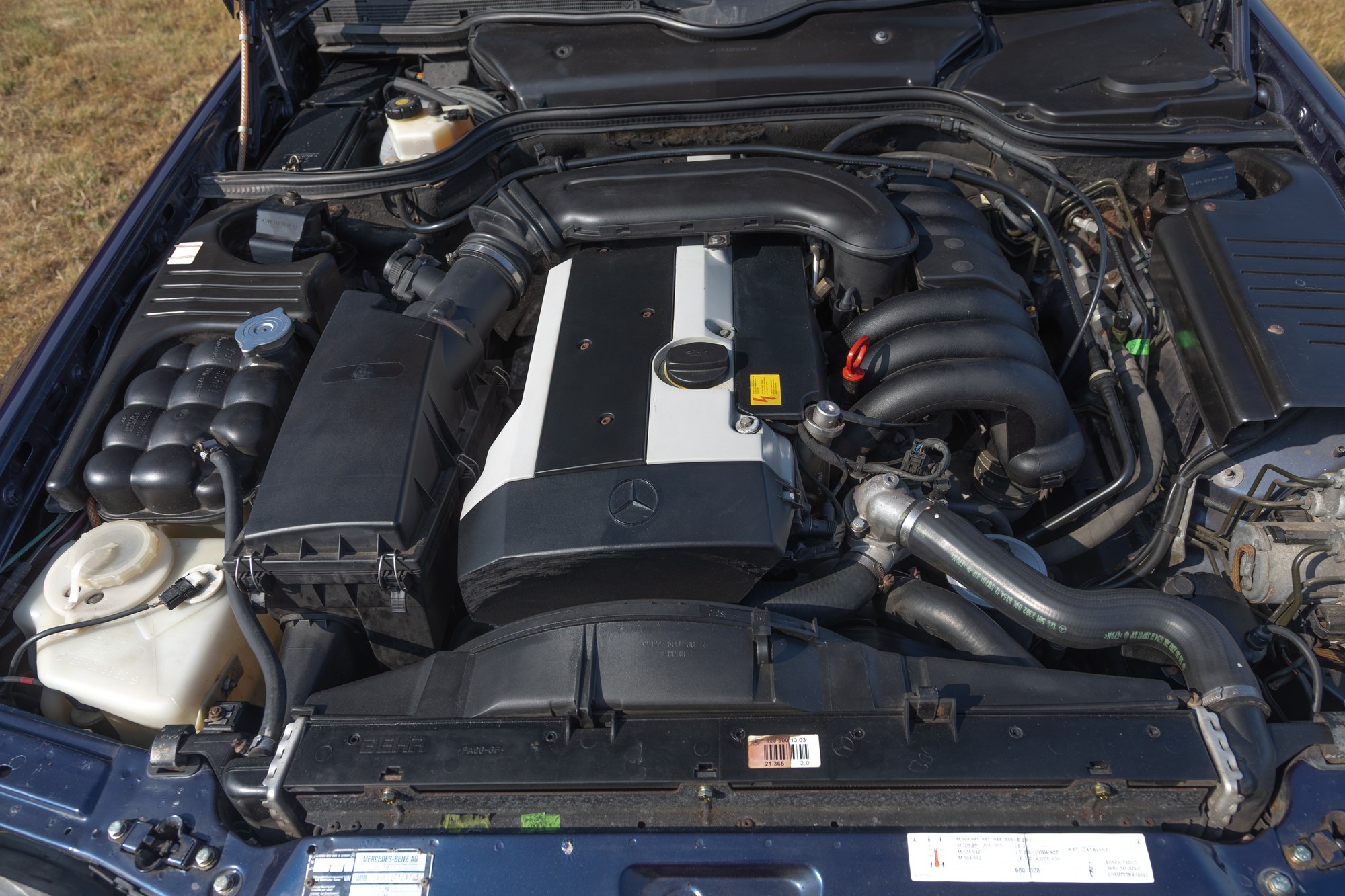
Mercedes-Benz has a long tradition of offering a wide range of engines in each model, and the R129 SL is no exception, with engines spanning from 2.8 to 6.0 litres and reaching 7.3 litres in AMG form. The SL 280, 300 SL, and SL 320 were the marque’s six-cylinder offerings, while performance stepped up significantly with the iconic 5.0-litre DOHC 32-valve V8 in the 500 SL / SL 500 and peaked with the flagship 6.0L M120 V12 in the 600 SL / SL 600. Most SLs featured 4- and 5-speed automatic gearboxes, although 5-speed manuals were sometimes optioned for the six-cylinder models.
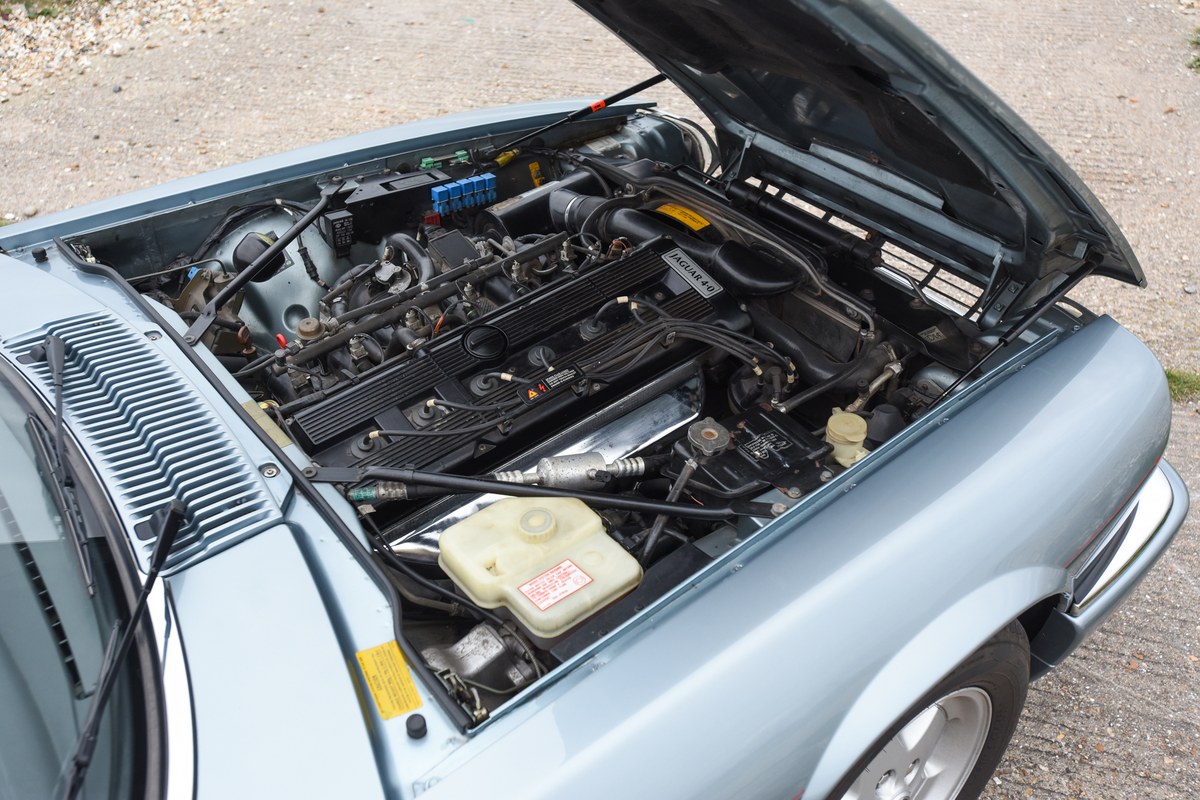
The XJ-S launched in 5.3-litre V12 form, but a 3.6-litre AJ6 straight-6 version was introduced in October 1983, followed by a 4.0-litre version in September 1989. During the early ’90s, the XJS V12 vs 6-cylinder question was a live one, as both engines remained popular in convertible models, the former offering headline performance and smoothness while the latter was considerably more economical and much lighter. A 6.0-litre V12 joined the lineup in May 1992, boosting power to 313 bhp, and was the only XJS V12 to have a four-speed automatic gearbox. The 5.3-litre unit had a three-speed auto box, whereas the 3.6- and 4.0-litre straight-6 cars had four-speed autos or the choice of a five-speed manual box. Set the 5.0-litre SL V8 against the V12 and you have the classic Mercedes SL500 vs Jaguar XJS V12 match-up.
Drive and handling
“Overengineered” is a word often used to describe Mercedes-Benz models during the Bruno Sacco era, and the R129 feels exactly that on the road. The ride is compliant and the handling tight, with minimal body roll through the corners, minimal chassis flex, and precise (albeit rather heavy) steering.
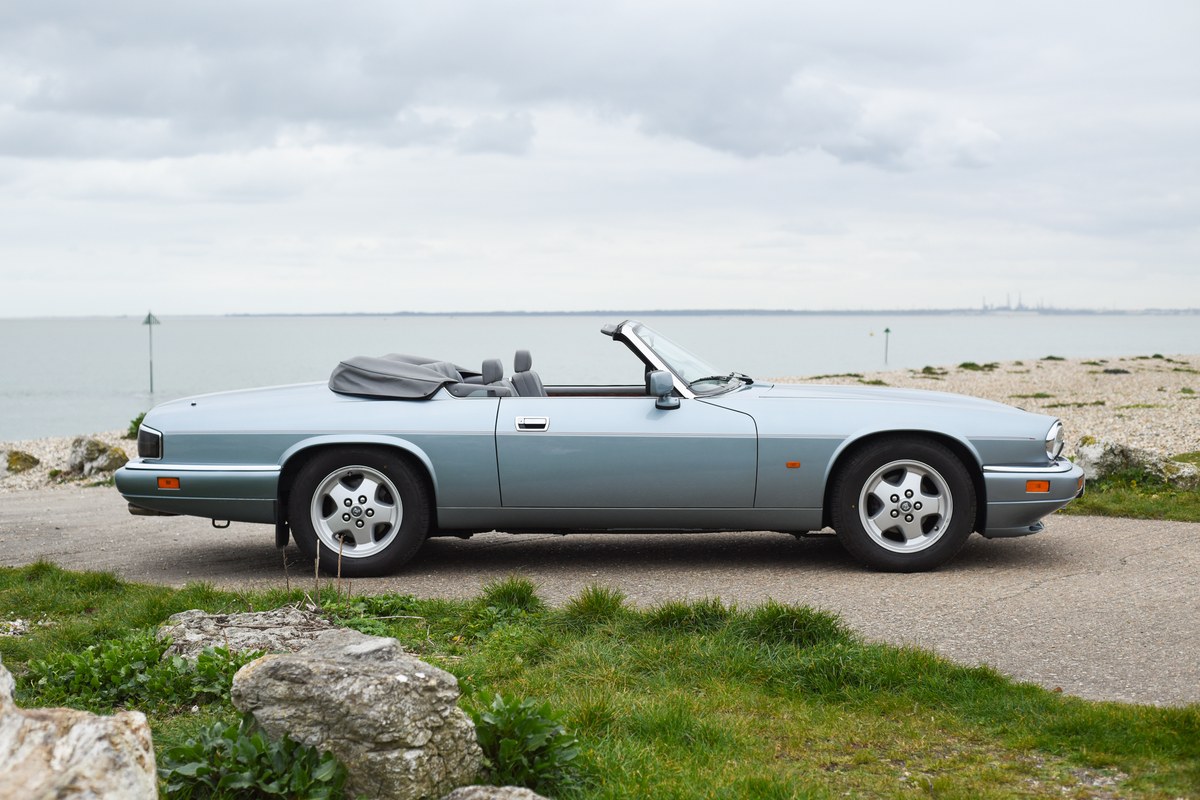
While the Mercedes was conceived as a roadster from the start, it should be remembered that the XJS Convertible began life as a coupé (complete with sculptural flying buttresses). Despite strengthening the floor pan, cutting the roof off resulted in some scuttle shake over harsh surfaces, although the XJS’ ride-handling balance is without equal. Jaguar’s independent rear suspension system began life in 1961, but it’s arguably yet to be bettered.
If overall ride quality is your priority, the Jag is the clear winner. But some may find it overly soft and therefore a little too inclined to lean in the corners. Ultimately, neither car rewards dynamic driving. They are grand tourers after all.
Reliability: R129 SL common problems vs XJS faults
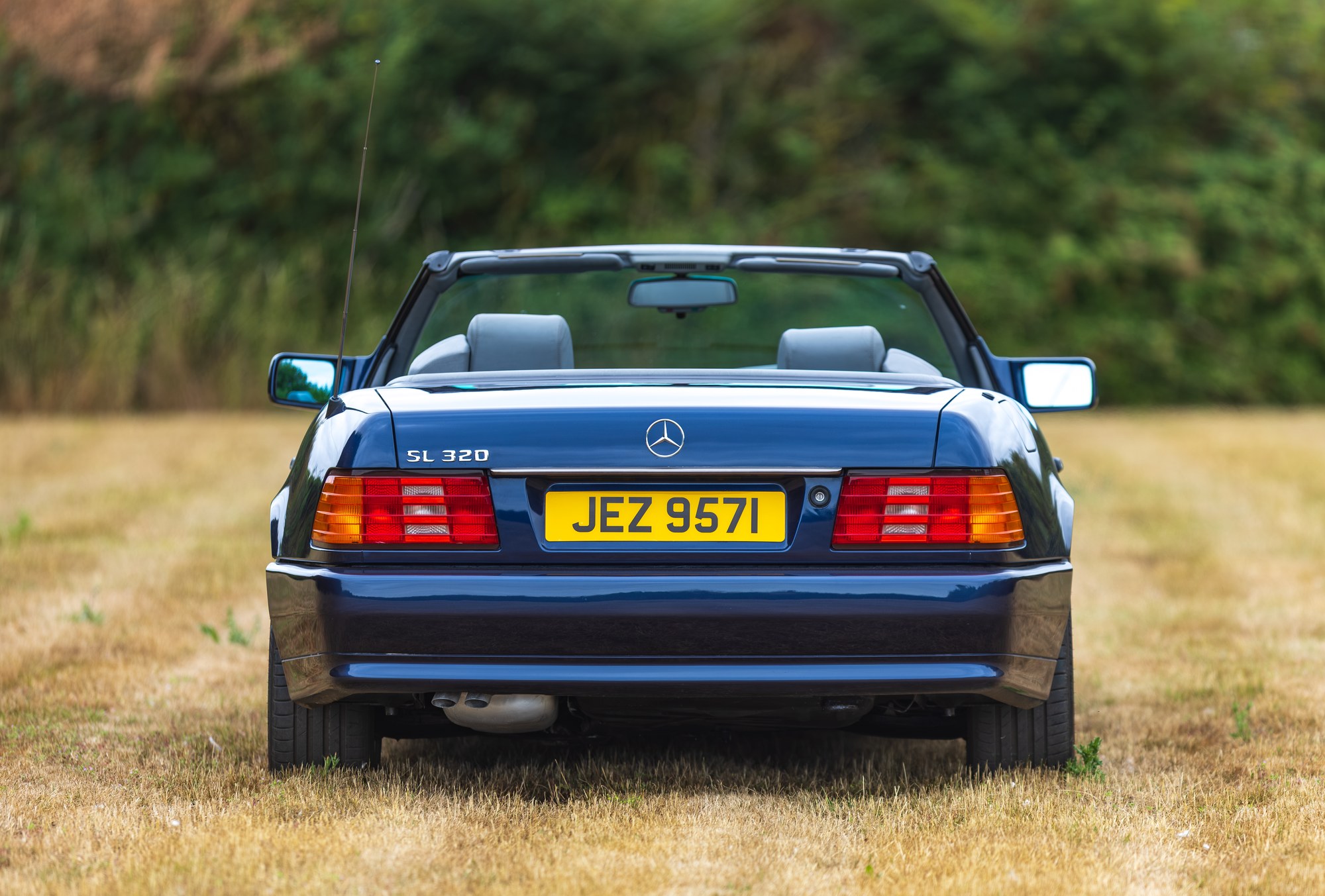
Let’s not beat about the bush. The R129 SL was leagues ahead of the XJS when it came to build quality. Yes, the post-facelift Jags had galvanised bodywork and better interiors, but no car from the West Midlands could ever hold a candle to the superlative “bank vault” quality of Stuttgart’s engineers. That said, for all that quality, the R129 SL was far more complex than the XJS. The Merc may have had fewer warranty claims in its day, but three decades later, both cars are getting rather long in the tooth. Both will go wrong, and when they do, you might much rather pay the bills that come from the Jaguar garage than those of a Mercedes specialist.
R129 SL common problems include age-related issues that commonly arise in the complex hydraulic convertible top system. Any of the 11-12 operating cylinders can (and probably will) leak. There’s also the not-so-small matter of the biodegradable engine wiring harnesses (yes, you did read that right) found on 1993–1995 models. Other frequent trouble spots include worn suspension bushings and ball joints due to the car’s heavy weight, leaking struts on ADS-equipped cars, brittle vacuum lines for the central locking and climate flaps, and failing distributor caps or brittle plastic oil feed tubes on early M119 V8 engines.
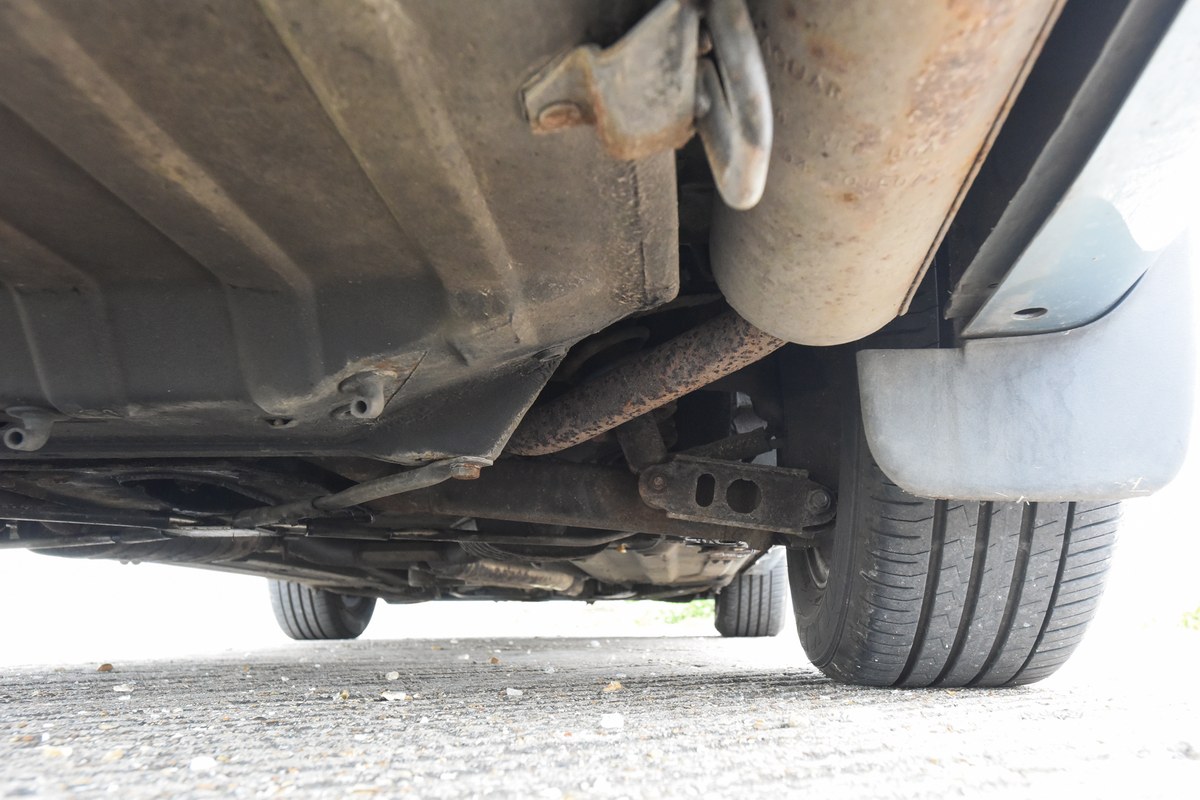
The 1990s Jaguar XJS convertible is mechanically robust in facelift form, but common age-related faults include electrical gremlins driven by ageing ground points, failed solenoids, and faulty relays controlling the electric hood and windows. The hydraulic convertible top system often suffers from leaking hydraulic rams, fluid leaks from ageing hoses, and failed lift motors. Rust remains a threat in the sills, floor pans, wheel arches, and radius arm mounts, while the cooling system needs careful maintenance to prevent blown head gaskets on AJ6/AJ16 engines or catastrophic overheating on V12 models. Suspension bushes and radius arm mounts wear quickly under the car’s substantial mass.
R129 SL running costs vs XJS: maintenance and fuel
Whichever of these classic convertible grand tourers takes your fancy, choose your engine wisely. As we discussed earlier, both cars were offered with various engine sizes and configurations, and the one you go for will make a big difference to how often you visit the petrol station and the workshop.
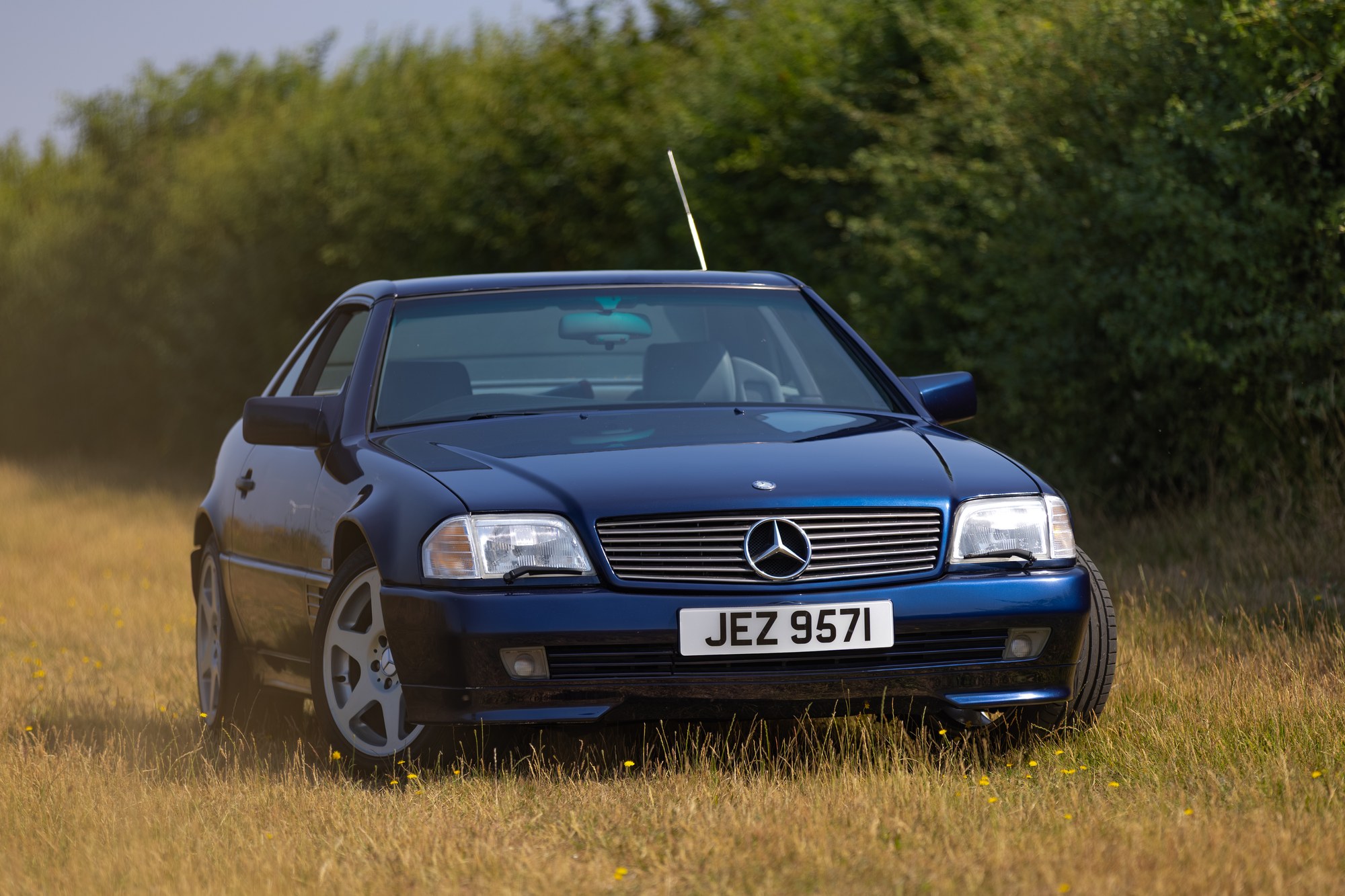
Remember, both the Merc and the Jag are big, heavy, executive cars. Neither was designed to be especially fuel efficient, but if economy is your prime consideration, choose the 6-cylinder versions of each. Expect 18-24 MPG from an SL320 and 16-22 from a 4.0-litre AJ6-engined XJS. R129 SL running costs and XJS servicing bills are broadly similar across the two models; parts are more readily available for the Mercedes, though they tend to be significantly more expensive.
Prices and values today
In today’s market, a 1990s Jaguar XJS convertible typically ranges from £8,000 to £14,000 for decent, roadworthy drivers, with late-facelift 4.0L AJ16 models in excellent condition fetching £15,000 to £22,000+ and some low-mileage V12s reaching even higher.
Meanwhile, the Mercedes-Benz R129 SL commands a slight premium, with usable everyday drivers between £7,000 and £12,000; well-maintained SL 320 or 500 examples with good history range from £14,000 to £22,000, and pristine, low-mileage SL 500s or rare SL 600 V12s sometimes reach £25,000+. A budget of around £20,000 buys a very good example of either, which makes them two of the best classic cars under £20k, and among the most appealing modern classic convertibles.
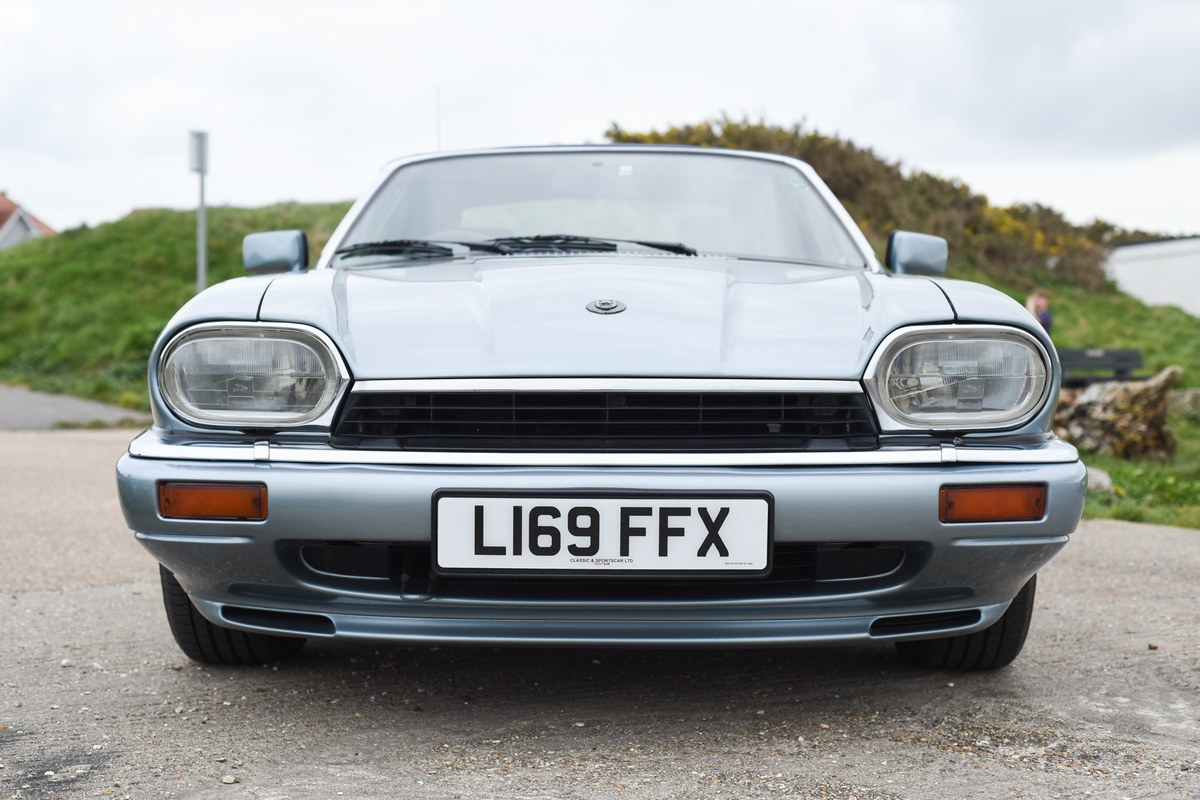
Verdict: R129 SL or XJS to buy?
If you’re the kind of person who gets a buzz out of knowing your car cost over 1 billion Deutschmarks to develop and that there are no fewer than 12 hydraulic cylinders, 11 solenoid valves, and 17 micro-switches in your roof mechanism, the R129 SL is the car for you. But if you get your kicks from sitting behind a bonnet so long that it’s in another postcode, and prefer your interior to feel like one of Blenheim Palace’s drawing rooms, the XJS is the only way to go.
Either way, you’ll own one of the best 90s convertibles money can buy.