No Reserve Classic Jaguar Auction – 3 Rare Big Cats From a Lifelong Collection

September 7, 2026
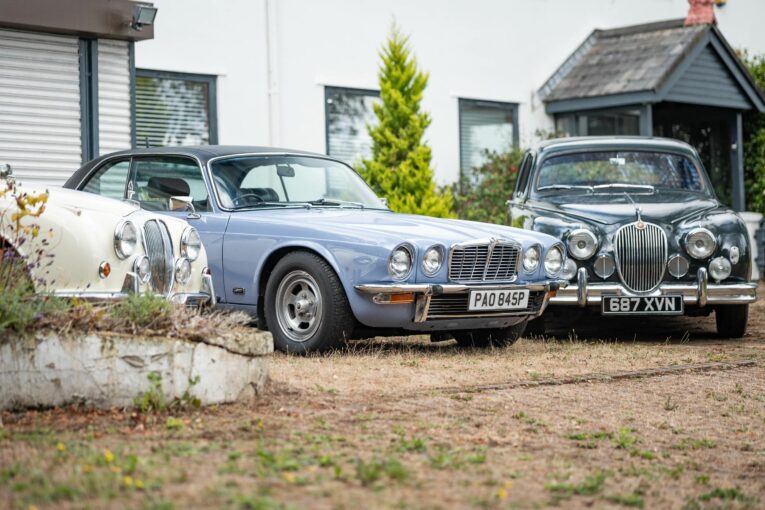
Jags. There’s something deeply, irrationally lovable about them. The same love one feels for an old family pet. Sure, it chews your slippers, leaves ‘presents’ behind the sofa and runs up a small fortune in vet bills, but you love it all the same. Not in spite of its faults but because of them. Cars with faults have character. Jaguars have a lot of character.
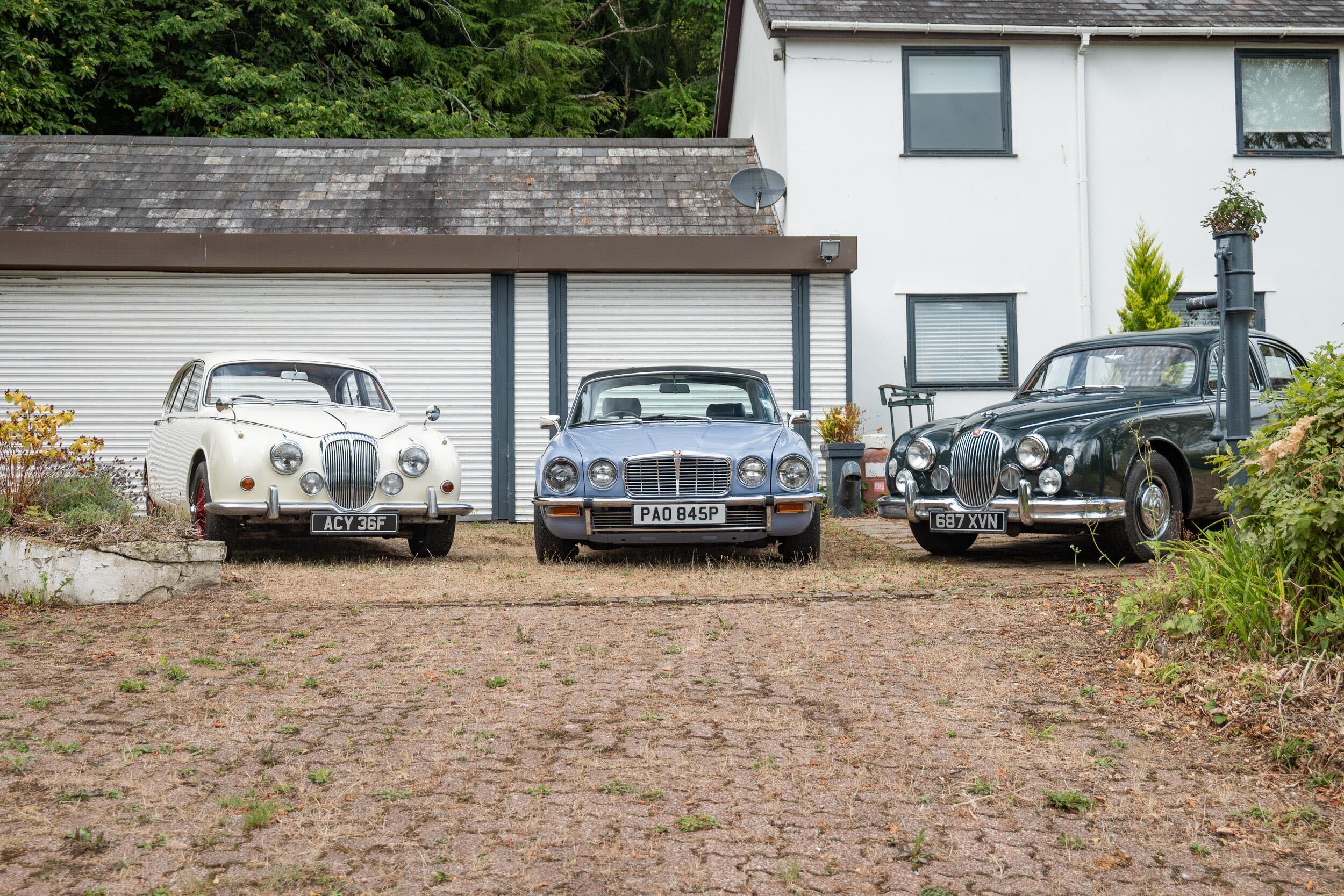
Back in May 2026, Car & Classic joined Chris Harris’ Car podcast team to host ‘The Great British Jaguar Day’, a celebration of Coventry’s finest. Car & Classic regularly has in excess of 2,000 Jaguars for sale at any one time, and of the 30+ currently in auction at the time of writing, three big cats from the same collection are destined for Car & Classic’s No Reserve online auction ending on Saturday 12th September. These are the final three most treasured cars from a discerning, lifelong collector of 50+ vehicles.
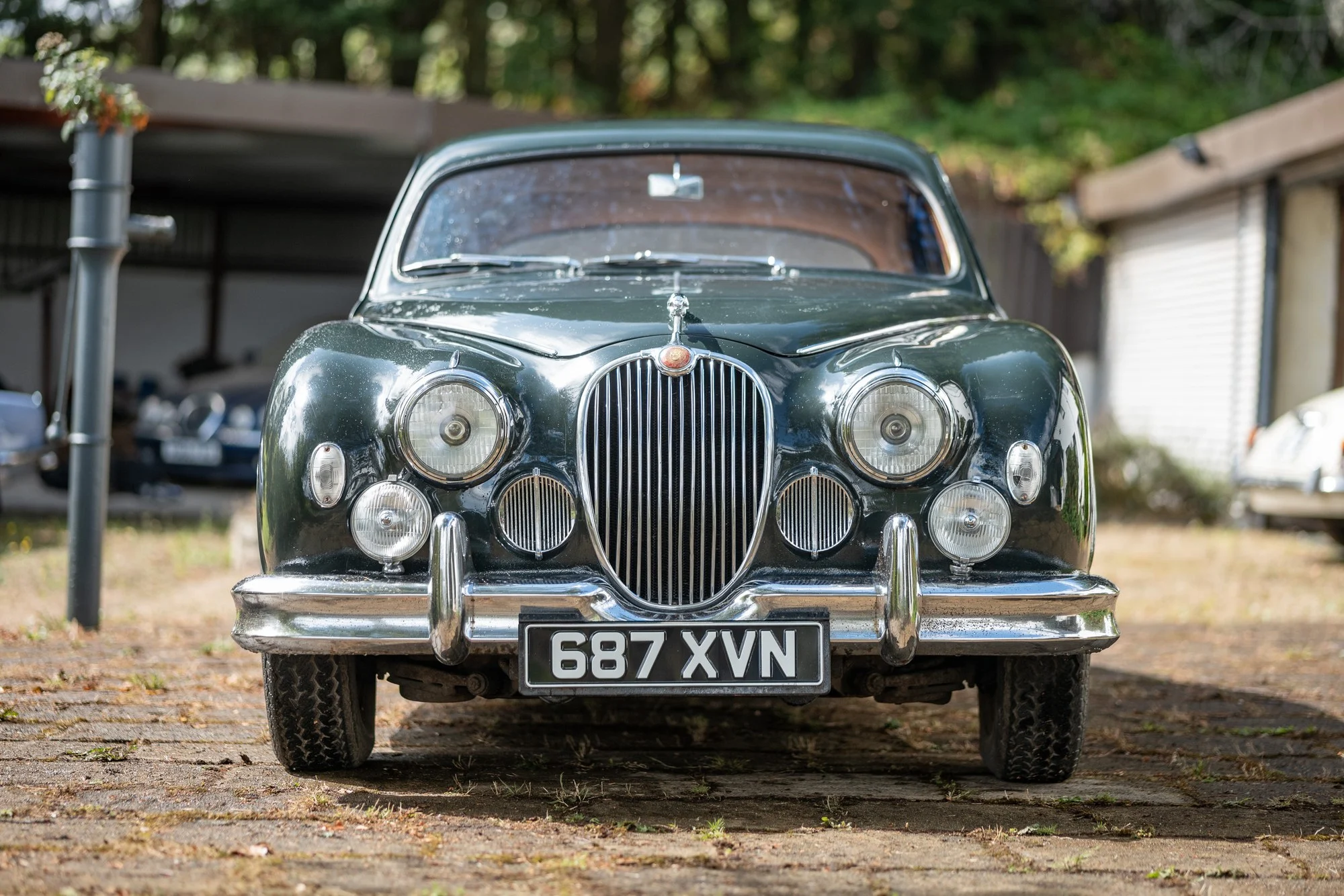
1958 Jaguar Mk1 3.4 MOD
The MkI introduced a saloon-car styling template that would endure directly for fourteen years and go on to influence Jaguar’s design language for the next half-century. Luxurious, competitively priced and powered by the same dual overhead camshaft straight-six that conquered Le Mans, it’s no wonder the Mk1 satisfied a broad spectrum of drivers.
Beloved of bank robbers and lovable rogues, the sight of a speeding Mk1 became synonymous with nefarious goings-on. Spot a Mk1 in the wild, and one can’t help but assume that something rascally is afoot. They have that scoundrelly air that suggests their driver has held up a local branch of Lloyds, left a dinner date without paying, or is bunking off for a weekend away with their secretary.
The Mk1 also excelled on the race track. Roy Salvadori, Stirling Moss and Mike Hawthorn are just some of the greats to have driven Mk1s in anger. In saloon car racing, a Mk1 cleared the field in the class for engines exceeding 2.7 litres, with Tommy Sopwith driving the famous Equipe Endeavour Mk1 (IVA 400) to multiple victories, including a historic pole-to-flag win at the first-ever saloon race at Crystal Palace in 1958.
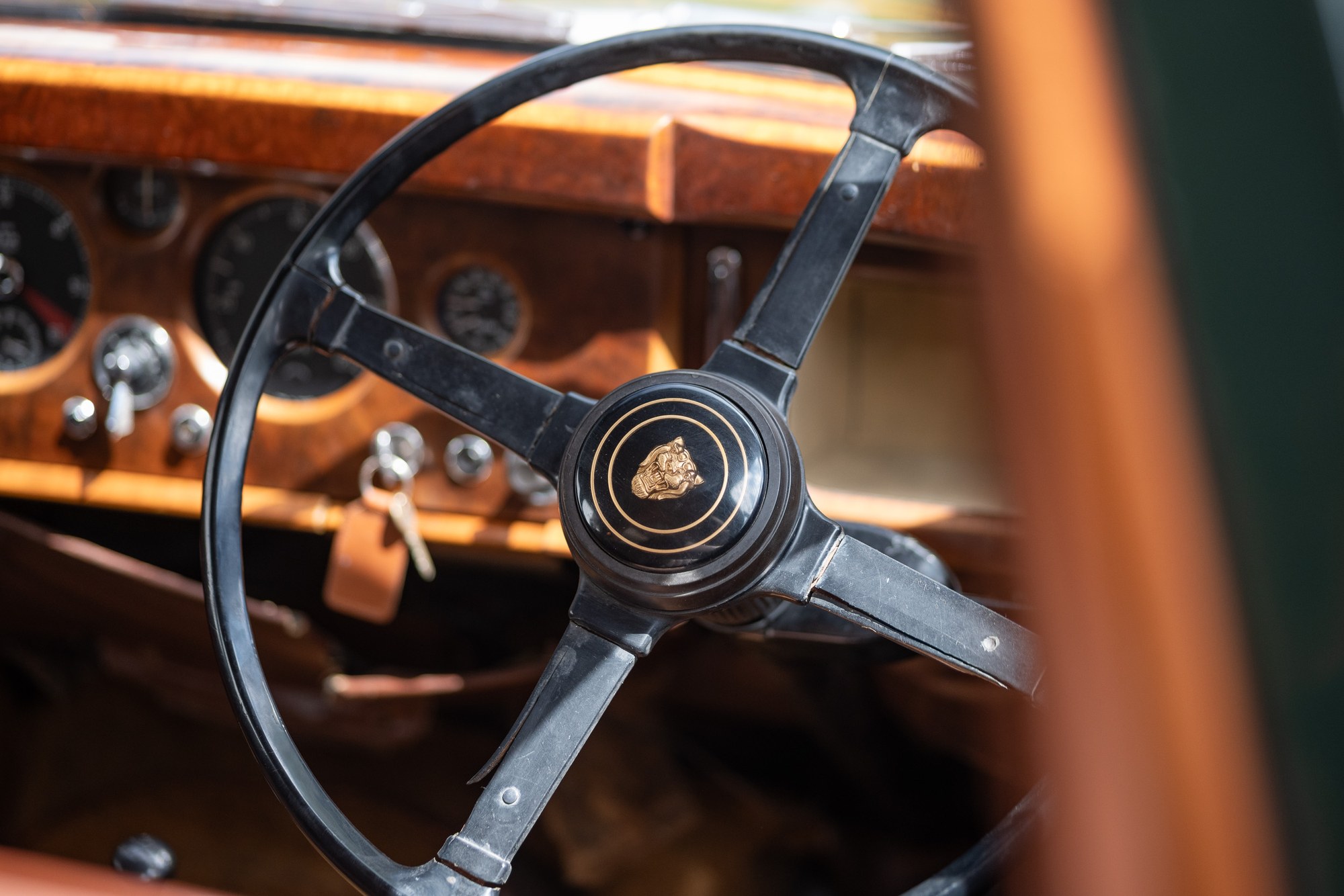
Our right-hand drive Mk1 is the one you want – the range-topping 3.4-litre car with a four-speed manual overdrive gearbox. Resplendent in classic British Racing Green over a tan interior, it joined the current keeper’s extensive collection in 1992. It has been sparingly used in recent years, with very few miles since the last advisory-free MOT in 2019. In 2014 and again in 2019, over £6,000 was invested in the car’s mechanicals, including brake and carburettor overhaul, servicing, water pump, new engine mounts and fuel system repairs.
The car received a new fuel pump, fuel pipe, coil, leads, distributor cap, condenser and points in 2024. £3,000 has been spent to ready the car for sale, covering brake, carburettor and ignition systems. Cosmetically, it remains highly original and supremely usable, with an age-commensurate patina. The next owner will face the tough choice of whether to enjoy it as-is or embark on cosmetic restoration. We’d err towards the former.
1968 Daimler v8 250 Auto
Jaguar acquired the ailing Daimler Company in June 1960. Its reasons remain debated. While some claim the Daimler name was wanted as an upmarket offshoot, which it indeed became, other, more sceptical observers argue that Sir William Lyons desired Daimler for one thing above all else: its V8 engine.
Designed by legendary motorcycle engineer Edward Turner, Daimler’s V8 was among the lightest in its class, weighing approximately 50 kilograms less than Jaguar’s XK straight-six. It was incredibly smooth, quiet, and, of course, powerful, with 140 bhp in its 2.5-litre form.
If you’re thinking that the Daimler 250 looks remarkably like a Mk2 Jag, you’d be right. Essentially, that’s exactly what it is.
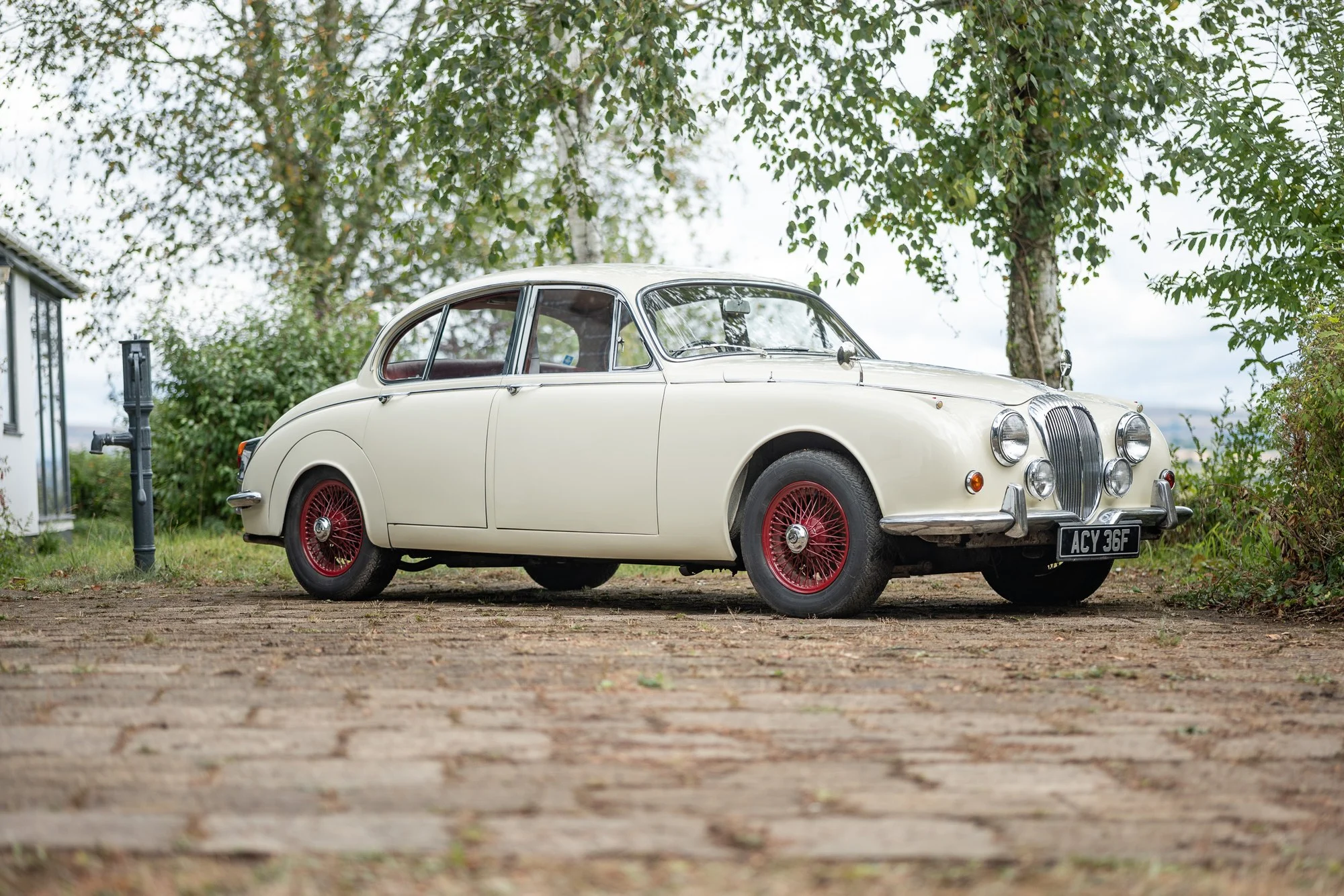
Rumour has it that the best Mk2 shells were specially selected off the production line to receive the 2.5-litre Turner V8, alongside fluted Daimler trim fore and aft and a more cosseting cabin. The slim-bumpered V8 250 arrived in mid-1967 and was built in small numbers for just two years. Our Old English White example is a 1968 model with a smart red Ambla interior.
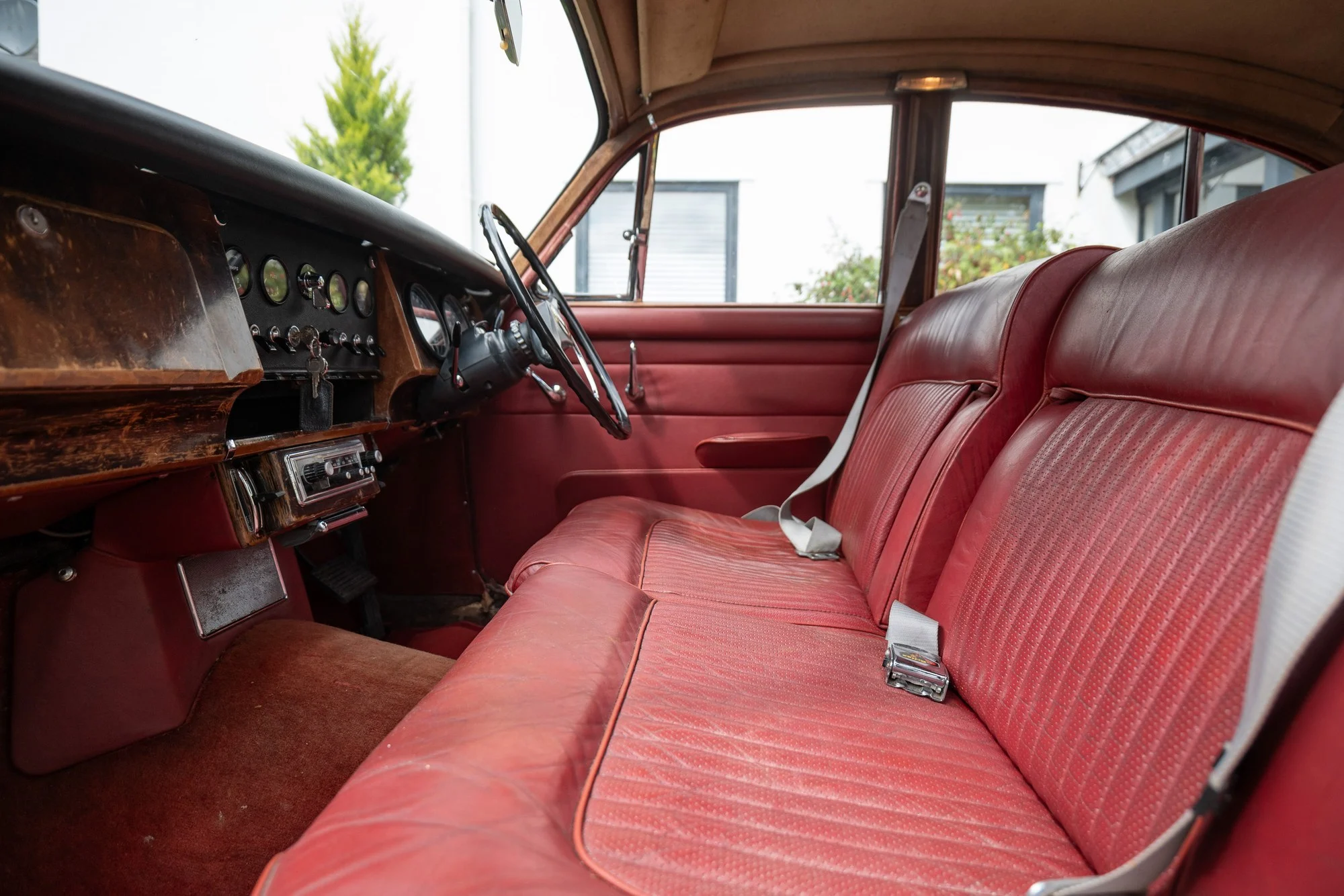
The current keeper acquired the Daimler in 1988. It has been used very sparingly in recent years, covering very few miles since extensive mechanical work between 2015 and 2019. This included the carburettors, brake system, suspension, fuel system, and a replacement water pump. The engine and gearbox were serviced less than 20 miles ago in 2019.
In white, it has obvious commercial potential as a wedding car, or indeed it could be readily enjoyed as the luxurious grand tourer it was originally intended to be. Jaguar founder Sir William Lyons’ mantra was ‘Grace, Space, Pace’. This car embodies all three.
1975 Jaguar XJ-C 4.2 Auto
Sleek pillarless coupés were all the rage during the late 1960s, and Jaguar was eager to jump on the bandwagon.
Strong demand, particularly in the US, prompted Sir William Lyons to commission a prototype two-door coupé variant of the short-wheelbase XJ. It looked fabulous, so Jaguar gave the XJ33 project the green light.
Developing the XJ-C wasn’t without its challenges. British Leyland’s turmoil, coupled with the inherent difficulties of removing the car’s structural B pillar, made for a costly and troubled gestation. But the result was well worth the wait.
Reviews unanimously concluded that the XJ-C boasted the finest ride quality and handling compromise money could buy. Using Jaguar’s legendary independent rear suspension system with inboard rear brakes, the XJ-C floated down the road while maintaining excellent traction, successfully blurring the line between luxury grand tourer and sports car in a way few, if any, manufacturers have been able to manage before or since. Buyers could choose between a 5.3-litre V12 and 4.2-litre straight-six.
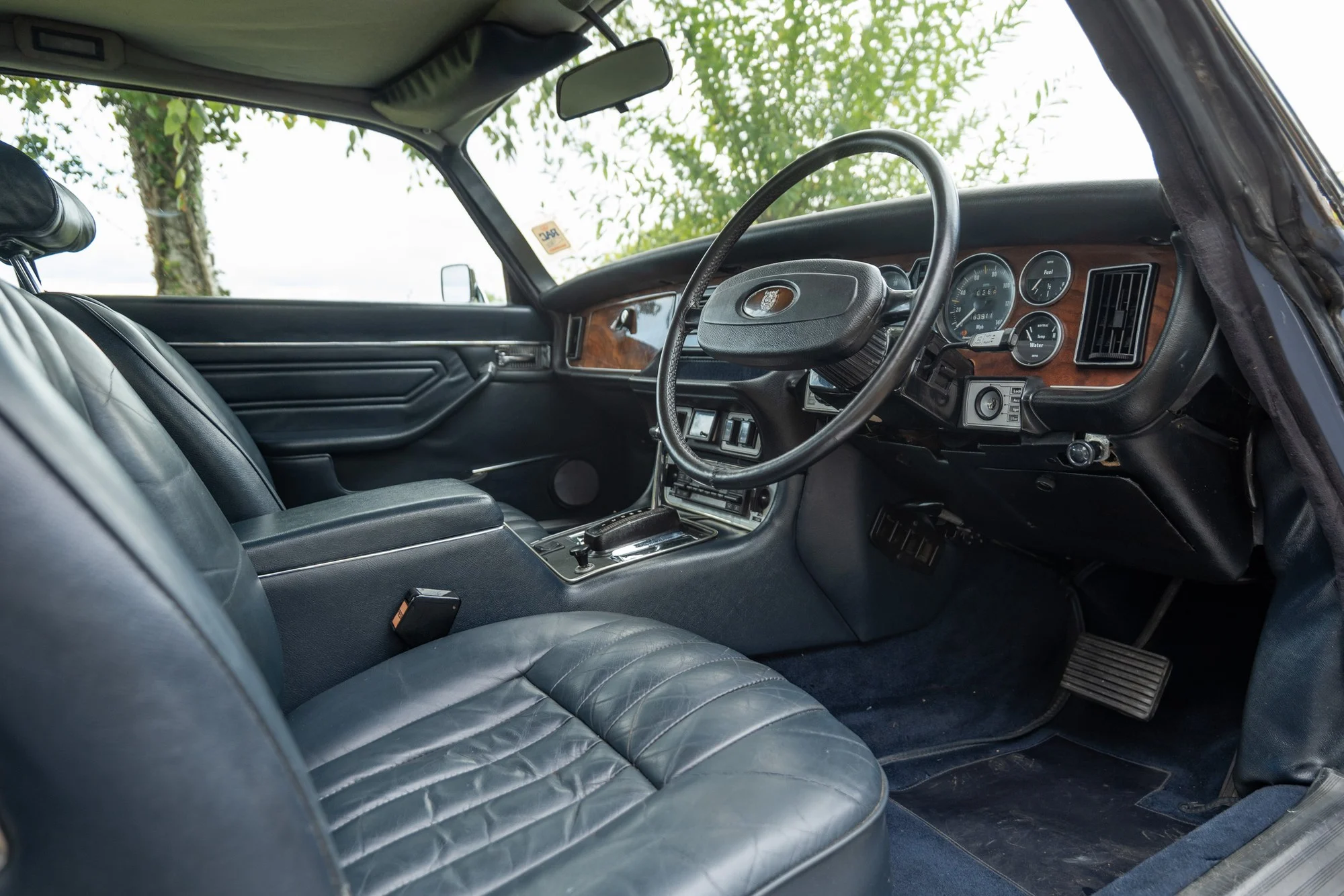
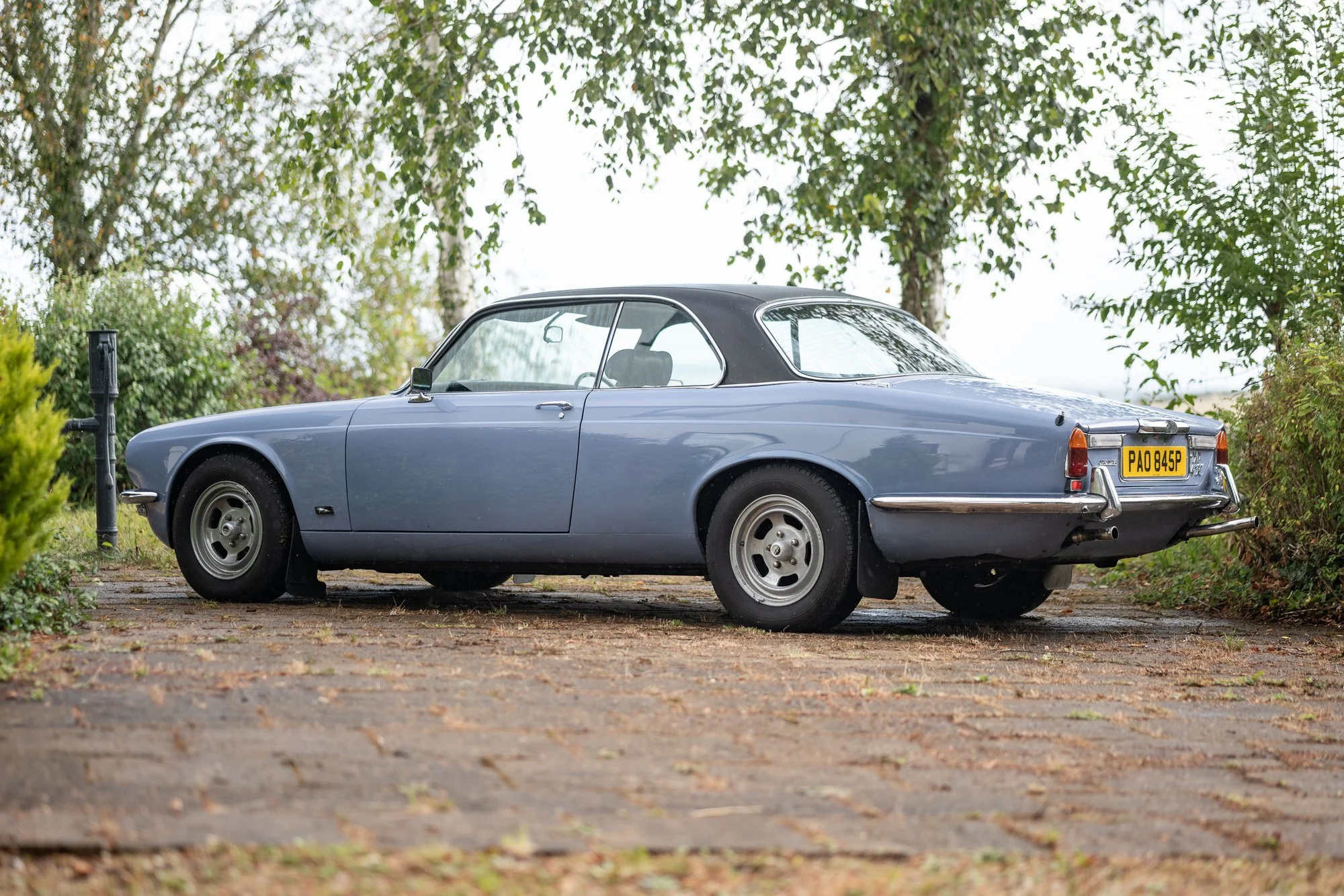
Our 1975 example is the 4.2 and one of only 19 right-hand drive Lavender Blue XJ-Cs built. It was acquired by its collector owner in 1981, and while the vendor is unable to warrant the mileage, the history file suggests that the indicated 63,911 miles may well be correct.
It’s a highly original example, minus a set of very sleazy Wolfrace Slotmags, and a particular highlight is the factory blue leather interior, which appears exceptionally well preserved. The exterior presents well also, with a few age-commensurate imperfections the new owner may wish to rectify, but certainly nothing that would prevent immediate use and enjoyment of the svelte grand tourer.
Despite very limited use over recent years, the car has a voluntary MOT to September 2026 with no advisories. The vendor includes invoices showing over £2,500 at Classics Engineering in 2025. This work included attention to the carburettor and fuel systems plus a new set of plugs and a battery. The vendor says the car is ready to use.
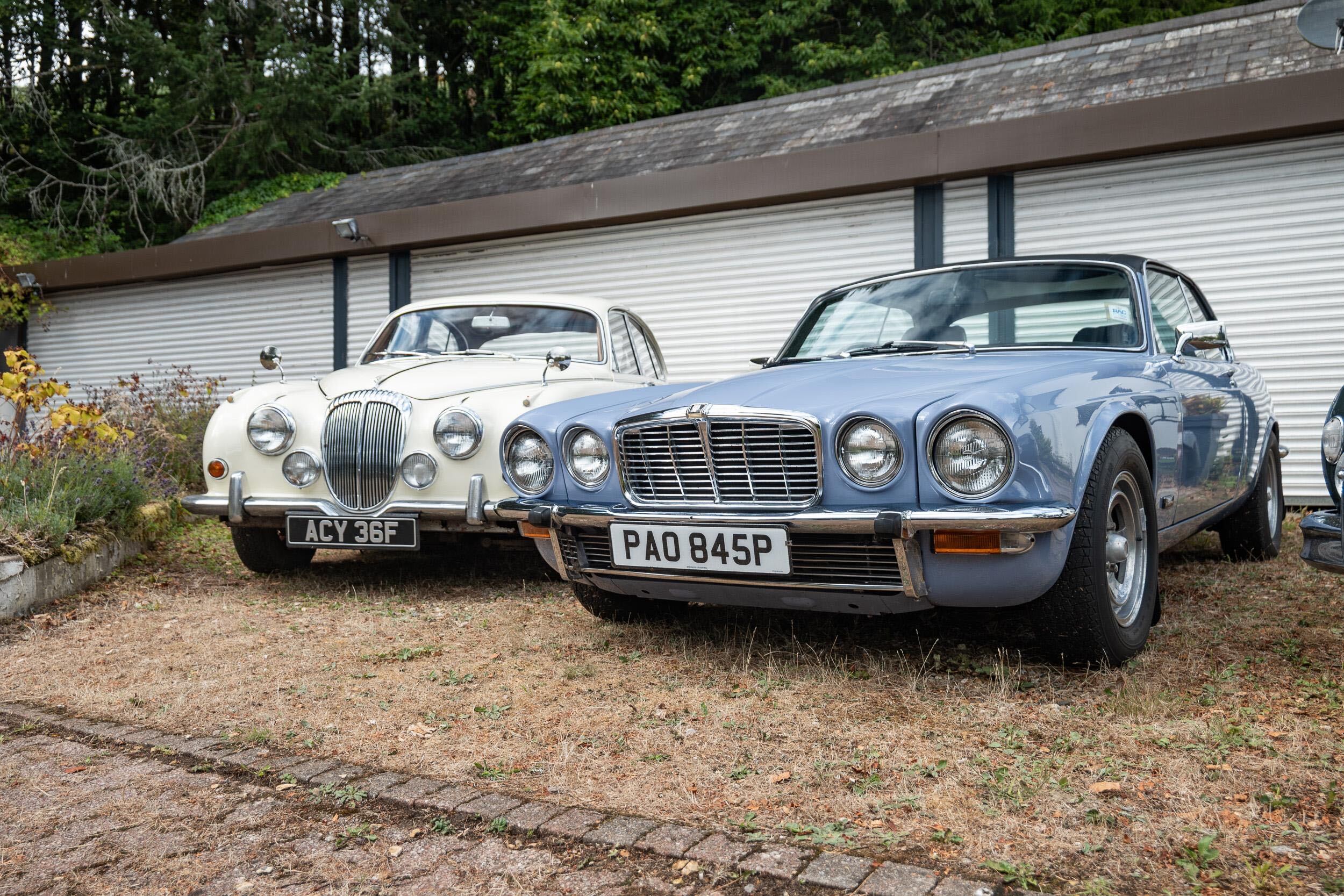
No reserve classic Jaguar auction ends Saturday 12th September
Whether you have John Prescott levels of Jag experience or want to dip your toe into big cat ownership for the first time, be sure not to miss these three Jaguars for which bidding is now live on Car & Classic. Spanning seventeen years of Jaguar history, these cars have shared the same stable for decades; the final three from a 50+ vehicle collection.
1958 Jaguar Mk1 3.4 MOD for sale
1968 Daimler 250 V8 Auto for sale
1975 Jaguar XJ-C 4.2 Auto for sale