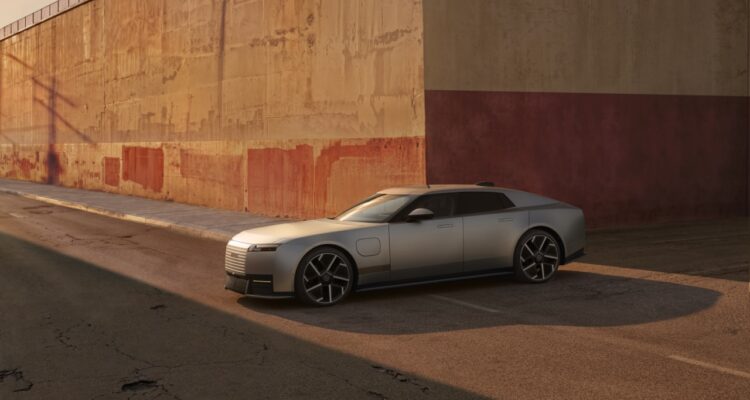
Form vs Ferrari – Is the Luce’s Polarising Design a Necessary Risk?

June 1, 2026
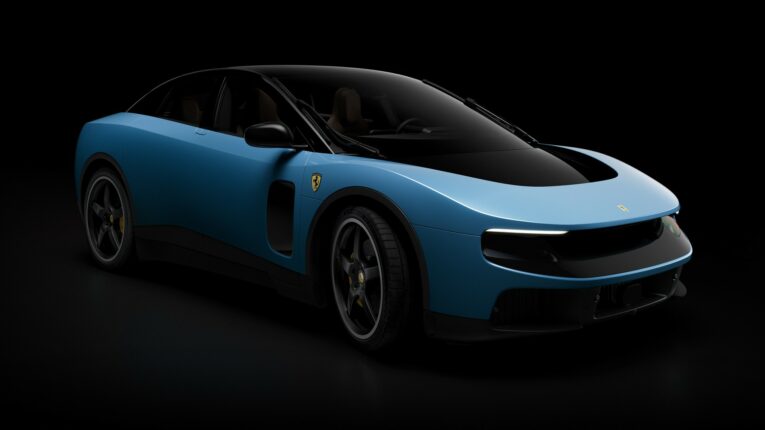
Luce exterior – Photo: Ferrari
The Tifosi are more resistant to change than most.
Nobody knew this more acutely than company founder Enzo Ferrari. For a man so unflinchingly unbothered by rubbing people up the wrong way, “Il Commendatore” cared profoundly about Ferrari’s image. He was wary of trying new things, and never was this tested more than by the introduction of Ferrari’s first mid-engined production car: the Dino 206 GT.
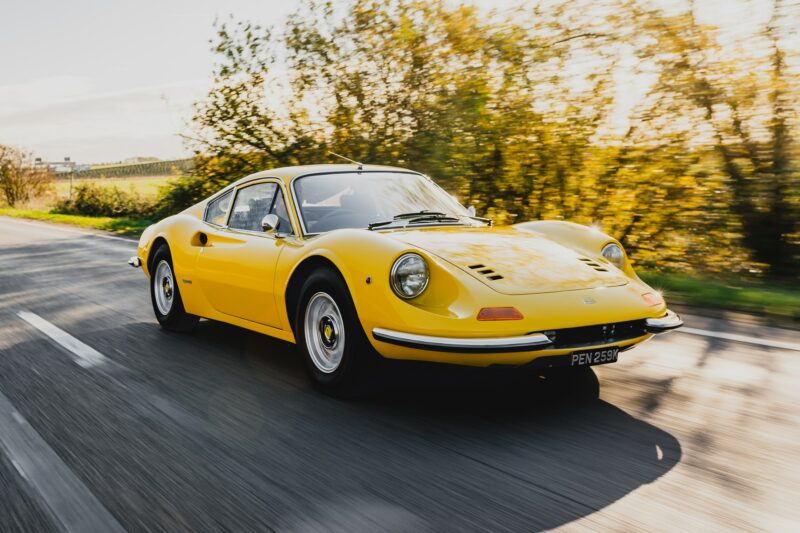
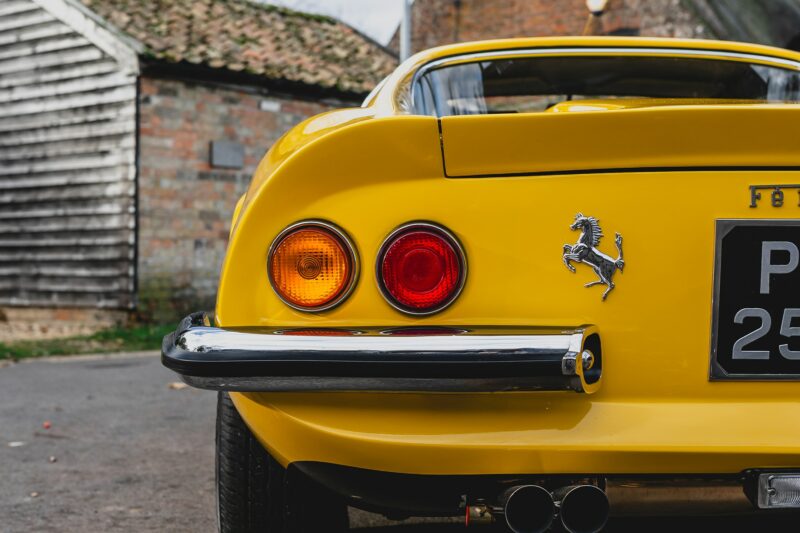
Dino 246 GT sold by Car & Classic Auction
Unveiled at the 1967 Turin Motor Show, following a series of concepts, the Dino signalled a radical departure from Ferrari’s typical front-engined GT formula. Enzo had been a firm believer in the idea that “the horse pulls the carriage,” and yet the Dino’s compact powerplant was to be mounted amidships, much like the Formula racing cars of the day.
But the most shocking deviation from the status quo was not the engine’s location, but its number of cylinders. The Dino featured a narrow-angle, DOHC V6 at a time when Ferrari was known for its V12s. The Dino engine was originally developed for Formula 2 competition, while its first road-going application was in the nose of the 1965 Fiat Dino, to which it was fitted for FIA homologation purposes.
Penned by Pininfarina and bodied by Scaglietti, the Dino 206 featured lithe styling markedly different from the usual GT cars emanating from the Ferrari stable. In this sense, its design was much more akin to that of the firm’s competition cars. This was a deliberate attempt to target a different buyer base. With its sights set on the Porsche 911, the Dino was intended as the first “affordable” Ferrari. This was radical stuff.
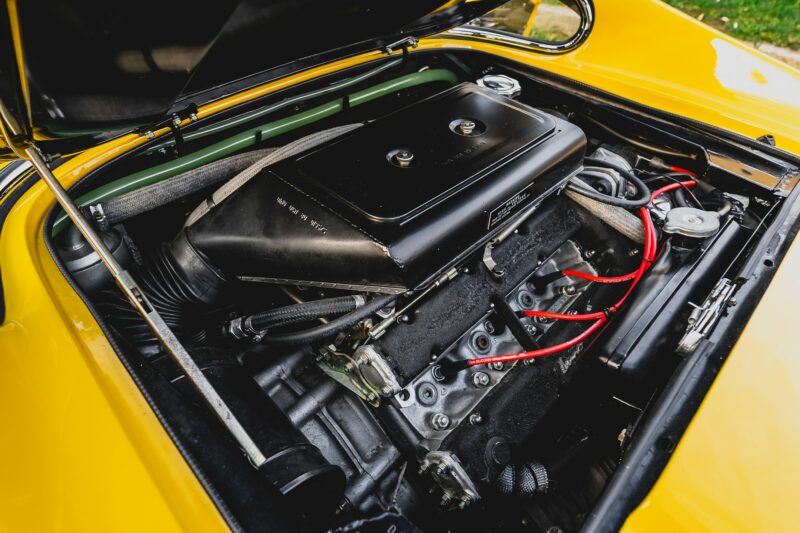
Indeed, “Old Man” Ferrari deemed the 206 GT so experimental that he was reluctant to endow it with his precious prancing horse. Dino essentially became a Ferrari sub-brand, as Maranello waited with bated breath to hear what the critics made of its unconventional new sports car.
Upon its unveiling, the Dino’s reception was overwhelmingly positive, with near-universal praise for its Pininfarina styling. Some questioned the car’s market positioning, however, noting that it cost significantly more than the front-engined Fiat Dino, which featured the same engine, after all, and asking why it didn’t feature the iconic Cavallino Rampante. Was this a car Ferrari was ashamed to call its own?
Any fears about potential damage to the Ferrari name vanished as soon as journalists were allowed behind the wheel. Mel Nichols (Car) hailed the high-revving V6 as a “pure feast” for the senses, while Denis Jenkinson (Motor Sport) found its mid-engine poise to be “driving pleasure distilled into its simplest, purest form.” L.J.K. Setright lauded the engine’s 8,000 rpm delivery as “heart-pleasing,” and Autocar noted that any lingering “not a real Ferrari” prejudice soon changed once clients got the chance to see it close up and drive it.
In the intervening decades, many Dino 206 and 246 owners have added Ferrari badges to their cars. While doing so is not strictly kosher, it is hard to argue that the badge doesn’t deserve to be there, as the Dino has become recognised as one of the finest Ferraris ever built.
That brings us on to the Luce, another Ferrari that dares to be different and will no doubt upset a few purists along the way.
We’ve known Ferrari would build an electric car ever since CEO Benedetto Vigna announced it back in June 2022. At the time of writing, Ferrari has produced nine hybrid models, so the introduction of battery technology is nothing new for the brand. Maranello could have played it safe by developing a ludicrously powerful EV powertrain for one of its existing supercars. But what it has done is anything but.
Predictably, Ferrari’s first EV is going to be very quick. The Luce will use four electric motors to make an equivalent 1,035 bhp, translating to 0-62 mph in 2.5 seconds and a 192 mph top speed. But these figures have been somewhat overshadowed by another of the new Ferrari’s attributes: its looks.
When Ferrari wants to develop a new car, it usually calls upon Pininfarina. However, the Luce design team was outsourced to a “creative collective” named LoveForm, headed by former Apple Chief Design Officer Jony Ive and industrial designer Marc Newson. The interior was teased before the rest of the car was unveiled, and the main feature of note was a retro-inspired redesign of the controls and instrumentation, boasting a thin, metal-spoked steering wheel and analogue dials.
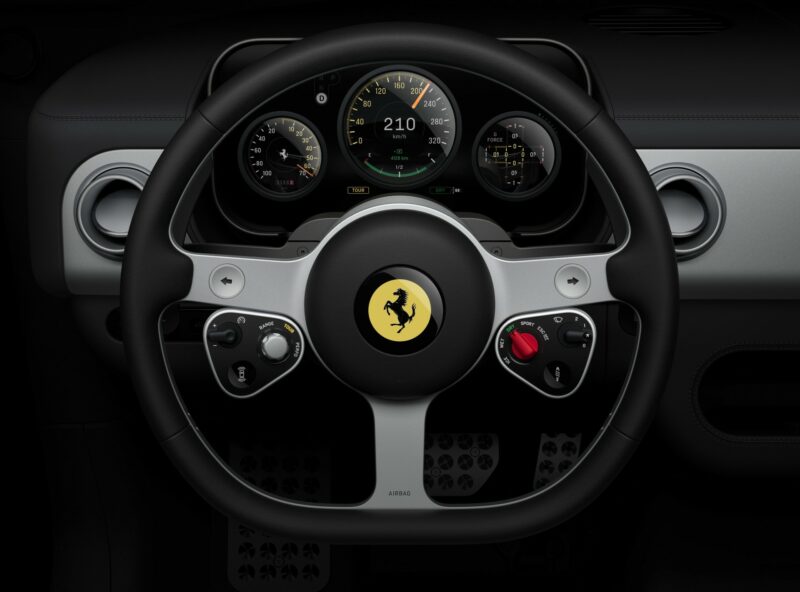
Luce interior – Photo: Ferrari
It’s fair to say the public reaction to the Ferrari Luce’s exterior design hasn’t been wholly positive.
The Luce is a five-seater hatchback, Ferrari’s first. The exterior styling, therefore, is a product of the vehicle type. That isn’t to say that a five-door, five-seater hatchback can’t be good-looking, but this car will never be a 250 GTO, F40, or 458. While some of the Luce’s interior appointments are a vintage throwback, the Luce’s exterior styling is unashamedly modern, reportedly offering the lowest drag coefficient in Ferrari’s history.
The Purosangue attempted something similar with four doors but retained a V12 heart and followed the design conventions of Ferrari’s current range. The Luce is something quite new, a car that is genuinely radical for Ferrari, but perhaps far less radical in the world of the Tesla Model S Plaid, Rolls-Royce Spectre, and Porsche Taycan Turbo. One wonders whether, had this car come from any other brand, the reception might not have been nearly so harsh.
The question that remains is whether Ferrari should enter the world of performance EVs in the first place.
The purist would almost certainly answer that question with a resounding “no”. But are said purists in the market for a new half-million-pound Ferrari? Likely not. Ferrari isn’t just thinking of Europe or the US; it’s looking further east, where a high-performance, ultra-luxurious EV is exactly the sort of car that sells in big numbers. Chinese automakers account for roughly 55 per cent of all global EV sales outside the US and Europe, with China manufacturing around 75 per cent of the world’s electric vehicles. Tempora mutantur – whether we like it or not.
Clearly, Ferrari is trying to beat the big EV manufacturers at their own game. But is that what Ferrari should stand for? Can Maranello not be content with building exotic supercars that stir the soul? The Luce will make a synthetic noise. There’s nothing synthetic about a Colombo V12.
The Luce is causing trouble at home, too. Ferrari’s stock price has fallen sharply since the launch, signalling a loss of faith in the brand that should really worry the board of directors. Former Ferrari chairman Luca di Montezemolo’s measured, yet overtly negative reaction has gone viral online and should certainly give them pause for thought.
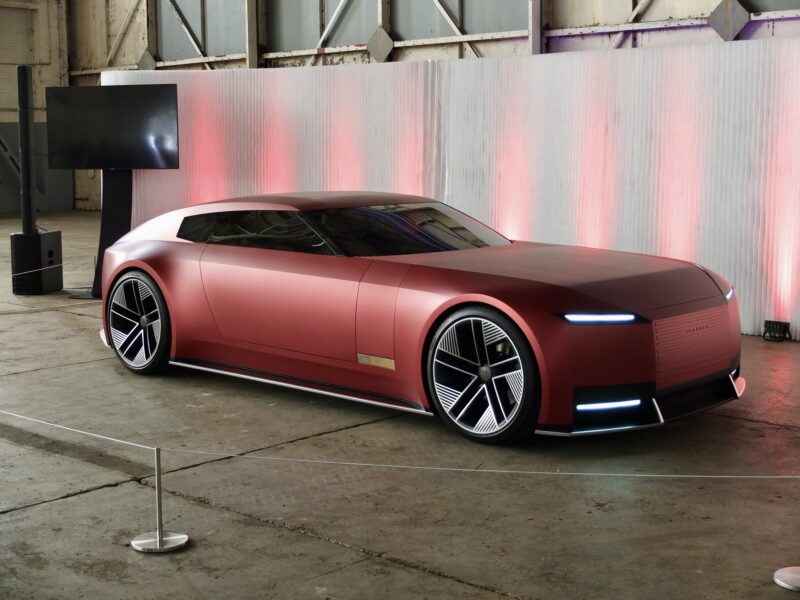
This isn’t the first time in recent years that a bold new EV flagship has provoked a strong reaction. Jaguar’s controversial 2024 rebrand brewed a media storm on an unprecedented scale. Jaguar weathered the tempest by claiming the “Copy Nothing”, “Delete Ordinary” campaign got people talking about Jaguar, which it certainly did.
Nevertheless, JLR was seemingly quick to part ways with the advertising agency and key individuals behind the move. In something of a PR U-turn, Jaguar has ditched “Copy Nothing” and dusted off its heritage fleet to lend the new design authenticity by comparing it with celebrated older models.
The opportunity to cut through the marketing hype and actually get behind the wheel of the car has worked wonders for the new Jag’s image. Journalists have found the Type 01 to perform favourably on Gaydon’s test track, citing how, despite being a totally new product for the company, the superb ride-handling balance makes it “feel like a Jaguar” to drive.
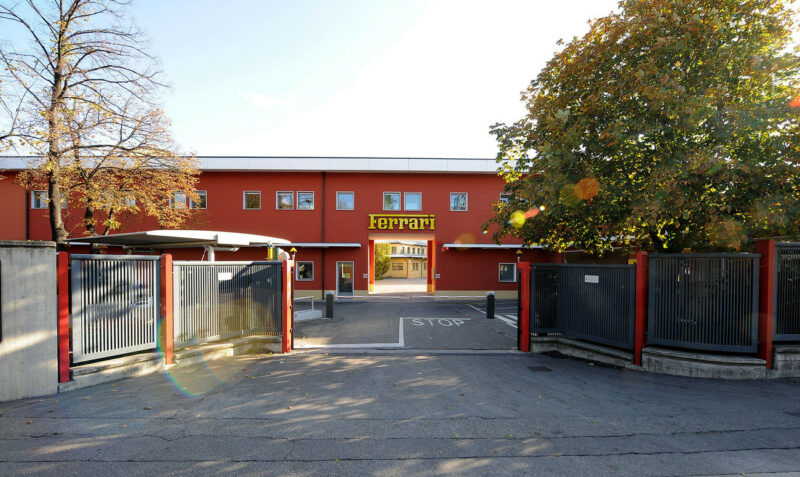
Maranello – Photo: Ferrari
One wonders if the Luce will feel like a Ferrari. Whether it looks like a Ferrari is a moot point, since the marque has never followed a single, unifying design language over its eight decades in business. It adapts with the times, and you could argue that’s exactly what’s happened with the Luce.
Nevertheless, the Luce is so different from anything the brand has come up with before that it seems unlikely to sit easily within the hallowed Ferrari lineage. Becoming the firm’s first fully electric car was enough of a shock to the system, let alone making it a five-door, five-seater hatchback styled by big tech designers. Perhaps letting journos smoke about in a Daytona during the Luce press launch will stir feelings of nostalgia and help forge a connection to Ferrari’s illustrious past, but it still seems a big leap to recognise Ferrari DNA in a five-door EV.
The Ferrari lineage may be sacred, but if history has taught us anything, it’s still far from perfect. Besides our Dino case study, the 400 GT was infamously divisive, as was the 308 GT4, 348, F50, Mondial, FF, and Purosangue (to name but a few). We’ve subsequently come to love many of these cars, so maybe the Luce will join them.
Every carmaker has made its fair share of mistakes over the years. Whether Ferrari has just made a big one, it’s too early to say.