Jaguar XJ-S Review – Living With a Big Cat

February 9, 2026
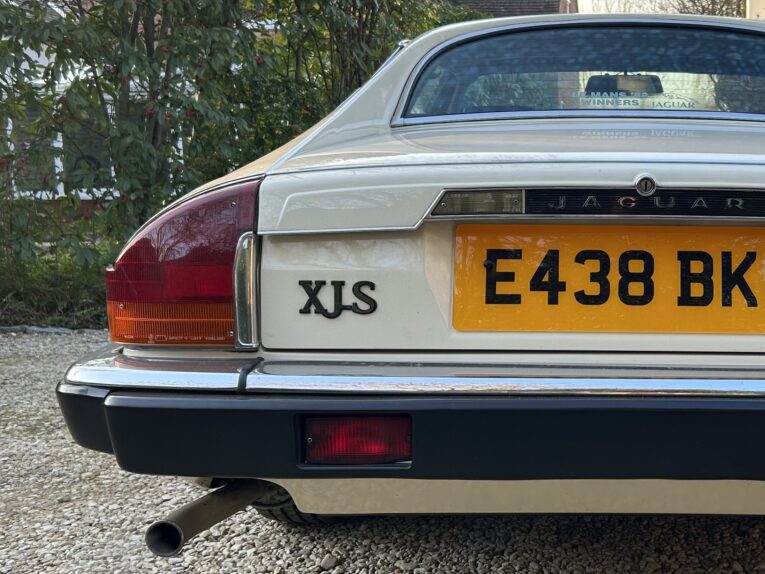
I’ve bought a Jag. A proper Jag; not some rebadged Mondeo, bloated SUV or electric milkfloat. It’s a Pringle jumper, pipe and slippers, tax-dodging sort of Jag – an XJ-S.
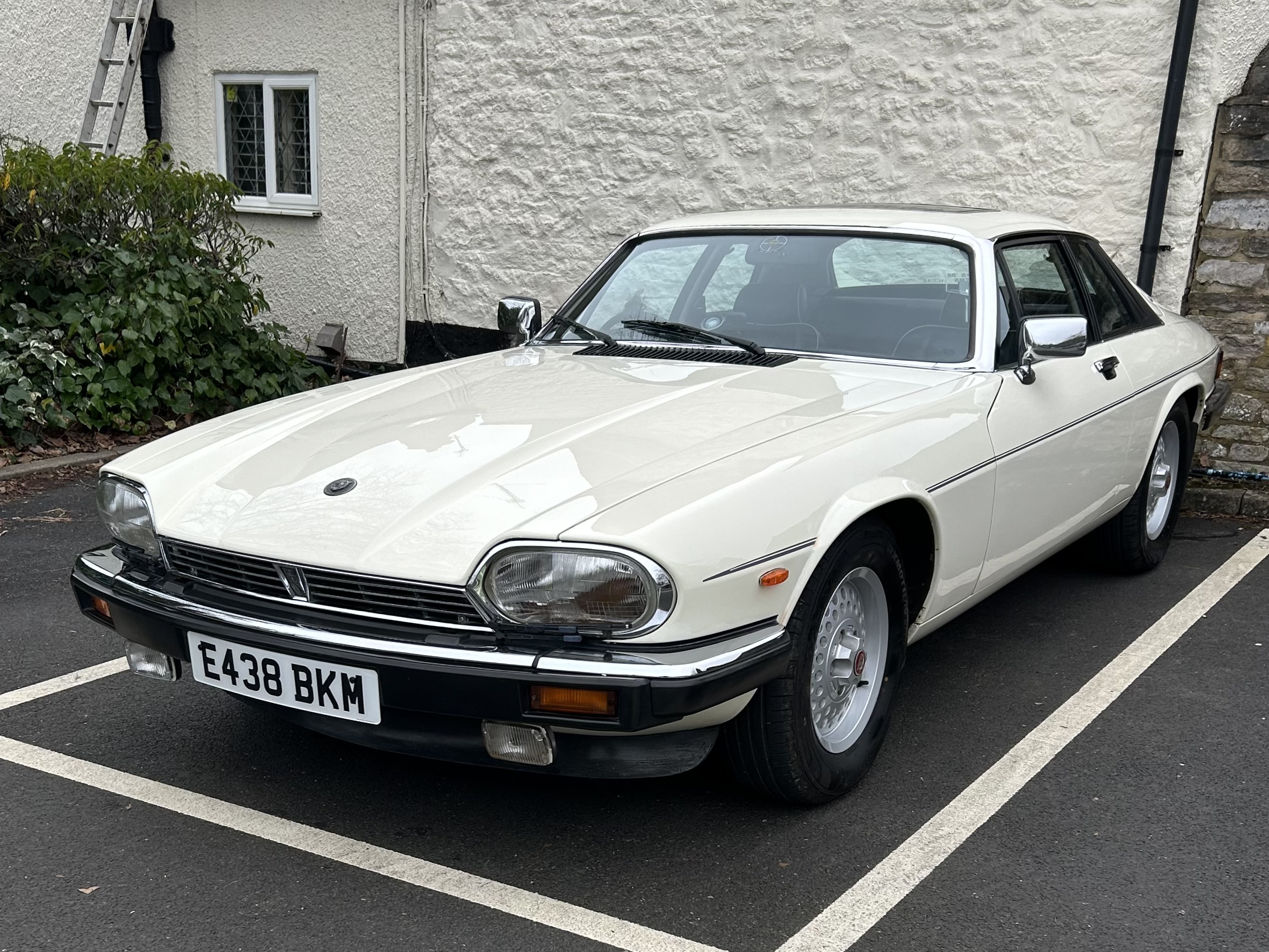
I’ve been on the lookout for a classic grand tourer for a while now. Ever since I tried (and failed) to drive my Alfa Romeo Spider to Le Mans Classic last year, I’ve arrived at the realisation that ‘80s Italian sports cars are probably a trifle too flaky for some of the Continental road trips I have in mind. Money no object, you’d find me behind the wheel of a Lamborghini Espada, a Ferrari Daytona, or a Jensen Interceptor. But the fact remains that I’m on a tight budget, and loath to buy something modern and sensible, I’ve ended up with a 1987 Jaguar XJ-S Coupé.
On the face of it, these cars offer excellent value for money. Unlike its E-Type predecessor, the XJ-S market has never really taken off, despite contemporary reviews lauding its performance and refinement. Even the most ardent critics are forced to accept that the XJ-S boasts a superb chassis, so good in fact that it was still used as the basis for the XK8 and Aston Martin DB7.
A radical departure from the curvy E-Type, its styling proved divisive in its day, but it’s safe to say it has aged well. Rumour has it that a mid-engined configuration was originally envisioned, hence the prominent rear butresses, but there’s scant evidence that this idea ever got off the ground. The buttresses make rearward visibility dreadful, but are a signature design feature of the car that’s lost on SC and convertible models. One could argue the XJ-S looks far less clunky than a Series 3 E-Type, especially the ungainly 2+2 models with their bulging rooflines.
Jaguar XJ-S Model History
The XJ-S came along at a tough time for Jaguar. Having merged with BMC in 1965, the firm was soon absorbed into the disaster that was British Leyland. Company founder William Lyons was getting too old to remain at the helm, and Jaguar’s best aerodynamicist and designer, Malcolm Sayer, died in 1970. Sayer had begun work on the XJ-S before his death, leaving colleagues to pick up the pieces and finish it off. To make matters worse, the XJ-S was launched amid the catastrophic fuel crisis of the early 1970s. Therefore, it should come as no surprise that early sales figures for this 5.3-litre V12-engined luxury GT were not especially brilliant. It was expensive too, especially when pitched alongside the last run of E-Types Jaguar was still trying to get rid of concurrently. In 1975, an XJ-S would cost you just under £9,000, whereas a leftover E-Type would set you back less than £4,000.
But Jaguar stuck at it, and it’s a good thing it did. The XJ-S finally found its fanbase during the affluent 1980s. Princess Diana had one. So did Frank Sinatra, Tom Petty, Joan Jett, Brian May, and Bob Dylan. It became part of the Yuppie uniform. Jaguar even launched a Burberry Edition, trimmed in the clothier’s trademark gabardine.
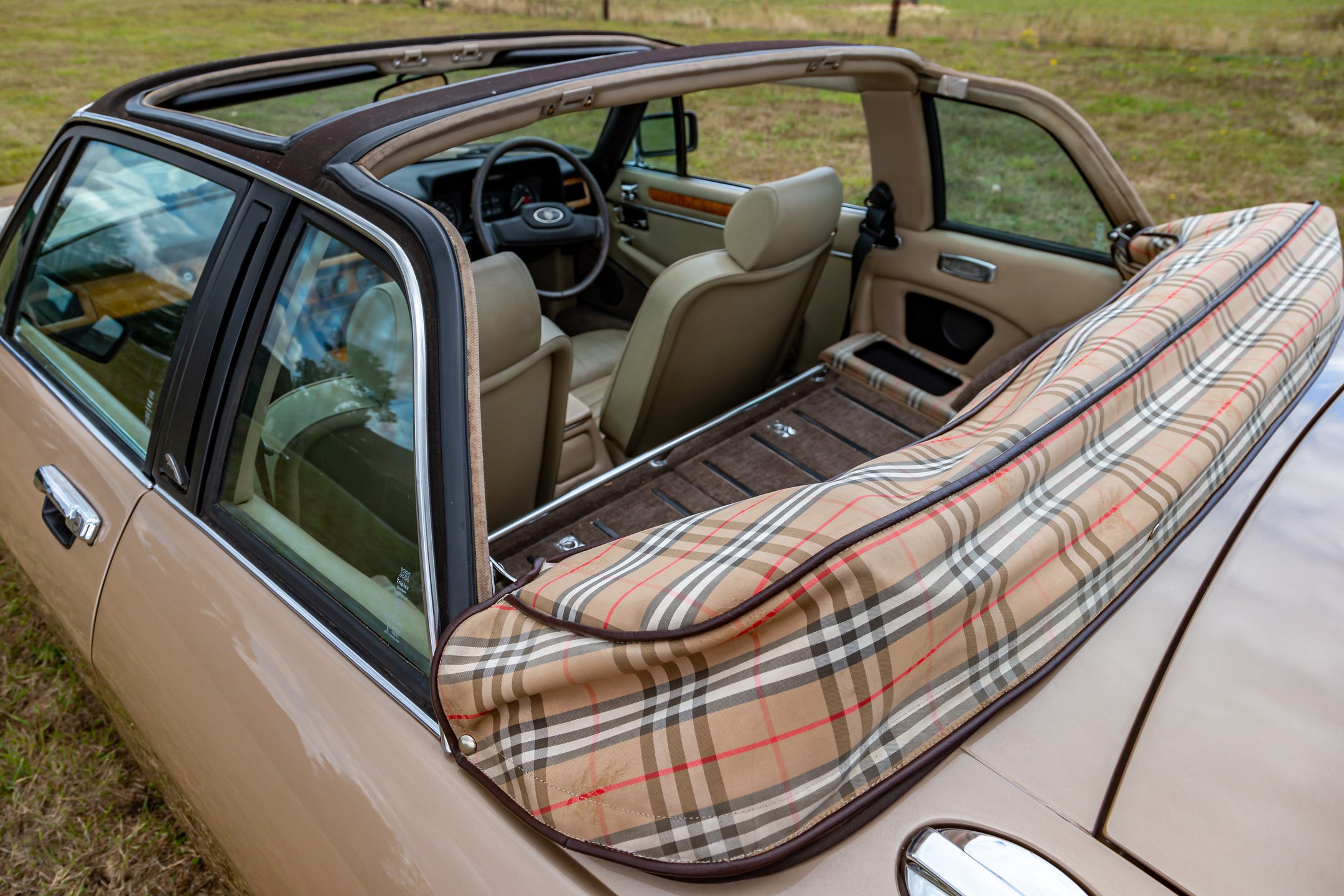
1984 Jaguar XJ-SC 3.6 ‘Burberry’ Edition
The XJ-S was also an unlikely star of the racetrack. Fettled by Tom Walkinshaw Racing (TWR), the XJ-S was a formidable touring car, winning the 1984 European Touring Car Championship (ETCC), including the famous Spa 24 Hours race, and securing a historic victory at the 1985 Bathurst 1000 in Australia. This spawned a factory-sanctioned TWR-honed XJR-S, bringing these modifications in-house through the creation of JaguarSport in 1988. Some of the most extreme aftermarket conversions were carried out by renowned Jaguar specialists Lister, while Lynx transformed the XJ-S into a supremely groovy two-door shooting-brake, which it christened the Eventer.
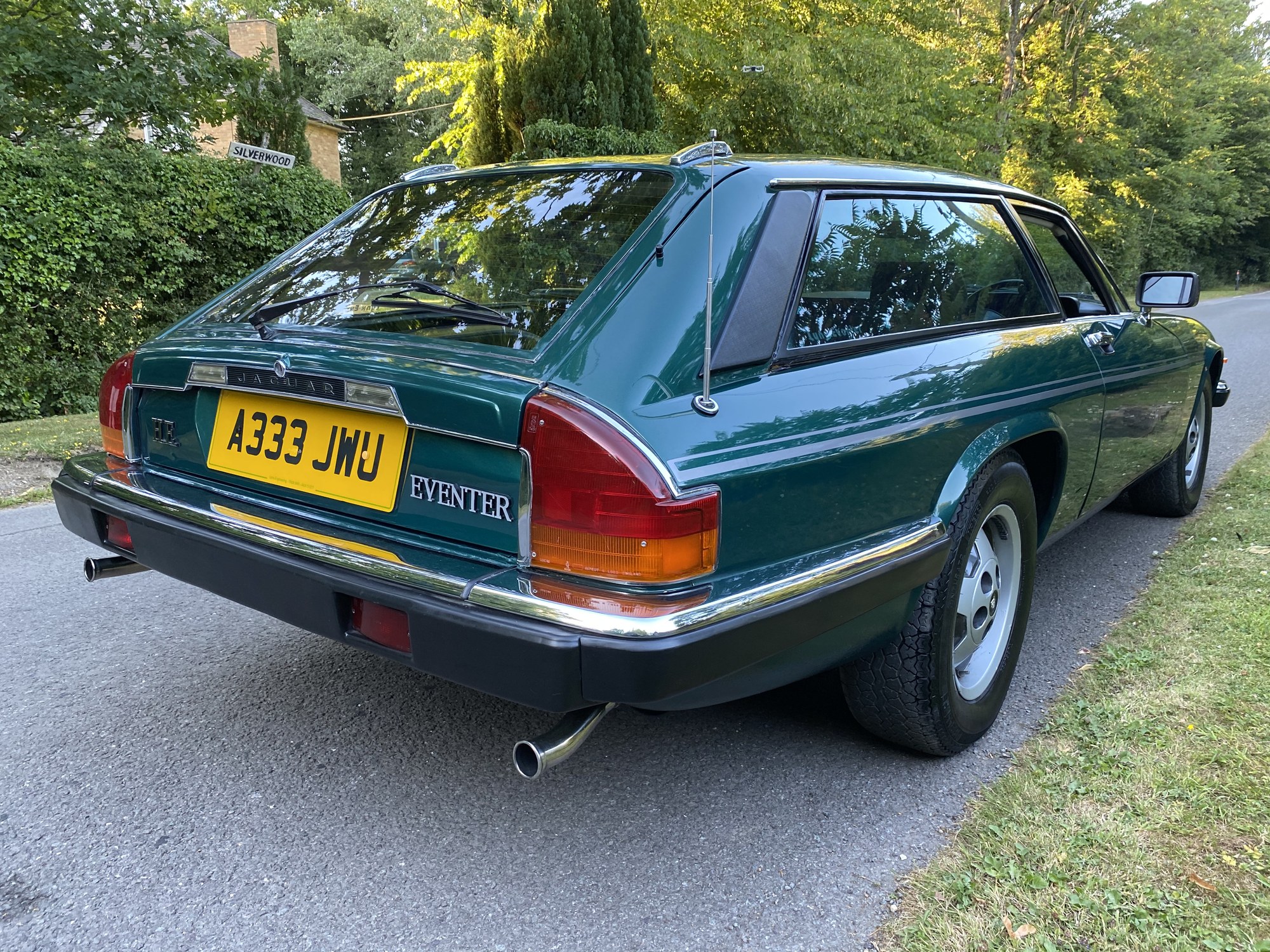
1983 Jaguar XJ-S HE Lynx Eventer
The Jaguar brand was also undergoing an image change under the stewardship of John Egan, saving the company from near-collapse and restoring its reputation as a premium global brand. A Le Mans win in 1988 with the Silk Cut-liveried XJR-8 did wonders to revitalise Jaguar’s image, while the XJ220 concept was unveiled in October the same year at the British International Motor Show.
Jaguar’s eventual success with the XJ-S was also thanks to the changes made while the car was in production. In an attempt to look sleek and modern, early models lacked the woodwork and chrome typically found in cars of this calibre. However, this decision was later reversed when Jaguar realised that wood and chrome were exactly the sort of features that buyers of a luxury British car would expect. Early XJ-Ss were all V12-engined. But with near single-figure MPG and high repair bills, a ‘High Efficiency’ (HE) version with revised cylinder heads was launched in 1981, followed by a 3.6-litre straight-six version in 1983. The 3.6-litre AJ6 cars initially came with a new five-speed Getrag manual gearbox. A four-speed automatic box was added for both engines in 1987.
A Targa-topped XJ-S-C came along in 1983, but wasn’t especially popular. It took Jaguar far too long to launch a full convertible, spawning aftermarket conversions, but this finally arrived in the spring of 1988 and proved to be a great hit. Some (Ed included) lament the loss of the ‘flying buttresses’ in these models.
From the mid-’80s, a replacement model had been in the works, but following Ford’s acquisition of Jaguar in 1989, such ruinously expensive projects were canned in favour of an XJ-S facelift, deftly carried out by Geoff Lawson. Some say these last XJSs (which were named minus the hyphen) are the best-sorted cars of the bunch. The bodies were galvanised, unlike early examples, and the rear lights and bumpers were neatly modernised. Engine options were revised with the introduction of a 4.0-litre six-cylinder version alongside the original V12, and this era also saw some highly specified run-out ‘Celebration’ models. There also came several high-performance models developed by TWR and Lister.
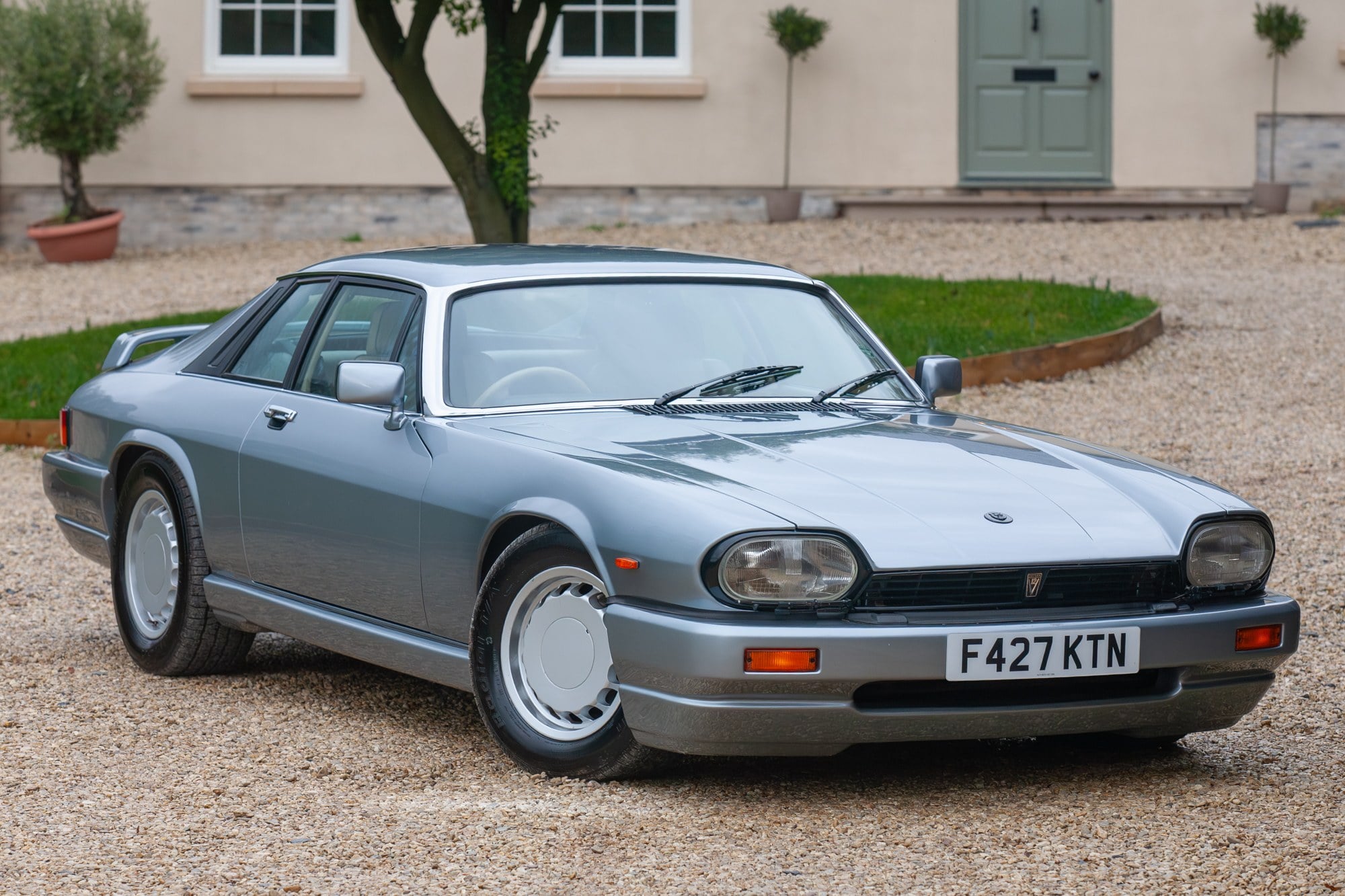
1988 Jaguar XJR-S JaguarSport 5.3 V12
My XJ-S
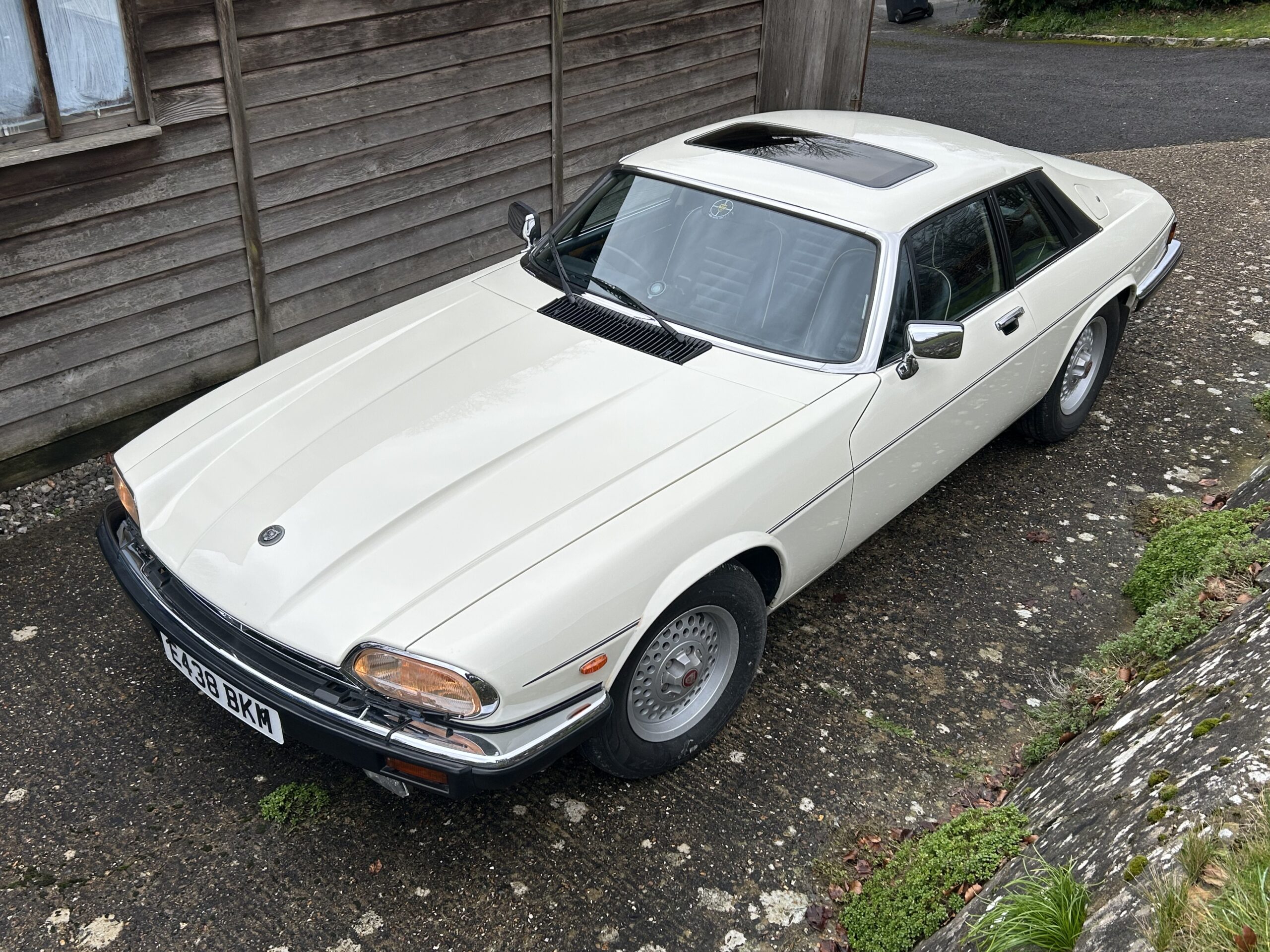
So where does my Jag fit into all this? It’s a pre-facelift 3.6-litre Coupé dating from 1987. As magnificent as the V12 engines are, I really can’t stomach the bills associated with fueling and maintaining them, so I’ve got the comparatively frugal AJ6, which is mated to the (optional) four-speed ZF automatic gearbox. I’d heard good things about the sporting nature of the Getrag manual cars, but I have to say the effortless waft of an auto certainly appeals to me for a vehicle I predominantly plan to use for long-distance travel. The AJ6 slant-six twin-cam is well-regarded, and with a warranted 79,000 miles, one hopes my engine is still in rude health. It certainly appears to have been well maintained during previous long-term ownership. With 221 horsepower, it’s still no slouch, with a significant weight saving over the V12.
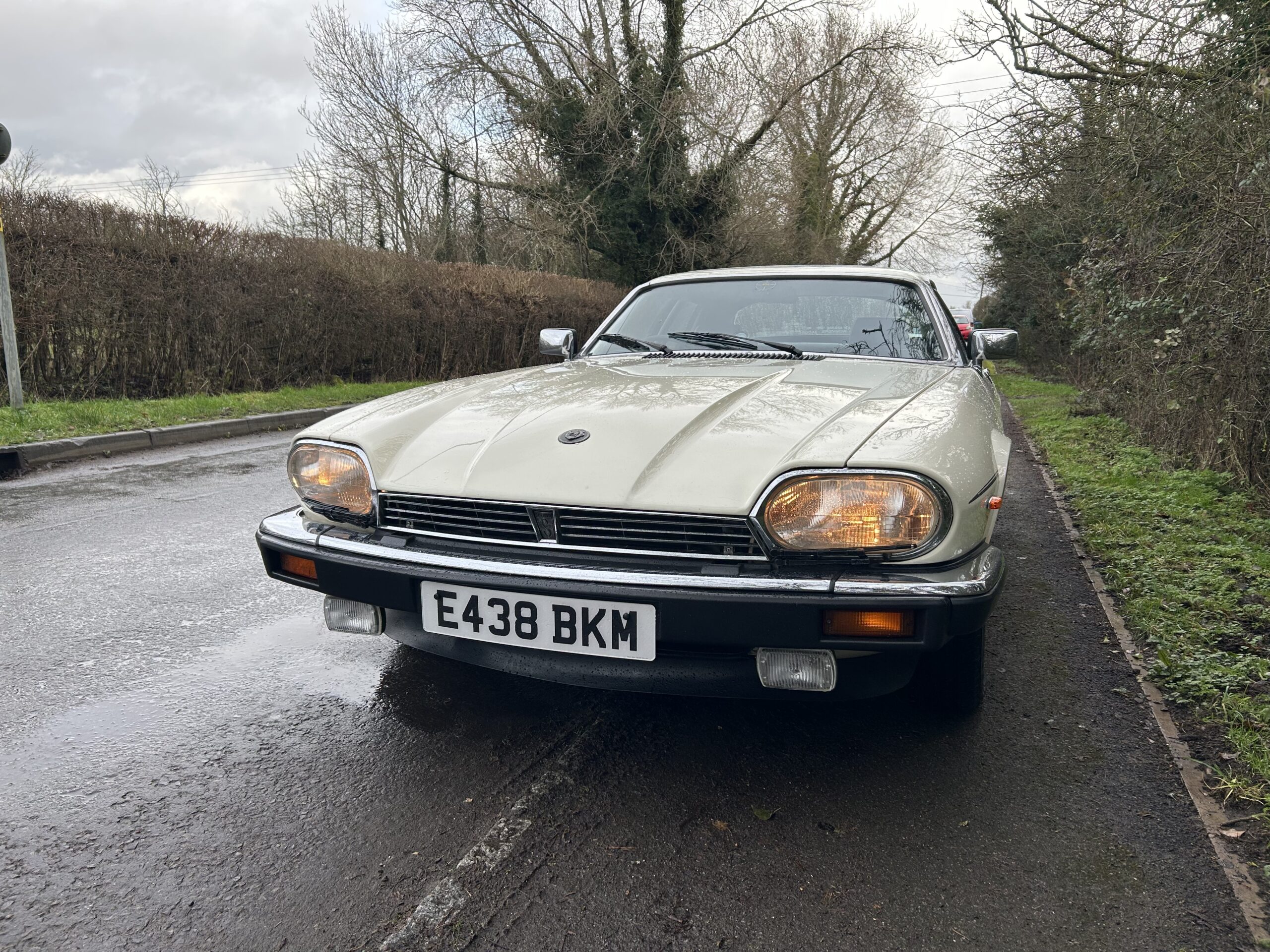
The other reason this 1987 XJ-S appealed is the spec. To be quite candid, the more common claret over beige colour scheme is a tad too golf club for me. Instead, my XJ-S is resplendent in Nimbus White, conjuring up images of Ian Ogilvy’s car in ‘Return of the Saint’. Better still, my car has a lovely blue leather with magnolia piping and a (functioning) glass electric sunroof that I’m more than a little scared to open in case it never closes again! I’m a sucker for comfort, so the well-damped suspension, tall tyres, power steering, heated seats (with electric lumbar adjustment) and air conditioning really do appeal in this sort of car. I wasn’t so sure about the pepperpot alloys at first, preferring the earlier ‘Kent’ wheels, but I have to say that they suit this ‘80s XJ-S very well.
What’s a Jaguar XJ-S Like To Drive
My favourite sort of cars to drive are usually rather different. I like Alfas, which should tell you all you need to know, but I must say it’s refreshing to smoke around in something that’s more relaxing and refined, while maintaining a sporting edge.
Unlike the E-Type, the XJ-S was a purpose-built GT from the outset. It should therefore be judged by different standards. The E-Type was hastily developed by a small group of engineers from the Le Mans-winning D-Type. It began life as a fairly raw, uncompromising sports car, later morphing into a GT with the advent of the 5.3-litre V12 engine, the introduction of automatic gearboxes, and the modification of the Fixed-Head-Coupés roofline to create a 2+2 variant.
The XJ-S was intended to be a grand tourer all along. If anything, it became more sporting as time went by, following an opposite trajectory to that of its predecessor. In 3.6-litre AJ6 guise, the XJ-S isn’t exactly rapid, certainly by modern standards, but it gathers momentum effortlessly, accelerating with a smoothness and linearity that no turbocharged four-cylinder of the period could muster. A 3.6 manual could dice with a Porsche 944, while contemporary road testers, including the trenchant LJK Setright, remarked that an XJ-S was at its best when high-speed cruising.

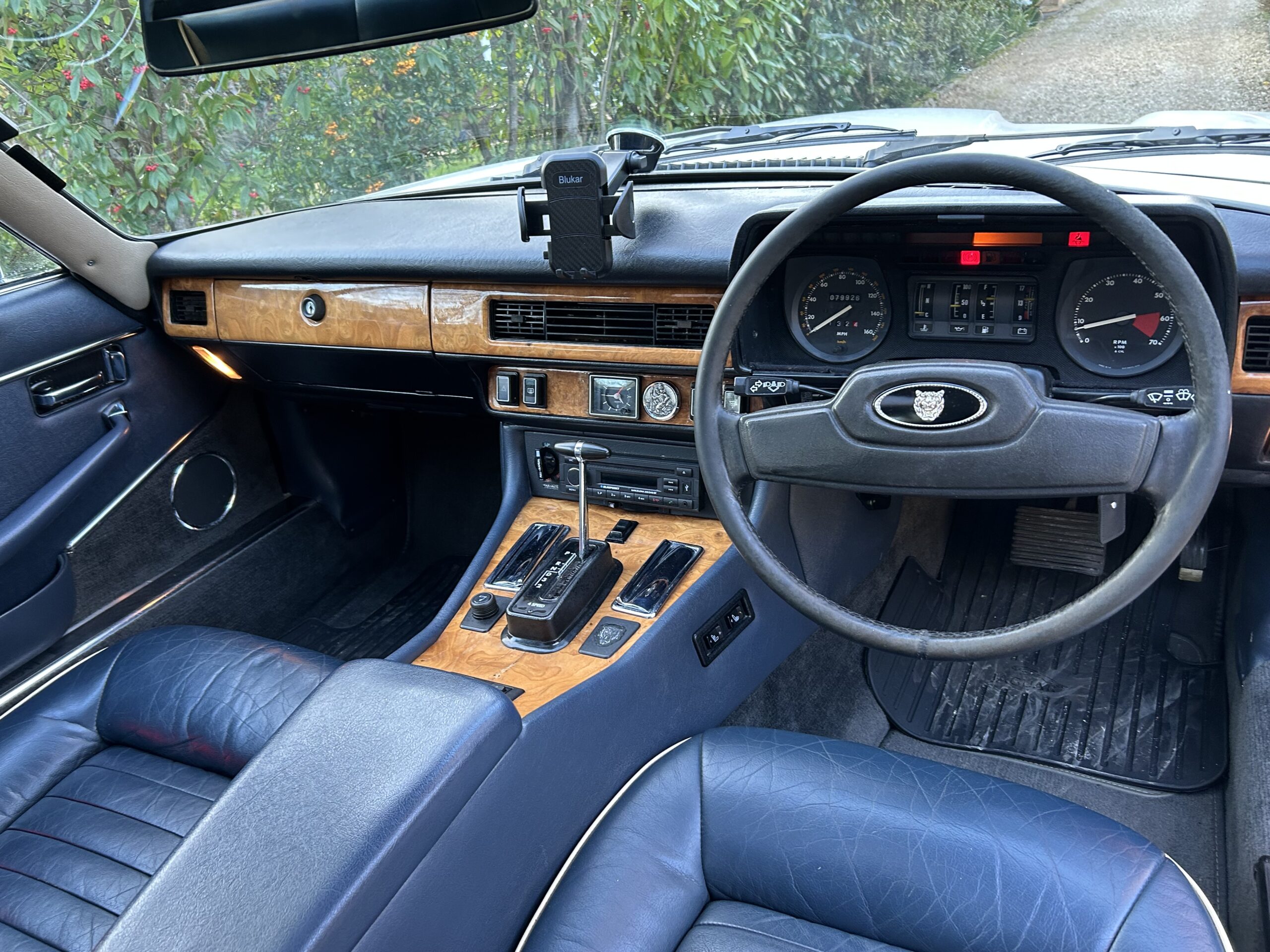
According to legendary Jaguar test driver Norman Dewis, Sir William Lyons had instructed his engineers to optimise the XJ-S for the American market. That likely explains why British road testers were dismissive of the “over-assisted” power steering. Certainly, it is quite light, and the wheel is too large, given how little effort it takes to turn it. But, compared to today’s electric systems, it certainly doesn’t feel excessively assisted. The rack is quick enough for a sporty feel without being in any way twitchy, and there’s still just enough feedback through the wheel to keep the driver informed. Where it proves less competent is hard cornering at speed, a task the XJ-S is eminently capable of, since the steering doesn’t weight up sufficiently to inspire confidence.
Despite being a very long coupé at fifteen feet, ten inches, the cabin is quite small, and it’s very low-slung. The downside is that it’s quite cramped inside, especially for rear passengers, but it does mean that the XJ-S is impressively aerodynamic with a super-slippery 0.39 drag coefficient. While the E-Type’s high-speed stability was notoriously compromised, the XJ-S could sit comfortably on Germany’s autobahns at speeds in excess of 140 mph with minimal wind noise and rock-steady composure.
Behind the wheel, the first thing you notice is how quiet it is. The super-slippery shape means there’s minimal wind noise, even at motorway speeds. The 3.6-litre AJ6 engine is silky smooth, with hardly any vibration and very little sound besides a pleasing turbine-like ‘whoosh’ under acceleration. The four-speed ZF auto gearbox is pretty smooth too, especially for an old-school slushmatic. It’s a little too eager to change up into top, which is probably good news for the fuel consumption, although slightly frustrating when you’re trying to hold onto gears under acceleration, since peak power falls between 5,000 and 5,300 rpm. In fairness, this can be remedied by remembering to use the third gear lockout. The kickdown function is effective, too, so the Jag can hitch up its skirts and get a move on when provoked.
You’d imagine an XJ-S would handle like an oil tanker, but it’s actually rather nimble for such a big, heavy car. The ride is very supple, but not nearly as floaty as it might be. In typical ‘70s GT fashion, the rear squats under acceleration and the nose dives under braking, but somehow the Jag still feels composed in the way a Mercedes-Benz of the period just doesn’t. The front end goes exactly where you point it, with a hint of body roll but not nearly as much as you’d expect from such a hefty old barge. The XJ-S doesn’t hide its considerable mass, but it copes with it very well. For a rear-wheel drive car, there’s ample grip available, and the limited-slip differential helps get the power down.
Jaguar XJ-S Review
Love it or loathe it, the Jaguar XJ-S is excellent value for money in today’s market. Having lived with one for a few hundred miles now in mixed conditions, it’s time to go through a few likes and dislikes.
Starting with the dislikes, I wish it had a slightly more exciting engine. The AJ6’s smoothness and refinement are commendable, and I have no complaints about the performance, but one can’t help thinking that a more vocal motor would suit the XJ-S down to the ground. It makes a perfectly pleasant noise, but lacks the theatre of some of its rivals. I love the quietness when cruising, but it would be nice to hear a more pronounced growl when you put your foot down. Explore the upper rev range, and the AJ6 becomes slightly thrashy, rather than sonorous.
The cabin is irritatingly small. I find I can get reasonably comfortable in the front, but it’s such a shame the rear seats are so compromised, as the XJ-S would likely have a much broader appeal if it could properly accommodate four people for long-distance touring. Once you’re in, the rear seats are comfortable, but the lack of head and leg room severely limits their usability. There’s also nowhere for the driver to put their left foot, which I anticipate may become tiring on longer journeys. The boot, by way of contrast, is cavernous. Ample room for golf bats, stolen paintings, and a sawn-off shotgun or two.
Now onto the likes. Very little else goes down the road with such impunity as a Jaguar XJ-S. The lack of wind and road noise is almost uncanny, and I savour how the suspension manages to be both compliant and composed at the same time. Jaguar’s legendary independent rear suspension is to thank here. The body control is quite remarkable; if only the steering loaded up in the corners enough to match it, this would be a deeply impressive machine.
What the AJ6 engine lacks in drama, it makes up for in reliable performance and acceptable fuel efficiency. A naturally-aspirated 3.6-litre straight-six is never going to return fifty mpg, but mid-twenties on a long run is achievable and not at all bad for a 1,660 kg luxury car. Compare the figures, and the V12 starts to make little sense for real-world driving and 2020s fuel prices.
While more than a little claustrophobic, the interior is nevertheless a lovely place to be, with lashings of wood and leather in later cars like mine. Jaguar clearly skimped on a few materials, like the habitually droopy headlining and incongruously plastic-y switchgear, but the overall feel of the cabin is still high-end. The leather, wood and carpets are all of very good quality, greatly contributing to the overall experience.
Conclusion
My Jag is by no means a perfect example, but it’s very presentable for its age, with just 79,000 miles under its belt, an excellent coat of paint, and a remarkably good original interior, aside from the usual saggy headlining. So, providing it doesn’t throw too many curve balls, I’m hoping I’ve bagged a competent GT for some road trips. I’ve got a few jobs to attend to before the big cat is ready to embark upon its first road trip, mainly tidying up the cosmetics, although I’ll be on the lookout for a decent specialist for some advice on a few mechanical gremlins. Cars of this complexity scare me, and I do find myself with one eye trained on the dashboard, anticipating the illumination of one or more of the twenty or so warning lights. So far, so good, however. I don’t kid myself that it will be in any way reliable, but however it turns out, I can’t wait to put this XJ-S to the test.