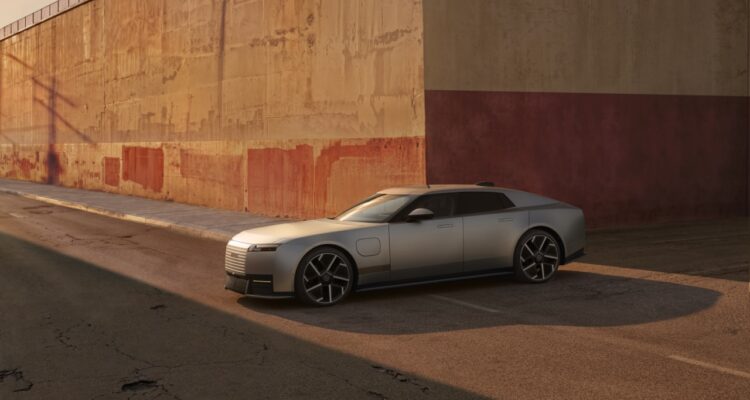
Renault Announces New Heritage Centre to Open in 2027

June 30, 2025
Photography courtesy of Renault
Car & Classic’s mission is to secure the future of historic motoring by offering the best choice of classic vehicles in the world. So when manufacturers say they’re going to invest in their heritage, we’re all ears. Now that the new car market is suddenly awash with Chinese EV brands, it seems old hands like Renault are looking to their illustrious past to lend legitimacy to their current models. And quite right too. The new Renault 5 is the car everyone’s talking about right now; a textbook example of the right way to bring back a classic name. There’s a retro-futuristic Renault 4 coming too. And don’t forget the Alpine A110 – one of the most celebrated revivals of a classic model released so far this century.
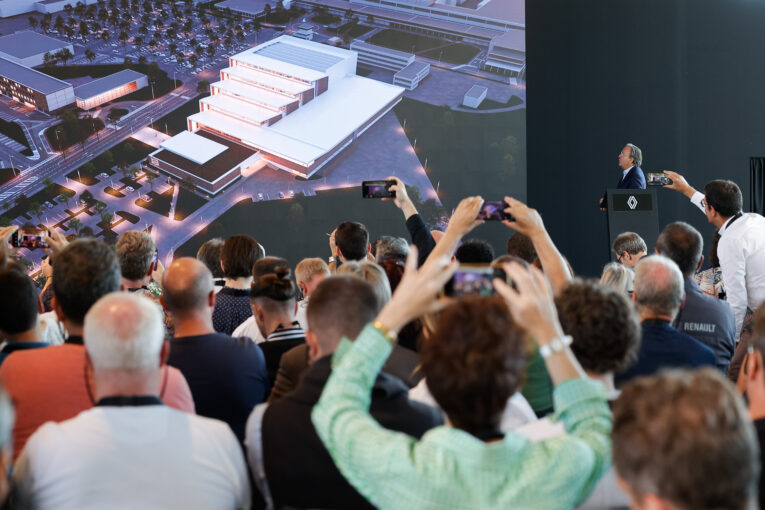
Renault recently invited us to its famous Flins factory near Versailles to unveil plans for its brand-new heritage centre, the first time Renault’s extensive collection will have a permanent home. Renault says it will open this new facility to the public, where it’s set to become part of the tourist trail and welcome at least fifteen thousand visitors each year. The Flins premises ceased car production in 2024, but Renault has retained and rebranded it as a “Refactory” site, dedicated to the circular economy, namely vehicle refurbishment, recycling, and research.
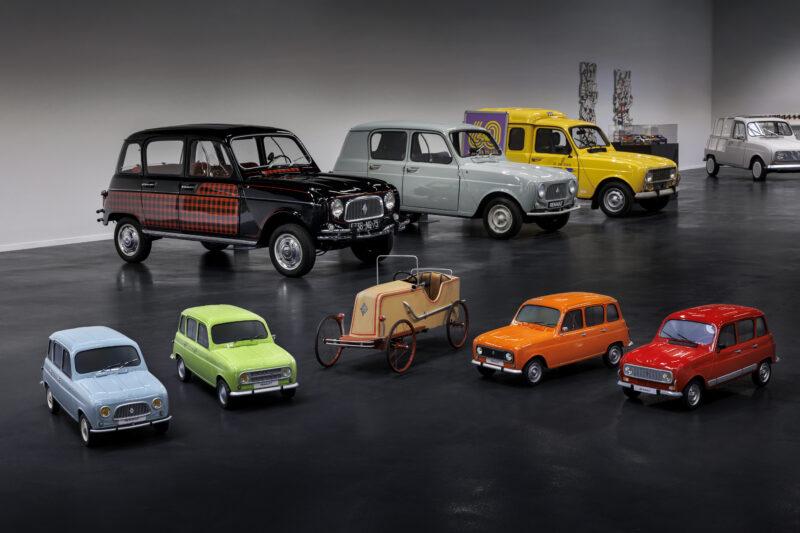
Keen to avoid the term ‘museum’, Renault says the new (yet to be named) heritage centre will “bring back personal memories associated with specific brand cars or commercials that marked their time, as well as giving them an opportunity to admire exceptional works of art from the Renault Fund.”
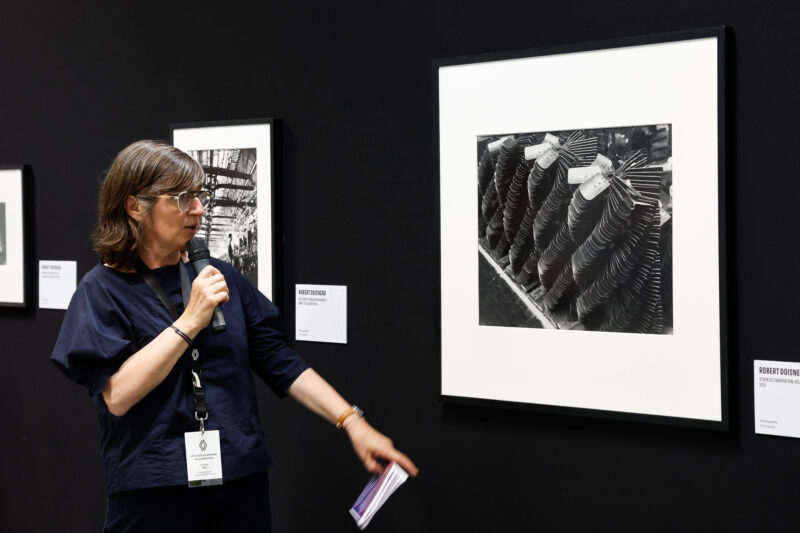
This is more than just a car museum. Renault has also amassed several hundred works of art since the 1930s, and these diverse collections will form a key part of the heritage centre display, alongside myriad archive documents: “posters, design drawings, miniatures and toys, pedal cars, cups and medals, and books making up the bibliography of Renault.”
Renault plans to continue adding to this collection, creating a fund and spaces for modern artists to work in certain areas of the Flins Refactory. And if art’s not for you, we hear there’s also an aeroplane and a tank to form part of the display.
The cars will still take centre stage, of course, and Renault says hundreds are to be arranged on a series of “pallets” in rows of nine stacked five cars high and up to fifteen rows deep.
Since the new 2,800 square meter building designed by celebrated architect Jacob Celnikier is yet to be constructed, Renault invited journalists to preview some of the cars and artworks from its extensive collections, which have been temporarily arranged around the Flins factory buildings. These aim to give a flavour of what the new heritage facility will be like, and they also offered us the chance to see and ride around in some beautifully restored classics from Renault’s vaults.
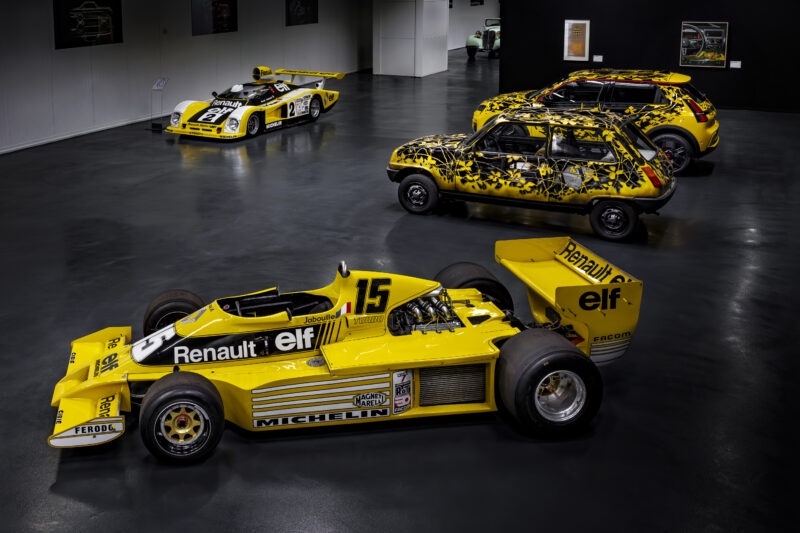
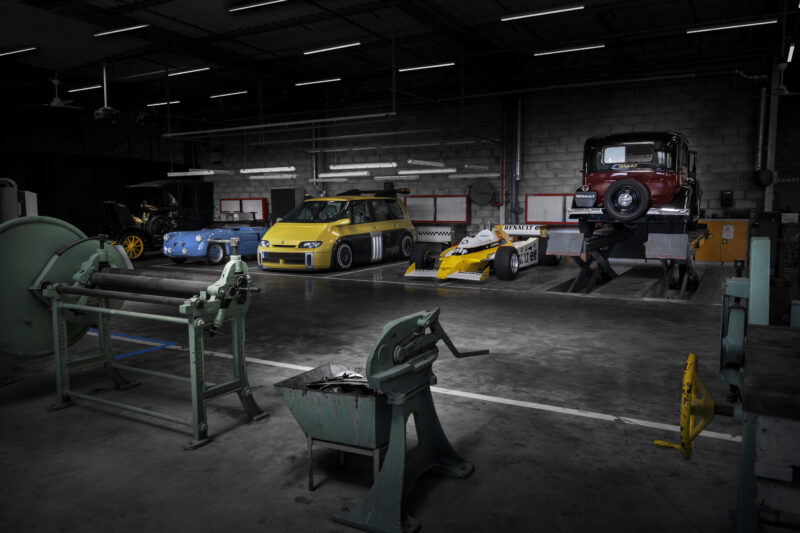
Highlights from our tour included Didier Pironi and Jean-Pierre Jaussaud’s 1978 Le Mans-winning Renault-Alpine A442B, an Espace F1, a vibrant array of Renault 4s and 5s old and new, and several historically significant Group B and Formula 1 cars. We also got to see the workshop that currently keeps these very special vehicles in tip-top shape. The quality of their work is astounding. Indeed, we’re told that the new heritage centre will be as dedicated to preserving the skills to maintain these cars alive as it will be about vehicles themselves. Renault does not currently intend to offer customer restorations from this facility, but with this renewed focus on heritage, who knows what the future may hold.
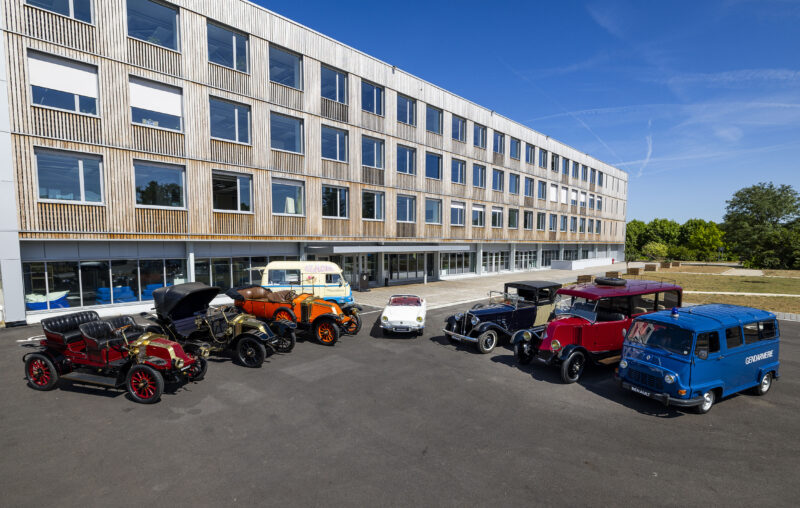
We’re informed that almost sixty per cent of the 650 vehicles in Renault’s collection are currently in running condition, which is no mean feat, even for an organisation of this size. Proving this point, Renault arranged for a selection of these vehicles to greet us as we arrived at the Flins plant, and we were later taken on a tour of the Refactory site in this eclectic convoy of early Renault cars and commercials.
It’s very promising to see that Renault is deepening its commitment to preserving the past. The collection itself is nothing new, but very few have hitherto even caught a glimpse of these vehicles. The fact that Renault is building a dedicated heritage centre to house them, and is opening it up to the public, is a significant statement of intent.
We’ll leave you with the words of Fabrice Cambolive, CEO Renault Brand:
“I believe that a brand draws its strength first and foremost from its roots. Our industrial and cultural heritage is based on 125 years of history and is still incredibly relevant today. It inspires our workforce every day in their efforts to imagine the future of mobility. And you could say that it belongs to everyone, since Renault is also part of a universal popular culture. This is why we wanted to share our heritage widely, through a dynamic, open experience accessible to everybody. The new site is a family venue, where you can stroll around the cars, and reconnect with a history that is not static but constantly evolving: a heritage that makes us proud and that we want to convey to the full.”