Beschreibung
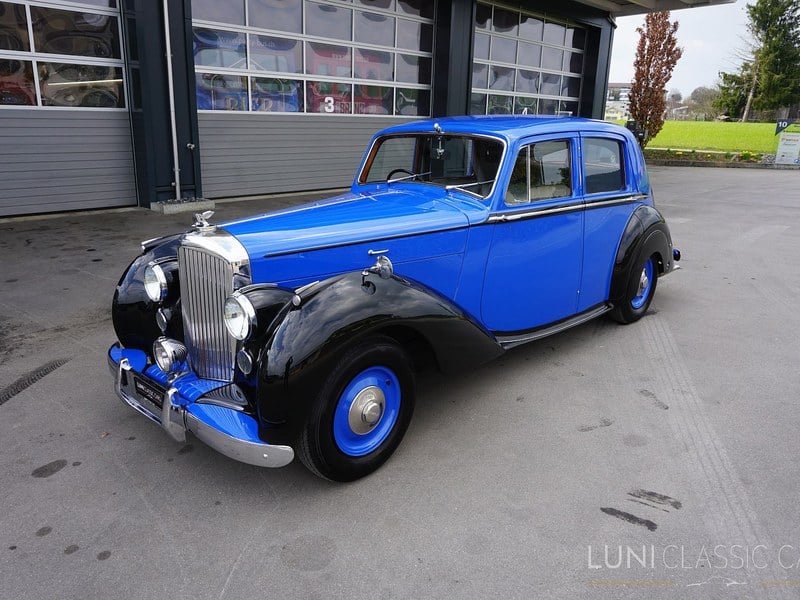
Ein Bentley Mark VI ist kein Auto, das sich über Lautstärke oder Effekte definiert. Er wirkt über Haltung, Materialität und eine Art von Souveränität, die nur aus echter Substanz entstehen kann. Dieser rechtsgelenkte Mark VI aus dem Jahr 1948 präsentiert sich in einer besonders stimmigen zweifarbigen Lackierung in der Bentley Originalfarbe «Knightsbridgeblue» und Schwarz – klassisch, elegant und sehr unverwechselbar in seiner Ausstrahlung.
Der Innenraum ist grau gehalten und harmoniert durch seine Zurückhaltung perfekt mit den vielen Holzapplikationen. Gerade bei Bentley ist Holz nicht Dekoration, sondern Teil des Gesamteindrucks: Oberfläche, Haptik und Atmosphäre sind hier genauso wichtig wie Technik. Und technisch überzeugt dieses Exemplar ebenfalls: Der Motor wurde revidiert und läuft hervorragend, ebenso das Schaltgetriebe. Genau so, wie man es sich von einer älteren britischen Reiselimousine wünscht.
Das Fahrzeug wurde inklusive dem grossen Stahlschiebedach umfangreich restauriert und befindet sich in sehr gutem Zustand. Als kleines Extra wurden währenddessen automatische Dreipunkt-Sicherheitsgurte vorne installiert. Der Wagen kam ursprünglich aus Australien (Vorbesitzer bekannt und frühere Nummernschilder vorhanden), wurde nach Deutschland verkauft und landete schliesslich frisch lackiert in der Schweiz, wo die mechanische Restauration 2013 begann und nach weit über 600 investierten Fachwerkstattstunden und der Revision des Sechszylinders im Jahr 2022 endete. Entsprechende Belege sind vorhanden und vollständig.
Dieser Bentley ist ein Wagen für Menschen, die nicht nur einen zuverlässigen und zeitlosen Luxus-Klassiker besitzen möchten, sondern ein besonderes Fahrgefühl suchen: Ruhig, kultiviert, mechanisch nachvollziehbar – und dabei frei von Übertreibung.
Mehr Daten und Bilder findest Du unter:
- details above
Ein 4K-Video inklusive Sound zum Fahrzeug findest Du unter folgendem YouTube-Link:
- details above
Details:
- 89’370 km
- Inv. 01. 07. 1948
- Veteranen-MFK 08. 02. 2022
- 4’257 ccm R6 Motor
- 132 PS
- Typenschein X
- Stammnummer 411. 572. 973
- Chassis B88DA
- Leergewicht 1’850 kg
- Zuladung 350 kg
Modellgeschichte:
Der Bentley Mark VI war für Bentley und Rolls Royce ein Wendepunkt: Er gilt als erstes Nachkriegs Luxusmodell der Marke und wurde von 1946 bis 1952 gebaut. Gleichzeitig steht er für den Wechsel von der klassischen „Rolling Chassis“-Ära zu einer stärker industrialisierten Fertigung: Der Mark VI war nicht nur ein Bentley nach dem Krieg, sondern auch eines der ersten Rolls Royce / Bentley Fahrzeuge mit werksseitiger Vollstahl Karosserie, welches vollständig in der Fabrik fertiggestellt wurde.
Ein zentraler Name in diesem Übergang ist W. A. Robotham: Er erkannte früh, dass der Markt nach dem Krieg weniger nach individuellen Karosserien auf Fahrgestellen verlangen würde, und verhandelte mit Pressed Steel über eine Standardkarosserie. Die Stahlkarosserien wurden von Pressed Steel geliefert und in Crewe lackiert, montiert und mit den typischen Bentley Materialien ausgebaut.
Gestalterisch ist der Mark VI eng mit J. P. Blatchley verbunden. Bentley selbst nennt ihn als Designer des Standard Steel Aufbaus und späteren Design Chef in Crewe. Damit erklärt sich auch der besondere Charakter des Mark VI: Zurückhaltende Eleganz statt Opulenz, klare Linien, sorgfältige Proportionen – Luxus, der sich eher über Qualität als über Schau ausdrückt.
Technisch verkörpert der Mark VI klassische Bentley Prinzipien in einer sehr robusten, langstreckentauglichen Auslegung. Bentley stattete den Mark VI mit dem 4’257 ccm Reihensechszylinder (B60), einem 4 Gang Synchromesh-Getriebe und einer traditionelle Rolls Royce Servounterstützung der Trommelbremsen aus.
Das Fahrwerkskonzept ist konsequent auf Komfort und Stabilität ausgelegt: Eine unabhängige Vorderachse mit Schraubenfedern und Querlenkern und hinten eine Starrachse mit Blattfedern, dazu ein stabiler Stahlrahmen. Der Mark VI war damit kein Sportwagen im klassischen Sinn, aber ein Fahrzeug, das sehr hohe Reisegeschwindigkeiten seiner Zeit in einer bemerkenswert ruhigen, kontrollierten Art abdecken konnte – ein „Driver’s Bentley“ im besten Sinn.
Für heutige Käufer ist der Mark VI deshalb so reizvoll, weil er mehrere Welten verbindet: Die klassische Ästhetik der Vorkriegszeit, das solide, servicefreundliche Technikverständnis der unmittelbaren Nachkriegsjahre und den Beginn einer neuen Fertigungslogik. In gutem Zustand – erst recht nach einer sauberen, umfangreichen Restaurierung und mit revidiertem Motor – ist er weniger Ausstellungsstück als kultivierter Zeitzeuge: Ein Bentley, der gefahren werden will, weil genau dort seine Qualität am deutlichsten wird.