The Right Kind of Déjà Vu
What the Nuvolari and RS5 say about Audi's new design direction

June 17, 2026
There’s a particular kind of dread that settles in the chest of a car enthusiast when a brand they love announces something genuinely new. We’ve been burned before. Design languages were abandoned overnight. Cherished nameplates retired or stretched beyond recognition. Brands handed to committees, trend consultants, or (as the automotive world discovered just a few weeks ago) to ex-Apple designers whose greatest hits were wireless keyboards and Cupertino stairwells.
I say this as a believer, not a cynic. I drive a B8 RS4, and have written before about what I feel makes it special. I’m both an Audi fan and a keen advocate for good design, and the four rings have given me plenty of reasons for concern in recent years.
But something has shifted in Ingolstadt. In the space of a few months, Audi has revealed two cars that feel less like product launches and more like love letters to the people who never stopped believing. The new RS5 , released earlier this year. And, on the 4th of June, the Nuvolari. Two very different machines, worlds apart in price and purpose, but powered by the same conviction: that great cars come from listening to the people who already love them.
What Ferrari got wrong
Before we get to the cars themselves, it’s worth dwelling on the cautionary tale unfolding in Maranello, because it sharpens the point.
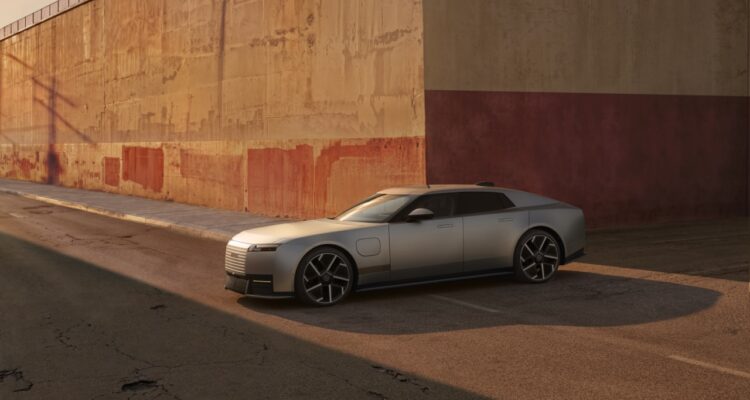
The Luce, Ferrari’s first fully electric vehicle, was unveiled just ten days before the Nuvolari. Styled in collaboration with Jony Ive’s LoveFrom, it is, in the most generous reading, an exercise in considered minimalism. In the less generous reading (the one dominating social media and Ferrari’s own shareholder base) it looks like something designed to transcend automotive convention rather than actually be a Ferrari.
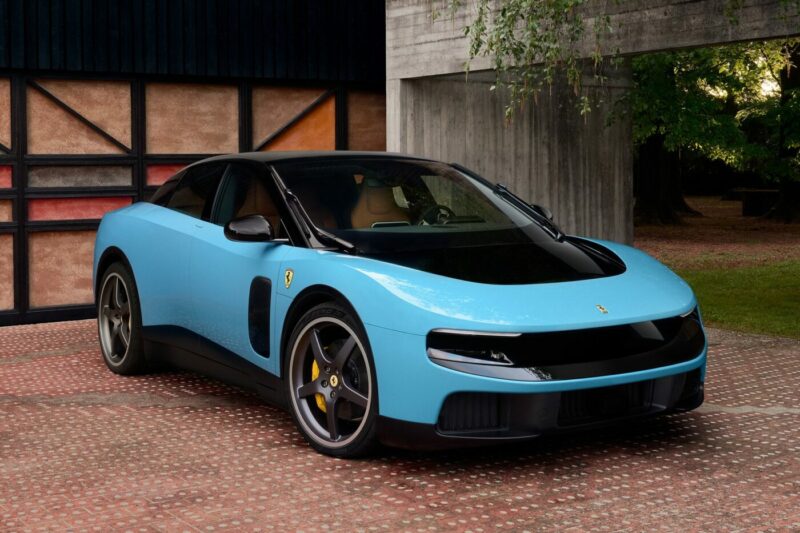
The backlash came from quarters that couldn’t be dismissed. Former chairman Luca di Montezemolo said “You risk destroying a myth and I am very sorry. At least take off the prancing horse.” Ferrari’s stock dropped eight percent in the days following the reveal. Chief designer Flavio Manzoni defended it by saying the team had deliberately avoided the “déjà vu effect” of referencing their own history. It’s a philosophically interesting position. It’s also exactly the problem. You don’t avoid the déjà vu effect at Ferrari: you honour it, you reinterpret it, you let it breathe through every crease and surface. That’s a heritage you carry forward, not escape from.
The new RS5 and a name worth mourning
Let’s start with the RS5, and let’s start honestly. The RS4 is gone, retired as Audi reshuffled its nomenclature to make space for its EV range: the A4 has become the A5, and so the RS4 has become the RS5. It’s the kind of administrative decision that stings more than it probably should. Four generations of history, quietly retired.
Though if we’re being precise, the story starts earlier than the RS4 anyway. The legendary RS2, built in collaboration with Porsche in 1994, is the spiritual first generation of this bloodline: the car that created the template of the fast, practical, understated Audi estate. The RS4 picked up that baton and carried it brilliantly for two decades, and now passes it, renamed but unbroken, to the RS5. Seen that way, a change of number feels less like a severance and more like another chapter in a long story. So we mourn the badge, accept the reality, and move on to what they’ve actually built. Because what they’ve built is very good.
The new RS5 understands what made the RS4 special. Immediately, viscerally, in a way that a few recent Audis honestly haven’t. Even the B9 RS4, a genuinely capable car that carried the lineage forward with ability and dignity, felt like it played things a little safe: refined and competent, but perhaps slightly too composed for its own good. It did its job, kept the bloodline alive, and deserves credit for that. But the RS5 feels like it takes a step further, a return to the kind of visual conviction that ran through the earlier generations before it.
The body is dramatically widened, sitting around 90mm broader at both axles than the standard A5. This is not a car that has been gently flared to suggest performance. It wears genuine squared-off box arches that dominate the stance and push the wheels hard to the edges of the bodywork, giving it a planted, ready-to-pounce aggression any Group B rally fan will recognise in their bones as pure Audi Sport Quattro DNA. The front fender vents are functional rather than decorative. The rear carries a pair of oval tailpipes within a properly worked diffuser, referencing motorsport without tipping into fancy dress.
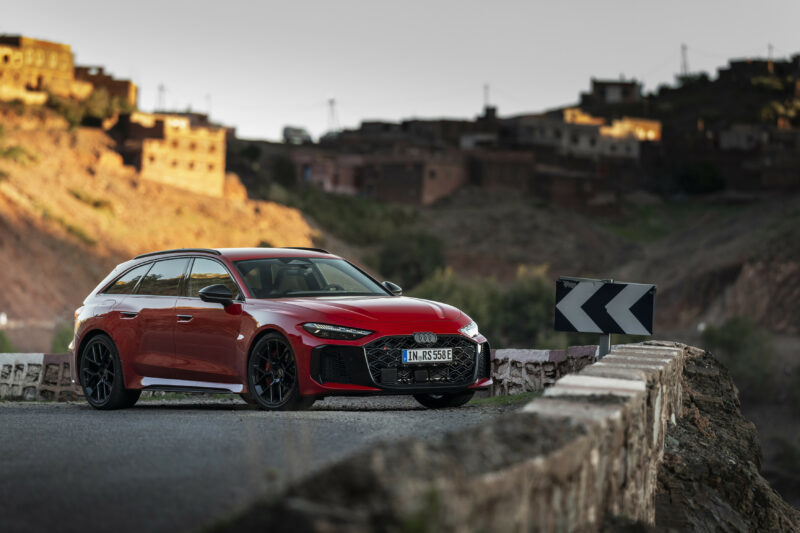
What strikes me most is the restraint. This is something you notice more acutely when design is your day job: the temptation to keep adding (I’m looking at you, BMW), to justify the brief with volume rather than quality. The RS5 resists that entirely, earning its presence through proportion rather than gimmickry. The team could have over-designed it, but they didn’t. The RS5 knows exactly what it is, and it wears that knowledge quietly but confidently.
Under the skin, it’s Audi’s first RS-badged plug-in hybrid: a 2.9-litre twin-turbo V6 paired with a 130kW electric motor, delivering 630 horsepower through a new Quattro drivetrain. Zero to 62 mph in 3.6 seconds. All this means it’s heavier than purists would like, but considerably faster and more capable than anything that has worn the RS4 badge before it.
The baton has been passed cleanly. The name has changed. The DNA is continuous.
The Nuvolari and “The Radical Next”
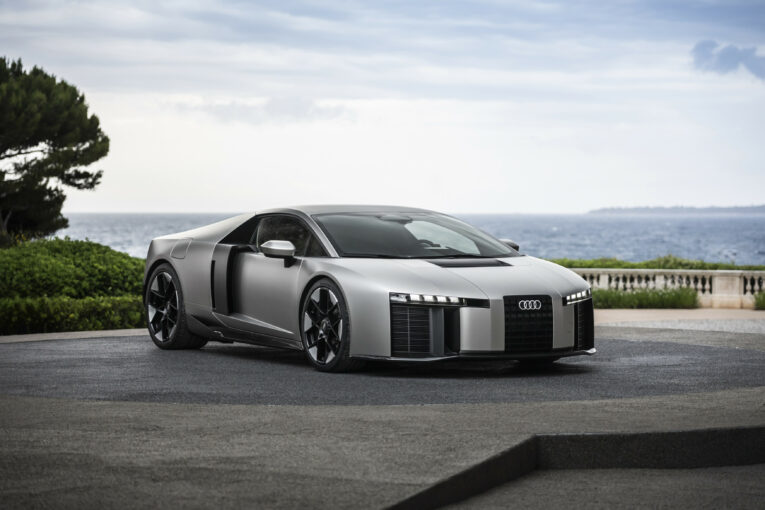
Now, I’m not going to wade into the debate about whether the Nuvolari is a worthy R8 successor. Partly because that conversation is already well underway elsewhere, and partly because I’m not sure the question is the right one. At €600,000 and 499 units, it exists in a different stratosphere entirely, and holding it up against the R8 feels like comparing a bespoke tailored suit to a very good one you bought off the rack. Yes, there are familiar styling cues, and I’d be lying if I said I didn’t take quite a pleasure in spotting them. But what interests me more is what Nuvolari says about Audi as a design organisation, and what it signals about where the brand is headed.
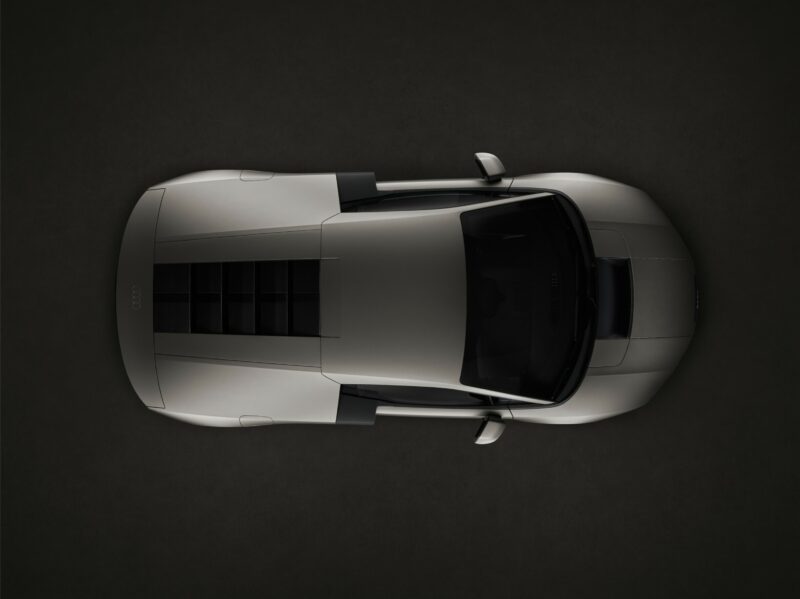
It starts with the name. The Nuvolari is named after Tazio Nuvolari, the legendary Italian racing driver of the 1930s who competed in Auto Union-badged cars, the direct precursors to modern Audis. To give this name to Audi’s most powerful production car ever is a statement of self-awareness: knowing exactly who you are, where you came from, and why that matters. Nuvolari is a human being who bled for this brand’s ancestors on racing circuits across Europe. Compare that to naming your first EV “Luce” (Italian for “light”), an abstract concept at best, a clumsy contradiction at worst – it weighs in at a hefty 2,260 kg. One name feels earned. The other feels invented.
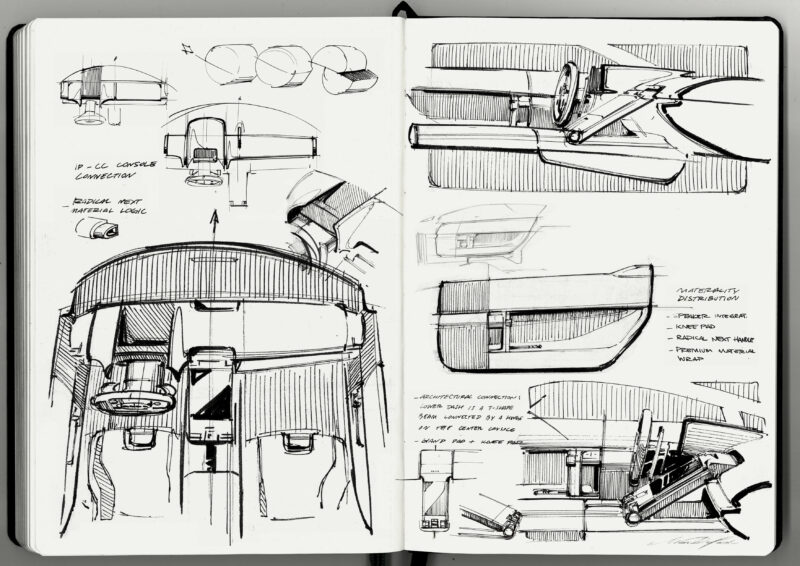
The design of the Nuvolari fell to Massimo Frascella, who joined Audi in June 2024 and has been building his “The Radical Next” design language ever since, with early hints in the beautiful Concept C at Munich in 2025. With the Nuvolari, he designed it himself, with a singular vision and the courage to say this is the direction.
The car has a monolithic presence. Supercars tend toward visual fragmentation, panels fighting each other, surfaces trying to outshout their neighbours, and from a design perspective, that kind of noise usually signals insecurity, a brief nobody was brave enough to edit. The Nuvolari is architecturally resolved, its panel integration so sophisticated that the whole thing feels carved from a single block. Up front, four horizontally arranged light elements beneath a single cover: immediately, unmistakably Audi. At the rear, the same four dots mirror back in the tail-lights. Then there is the side blade, finished in a contrasting colour – a welcome design thread carried gracefully into the present. Unfortunately, not beautifully framing the filler cap like the first generation R8s, but the blade is there, saying what it always has – this is one of ours.
The engineering matches the ambition. A twin-turbocharged 4.0-litre V8 with three axial-flux electric motors delivers 1,001 bhp, with the V8 alone revving to 10,000 rpm. Zero to 62 mph in 2.6 seconds, top speed beyond 217 mph. On paper, a genuinely staggering set of numbers.
So, Audi is listening (mostly)
Both cars feel like they were made by people who talked to Audi enthusiasts before they picked up a pen. Not market research. Not focus groups. Listening. To the forum threads and the club meets and the people who still polish their RS badges on a Sunday morning.
But let’s be honest. Audi has not been above the sins it’s currently outperforming. The red rhombus problem is real. In recent years, Audi joined a depressingly long queue of mostly German brands that discovered that slapping a sporty styling package on an ordinary car was considerably easier, and more profitable, than actually building something special. BMW did it. Mercedes did it. Audi did it too. The S line trim became ubiquitous to the point of meaninglessness: plastic splitters and darkened trim on cars that shared their underpinnings with a diesel hatchback. Performance identity quietly diluted in the pursuit of margin.
That habit hasn’t vanished entirely, and it would be naive to pretend otherwise. But what the RS5 and the Nuvolari represent is a signal, from the top of the organisation down, that the real thing still matters. Right now, Audi seems to be choosing substance over costume. The Ferrari Luce hangs in the air as a warning of what happens when a brand decides its heritage is a constraint to escape rather than a gift to honour. Audi looked at that crossroads and took the other path.
Still believing
The faded RS2 die-cast model still sitting on my shelf has served as a measuring stick for years. The original. The one that started it for me. Does this car know what it is? Does it mean what it says?
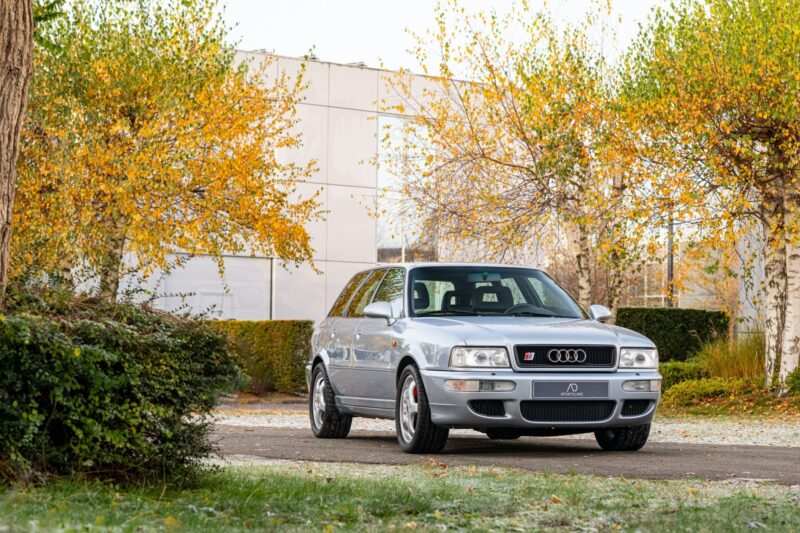
The RS5 passes. When I look at those box arches, those oval pipes, that properly wide stance, I see the same conviction that has shaped Audi’s fast wagons from the RS2 through the RS4 generations.
And the Nuvolari passes, it passes with the kind of authority that makes you exhale. Produced in numbers most of us will only ever see in photographs, it belongs to a different world. But it shares that essential design quality: every surface, every detail is where it is for a reason, and that matters.
Audi, from a €600,000 hypercar to a reborn performance wagon (and saloon), seems to have found its voice again. And perhaps more importantly, it seems to have remembered whose voice it was always meant to answer.
For those of us who have believed in the four rings for as long as we can remember, that feels very good indeed.
Photos courtesy of: Audi AG & Ferrari