100 Years of the Bugatti Type 35 – The Most Successful Racing Car of All Time

July 15, 2026
The Bugatti Type 35 holds the distinction of being the most successful racing car of all time. Car & Classic celebrates 100 Years of the Bugatti Type 35 and discovers what made it so effective.
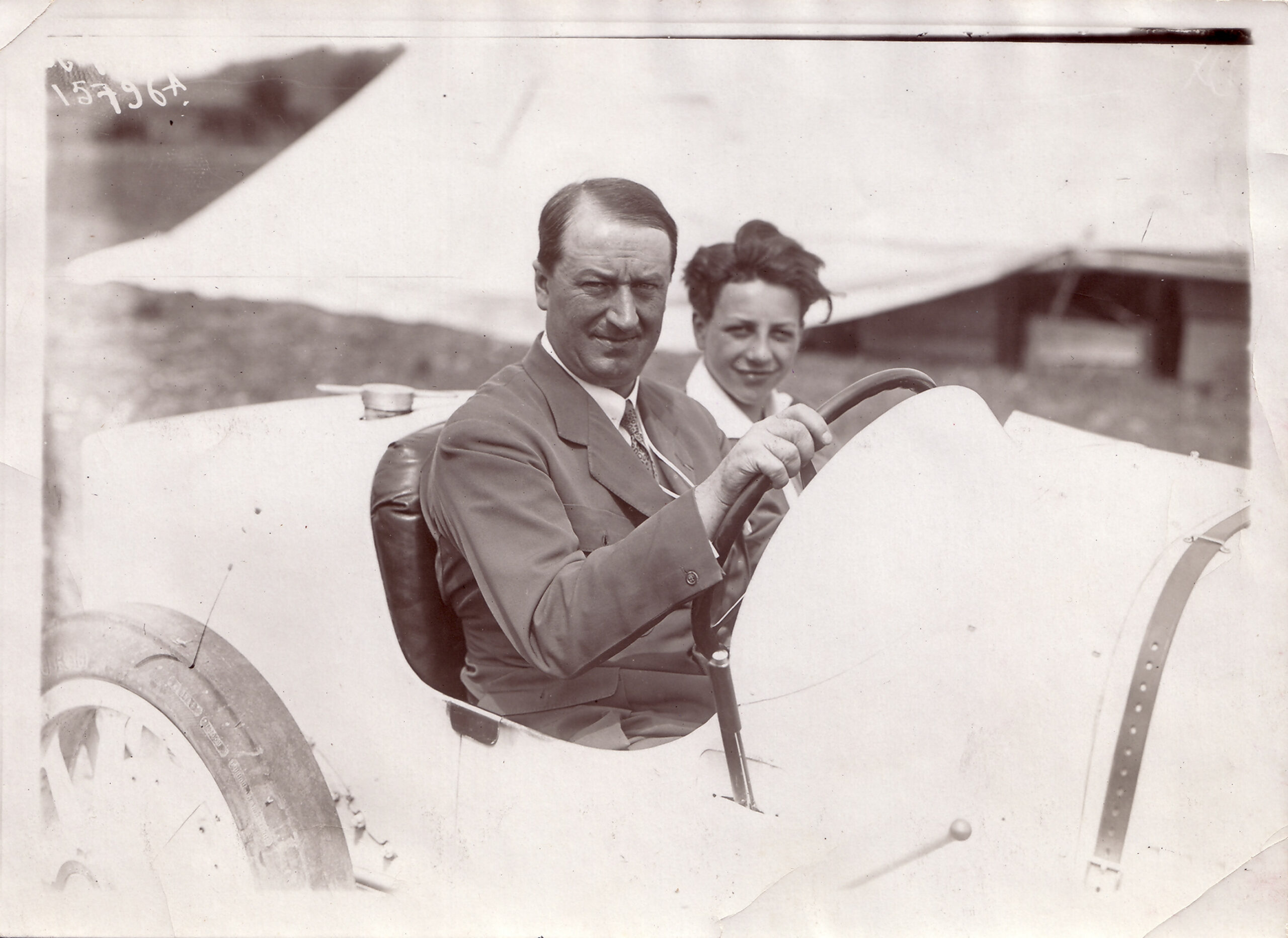
Ettore Arco Isidoro Bugatti was a difficult man.
He flatly refused to sell cars to anyone to whom he took a personal dislike to. King Zog of Albania’s order for a Bugatti Royale was cancelled after Ettore described his Royal Highness’s table manners as “beyond belief”. A wealthy racing driver once complained about his Bugatti’s brakes only to be told that he wasn’t driving it properly. Another client found his car hard to start on cold mornings, to which Bugatti retorted, “Surely a man who can afford a Type 35 can afford a heated garage?”
These encounters give some flavour of the fellow. Bugatti was pugnacious, dogmatic, and arrogant. But he was also one of the greatest automobile engineers the world has ever seen. Bugatti’s relatively brief stewardship of the marque that bore his name produced some world-beating motor cars, with one standing head and shoulders above all else: the Type 35.
The idea of a purpose-built racing car had begun to gain momentum in the early 1920s. This was a golden age for motorsport, with the advent of Grand Prix racing, the Le Mans 24 Hours, and great road races like the Mille Miglia, speeding the development of ever-faster, ever-more advanced vehicles. Bugatti’s approach to what would become the Type 35 was as single-minded and meticulous as one would expect from Ettore. He genuinely believed he was the best, and some have since speculated that his lack of formal training as an engineer afforded him unique insights. He was a man who thought outside the box.
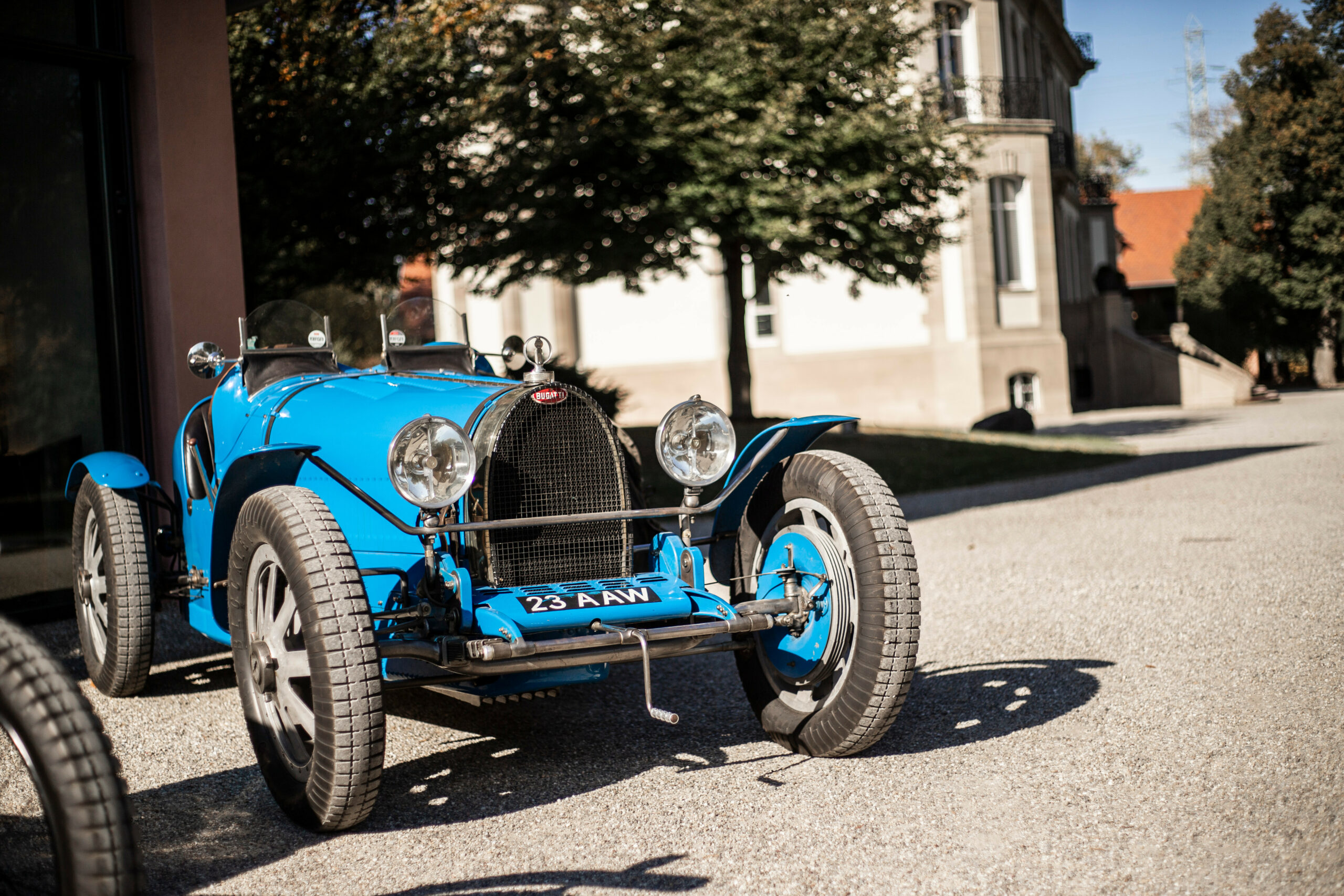
Bugatti was among the first to understand that unsprung weight was the enemy. The Type 35 pioneered the use of cast-aluminium alloy wheels and a hollow front axle. The brake drums formed part of the wheel itself, serving the dual purpose of improved cooling under strenuous race conditions and enabling simultaneous replacement of the wheel and brake components during a pit stop. While so many of its competitors sat high above the ground, the Bugatti Type 35 was low-slung and aerodynamic thanks to an unusually shaped rear axle that curved inwards at the centre to fit around the chassis.
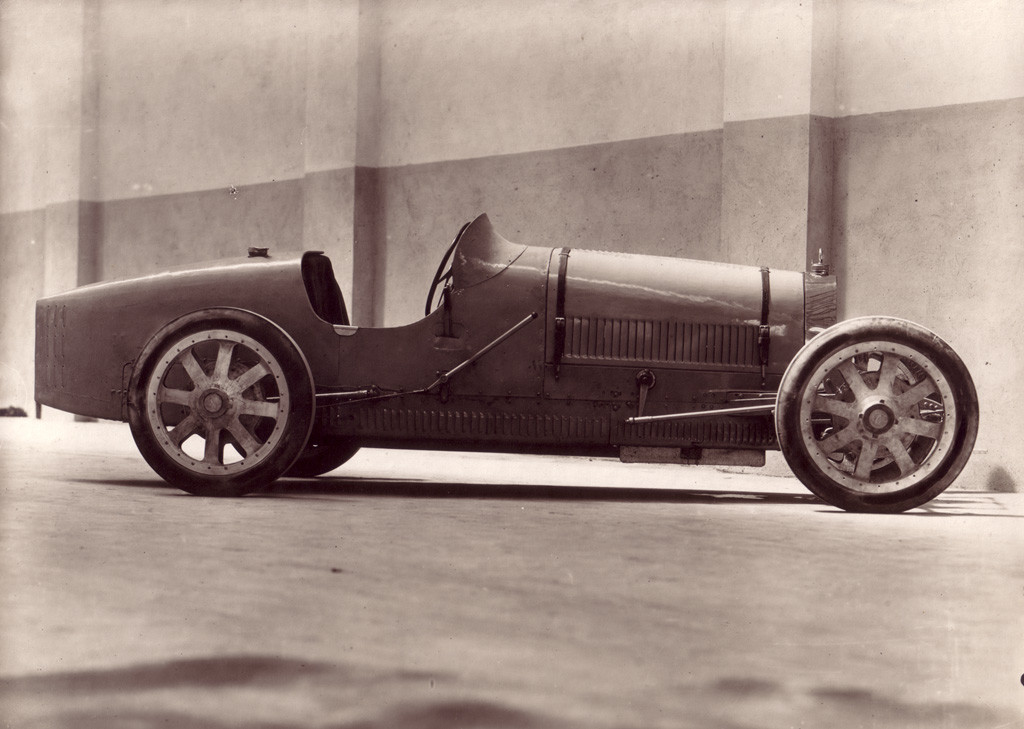
Under the bonnet, the Type 35 debuted with a 24-valve 2.0-litre straight-eight, later enlarged to 2.3-litres and supercharged. Much like arch-rival W.O. Bentley, Bugatti was distrustful of forced induction, but both men had to concede that the technology afforded their cars a considerable edge. Lightweight internals, achieved with an aluminium crankshaft, enabled the standard naturally-aspirated 2.0-litre Bugatti engine to rev up to 6,000 rpm and deliver ~95 BHP. When one considers that the Type 35 weighed a mere 750 kilograms, one can begin to appreciate just how quick and agile their cars could be.
Driven by the likes of Louis Chiron, William Grover-Williams and Ettore’s own son Jean Bugatti, the Type 35 dominated early Grand Prix racing.
Debuted at the 1924 French Grand Prix at Lyon, the Type 35 went on to accumulate an extraordinary competition record, claiming over 1,000 victories and achieving around 2,000 podium finishes across its racing career during the mid-to-late 1920s.
At the 1926 French Grand Prix at Miramas, Bugattis finished first, second and third, a result that underlined the Type 35’s dominance over the supercharged Delage and Sunbeam machinery that had been considered its most serious competition. The Delage, in particular, was a formidable opponent, but it suffered from overheating cockpit temperatures so severe that its drivers required relief co-drivers mid-race.
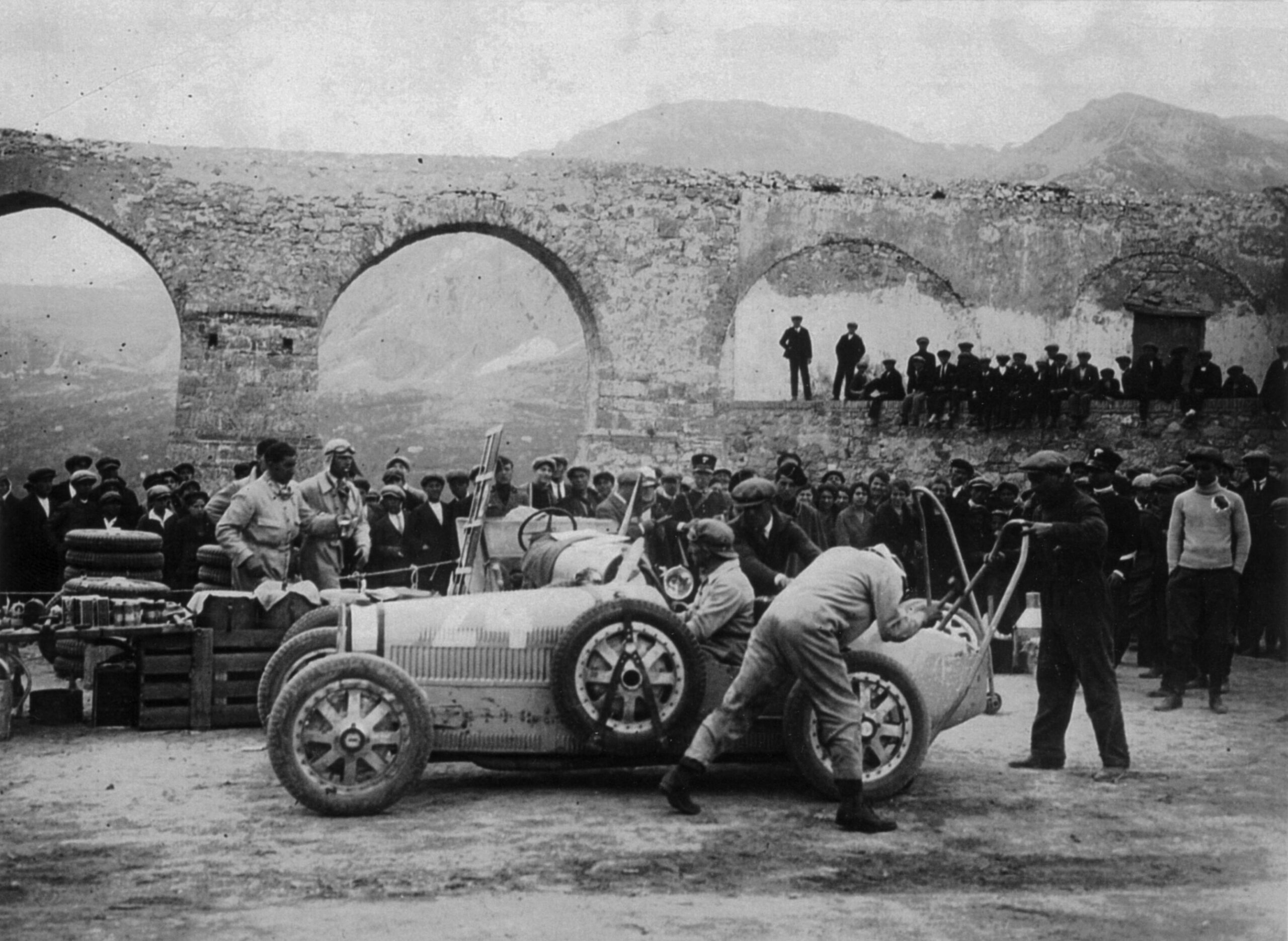
William Grover-Williams brought further glory with victory at the inaugural Monaco Grand Prix in 1929, threading the Type 35 through the streets of the principality with a precision that the less responsive machinery of competing manufacturers could not match, finishing comfortably ahead of a field that included the works Alfa Romeo entries.
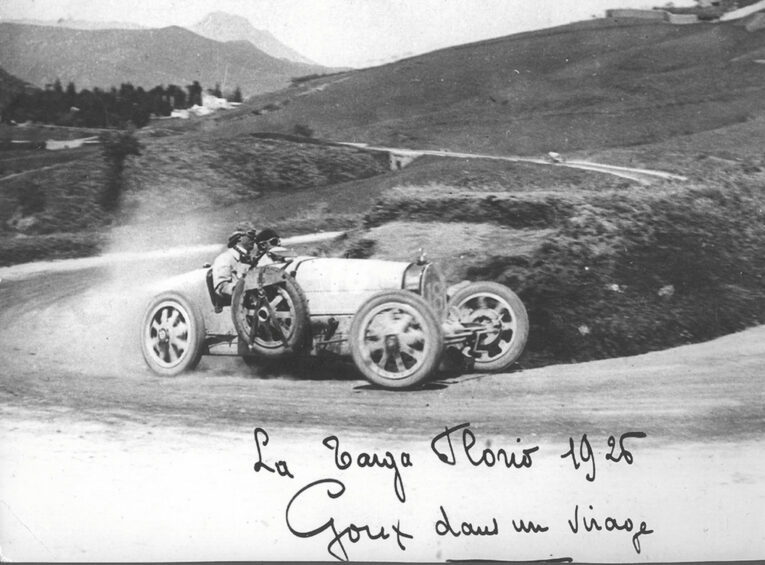
The Type 35 won the Targa Florio five consecutive times between 1925 and 1929. The treacherous 67-kilometre circuit carved through the mountains of Sicily demanded reliability as well as performance, and the Type 35 was virtually unbeatable. Its low mass and precise handling proved perfectly suited to the narrow, twisting roads where brute power counted for less than agility and mechanical sympathy. Bartolomeo Costantini took victory there in both 1925 and 1926, the car’s superior traction and balance allowing it to exploit the circuit’s technical demands in a way that heavier, less nimble rivals simply could not replicate.
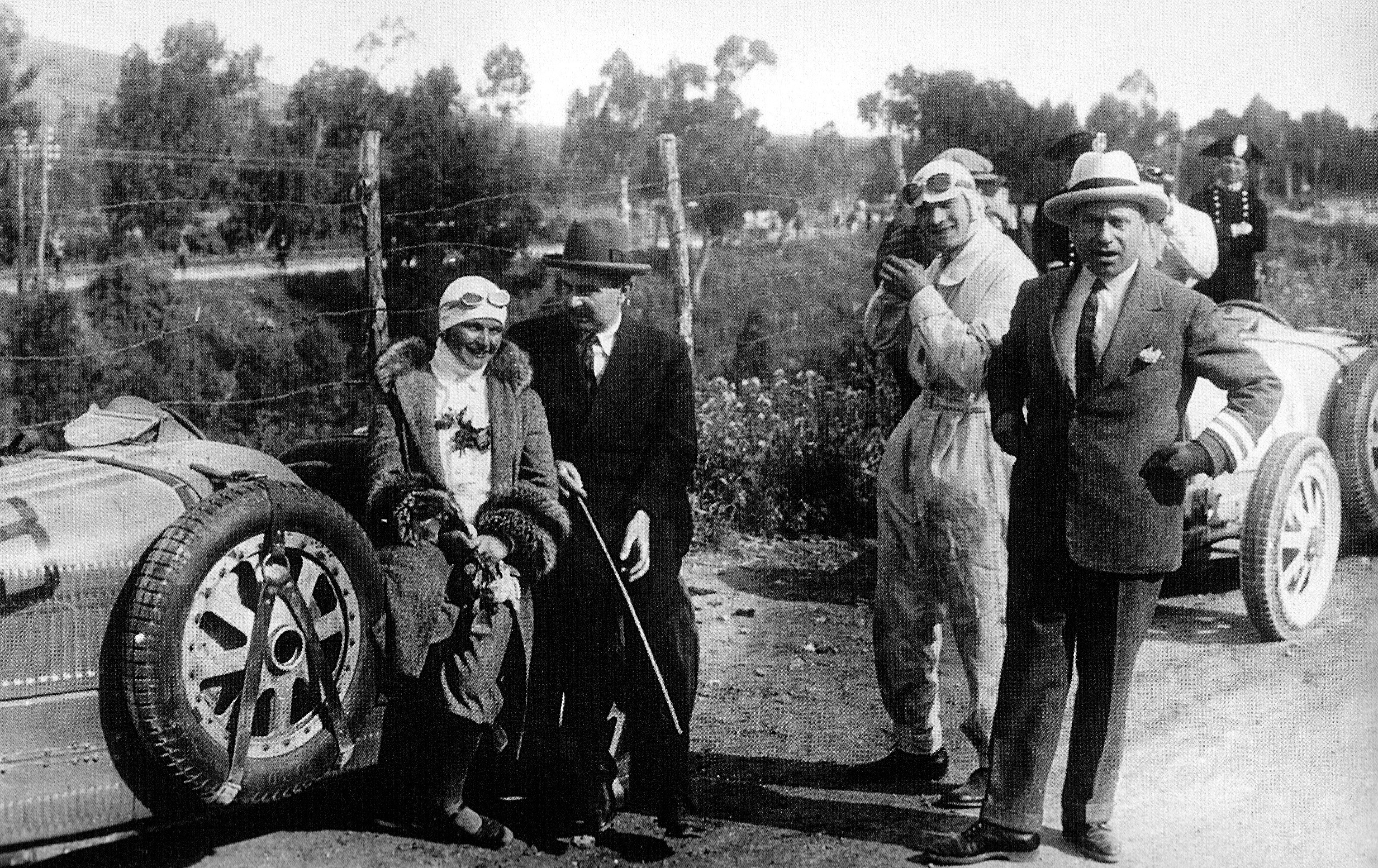
The Type 35 must have seemed unstoppable. However, it was only a matter of time before Bugatti’s competitors caught up. Alfa Romeo and Maserati were hot on Bugatti’s heels, and by the end of the 1920s, the Type 35’s dominance began to wane, remaining viable as a privateer entry but no longer competitive as a works racer. The Great Depression nearly bankrupted Bugatti by entirely wiping out the ultra-luxury automotive market, so the Molsheim firm took up a French Government Contract to build high-speed trains.
Today, surviving Type 35s typically command prices well in excess of one million pounds at auction. They’re still fast cars, even by modern standards, and every survivor has a fascinating story to tell. A century on, it’s remarkable that no manufacturer has yet equalled its success.
Bugatti Type 35 Specifications
| Variant | Years Built | Engine | Displacement | Power | Top Speed | Key Features |
|---|---|---|---|---|---|---|
| Type 35 | 1924–1929 | Inline 8-cylinder | 2.0 litre | 95 bhp | 125 mph | Original design; aluminium pistons, hollow front axle, innovative alloy wheels |
| Type 35A | 1925–1927 | Inline 8-cylinder | 2.0 litre | 70 bhp | 112 mph | Simplified ‘touring’ variant with plain bearings rather than roller bearings; lower-cost entry-level racer |
| Type 35B | 1927–1930 | Supercharged inline 8-cylinder | 2.3 litre | 138 bhp | 130 mph | Most powerful variant; Roots-type supercharger; enlarged displacement; dominant Grand Prix specification |
| Type 35C | 1926–1930 | Supercharged inline 8-cylinder | 2.0 litre | 128 bhp | 125 mph | Supercharged version of original 2.0 litre; widely regarded as finest handling variant; Targa Florio weapon of choice |
| Type 35T | 1926–1927 | Inline 8-cylinder | 2.3 litre | 110 bhp | 125 mph | Targa Florio-specific variant (T = Targa); enlarged displacement without supercharger; tuned for mountain circuits |
Photography: Bugatti