
Volkswagen vehicles
Your comprehensive research hub for models, generations, specifications, and live marketplace activity.
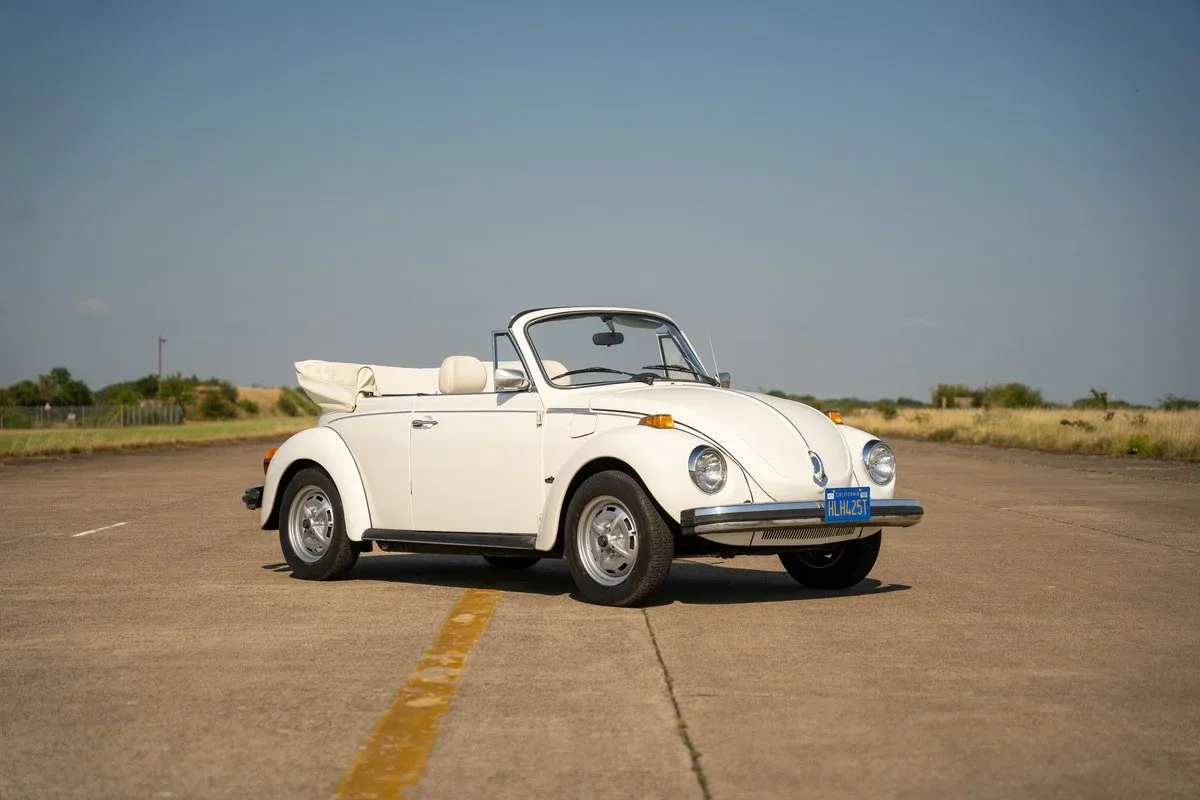
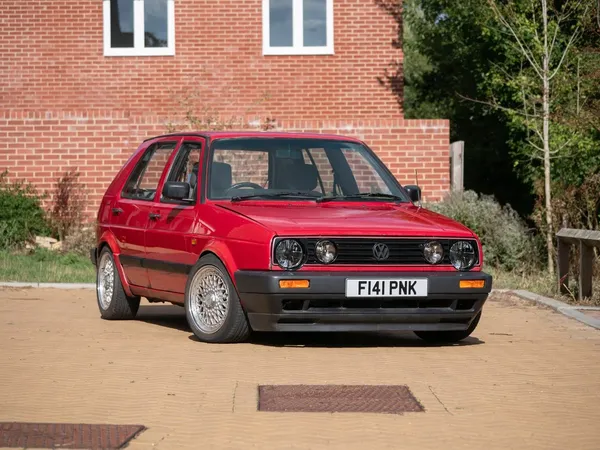
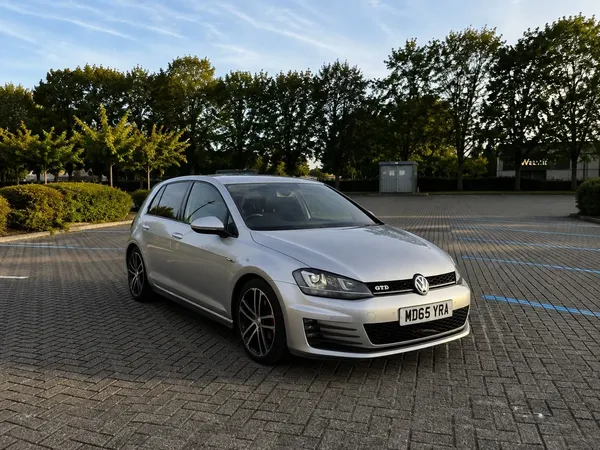
What Volkswagen stands for
The people’s car. The clue’s in the name; Volkswagen was created to make car ownership affordable for ordinary families.
Two great reinventions. The air-cooled Beetle and the water-cooled Golf each redefined what an everyday car could be, despite the former’s regrettable back-story.
A culture of its own. Owners have turned Volkswagen’s buses, buggies and hot hatchbacks into a scene which has its own shows, styles and slang.
Overview
Making ordinary cars into icons is rare and difficult, but Volkswagen has managed it on several occasions. Its cars are simple, tough and built in vast numbers, which makes them easy to own and keep running. Owners also tend to bond with them, and that loyalty sustains one of the biggest classic scenes and ownership communities in Britain, complete with its own festival scene.
History
Volkswagen was founded in 1937 by the German Labour Front, the Nazi-era state labour organisation. Its purpose was to mass-produce an affordable car designed by Ferdinand Porsche’s engineering office. A factory was built near Fallersleben in Lower Saxony, along with a new town to house its workers. Despite a vast savings programme, few civilian cars were delivered before war broke out. During World War II, the plant instead built military vehicles, including the Kübelwagen and Schwimmwagen, using forced labourers.
In 1945, the factory came under British military control, and the town was renamed Wolfsburg. Major Ivan Hirst restarted production, and the British Army ordered cars for its own use. British carmakers turned down the chance to take over the factory, which is ironic considering subsequent events. In 1949, control passed to the West German federal government and the state of Lower Saxony.
Under Heinrich Nordhoff, who ran the company from 1948 to 1968, the Beetle became an export phenomenon. Other famous models included the Type 2 Transporter of 1950 and 1955’s Karmann Ghia. Volkswagen bought Auto Union from Daimler-Benz in the mid-1960s and merged it with NSU in 1969, introducing concepts like front-wheel-drive and water-cooled engines to the company’s showrooms. The Passat (1973), Scirocco (1974), Golf (1974) and Polo (1975) replaced the air-cooled range within a few years, while the Golf GTI created the hot-hatch template when it launched in 1976.
The company became Volkswagen AG in 1985 and went on a shopping spree which included the acquisitions of SEAT, Škoda, Bentley, Lamborghini and Bugatti in the late 20th century. With Porsche following suit in 2012, VW became one of the world’s largest carmakers, despite emissions scandals and modern-day financial woes.
In the UK, servicemen brought the first Beetles home after the war, and official right-hand-drive imports began in 1953. The Beetle and Type 2 built a loyal following in Britain, and camper conversions became part of UK holiday culture. From the late 1970s, the Golf, Polo and Passat brought Volkswagen into the mainstream, supported by an extensive dealer network.
Family Tree
This tree has many branches, since Volkswagen AG is the parent group for Audi, SEAT, Cupra, Škoda, Bentley, Lamborghini, Porsche and even Ducati. Its truck and bus businesses, Scania and MAN, sit within the little-known Traton subsidiary. Bugatti was owned by the group from 1998 and is now part of the Bugatti Rimac joint venture.
Shared parts and platforms run throughout the group:
The Mk1 Polo was derived from the Audi 50.
The VW-Porsche 914 used Volkswagen engines.
VW’s air-cooled flat-four powered the early Porsche 356.
The Beetle floorpan underpinned the Karmann Ghia as well as countless beach buggies and kit cars.
Some VWs were twins of other manufacturers’ vehicles:
The Sharan was built alongside the SEAT Alhambra and Ford Galaxy in Portugal.
The 2006 Crafter van shared its body with the Mercedes-Benz Sprinter.
The K70 was developed by NSU and launched as a Volkswagen.
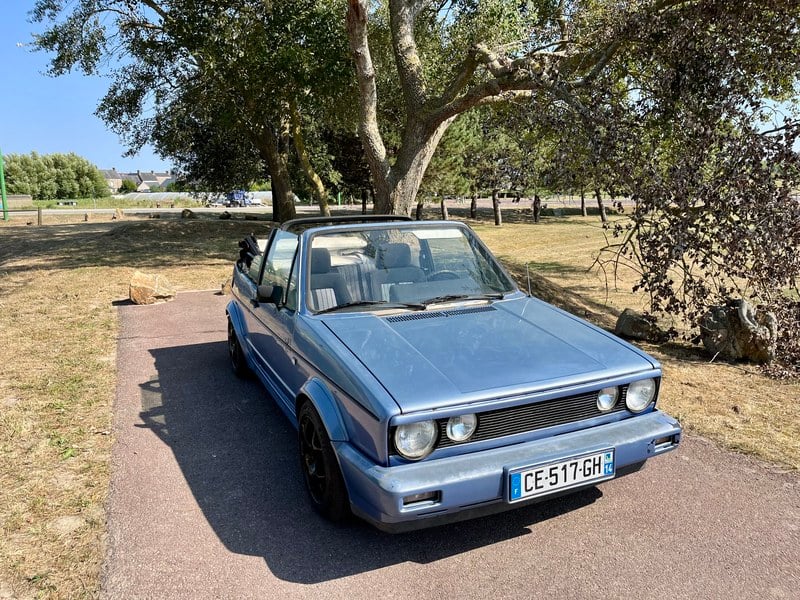
Several models had second lives extending for decades after German production ended. The Beetle was built in Mexico until 2003, and the Type 2 stayed in production in Brazil until 2013. The Mk1 Golf continued as the Citi Golf in South Africa, and the Karmann-built Mk1 Golf Cabriolet ran until 1993. Saloon versions of the Golf have had periodic name changes: Jetta, then Vento, then Bora and finally back to Jetta.
Key Models
Beetle (1945–2003): The car that put a nation on wheels and became the best-selling single design in motoring history.
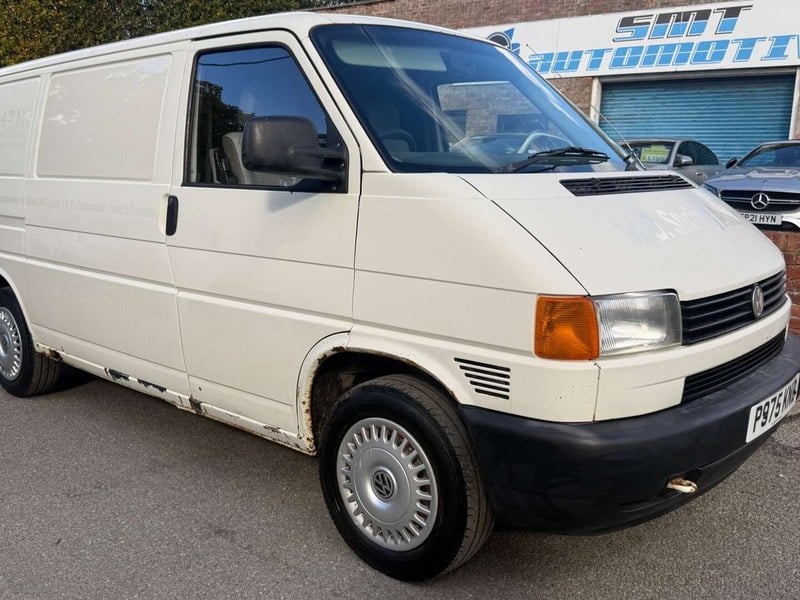
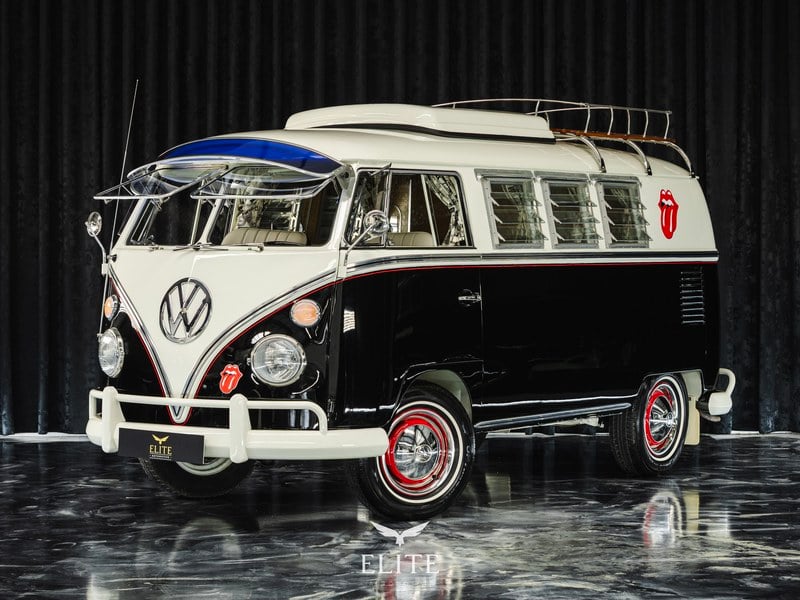
Type 2 Transporter (1950–1979): The original Volkswagen bus, and the base for the camper vans that underpinned a generation of fume-ridden British holidays.
Karmann Ghia (1955–1974): Italian styling on Beetle mechanicals, which gave Volkswagen its most elegant classic.
Golf GTI Mk1 (1976–1983): Invented the hot hatch, led a hugely competitive field, and remains one of the most sought-after modern classics.
Corrado (1988–1995): A driver-focused coupé that is now the most collectable VW of its era.
Safety and Brand Philosophy
Volkswagen’s founding philosophy centred on simplicity and durability. The original air-cooled, rear-engined layout needed no radiator, coped with cold starts and poor roads, and could be fixed using basic tools.
From the 1970s, the company shifted to transverse, front-wheel-drive, water-cooled engineering. Signature innovations followed: the narrow-angle VR6 engine in the early 1990s, widespread turbodiesel technology (though not without controversy) and the DSG dual-clutch gearbox, which first appeared in the Golf R32 in 2003.
Although Volkswagens are often thought of as robust vehicles, safety is not central to Volkswagen’s brand identity. It followed existing safety standards rather than establishing them.
Buying Tips
UK-supplied right-hand-drive cars are always popular, but a large share of air-cooled VWs in Britain have been imported. Rust-free left-hand-drive cars from California are common. Right-hand-drive imports tend to originate from South Africa and Australia. Many late-model Beetles were imported from Mexico and many Type 2s started life in Brazil, so you should always confirm a car’s origin. An imported car is not necessarily the same as a UK-supplied one, with varying specifications, and it may be harder to verify its ancestry.
Parts supply is excellent across the classic range. A huge reproduction parts industry supports air-cooled models, and Volkswagen Classic Parts covers many older water-cooled cars. As a result, restoration projects are plentiful, especially Beetles, Type 2s and Type 3s. Rust, past repairs and modifications should be the main concerns.
Expand your search by using terms like Beetle, Bug and Type 1, along with Transporter, Kombi, Camper, T25 and T3. Saloon versions of the Golf appear as Jetta, Vento or Bora depending on their age. Camper conversions may be listed under the converter’s name, such as Devon or Dormobile.
The UK has a strong owners’ club scene, including the Historic Volkswagen Club, the Split Screen Van Club and the Karmann Ghia Owners Club. There is also a large network of air-cooled and water-cooled specialists, and major annual shows such as VolksWorld and Bug Jam.









Frequently asked questions
Who owns Volkswagen?
Volkswagen AG is a publicly listed German company. It is controlled by Porsche SE, the holding company of the Porsche and Piëch families, and the state of Lower Saxony and Qatar are also major shareholders. It’s headquartered in the Lower Saxony city of Wolfsburg, where its original factory still operates as the company’s main plant.
What does Volkswagen mean?
Volkswagen is German for “people’s car”. The name reflected the brief behind the company’s creation: an affordable car for ordinary families. It was founded in 1937, but following a failed savings scheme, the Beetle finally went into series production for civilians after the Second World War.
When did they stop making the Beetle?
The answer varies by continent. German production of the Beetle saloon ended in 1978, and the Cabriolet was deleted in 1980. The original Beetle was built in Mexico until 2003, and many of those later cars have since been imported to the UK.
What names are VW camper vans known by?
VW camper vans are based on the Type 2 Transporter. Generations and variants are known by nicknames: the Splitty (split-screen T1), the Bay (T2) and the T25 or T3. Many UK campers carry the name of the firm that converted them, like Danbury or Westfalia.
Is Volkswagen a reputable brand for classic buyers?
Volkswagen classics are known for simple engineering, excellent parts supply and one of the UK’s largest owner and specialist networks. That combination makes them some of the easiest classics to buy, run and restore.