Beschreibung
Auf einen Blick:
Modell: Yamaha FZR1000 Genesis
Baujahr: 1987
Motor: 997 ccm
Laufleistung: Ca. 27. 262 Meilen insgesamt (27. 032 Original-Tacho, 230 neue Einheit)
HU: Bestanden Mai 2026 ohne Mängel
HU-Gültig bis: Mai 2027
Vorderachse: 2012 Yamaha YZF-R1 14B Umbau
Instrumentierung: KOSO RX2N+ digitales Cockpit
Inbegriffen: Ersatzsatz Verkleidungen/ Kunststoffteile
Zum Verkauf steht meine 1987 Yamaha FZR1000 Genesis, ein umfassend überholtes und behutsam modifiziertes Exemplar, das den ursprünglichen Genesis-Motor und den Grundrahmen behält, während es eine beträchtliche Anzahl von späteren Yamaha-Komponenten und Upgrades integriert.
Ich habe das Motorrad 2023 gekauft und das Hauptprogramm der Restauration wurde Anfang 2026 abgeschlossen. Die Arbeiten konzentrierten sich stark auf die mechanische, Fahrwerk-, Brems- und Elektrikseite des Motorrads, anstatt eine werksgetreue Concours-Restauration anzustreben.
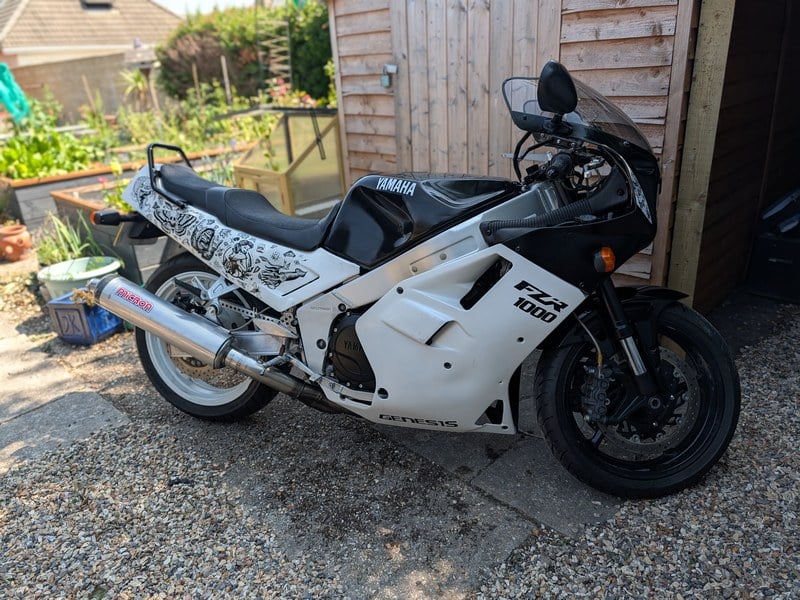
Das bedeutendste Upgrade ist der komplette Umbau der Vorderachse einer 2012 Yamaha YZF-R1 (14B). Dies umfasst die 2012er R1-Gabelanlage, Oberjoch, Vorderrad, Bremsscheiben und Bremssättel vorne. Die Bremssättel wurden im Rahmen des Aufbaus vollständig überholt.
Das Motorrad ist auch mit 50-mm-Hochlenker-Klapplenker und einem KOSO RX2N+ GP-Style digitalen Cockpit mit blauem Display und 10. 000er-Drehzahlskala ausgestattet. Der ursprüngliche Tacho zeigte 27. 032 Meilen, als die KOSO-Einheit eingebaut wurde. Das neue Display hat seitdem etwa 230 Meilen zurückgelegt, was einer aktuellen Gesamtlaufleistung von etwa 27. 262 Meilen entspricht.
Hinten wurde der Stoßdämpfer durch eine OEM-Yamaha-Einheit in ausgezeichnetem Zustand ersetzt. Der hintere Bremssattel wurde vollständig gewartet, überholt und pulverbeschichtet, und der hintere Bremshauptbremszylinder wurde durch eine OEM-Einheit in nahezu neuwertigem Zustand ersetzt.
Lager und Dichtungen wurden im Rahmen des umfassenden Umbaus umfassend überarbeitet oder ersetzt.
Mit Ausnahme des Grundrahmens des Motors wurden die meisten geeigneten Metallkomponenten, einschließlich des Unterrahmens und zahlreicher Halterungen und zugehöriger Teile, entfernt und schwarz pulverbeschichtet. Der hintere Schwinge wurde ebenfalls umfassend poliert/überarbeitet.
Der Motor selbst wurde kosmetisch aufgefrischt, einschließlich Neulackierung und Austausch zahlreicher älterer Bolzen und Befestigungselemente durch neue Hardware.
Das Elektriksystem wurde ebenfalls sorgfältig überprüft. Leitungen und Schaltkreise wurden inspiziert und getestet, eine neue Batterie wurde eingebaut und eine Reihe von Sensoren wurden bei Bedarf ersetzt. Bei Tests wurden keine Elektrikprobleme festgestellt.
Das Motorrad ist mit einer Micron-Auspuffanlage/ Schalldämpfer ausgestattet, die zum Gesamtcharakter des Restomod-Motorrads passt und ihm einen besonders kräftigen Sound verleiht.
Der Sitz wurde neu bezogen/überarbeitet und ein neuer Windschild wurde montiert.
Die Verkleidungen wurden individuell DIY-lackiert, anstatt in einem Original-Yamaha-Farbschema restauriert zu werden. Sie sehen insgesamt gut aus, aber wie zu erwarten bei Kunststoffteilen dieses Alters gibt es leichte altersbedingte Kratzer, Verschleiß und Unebenheiten an einigen Stellen. Ich würde die Karosserie als gut und ehrlich beschreiben, eher nicht als Concours-perfekt. Ein Ersatzsatz Verkleidungen/ Kunststoffteile ist ebenfalls enthalten, was dem nächsten Besitzer die Möglichkeit gibt, die kosmetische Seite des Motorrads neu zu lackieren, zu restaurieren oder weiterzuentwickeln, wenn er möchte.
Das Motorrad bestand seine HU im Mai 2026 ohne Mängel und ist bis Mai 2027 HU-gültig.
Alle im Inserat verwendeten Fotografien sind aktuell, innerhalb des letzten Jahres aufgenommen und stellen das Motorrad so dar, wie es derzeit aussieht.
Dies ist keine vollständig originale Sammler-FZR1000. Es ist ein gut entwickeltes Restomod, das den Charakter von Yamahas ursprünglichem 1987er Genesis-Superbike mit einer viel späteren R1-Vorderradaufhängung, Rad- und Bremsanlage, moderner Instrumentierung und umfassender mechanischer, elektrischer und kosmetischer Überholung kombiniert.
Es sollte am meisten jemanden ansprechen, der eine charakteristische und nutzbare frühe FZR1000 möchte, an der bereits erhebliche Arbeiten durchgeführt wurden, anstatt jemanden, der nach einem unberührten werksoriginalen Exemplar sucht.
Was mich ursprünglich zur FZR1000 Genesis zog, war die Kombination aus Old-School-Superbike-Charakter und echter Bedeutung in Yamahas Geschichte. Die frühe Genesis hat eine Präsenz, die neuere Motorräder einfach nicht haben: groß, mechanisch, zweckmäßig und unverkennbar ihrer Zeit.
Als ich dieses Motorrad 2023 kaufte, wollte ich es nicht in etwas Unkenntliches verwandeln. Das Ziel war, die Identität und den Charakter der ursprünglichen FZR1000 zu bewahren, aber die Bereiche zu verbessern und aufzufrischen, die den größten Unterschied darin machen würden, wie das Motorrad aussieht, sich anfühlt und präsentiert.
Das führte zum Umbau der Vorderachse der 2012 Yamaha YZF-R1 14B. Für mich ist dies eines der Dinge, die das Motorrad hervorstechen lassen. Es ist immer noch sehr klar eine 1987er Genesis, aber die spätere Yamaha-Vorderradaufhängung, das Rad und die Bremshardware geben ihm eine viel modernere und zweckmäßigere Optik. Ich mochte besonders die Idee, die Umrüstung innerhalb der Yamaha-Familie zu halten, anstatt unverwandte Komponenten zu vermischen.
Dieser Ansatz zog sich durch den Rest des Aufbaus. Anstatt mich rein auf oberflächliche Modifikationen zu konzentrieren, floss viel Arbeit in die weniger sichtbaren Teile des Motorrads: Lager, Dichtungen, Bremsen, Aufhängung, Verkabelung, Sensoren, Befestigungselemente und Überarbeitung von Komponenten, die sich über fast vier Jahrzehnte unvermeidlich abgenutzt hatten.
Das ist wahrscheinlich das, worauf ich am meisten stolz bin. Es war nie als schnelle kosmetische Überholung gedacht. Das Ziel war, etwas zu schaffen, das sich durchdacht und vollständig anfühlt.
Optisch liebe ich auch den Kontrast zwischen der schwarz pulverbeschichteten Metallarbeit, der polierten hinteren Schwinge, der individuell lackierten Karosserie und der späteren R1-Vorderachse. Das KOSO-Digitalcockpit und die Hochlenker-Klapplenker verleihen ein moderneres Element, ohne den Charakter des ursprünglichen Motorrads zu beeinträchtigen, während der Micron-Auspuff ihm genau den Sound und die Präsenz gibt, die ich denke, dass eine FZR1000 haben sollte.
Für mich liegt der Reiz darin, dass es irgendwo zwischen einem Klassiker und einem Restomod liegt. Es hat immer noch den Motor, das Grundfahrwerk, die Form und die Persönlichkeit einer frühen Genesis, aber es wurde zu etwas Individuellerem entwickelt.
Es gibt viele originale FZR1000er für jemanden, der ein werksgerechtes Exemplar möchte. Dieses hier ist anders. Es ist für jemanden, der die Idee eines frühen Yamaha-Superbikes mit einer späteren R1-Vorderachse, modernisierten Bedienelementen und Instrumentierung, umfassender Überholung und einer starken visuellen Identität mag.
Mein Lieblingsdaran ist wahrscheinlich diese Kombination: Es fühlt sich immer noch unverkennbar wie eine Old-School-FZR1000 an, aber es sieht und fühlt sich wie ein Motorrad an, über das jemand wirklich nachgedacht und das entwickelt hat, anstatt es einfach zu bewahren.
Es war ein sehr persönliches Projekt, und ich denke, der nächste Besitzer wird wahrscheinlich jemand sein, der das Motorrad genauso sieht wie ich: nicht als etwas, das völlig original sein muss, um interessant zu sein, sondern als ein charakteristisches Stück Yamaha-Geschichte, das ein zweites Leben bekommen hat.