Beskrivning
Fransk fordonsregistrering – Samling
1962
Roadster 2+2
BT7
Målas och monteras :
I grundfärg
Ny motor monterad
Många nya delar (fakturor)
Fullständig
- details above
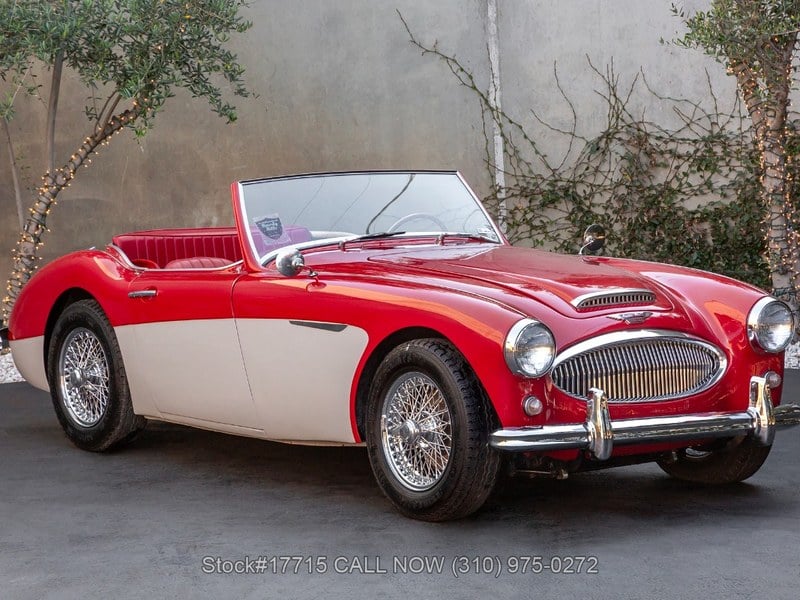
L’Austin-Healey 3000 BT7 är en av de mest ikoniska versionerna i Big Healey-serien, tillverkade mellan 1959 och 1961. Här är dess viktigaste egenskaper och historia:
Historia och positionering
BT7 är 2+2-sits versionen av Austin-Healey 3000, lanserad i juli 1959 för att efterträda 100-6. Den designades för att erbjuda mer mångsidighet samtidigt som bilens sportiga karaktär bibehölls.
Den delar sin 3, 0 L-motor med BN7 (tvåsitsig), men utmärker sig med sina baksäten, även om utrymmet är begränsat.
BT7 tillverkades i 10 825 exemplar, vilket gör den till den mest spridda versionen av första generationen (Mark I) av 3000.
Tekniska specifikationer
Motor: BMC rak sexcylindrig serie C, 2 912 cm³, 124 hk vid 4 600 v/ min, driven av två SU-förgasare.
Växellåda: Manuell 4-växlad (overdrive som tillval), framåtdrift.
Prestanda:
Toppfart: 185 km/ h (115 mph).
Acceleration 0–100 km/ h: 11, 7 s.
Chassi och bromsar:
Hjulsprångsupphängning, skivbromsar fram (trummor bak).
Rattokärnlös styrning, typisk för roadsters från den tiden.
Design:
Elegant formgivning, oval grill, uppfällbara strålkastare, tygdäcktak.
Interiör: Av karaktärisk 1960-tal, med läderklädda säten och ett metallinstrumentbräda.
Utveckling och särdrag
BT7 Mark I ersattes 1961 av Mark II, med små förbättringar (bromsning, finish).
Den hade stor framgång i motorsport, särskilt i rally, där den framträdde för sin robusthet och manövrerbarhet.
BT7 anses ofta vara en bra kompromiss mellan praktikalitet (tack vare baksätena) och sportighet