
Description
Kelham Hall | Newark, Nottinghamshire
Viewing: Tues 16th June from 12pm
Auction: Wed 17th June from 9am
Location: Main Street, Newark, Nottinghamshire NG23 5QX
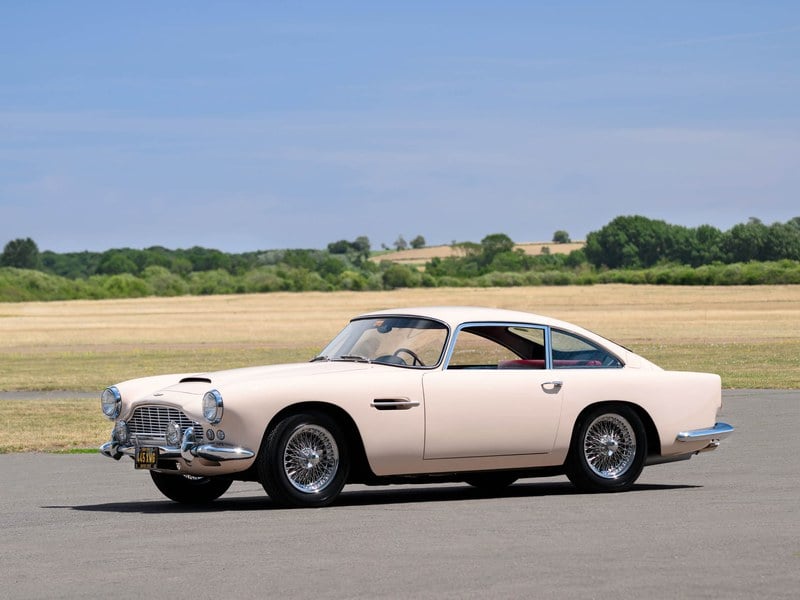
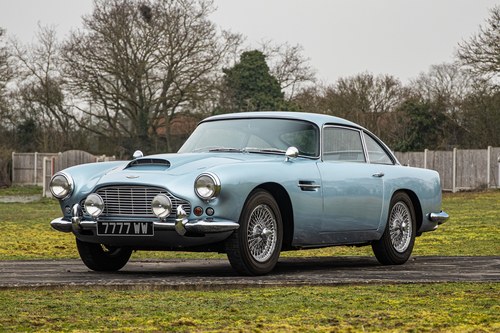
1960 Aston Martin DB4 Series II
One of just 349 produced
Estimate
£240, 000 - £260, 000
Registration No: 7777 WW
Chassis No: DB4/ 341/ R
MOT: Exempt
One of just 349 examples of the DB4 Series II produced
Delightfully presented in its current livery of Carribean Pearl over a restored black leather interior
Displaying matching engine and chassis numbers
An original UK, Right-Hand Drive example previously resident in Australia and then repatriated in 2015
Debuting at first the Paris and then London Motor Shows of 1958, the Aston Martin DB4 was a world class high-performance GT. Some four years in the making, its gestation was overseen by the marque's Technical Director John Wyer. Working alongside Carrozzeria Touring of Milan, Harold Beech developed a robust sheet-steel platform chassis which could accommodate the Italian coachbuilder's 'Superleggera' or 'Super Light' method of body construction (whereby hand beaten aluminium alloy panels are fitted over a cage-like structure of small-diameter support tubes). Equipped with independent coil and wishbone front suspension, a Watts linkage located 'live' rear axle and four-wheel disc bakes, the model was powered by a new all-alloy DOHC straight-six engine. Displacing 3670cc thanks to its 'square' bore and stroke dimensions (92mm x 92mm), the sophisticated powerplant was designed by Tadek Merak.
Interestingly, the Polish-born engineer is thought to have fought Wyer's wishes for a more competition friendly 3-litre unit and to have initially favoured cast-iron construction. With a quoted 240bhp and 240lbft of torque on tap, the two-door fixed-head also boasted a four-speed all-synchromesh manual gearbox as standard. Reputedly capable of 0-60mph in 8. 5 seconds, 0-100mph in 21 seconds and a top speed of some 140mph, the DB4 won rave reviews from the likes of Autocar and Motor magazines. Despite a well stocked dashboard, finest Connolly hides and thick carpets, the refinement of the early 'Series 1' cars was compromised by wind roar at speed. Frames were thus quickly adopted for the side windows, and the 2+2 was further progressively refined through five series (a process that also saw it put on weight). Introduced in January 1960, the Series II variant was distinguished by its front-hinged bonnet, flat glass opening rear quarter lights, uprated front brake callipers and increased oil sump capacity, therefore alleviating the Series 1's oil pressure issues when hot. Of the 1, 110 DB4s made, just 349 of those built were Series II cars (chassis DB4/ 251/ L to DB4/ 600/ R).
More information to follow.