Opis
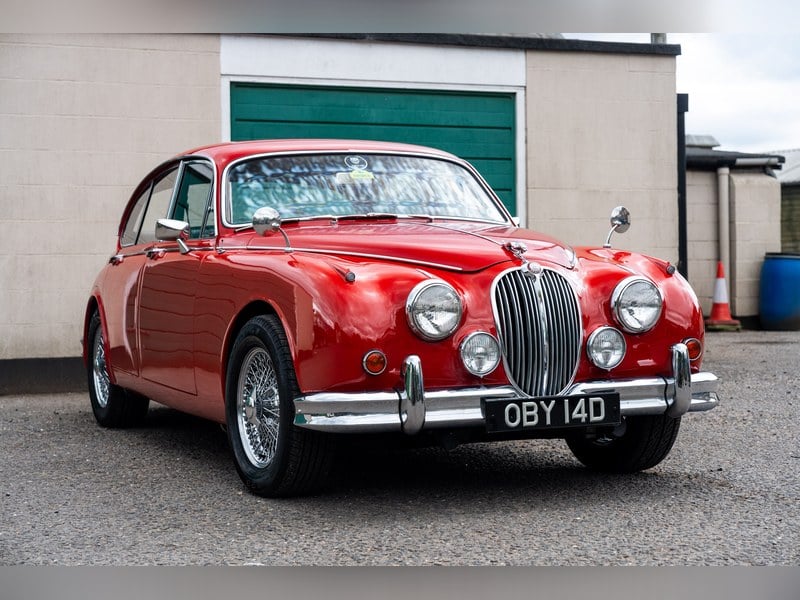
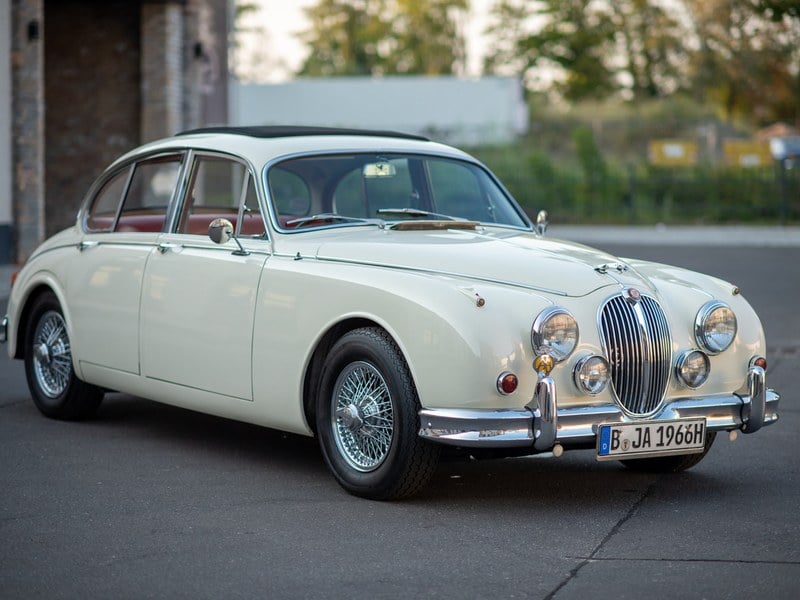
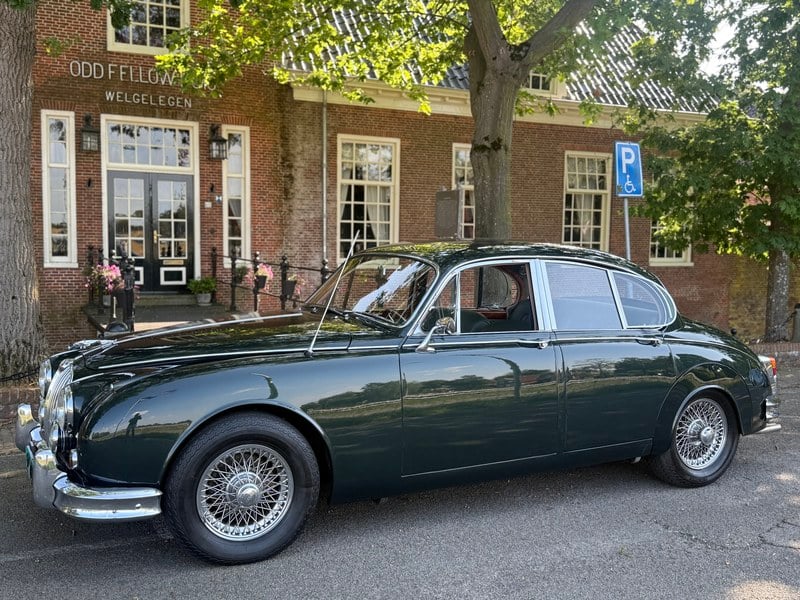
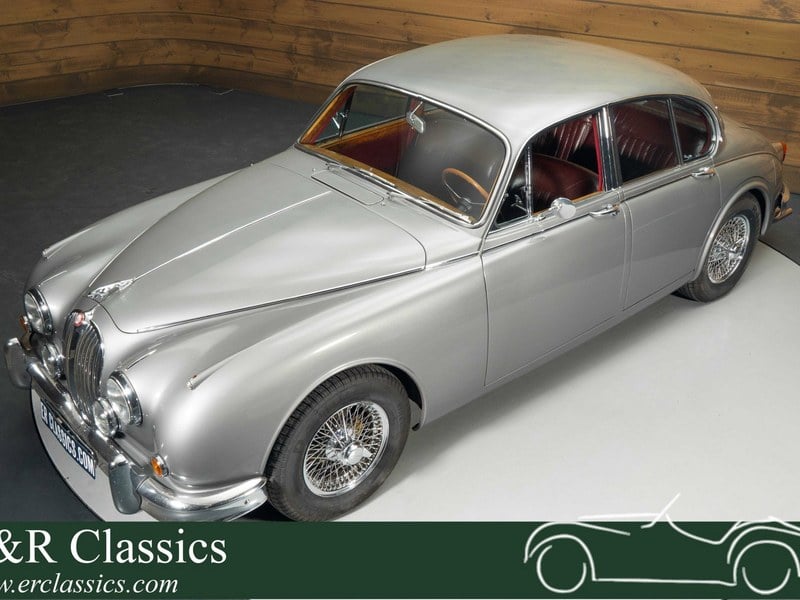
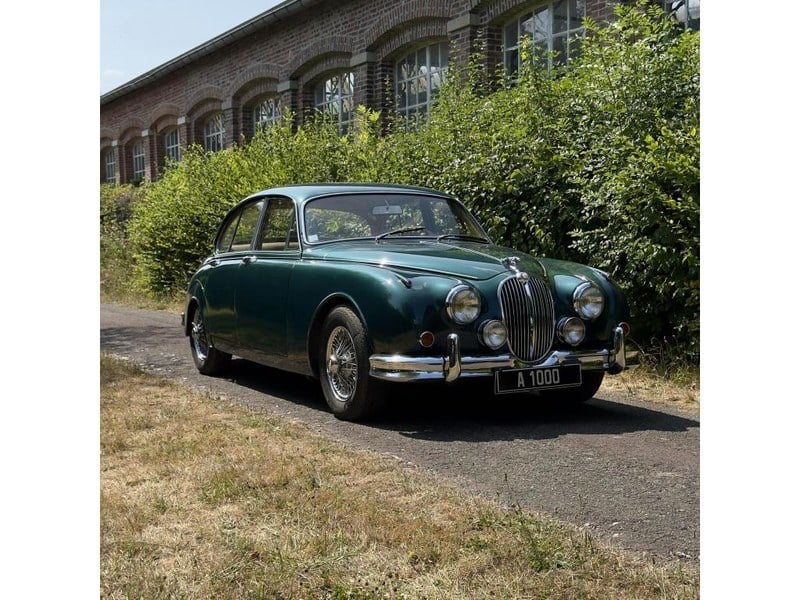
Oldtimer Australia is delighted to offer for sale this rather lovely Jaguar Mk2 3. 8 Sports Saloon. This Australian delivered, factory right hand drive example has the desirable manual gearbox with overdrive.
The Jaguar Mk2 3. 8 Litre is widely regarded as the ultimate expression of the Mk2 range, combining understated elegance with genuine high performance capability. Powered by Jaguar’s legendary 3. 8 Litre twin overhead cam XK six cylinder engine, it produces 220 hp through twin SU carburettors, delivering effortless acceleration and a distinctive, catlike smoothness.
The Jaguar Vehicle Information Sheet (a document that predates a Heritage Certificate) on file dated the 11th May 1993, confirms this particular example was delivered new to its first owner through Jaguar Dealer Brylaws in Melbourne.
The car was manufactured on 12th November 1963 and despatched from Browns Lane, Coventry, England on the 21st November 1963. The exterior colour is noted as cream and the trim as red.
The Vehicle Information Sheet also confirms that this car retains its original ‘matching numbers’ engine and gearbox.
This car has an exceptional history file, which includes the original service book as well as the Certificate of Registration of Motor Car from the state of Victoria issued on the 6th March 1964. Both documents confirm the car’s first owner was Mr Denys S Bottomley from the inner Melbourne suburb of Toorak in Victoria. It was first registered as HYR999.
Mr Bottomley was a long term and a very fastidious owner of this Jaguar Mk2. There are three fully stamped original service books on file, all in his name, along with a diary he kept from day one detailing what was done to the car, when it was done and the mileage at that time. The last entry in the service book and also the diary is from the 2nd November 1987.
Around that time Mr Bottomley unfortunately passed away and his wife decided it was time to trade the Jaguar for something more modern. She purchased a new Saab from dealer Patterson Cheney Saab in Melbourne. At that time the Jaguar had approximately 75, 000 genuine miles on the odometer, all supported by the service books and the diary.
The car was subsequently purchased by Mr Guy Nevett from Berwick, Victoria. In his ownership the engine was reconditioned, the car repainted and the interior refreshed with new upholstery, headlining and carpets. The timber was also refurbished. The mechanical work was completed by Trevor Hill in Lilydale, the electric work by R Smith Classic Wiring Looms from Mt Evelyn and the upholstery by B Main in Ringwood. The car was painted by G Forbes Hawthorn Panels.
In April 1993 Nevett sold the car to J Tyburski from Moe, Victoria. Tyburski kept the car for 6 years before selling it to Tony Tewierik from Morwell, Victoria in August 1999. At that time the mileage was noted as 84, 672 miles. After 24 years of continuous ownership, the car passed to Tewierik’s relative, Eddie, who was living in Terrigal on the NSW Central Coast. At that time the odometer read 92, 979 miles.
The current Adelaide based owner acquired this fabulous Jaguar Mk2 from Tewierik in late 2023 and at that time the odometer read 94, 154 miles.
Over the last few years this car has been used and enjoyed as its makers intended and at the time of photographing the odometer reads 97, 836 miles, which is unequivocally genuine.
It is hard to believe that this car was essentially restored some 40 years ago. Granted, it has only travelled c23, 000 miles in that time but its overall presentation and condition today are a testament to the quality of the restoration all those years ago and how well it has been maintained and cared for since.
The paint is generally in a very good condition with only a few stone chips, defects and some small marks on the edges of the doors, around the boot lid and at the bottom of the grill evident. The panel gaps are often a weak point on a Jaguar Mk2, however, on this car they are excellent. The doors open and close easily. All the glass caries the same etching and appears to be all original.
All the bright work is still in a good condition. The same can be said for all the lights and lenses. We did notice that the rubber around the right rear tail light has perished and is due for replacement, which is a simple job.
The car is fitted with 15 inch wire wheels which are shod with period correct Michelin XWX tyres, size 205/ 70VR15. The tyres are date stamped 1521 (week 15, 2021) and are still in a good, roadworthy, condition. The wheels and wheel spinners present well.
The interior of this Jaguar Mk2 3. 8 Sports Saloon is a masterclass in traditional British luxury, blending warmth, craftsmanship and sporting character in equal measure. Like the exterior, it presents with just the right amount of patina. The rich burr walnut veneer, which stretches across the dashboard, door cappings and window surrounds is all in very good condition and beautifully presented. In the rear of the car you’ll find two small foldaway tray tables and we did notice during our photo shoot that the left one has a small imperfection in the veneer. All the woodwork contrasts beautifully with the red upholstery and carpets. The upholstery shows some discolouration, however, there are no rips or tears and the seats still provide ample support and a high degree of comfort. The door cards are even better presented and the carpets are plush with minimal wear evident. The headlining is in very good condition and shows no sign of sagging or discoloration. There is lots of delicate bright work inside the car, including the door handles, window latches, window winders and ash trays, all of which is in very good condition.
All the instruments present well with crisp white markings on black faces and on our test drive they all appeared to be in good working order.
Under the bonnet the engine bay is busy, though it presents well, reflecting careful ownership rather than recent cosmetic restoration. The polished aluminium cam covers immediately draw the eye as does the oil filler cap which proudly displays the iconic “Jaguar” script, while the twin SU carburettors sit neatly on the inlet side of the engine.
You will notice from the photos of the engine bay that the original air filter housing and air intake plenum are currently not fitted to the car. Instead, there are smaller air filters fitted to each of the carburettors. The original air filter housing and plenum are still with the car.
The automatic choke has been changed to a manual one, which is operated by a toggle switch located underneath the dashboard on the left side of the steering column. Like most Jaguars, this car does require the use of the choke to start the engine when cold.
The car starts easily from cold but needs a few minutes to warm up before the choke can be disengaged. The first impressions are good as the engine sounds strong and healthy. The exhaust note brings a wry smile. There is a sense of refinement, yet beneath the civility lies an unmistakable sporting intent.
Whilst waiting for the car to warm up you can’t help but admire the cockpit. Directly ahead of you sits a large, thin rimmed, wood steering wheel, framing a classic array of Smiths instruments. The prominent speedometer and tachometer are right in view with the smaller gauges monitoring fuel, oil pressure, water temperature and battery charge sitting in the centre of dash with a row of neatly arranged toggle switches, the ignition switch, starter button and the cigarette lighter underneath.
Once the engine has reached operating temperature this car is an absolute delight to drive. The overall experience is best described as engaging. Driven sedately the car has all the refinements of a luxury saloon and yet driven with intent its personality changes and it is more of a sports car. It is easy to understand why, back in the day, these cars were very popular with people who operated on the other side of the law. They made a fabulous getaway car!
The engine is smooth, eager and immensely flexible, delivering strong torque from low revs and a surge of effortless power as the rev counter climbs. The four speed manual gearbox adds a level of driver involvement that perfectly suits the Mk2’s sporting nature. The Moss box gear change needs a deliberate hand and whilst the gear changes will never be fast they are rewarding once mastered. There is of course no synchro on first gear. The electrically operated overdrive, which is operated by a lever on the steering column, engages and disengages smoothly transforming the car into an accomplished long distance tourer. Engaging overdrive in top gear drops the engine speed noticeably, allowing the car to cruise quietly and effortlessly at highway speed.
A Jaguar MK2 3. 8 has disc brakes on all four wheels, something that wasn’t very common in the early 1960’s. We just love the small warning disc on the rear bumper! The brakes work well and they pull the car up quickly and in a straight line when needed.
The power steering makes the Jaguar Mk2 remarkably easy to manoeuvre. At low speeds the steering is light and effortless, while on the move it offers a reassuring blend of precision and stability, perfectly complementing the car’s refined yet sporting character.
This car just goes about it business, however, you chose to drive it.
If you want a beautifully presented car that is just a delight to drive then you have found your car. We also love its impeccable history and provenance.
This Jaguar Mk2 3. 8 Litre Sports Saloon will turn heads where ever it goes. It will be a welcome attendee at any Jaguar event or classic car show, however, if that is not your thing it is the perfect car to take out for a Sunday morning drive to your favourite breakfast cafe. And there is even enough room for the entire family!
Accompanying the car is an excellent history file with its three original service books, an owner’s manual, Jaguar Vehicle Information Sheet, sales brochure, original registration, a diary of usage and maintenance work as well as other notes documenting the history of the car from new. There is a spare wheel, jack and a complete tool kit as well as the original air filter housing & plenum and a set of spats.
Highlights:
- Top spec Jaguar Mk2 3. 8 Litre Sports Saloon.
- Australian delivered, factory right hand drive example.
- Presented in its original colour scheme.
- Matching numbers chassis, engine and gearbox.
- Fabulous history file with books and the original registration documents.
- Genuine 98, 000 miles on the odometer.
- Ready to use and enjoy.
Price: AUD $72, 950.
Background
The Swallow Sidecar Company was founded in 1922 by William Lyons and William Walmsley. Initially the company’s focus was on making sidecars for motorcycles. Over the next few years the company slowly transitioned into coachbuilding. In May 1927 the company announced they would start making 2 seater bodies on Austin and Morris chassis and running gear. During the winter of 1928-1929 the company relocated to Coventry and continued to shift its focus from sidecars to cars. In 1929 they produced a one off car, a sleek open boat tail two seater.
In October 1931 at the Motor Show they produced their first prototype of what was to become the SS 1. It was powered by a six-cylinder side-valve engine of 15hp. The SS 1 was superseded by the SS 2 in 1932.
In 1934 Lyons formed SS Cars Limited to effectively take over the operation from Walmsley. The SS brand was quite successful, though their cars had a reputation for having ‘more show than go’.
The first open two seater sports car was introduced in 1935, the SS90. It was powered by a 2½-litre side-valve, six-cylinder engine and only 23 were made.
1935 was also the year the Jaguar name first started appearing on the SS cars.
In 1936 the company introduced one of the greatest pre-war sports cars ever, the SS Jaguar 100 which remained in production until the start of World War II. Like so many British companies production ceased during the war to free up resources to support the war effort.
One of the first things that happened after World War II was the renaming of the company. At a general meeting held on 23rd March 1945 the shareholders agreed to change the name of the company to Jaguar Cars Limited.
In 1948, at the London Motor Show, Jaguar introduced a car which really put them on the map, the legendary Jaguar XK120. The car caused a sensation, which persuaded Jaguar founder and design boss William Lyons to put it into production. The XK120 morphed into the XK140 and ultimately the XK150 and in total, just over 30, 000 cars were built over 15 years of production.
In 1961, at the Geneva Motor Show, Jaguar introduced the E-Type, which like the XK120 all those years ago, took the motoring world by storm. The body styling was simply gorgeous and technologically the E-Type was an engineering masterpiece and it set new standards in all areas.
Whilst automotive styling is somewhat subjective, the E-Type is often ranked atop lists of ‘the most beautiful cars’ and in fact it has been described by Enzo Ferrari as ‘the most beautiful car ever made’. And it’s not just about the looks as the E-Type is often at the top of other lists such as ‘the best sports car ever built’ or ‘the most significant cars’. It is truly a motoring icon.
As a testament to the success of the E-Type, production evolved through three series from 1961 until 1974 during which time circa 70, 000 cars were built.
Jaguar could build sports cars but they were also very successful at building sports saloons.
In 1955 the Jaguar Mk1 was introduced to fill a gap in the model range of a small to medium sized luxury saloon. Initially introduced with a 2. 4 litre 6 cylinder engine and later a 3. 4 litre 6 cylinder engine this model was very successful with some 38, 000 examples sold between 1955 and 1959.
In 1959 the Mk2 was introduced and whilst visually similar at first glance the ‘new car’ had many improvements over its predecessor. In addition to the 2. 4 litre and 3. 4 litre engines the Mk2 was also offered with a 3. 8 litre engine as used in the E-Type. Just over 80, 000 Mk2’s were built from 1959 to 1967.
The Mk2 was to be replaced by the XJ6, however, delays with this car resulted in Jaguar producing another series of the Mk2 which was designated as the 240 and 340 to fall in line with the nomenclature used with other models on offer at the time, specifically the 420. The 240 and 340 were built from 1967 to 1969 and almost 4, 500 and 2, 800 respectively of each model were built.