Beschreibung
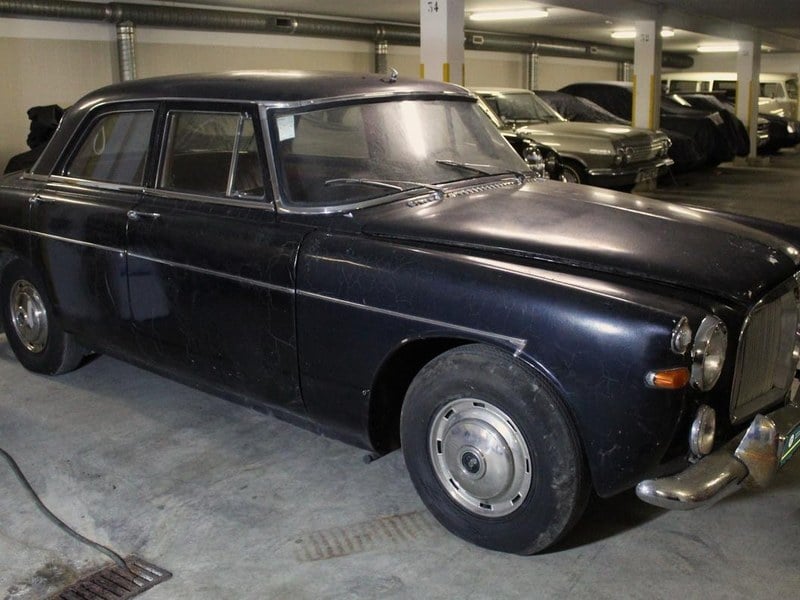
1939 Rover P2 Limousine-Projekt
Dieser Rover P2 bietet eine fantastische Gelegenheit, dieses Projekt die letzten Schritte bis zur Fertigstellung zu führen
Liebevoll auf einem außergewöhnlich hohen Standard restauriert – alle harte Arbeit ist erledigt – es fehlen nur noch die letzten Schritte, um dies abzuschließen und es zu einem prächtigen Pre-War-Juwel zu machen.
Das gesamte Auto wurde auf Bare-M metal restauriert – die Türen, Zierleisten, Kotflügel, Radkästen und die Haube müssen noch vorbereitet und lackiert werden – der Fahrgestellrahmen wurde vollständig und fachmännisch restauriert. Der Motor und das Getriebe wurden vollständig zerlegt und neu aufgebaut, alle Bremsen und Leitungen wurden restauriert/ neu aufgebaut.
Das Auto wurde komplett zerlegt, der Fahrgestellrahmen und die Karosserie wurden gestrahlt und neu lackiert. Der Motor wurde überholt und mit einer neuen Kupplung ausgestattet, während das Getriebe und die hintere Achse mit neuen Dichtungen und Lagern neu aufgebaut wurden. Stoßdämpfer wurden vollständig überholt, und alle Schmierölleitungen wurden durch neue ersetzt. Die Räder wurden pulverbeschichtet und mit brandneuen Reifen und Schlauchchen versehen.
Alle Roststellen der Karosserie wurden herausgeschnitten und durch frisches Metall ersetzt, so dass das Auto völlig rostfrei ist. Die Laufbretter wurden neu gefertigt, und sowohl vorne als auch hinten wurden die Stoßstangen originalgetreu neu verchromt.
Umfangreiche Restaurationsunterlagen, Fotos und Rechnungen sind vorhanden.
Ja, es bleibt noch viel zu tun – aber die harte Arbeit ist erledigt – die abschließenden Arbeiten sind gut handhabbar und sollten relativ zügig zusammenkommen – Jetzt beginnt der spaßige Teil – sobald der Wiederzusammenbau beginnt – dann wird dieser Rover P2 Form annehmen –
Etwas Geschichte
Der 1939 Rover P2 4-Tür-Limousine – sowohl seine allgemeine Linie als auch das, was die 1939er (Vorkriegs-)Version interessant macht. Dieses Modell wird oft unter der Bezeichnung „P2“ geführt, die als Serienname von Rover von 1937 bis 1948 diente. Die P2-Reihe umfasste mehrere verschiedene Modelle, unterschieden nach Motorgröße, z. B. Rover 10, 12, 14, 16, 20.
Rover P2: Die Serienübersicht
• Rover führte die P2-Serie 1937 ein, um seine frühere P1-Plattform zu beerben.
• Die P2-Linie umfasste mehrere Motorvarianten unter einer gemeinsamen Fahrgestell- und Karosseriekonstruktion: der Rover 10, 12, 14, 16 und 20.
• Die Produktion lief (mit Unterbrechungen durch den Zweiten Weltkrieg) von ca. 1937 bis 1948.
• Die P2-Modelle galten als recht vornehm für ihre Klasse – sie boten relativ feine Ausstattung, gute Innenräume und mechanische Vorzüge (für die Zeit).
Da die P2-Reihe unterschiedliche Motorgrößen abdeckte, könnte man bei der Bezeichnung „1939 Rover P2 4-Tür-Limousine“ auf einen Rover 10 P2, Rover 12 P2, Rover 14 P2 oder Rover 16 P2-Varianten verweisen (oder in wenigen Fällen sogar auf Rover 20). Viele mechanische, stilistische und historische Merkmale sind jedoch bei ihnen gemeinsam, mit Unterschieden in Motor, Leistung und Ausstattung.
1939 P2 4-Tür-Limousine — Technische & Designmerkmale
Hier ist, was die 1939er Limousinen der Rover P2-Familie kennzeichnete:
Körper & Stil
• Die 4-Tür-Limousine war typischerweise im „Six-Light“- oder „Six-Window“-Design gehalten (d. h. drei Fenster pro Seite, inklusive der hinteren Viertelfenster). Einige Varianten (insbesondere die „Sports Saloon“) hatten weniger Seitenfenster (4 Fenster).
• Der Karosseriestil war recht konservativ und traditionell – aufrechte Linien, eine separate Motorhaube vorne, Laufbretter und unverwechselbare Kotflügel.
• Bis 1939 bot Rover Scheibenräder (also gepresste Stahl-Scheibenräder) zusätzlich zu Leichtmetallspeichenrädern als Option an.
• Die Innenausstattung war in der Regel gut ausgestattet – Leder oder gute Polsterung, passende Teppiche, vollständige Instrumentierung und Annehmlichkeiten wie eine herausziehbare Werkzeugablage unter dem Armaturenbrett.
• Der Fahrgestellrahmen enthielt außerdem eine automatische Schmierung des Chassis über das Luvax-Bijur-System, welches dazu beitrug, bewegliche Teile zu pflegen.
Mechanik / Motor / Getriebe
Hier sind die mechanischen Highlights und Änderungen für 1939 P2 Limousinen:
• Im Jahr 1939 wurde Synchromesh (Synchrongetriebe) zu den beiden oberen Gängen (3. und 4. Gang) in vielen Modellen hinzugefügt, was Gangwechsel erleichtert.
• Das Freilaufwerk war eine vom Rover patentierte Eigenschaft. Der Freilauf ermöglichte dem Auto, zu gleiten (d. h. den Motorantrieb zu entkoppeln, wenn nötig) für sanftere Gangwechsel und Kraftstoffeinsparungen.
• Bremsen waren mechanisch (Stangenbetätigt) Girling-Bremsen, vollständig ausgeglichen.
• Ein typisches Beispiel: der Rover P2 12 4-Tür-Limousine (1939) hat veröffentlichte Spezifikationen.
o Motor: 4-Zylinder (für die 12-Variante)
o Leistung, Gewicht usw. gemäß Periodenkatalogen.
• Für höhere Varianten (z. B. 14, 16) gab es 6-Zylinder-Oberkanten-Ventil-Motoren mit größerem Hubraum. Beispielweise hatte der Rover 14 P2 einen 1. 901 ccm großen 6-Zylinder-Motor.
Produktion & Varianten
• Die Modelle der P2-Serie wurden je nach Motorgröße und Kriegswirkung in unterschiedlichen Stückzahlen produziert.
• Vorkriegszeit war der P2 ein zeitgenössisches Auto; die Kriegsproduktion wurde weitgehend für zivile Nutzung eingestellt.
• Nach dem Krieg wurde die Produktion einiger P2-Modelle in modifizierter Form fortgesetzt.
• Gesamte Stückzahlen: Beispielsweise sah der Rover 12 P2 vor dem Krieg 11. 786 Exemplare und danach 4. 840.
Historischer Kontext & Bedeutung
• Rover versuchte in dieser Zeit, seine Attraktivität über Nischen- oder Luxusfahrzeuge hinaus zu erweitern; die P2-Reihe war Teil des Vorstoßes in ein etwas mittleres, aber dennoch raffiniertes Segment.
• Der Ausbruch des Zweiten Weltkriegs 1939 hatte eine tiefgreifende Wirkung: Die zivile Autoherstellung wurde eingeschränkt; die Rover-Werke wurden für Kriegseinsätze umgenutzt.
• Rover trug auch zu anderen Kriegs- und Nachkriegstechnologien bei (insbesondere in der Luftfahrt und später der Turbinen-Technologie).
• Nach dem Krieg wurde die Rover P2-Linie schrittweise zugunsten neuerer Designs (wie der P3-Serie) eingestellt.
Aufgrund ihrer Kombination aus Raffinement, Qualität und moderater Seltenheit (insbesondere vor Kriegsbeginn) sind P2-Model heute bei klassischen und historischen Autoliebhabern begehrt.