Descrição
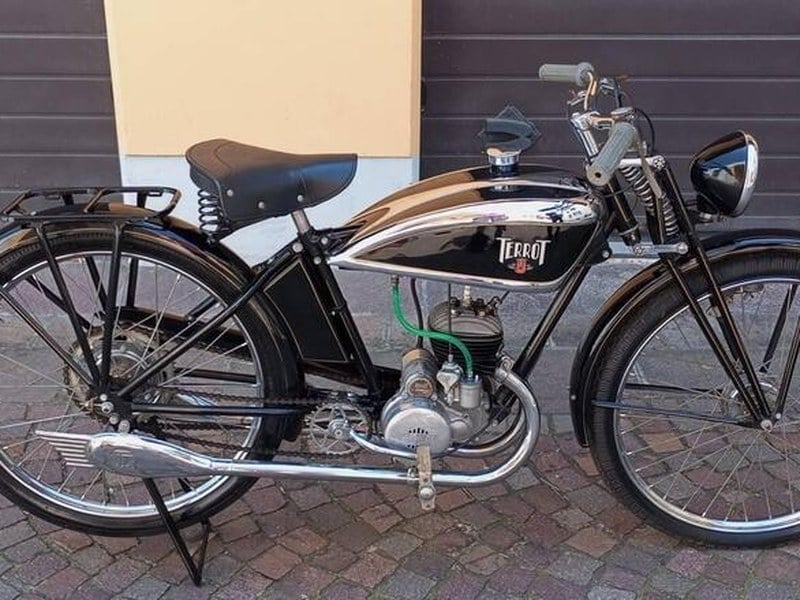
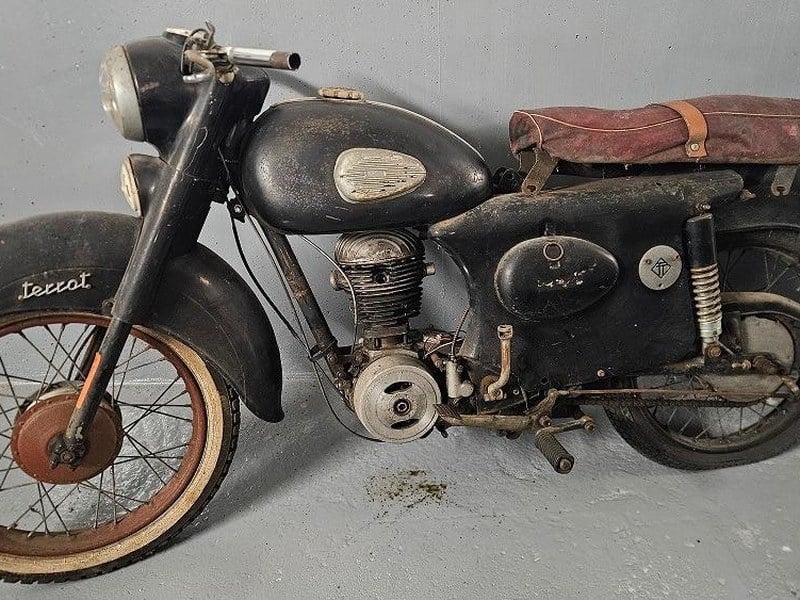
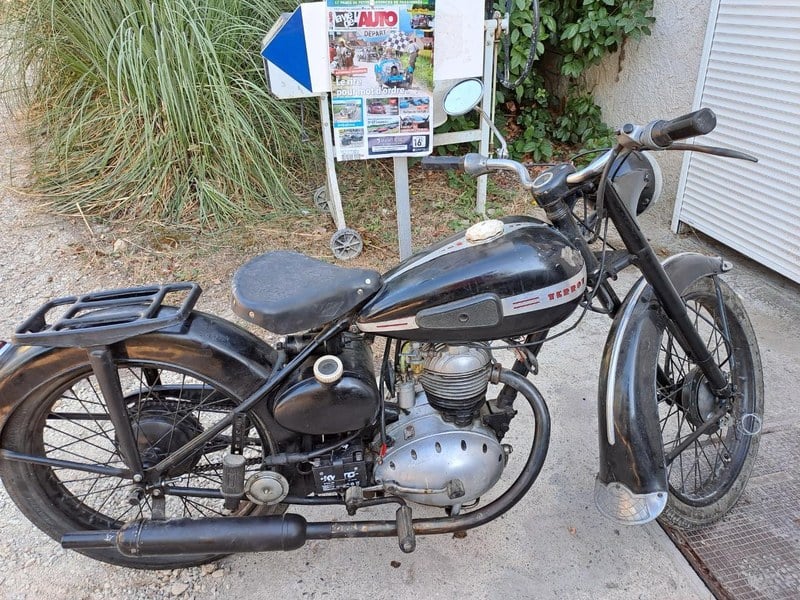
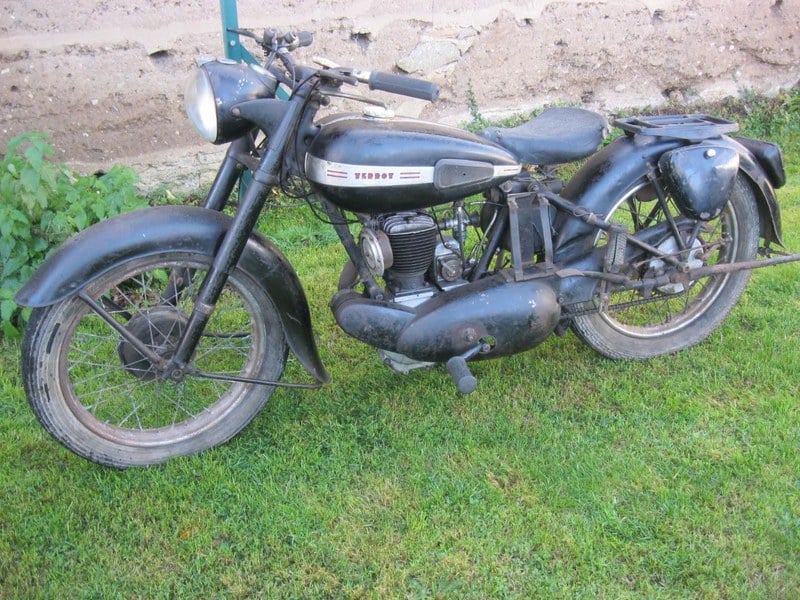
A primeira mota Terrot foi a 125 Type EP, lançada em 1946. Equipava um motor de válvulas na cabeça, uma caixa de quatro velocidades e um quadro rígido com garfo dianteiro de treliça. Em seguida, os modelos FTE e ETPC, equipados com garfos telescópicos com amortecimento hidráulico, e o ETD, disponível com dinamô e ignição por bateria/ bobina. Em 1953, foi lançada uma versão « económica », a ETM, dotada de ignição por magneto com volante de inércia e de uma forquilha dianteira não amortecida. As últimas desta série, a ETDS e a ETM4S, estavam equipadas com uma suspensão traseira por braço oscilante, ambas comercializadas a meados de 1954.
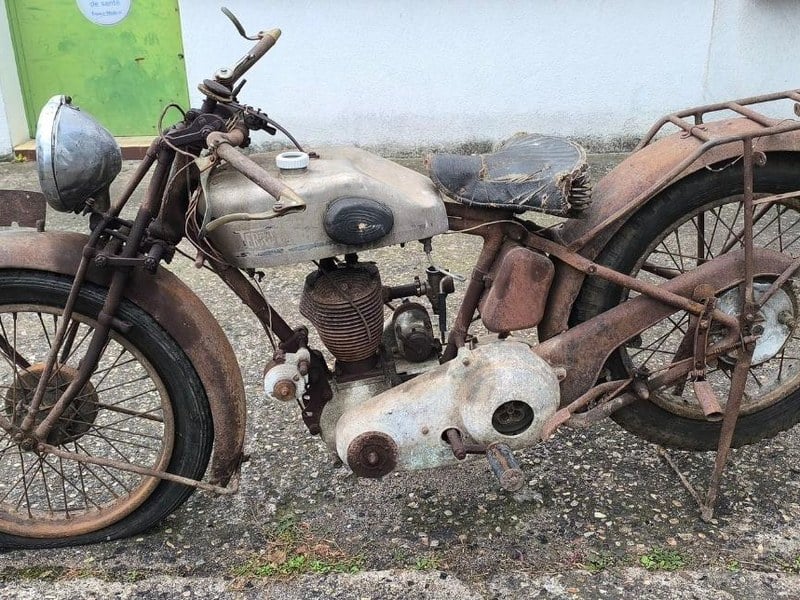
Esta moto é uma Terrot ETM 125 de 1955; é uma autêntico achado de garagem.
O motor tem boa compressão; basta dar-lhe uma partida.
E como se chama uma moto vintage francesa tão bonita? Brechó, vintage, clássico, tal como está, ou simplesmente MUITO BONITA?
Esta Terrot não está atualmente licenciada; vem acompanhada de uma factura de matrícula.
História da Terrot:
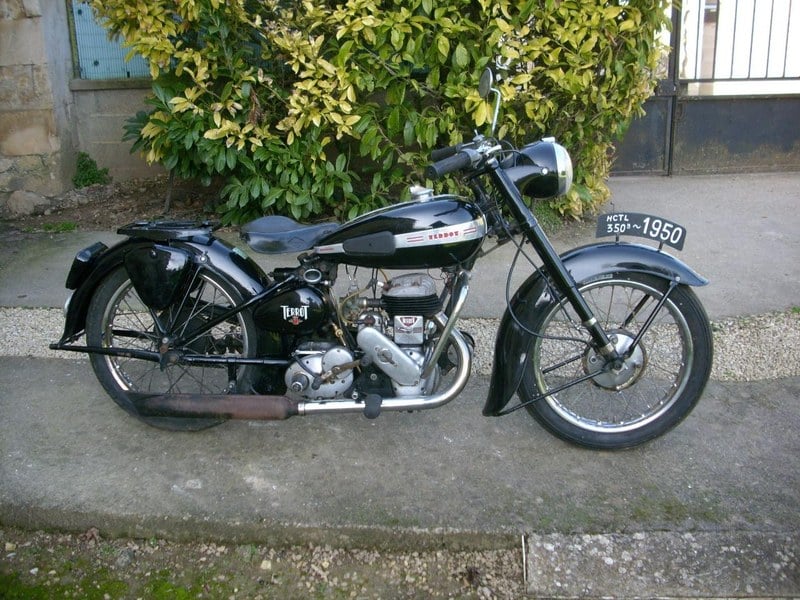
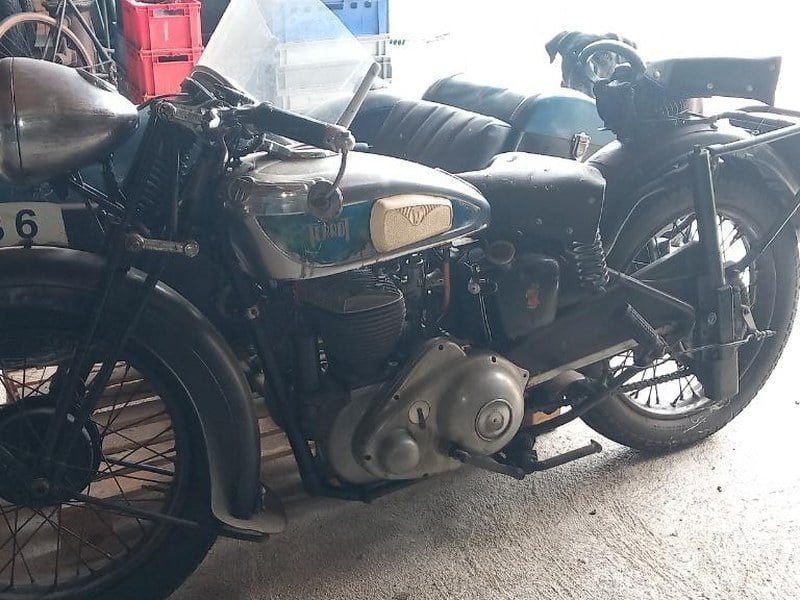
Embora a empresa de Charles Terrot fabrique máquinas de tricotar desde 1887, começa a desenvolver veículos motorizados no início do século. As primeiras motos aparecem por volta de 1904 e, 22 anos depois, a empresa é o maior fabricante de motos na França. O facto de ter inicialmente evitado um desenvolvimento interno dispendioso pode ter contribuído para o seu sucesso. A empresa geralmente comprava motores integrados, que fabricava sob licença. Graças a desenvolvimentos posteriores, eles tornaram-se, por fim, os seus próprios motores.
Até aos anos 1920, dominavam os pequenos motores de monocilíndrico, geralmente da marca Zedel, com uma válvula de respiração e cubagem entre 137 e 427 cm³. Modelos em V de dois cilindros Motosachoche até 1 000 cm³ também eram oferecidos, bem como modelos de dois tempos de 175 cm³ e 240 cm³. A partir de 1923, o primeiro motor monocilíndrico JAP de válvulas Laterais passou a fazer parte da gama, rapidamente seguido por uma versão de 500 cm³. As caixas de velocidades de três marchas provinham inicialmente da Burman, depois da Sturmey-Archer. A máquina de 350 cm³ revelou-se particularmente performante. Com base neste modelo, desenvolveram também os seus próprios motores monocilíndricos de válvulas laterais: o H/ HSS. Além disso, os motores de válvulas em cabeça destinados à competição, como o HSSL 350, dispunham ainda de caixas de velocidades separadas. Os modelos Supersport eram respetivamente chamados HCP (350 cm³), LCP (175 cm³) e OCP (250 cm³). A partir de 1934, uma caixa de velocidades de quatro marchas com comando a pé tornou-se de série. Depois da Segunda Guerra Mundial, a produção continuou inicialmente com as cilindradas de pre-guerra de 350 e 500 cm³. Também foi introduzida uma moto leve com motor de 125 cm³ de válvulas em cabeça. Em 1960, após várias tentativas frustradas com scooters de 100 e 125 cm³, bem como um motor de 175 cm³ de válvulas em cabeça, a Terrot cessou a produção de motos.
Deseja ver este automóvel? Agradecemos muito.
Estamos regularmente na estrada para entregar ou recolher veículos.
Por favor, ligue-nos com antecedência para evitar qualquer decepção.
Fizemos tudo o que podíamos para garantir a exatidão das informações contidas neste anúncio. No entanto, nenhum direito pode ser retirado das informações fornecidas. Não se baseie apenas nessas informações; verifique sempre por si próprio os fatores importantes para si e suscetíveis de influenciar a sua decisão. Para qualquer questão, contacte o vendedor.