Description
AMILCAR CS
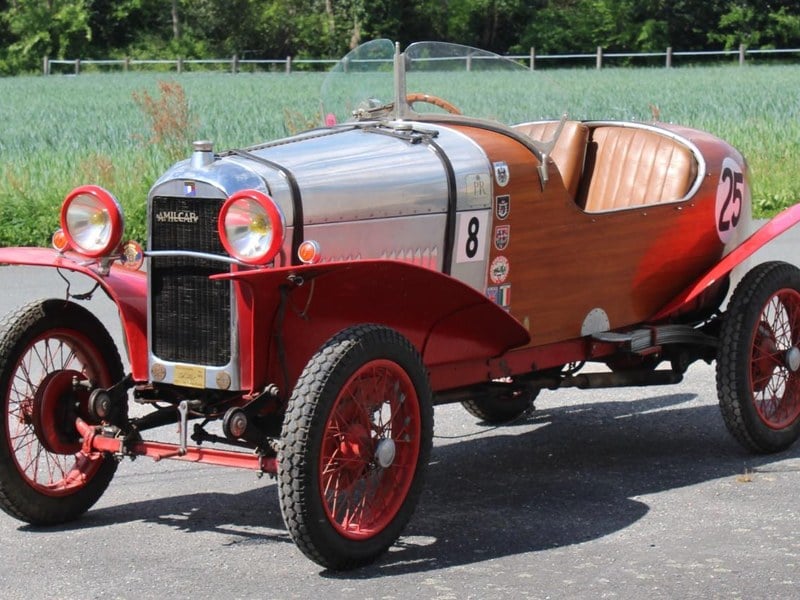
Wooden point-skiff body
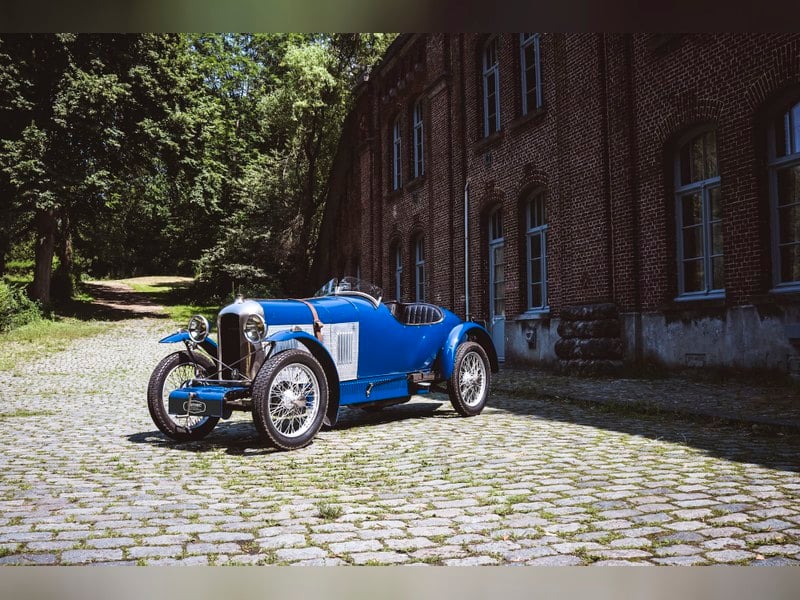
Classic restoration
Four-wheel brakes
Has taken part in numerous rallies
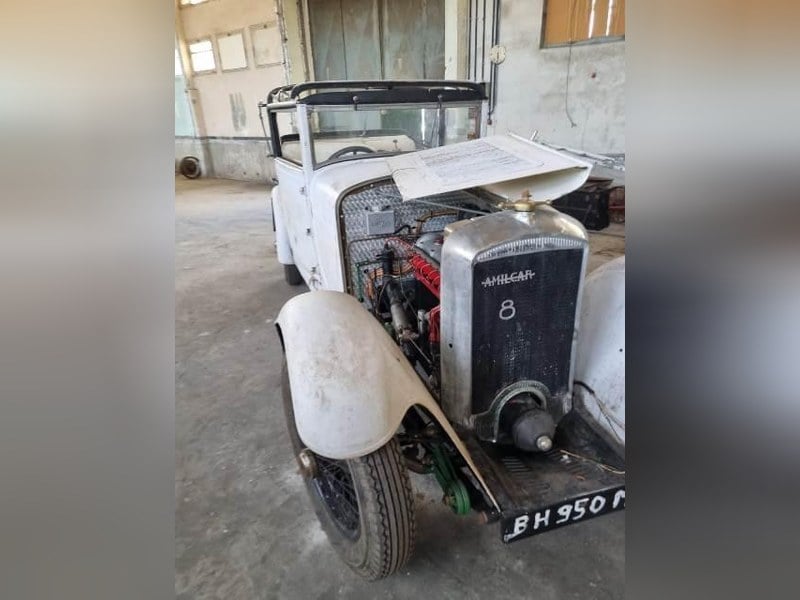
Needs to be recommissioned
French registration certificate
The Amilcar CS (Cyclecar Sport) is one of the most emblematic examples of the French cyclecar golden age. Launched in 1922 and produced until 1925, the 1923 model captures the marque at the peak of its popularity in the early 1920s, delivering the thrills of a sports car in a light and tax-efficient package.
Technical specifications
The CS was an evolution of the previous CC, featuring a slightly more powerful engine and a reinforced chassis.
Engine: Inline-four, side-valve.
Displacement: 1004 cm3 (versus 903 cm3 for the CC).
Power: Around 25 hp at 2, 800 rpm.
Transmission: 3-speed manual.
Chassis: Ladder frame with semi-elliptic leaf springs at the front and quarter-elliptic at the rear.
Top speed: Around 100–110 km/ h, impressive given the car’s very light weight and narrow tyres.
Key features
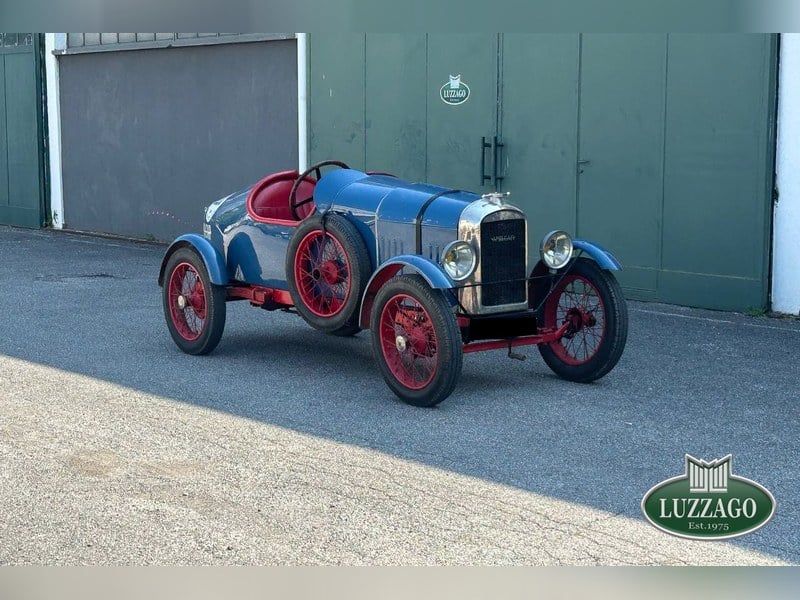
The "pointed bow" design: Most CSs wore a two-seat offset "skiff" or "pointed bow" bodywork. The passenger seat was placed slightly behind the driver to keep the cabin narrow and aerodynamic.
The simplicity: To stay within France’s tax class for cyclecars (which required a weight under 350 kg), the car was stripped of all superfluous features.
Historical significance
In 1923, Amilcar was the brand to beat in the small-displacement racing categories. The CS wasn’t just a city car; it was an affordable club-racing car. It laid the technical foundations for the legendary CGS (Grand Sport) and CGSS (Grand Sport Supercharged) which dominated the second half of the decade.
The 1923 Amilcar CS (Cyclecar Sport) is one of the most emblematic models of the golden age of French microcars. At that time, Amilcar dominated the market by offering lightweight, nimble, and above all accessible cars.