

Beskrivning
Morgan Plus 8 föds 1968, först nästan som en "experiment": Morgan bestämmer sig för att installera den helt nya Rover V8 på 3, 5 liter, i aluminium, under den långa huven på sin Plus 4. Resultatet är uppseendeväckande: en lättviktig vikt på cirka 900 kg och en effekt på cirka 160 hästkrafter. Bilen behåller den smala chassisen från Plus 4 och sin framvagn med skenor som daterar från 1910. Den är rustik, men mycket snabb, med en livlig uppträdande.
År 1969 hålls bilen nästan identisk med 1968 års modell. Justeringarna är få och små: några detaljförbättringar avseende kylning och bromsar, men inga stora förändringar. Den förblir en övermäktig Plus 4, med förkrigsstil men med samtidiga sportbilsprestanda.
År 1970 börjar Morgan göra hela bilen lite mer tillförlitlig. Instrumentpanelen ses över, nya strömbrytare och mätare dyker upp. Moss-lådan förblir oförändrad, men den mekaniska uppbyggnaden får ökad robusthet. De första lättare chassiverktygen visas för att hantera V8-självständig torque.
År 1971 görs några utrustningsändringar: något omdesignade säten, förbättrat uppvärmning och vattentätning av cabrioletluckan, men fortfarande inget större strukturellt skifte. Plus 8 behåller sin smala spårvidd och sina tunna fälgar.
Så kommer 1972, som motsvarar den fulla mognaden av denna första smala generation. Rover V8-motorn på 3, 5 liter med SU:s förgasare utvecklar ungefär 155 hästar, och bilen behåller en vikt under 900 kg. Moss-fyrväxlad låda kvarstår. Denna 1972-version anses ofta vara höjdpunkten av den ”ursprungliga” Plus 8: livlig, rå, oerhört lätt, med hantverksmässig charm från de allra första serierna och en originalbevarad stil som arv från Plus 4.
År 1973 fortsätter Plus 8 nästan oförändrad, men får några diskreta förbättringar av bromsar och fjädring. Estetiken förblir identisk, alltid med den tunna karosserin och de böjda skärmarna runt hjulen.
Under 1974 och 1975 börjar Morgan förbereda en utvidgning av chassit, eftersom moderna bredare däck kräver mer utrymme och stabilitet. Några förstärkningar tillkommer och vissa modeller får redan bredare fälgar, men den övergripande silhuetten förblir densamma.
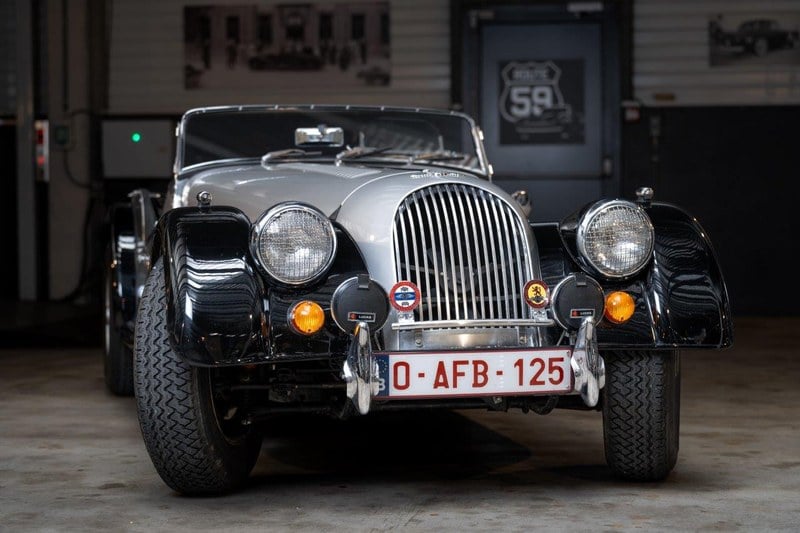
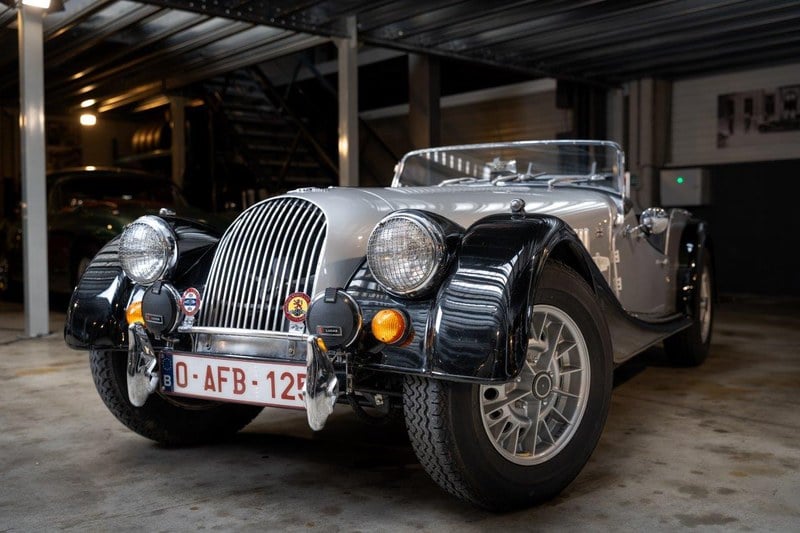
Det här exemplar har levererats ny i Tyskland den 14 februari 1973 och har sedan dess kört lite mer än 81 000 km. Det är således en sällsynt left-hand-drive-version med metrisk instrumentering. Den är i mycket fint skick och har genomgått en motorstaging som ökat effekten till cirka 170 hk. Den följs av en cabriolet, sidotjutorna och en tonneautäcke.
Bilen går mycket bra, motorn är vridstark och kraftfull och upphängningen samt drivlinan är i mycket gott skick.