Beschrijving
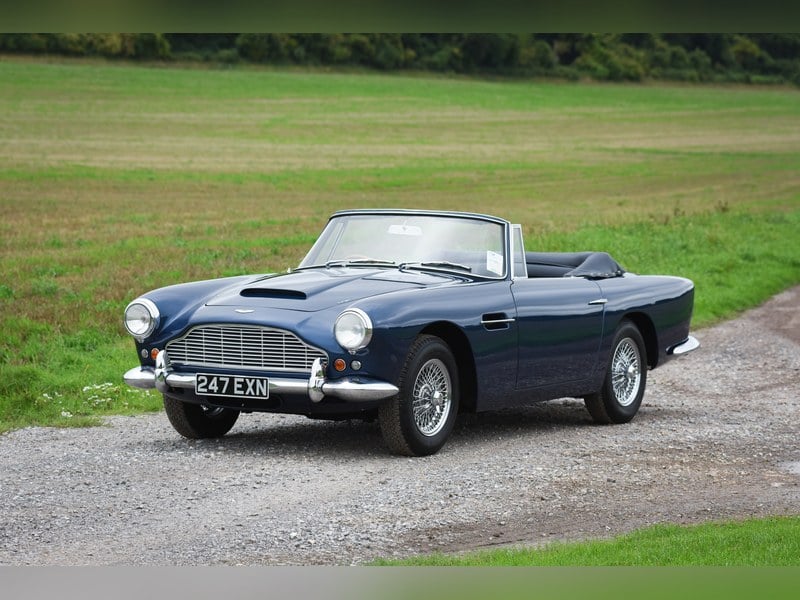
Veloce Classic and Sports Auto LTD is pleased to offer this rare and stunning Aston Martin DB4 Series II with the impressive upgrade to DB4 GT Spec Car Information: And what a car it is, the Aston Martin DB4 is one of the finest cars in automotive history. It combines elegance, performance, racing pedigree with the ultimate DB4 GT car at the top of the list. What our car combines here is the elegance of a usable DB4 with all the upgrades of a DB4 GT in both styling and performance.
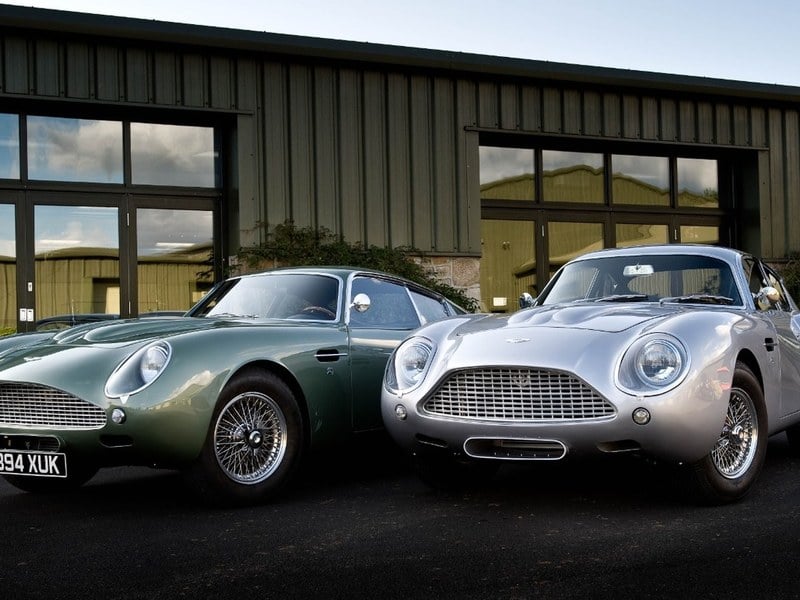
Aesthetically, the car adopts fairing headlamps with Perspex covers, a popular feature that was also soon adopted for the DB4 Vantage, but the Twin competition-style bumper overlays, quick-release Monza fuel filler caps with DB4/ GT headlamps, and no front and rear bumpers have been removed,
a sports exhaust (which also improves performance and produces a stunning sound), 'quick-release' fuel caps on both rear pillars, wider Borrani 42 wire wheels added on each of the rear wings, and a Harvey Bailey suspension kit that gives the car a lowered sporty look but also improves performance.
Mechanically, the car is a masterpiece, with a Getrag five-speed gearbox mated to a rear axle ratio of 3. 06:1 and 3. 54:1. A massive upgrade was made to the engine with matching owner numbers, which was upgraded to Vantage specification. The car has an impressive and extensive history file that confirms the car's high quality and clearly shows how much it was loved by its previous owners. This DB4 Series II is perhaps the closest you can get to a DB4 GT without paying the extreme figures required for one. Historical models: the DB4 GT 1959 was a happy year at Newport Pagnell: Aston Martin took overall victory at Le Mans, taking 1st and 2nd place overall, with drivers Carroll Shelby and Roy Salvadori in the lead, followed by Maurice Trintignant and Paul Frere in second.
Aston Martin also won the World Sports Car Championship title, becoming the smallest manufacturer to do so, before or since. One of the first cars to take part in the 24-hour race that year was also an Aston Martin, painted the same light green as the victorious DBR1. It was a prototype for a competition-oriented version of the company's new grand tourer, the DB4. In September 1959, the production version of that car, called the DB4GT, made its debut at the London Motor Show. It was developed from the production DB4 to make it shorter, lighter and more powerful. The body was made of incredibly thin 18-gauge aluminium alloy, the wheelbase had been reduced by about five inches, and the rear seats had been eliminated on all but three of the specially ordered cars, all to reduce weight by about 200 pounds. The engine had been extensively modified, with a higher compression of 9:1, a twin ignition cylinder head and triple Weber 45 DCOE twin throttle carburettors, and was capable of producing the outstanding 302 horsepower at 6, 000 rpm. This was a useful increase over the standard DB4's claimed 240 horsepower and qualified the DB4GT as the most powerful British car of the time. Top speeds reached during testing were 153 mph, with a 0-60 time of 6. 1 seconds. It was also one of the first cars capable of going from a standstill to 100 mph and then braking to a standstill in less than 20 seconds, which was a tribute, in part, to its upgraded Girling braking system, which was used on the racing Aston Martins of the time. The DB4 Series II Of all the post-war Aston Martins, the gracefully elegant DB4 is most admired for its robust British engineering combined with elegant Italian lines in perfect proportion. Specifications included a strong new steel platform chassis designed by Harold Beech, who had recently taken over as Aston Martin's chief engineer. In the production version, this rigid chassis supported a sleek and virtually unadorned fastback body, designed by Carrozzeria Touring of Milan, which used its famous Superleggera construction, characterised by a skeleton of small-diameter steel tubes covered by hand-formed aluminium alloy body panels. The new chassis featured independent front suspension and a tensioned rear axle, positioned via wishbones and a Watt's linkage. Four-wheel disc brakes and rack-and-pinion steering were specified for the first time; both elements were state-of-the-art for the time and were offered well in advance of Ferrari's adoption. The most exciting development, however, was the innovative 3. 7-litre twin-cam alloy engine. With two SU carburettors, the engine was capable of producing 240 horsepower and produced the prodigious torque for which the DB series Astons became famous.
Available from Veloce Classic Auto Ltd, London Price: £400, 000