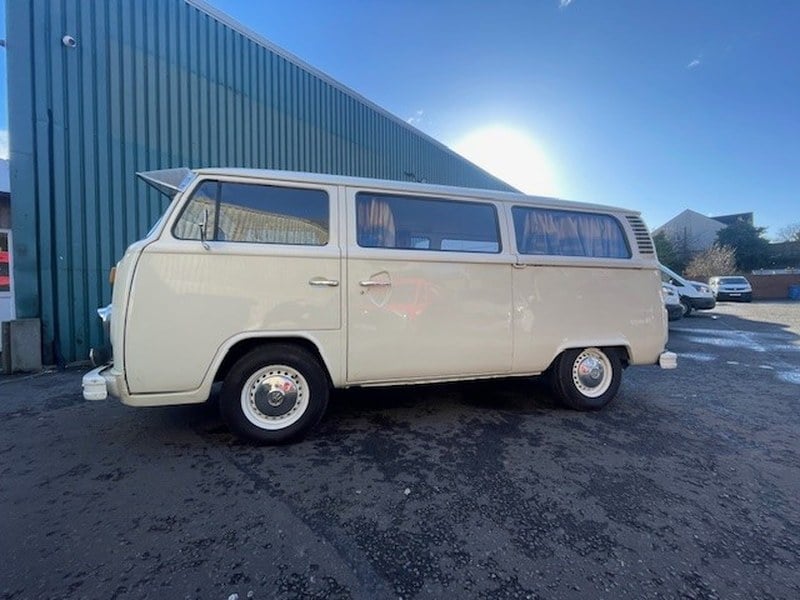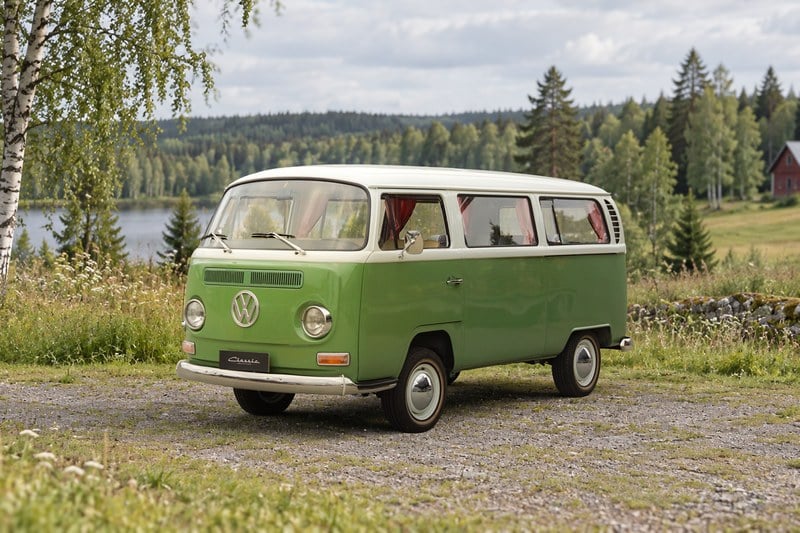


Description
Model: Typ2 (T2) / Kleinbus “Bay Window”
Model type: Typ 23 – Kombi
Model Year: 1970
First Registration: 29 April 1970
Mileage: 32, 256 km
Engine: 1. 6-litre air-cooled flat-four, 50 kW (68 hp)
Transmission: 4-speed manual
Wheels: 14-inch steel wheels with chrome VW hubcaps
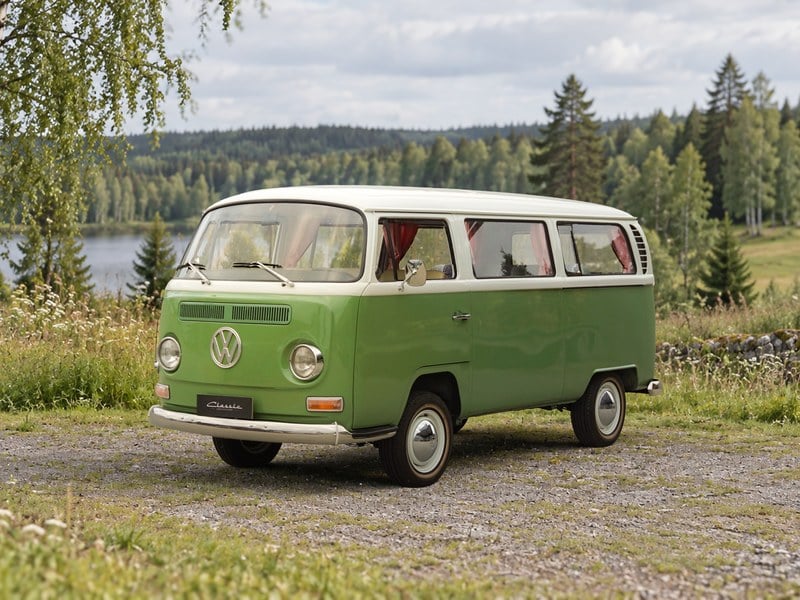
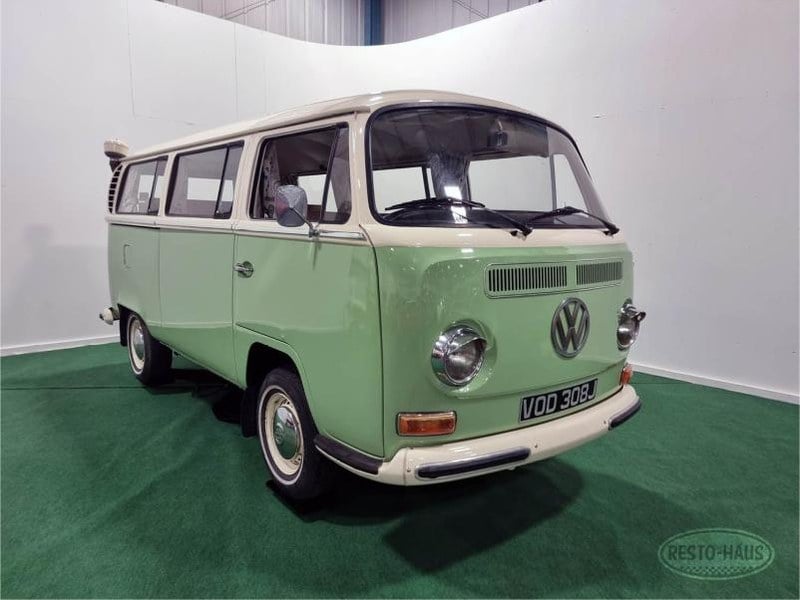
Exterior Colour: Two-tone Elm Green and Pastel White
Kleinbus “Bay Window”
Volkswagen's Typ 2 is one of the world's most recognisable and
beloved classic vehicles. Its story began in 1950 with the
introduction of the first-generation T1. Unveiled in 1967, the
second-generation T2 continued its predecessor's success by
combining practicality, straightforward engineering and
unmistakable styling.
The T2 is also widely known among enthusiasts as the * Bay
Window*, a nickname derived from its large, single-piece,
slightly curved windscreen. The first-generation T1, by contrast,
was known as the * Split Window* or * Splittie* because of its
distinctive two-piece windscreen. With the introduction of the
T2 in 1967, the split windscreen was replaced by a single, larger
glass panel, improving visibility and giving the vehicle its
characteristic appearance. The model was manufactured in
Europe from 1967 to 1979, while production continued
elsewhere in the world, most notably in Brazil, until 2013.
The T2 introduced several improvements over the first
generation. A redesigned body, larger windows, a more
advanced chassis and improved ride comfort made it an even
more versatile vehicle. The rear-mounted, air-cooled flat-four
engine remained one of the model's defining mechanical
characteristics.
Volkswagen's Typ 2 range was produced in several body styles,
including panel vans, Kombis, Kleinbus passenger versions,
pick-ups and camper vans. The Kombi, designated Typ 23 by
the factory, was specifically designed for combined passenger
and cargo transport. Its defining feature was a versatile interior
with seating arrangements that could be adapted to different
transport requirements. The Kombi offered the windowed body
of the passenger versions and the possibility of accommodating
up to nine occupants, while retaining the practicality and
straightforward construction of a commercial vehicle.
Particularly during the 1960s and 1970s, Volkswagen's Kleinbus
and Kombi models became cultural icons of their era. Today,
the T2 has established itself as a highly regarded classic and
collector's vehicle, appreciated worldwide for its timeless
design, practicality and distinctive driving experience.
The 1970 Volkswagen T2 offered here represents the early
production years of the second-generation model. Its original
factory designation is Typ 23, or Kombi, as confirmed by its
chassis number. This means the vehicle was originally
manufactured for combined passenger and cargo transport.
According to its historical documentation, the original seating
configuration was 3+6, accommodating a total of nine
occupants.
The vehicle has undergone extensive body restoration, while its
mechanical components, electrical system and numerous
details have been comprehensively refurbished or renewed.
The vehicle is finished in a period-correct-style green and white
two-tone colour scheme, beautifully complementing the classic
lines of the T2. The colours are RAL 6011 and RAL 9002, closely
resembling Volkswagen's Elm Green and Pastel White shades.
The two-tone finish is particularly well suited to the early T2
design, highlighting its distinctive and timeless appearance.
One of the most significant highlights of this particular example
is its thoroughly restored bodywork. The entire body has been
sandblasted and treated with epoxy primer. All necessary
welding, metalwork and painting have been carried out
professionally. Particular attention has been paid to the body
structure and surface protection, providing an important
foundation for the long-term preservation of a classic vehicle of
this age.
The exterior and numerous details have also been carefully
refurbished, including the replacement of door and hatch seals,
door handles, mirrors and various other wear items and trim
components. Stainless steel bumpers have also been fitted. The
classic appearance is further complemented by 14-inch steel
wheels with chrome Volkswagen hubcaps.
The vehicle's mechanical systems have likewise received
extensive attention. In particular, the braking system has
undergone significant refurbishment, including the
replacement of the brake master cylinder, brake lines, brake
hoses, wheel cylinders and brake shoes.
The electrical system has also been inspected and overhauled,
with various components and wiring renewed where necessary.
Power comes from a 1. 6-litre, air-cooled four-cylinder boxer
engine, paired with a four-speed manual transmission.
According to the information available to us, the engine was
rebuilt in 2008, with work reportedly including cylinder honing,
replacement piston rings and new bearings. However, no
verified documentation of this work is available. Based on the
information provided to us, approximately 1, 500 kilometres
have been driven since the engine rebuild.
The engine and mechanical components operate exceptionally
well. The engine runs smoothly, pulls strongly and shows no
signs of abnormal exhaust smoke. The gearbox, brakes and
steering also function equally well, providing an enjoyable
driving experience characteristic of a classic air-cooled
Volkswagen.
The vehicle is currently fitted with a so-called summer exhaust
system, featuring a header-style exhaust manifold and silencer.
The sale also includes the heater boxes, the corresponding
exhaust silencer and associated fittings, as well as the
underbody heating ducts and various related components.
The interior reflects the practical and straightforward design
characteristic of the Kombi. Light-coloured vinyl upholstery,
horizontally stitched door panels, a body-coloured dashboard
and a classic Volkswagen steering wheel create a
period-appropriate atmosphere. The front features a three-seat
arrangement, while the vehicle's original nine-seat
configuration is documented in its registration history.
The original upholstered rear bench seat is also included in the
sale. The vehicle is currently fitted with a firmer rear bench seat
featuring approximately 5 cm of padding, installed for
inspection purposes.
The vehicle's history is complemented by an extensive 23-page
registration and ownership history obtained from the National
Archives of Finland, allowing its history in Finland to be traced
over several decades. The historical records confirm its original
3+6 seating configuration, typical of the nine-seat Kombi
version.
The vehicle was first registered on 29 April 1970. According to
the information available to us, it was taken out of regular use
in 1995 and subsequently passed through several owners
before undergoing its recent restoration. Its most recent
periodic roadworthiness inspection was successfully completed
on 26 August 2026.
This Volkswagen T2 Kombi presents an excellent opportunity to
acquire an extensively restored example from the early
production years of the second-generation model. Its original
Typ 23 factory designation, documented nine-seat history and
the versatile construction characteristic of the Kombi add
further interest to this particular example.
Professionally completed bodywork and paintwork,
comprehensively refurbished mechanical components and
carefully finished details combine to create a particularly
appealing classic. Its distinctive two-tone colour scheme, the
unmistakable character of the air-cooled boxer engine and the
timeless design of the T2 make it an excellent choice for
leisurely summer drives, classic car events or as an addition to
a collection of historic vehicles.
Please do not hesitate to contact us for further information
about the vehicle, its restoration and historical documentation,