Beschreibung
THE MASERATI MISTRAL
The story of the Maserati Mistral begins with its predecessor, the Maserati 3500 GT, which was built from 1957 to 1966.
The Maserati 3500 GT / GTI was Maserati’s first model produced in larger numbers, powered by a racing-derived inline-6 engine of 3, 500 cc with two overhead camshafts and a body built by Carrozzeria Touring for the 2+2 coupé or by Carrozzeria Vignale for the two-seat spider. The 3500 GT was a sales success and secured the financial footing for further developments.
The Maserati Mistral is a classic two-seater sports car built between 1963 and 1970.
The name “Mistral” refers to the famous wind from the south of France, thus establishing Maserati’s tradition of naming models after winds (e. g., Ghibli, Bora, Khamsin).
It was presented in 1963 at the Turin Motor Show as the 3500 GTI 2Posti and was renamed Mistral only in 1966.
Our car is technically Maserati 3500 GTI 2Posti.
Between spring 1964 and 1970, 828 coupes and 123 spiders were produced at Carrozzeria Maggiora.
The body was initially entirely aluminium, and from 1967 onwards it used pressed steel sheet. Only the doors and hood were clad in aluminium.
Our car still has the hand-built aluminium coachwork.
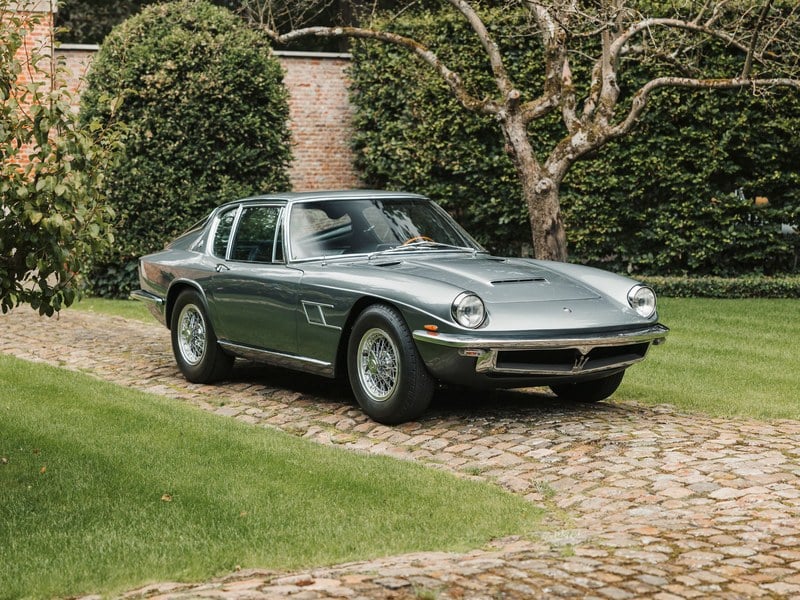
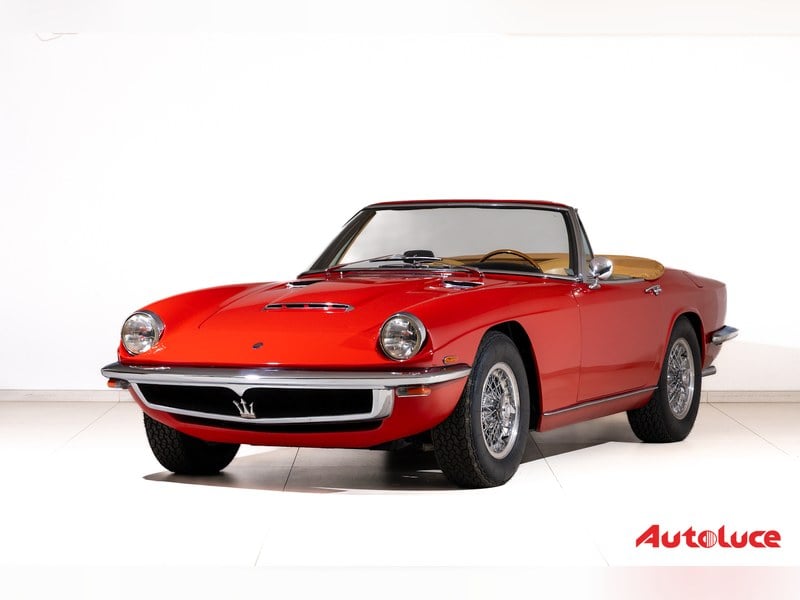
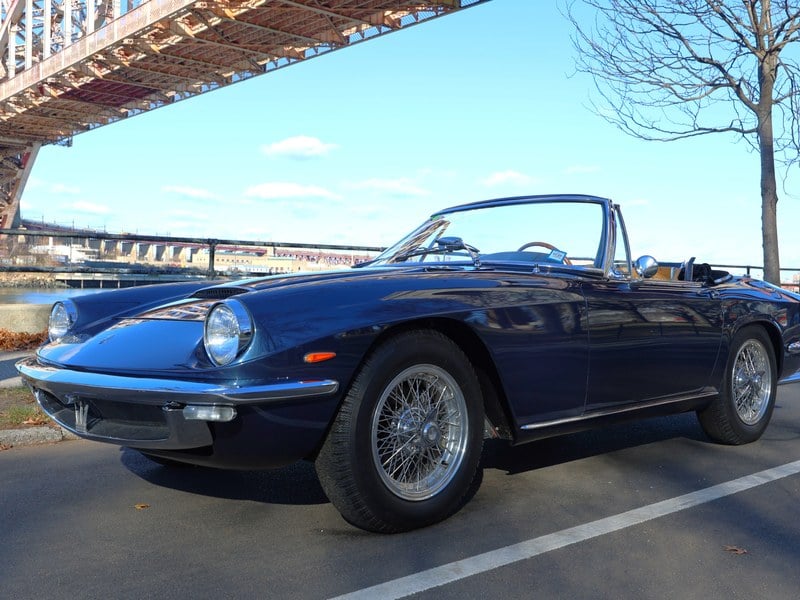
With its long bonnet, slender silhouette and the glass fastback hood, the Mistral is recognisable as Pietro Frua’s elegant design.
It embodies the aesthetics of the 1960s in a particularly stylish way and is a real eye-catcher.
Its clean lines, large glass areas and the fastback rear make it one of the most beautiful cars in Maserati’s history.
With exclusive features, hand-finished details and a unique history, this car is more than just a means of transport – it’s a statement.
Pietro Frua created a masterpiece with this design – sporty yet with a nobility and timelessness that set Maserati apart from other cars of its era.
The generous glass areas and the flowing coachwork make every detail a feast for the eyes. This car fascinates from every angle.
Timeless, pure elegance and unbridled driving pleasure, the Maserati Mistral is ***** not just a car, it’s a way of life – a statement.
This legendary Grand Tourer from the 1960s combines extraordinary design with masterful engineering and brings the best of both worlds to the road.
Up to 255 PS enable a top speed of over 250 km/ h, and the mechanical fuel injection provides optimum performance that impresses every time.
Driving a Mistral is ***** not just a drive – it’s an experience.
The intoxicating soundtrack of the high-performance inline-6 engine with twin ignition is addictive.
The precise ZF 5-speed manual transmission and the exceptional weight balance make every corner a pleasure, while its comfortable interior allows long journeys to be undertaken by even tall drivers in comfort.
This handmade classic offers so much more than power – it lets you feel the freedom and luxury Maserati has stood for for decades.
In short: the Mistral delivers an unforgettable driving experience.
Powered by a high-output inline-six that originates from Maserati’s racing DNA and was originally developed for the Formula 1 car Maserati 250F, the Mistral was ***** not only beautiful but technically advanced.
It was one of the first production cars to feature mechanical fuel injection – extraordinary for its time.
Customers could choose from the following engines:
• 3. 5-litre inline-six – 235 PS
• 3. 7-litre inline-six – 245 PS
• 4. 0-litre inline-six – 255 PS
The mixture preparation was via mechanical Lucas injection (at the time unusual – most cars still had carburettors), and shifting was done with a fully synchronised 5-speed manual S5. 17 by ZF.
Top speed, depending on the engine, was up to 255 km/ h (158 mph) and was one of the fastest sports cars on the market of its time.
The interior is driver-oriented, featuring a classic-sporty cockpit with high-quality materials such as Connolly leather, glass, chrome and Wilton wool carpets.
A three-spoke mahogany steering wheel by EFFPI in classic design completes the cockpit.
The beautifully drawn instruments consist of the large Jaeger speedometer and tachometer, and the five smaller Lucas gauges for oil pressure and temperature, fuel, coolant temperature and ammeter.
On the centre console lies the mechanical rectangular Jaeger clock and the ashtray, which is a work of art in itself. The entire...