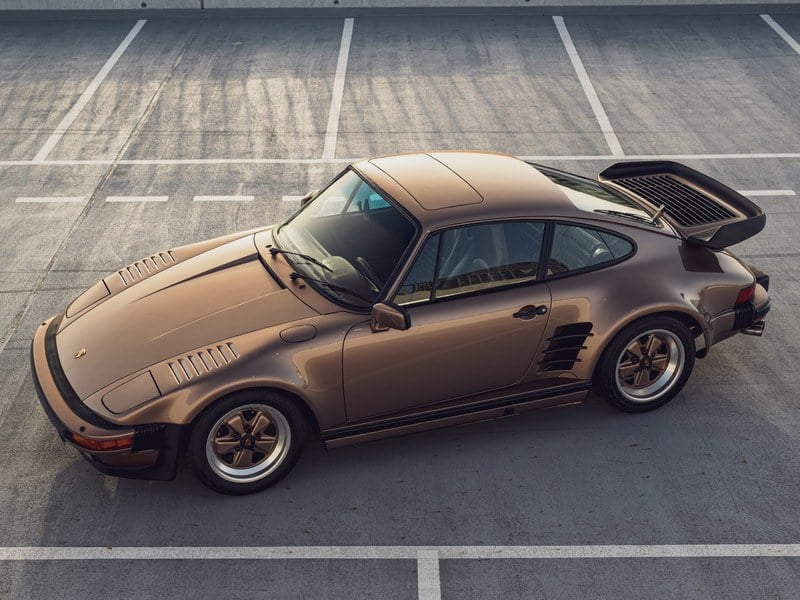
Beskrivning
En av två exempel tillverkade för racing, aldrig kraschad, fullständigt dokumenterad racinghistoria, extraordinär restaurering. En mycket välkänd bil. VÄGANMÄLD. 964 Turbo S Leichtbau behöver ingen introduktion: lanserad i maj 1992 för att homologera Le Mans-racingbilen, skulle den ha tillverkats i ett begränsat antal på 80 fordon, 3, 3L enkel turbo, med effekten höjd till 381 hk, 5-växlad växellåda med begränsad skridvridning, förstärkt karosseri, fjädring från RS, bromscaliprar målade i rött (för första gången som standard), framlock, motorkåpa och dörrar tillverkade av GRP-komposit och förenklad interiör. Leichtbaus vikt var 1290 kg, 180 mindre än standard Turbo. I slutändan tillverkades inte 80 utan 86 bilar och endast 2 av dem byggdes specifikt för racingändamål: chassinummer 79 och chassinummer 80, bilen vi presenterar här. Ursprunget till dessa två Turbo S började 1992 när Jurgen Barth var i Vallelunga för att se ett av de första racen i det nya italienska GT-mästerskapet. 964 RS kunde inte göra mycket mot den kraftfulla Ferrari F40 så när han pratade med sin vän Graziano Teggi, mekaniker och ägare av teamet Rennsport, sa han att de skulle ha studerat en bil för att kämpa på lika villkor mot Ferrari. Med utgångspunkt från 964 Turbo S utvecklade Porsche denna "Leichtbau Clubsport"-version, tillverkad i bara 2 exempel, båda levererade under samma period i Italien, ett chassinummer 79, det andra – denna till salu – med chassinummer 80. I slutet av 1992 var nr 79 klar i Zuffenhausen och Graziano Teggi från Rennsport åkte dit för att hämta den men fjädringen var inte lämplig för den bilen (samma som gatversionen) så han drog sig inte ur. Den levererades av Porsche till Rennsport den 24 december 1992, sedan testade Graziano den och sa att den inte var kraftfull alls... han berättade det för Porsche och fick från fabriken en annan turboladdare: motorn hade ett problem, så skickades den tillbaka. Sedan testades nr 79 igen och en annan turboladdare gick sönder... ytterligare 2 gånger. Eftersom bilen med den nya motorn levererades till Monza av Jurgen Barth hade 381 riktiga hästkrafter: senare sades det att den hade uppgraderats med 450 hk, men det bevisades aldrig. Efter många problem började racingsäsongen och den välkände racerföraren Beppe Schenetti deltog i italienska GT-mästerskapet 1993, vinnande mot Ferrari F40 på Varano de'Melegari. Under tiden byggdes Turbo S Chassinummer 80 för att uppfylla specifikationen för Tyskland (C00), det var 1 av 38 bilar som skulle målas i Speed Yellow. Interiören var klädd enligt Ausstattungskarte 970, sätena klädda i svart Nomex-tyg. Bilen var utrustad utan airbags och utan luftkonditioneringssystem. Speciella alternativ inkluderade Clubsport-paketet som innehöll ett svetsad rullbur (Z-order 16112, "säkerhetsbur som M001"). Den köptes av en annan italiensk gentleman driver, Renato Mastropietro: den 3 mars 1993 levererades bilen och registrerades i Tyskland under teamet Bernt Motorsport (betalade 350 000 tyska mark, medan italiensk moms på den tiden var 38%) och började tävla i Porsche Club Italia-lopp följt av Motortecnica-teamet, av Ruggiero Bernardi; inte heller denna bil var konkurrenskraftig och inte heller tillförlitlig så skickades den tillbaka till Zuffenhausen för några uppgraderingar som inkluderade Cup-fjädring, en ny begränsad skridvridning, nya växlar och synkro och en ny turboladdare. Efter 40 000 tyska mark spenderade utan resultat, tog Mastropietro bilen till Rennsport som redan arbetade med uppgraderingar av systerbilen (chassinummer 79). Efter många problem, med enturbo-versionen, bytte båda bilarna de ursprungliga motorerna mot en tillförlitlig 3, 3 dubbelturbo-motor och tävlade sedan med den konfigurationen. Originalmotor demonterades och användes aldrig, liksom originalkevrarkåpan, bakvingan och stötfångarna. Med denna konfiguration, med en bakväng härledd från RS 3. 8 med två snorklar och utökade skärmar, hade Turbo S Leichtbau Clubsport en effekt på över 500 hk, testad på dynamometern. Mr. Mastropietro minns tydligt att när han deltog i 24-timmarsloppet på Le Mans 1993 med RSR såg han en Works vit 911 Turbo driven av Bob Wollek och Hans Stuck som hade samma lösning som Rennsport studerade: den hade en växellådafel men vägen för dubbelturbon var utlagd. Turbo S nr 80 började en lång och vinnande karriär sedan 1994 på Rally di Monza där den slutade 8:a totalt men avslutade en specialsträcka på 1:a plats och kämpade mot works Alfa Romeo 155 DTM driven av Giorgio Francia! Andra segrar i Vallelunga och Mugello under Targa Tricolore Porsche, sedan segern i italienska GT-mästerskapet 1995 (kallat Coppa GT special). Samma år deltog bilen också i Jarama-loppet i BPR-mästerskapet och i 6-timmarsloppet, båda loppen tillsammans med Angelo Zadra. 1997 körde den tidigare Ferrari-föraren Luca Drudi med Turbo S i GT-mästerskapet...