Description
Plus de détails à venir
NOTES HISTORIQUES :
Celle de la Lancia Flavia Zagato est une histoire controversée : une voiture qui n’a pas séduit le public par des lignes fascinantes, mais qui a permis à la maison torino de remporter de nombreuses compétitions en misant sur la légèreté.
La Flavia berline née en 1960 fut la première Lancia dotée d’un moteur en ligne et d’une traction avant, une véritable nouveauté après des années de transmission arrière ; c’était une berline de gamme moyenne-haute avec un moteur boxer de 78 ch, sûr et élégant.
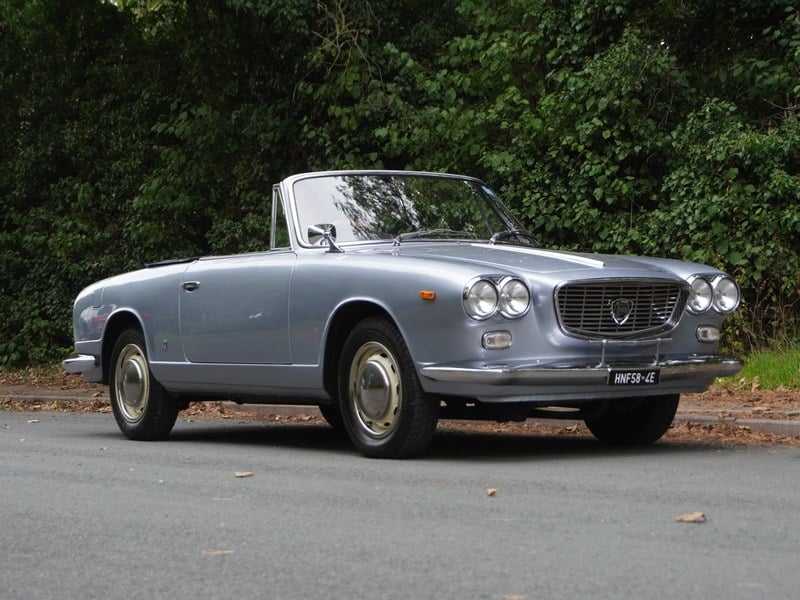
Sur la base de la berline, en 1961 naquit la coupé Pininfarina qui conjugait élégance et sportivité, grâce à un style inspiré des créations contemporaines de Pininfarina comme la Ferrari 250 GT : cette Gran Turismo rapide resta au catalogue pendant de nombreuses années avec des moteurs de 1500 à 1800 puis 2000, très appréciée du public.
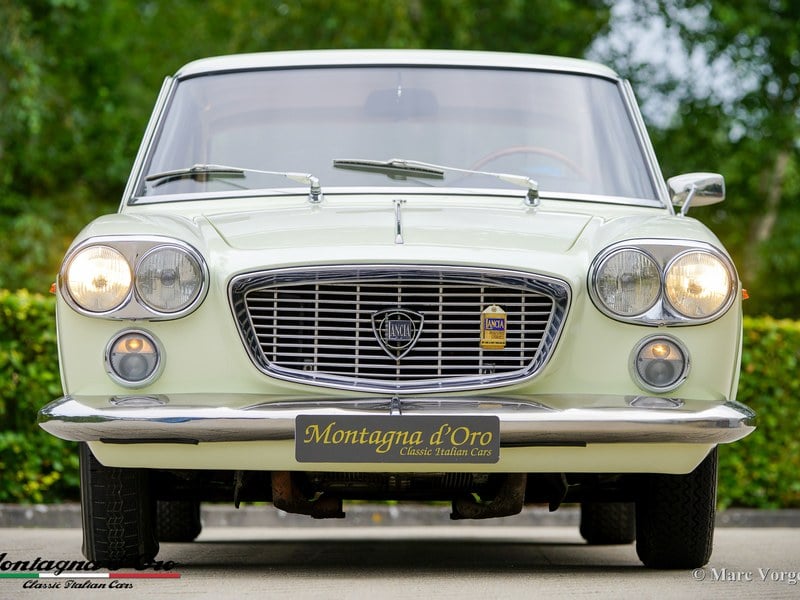
Aux côtés des premiers modèles Flavia berline et coupé (puis il y eut même une cabriolet), à partir de 1962 la carrosserie Zagato élabora sa version de la coupé. Elle était très légère grâce à la technologie constructive du carrossier milanais avec des tubes structurels et une peau extérieure en aluminium ; sa forme était très audacieuse avec des vitres latérales qui s’étiraient sur le toit, une lunette arrière concave, une grille frontale cassée horizontalement… La Flavia Zagato éblouit sans doute le public, mais pas pour ses formes gracieuses qui, même après tant d’années, ne convainquent pas.
Seulement 98 exemplaires furent produits avec le moteur 1500, car dès 1962 la Zagato fut proposée aussi avec le moteur 1800, dont 626 exemplaires furent fabriqués.
Ce qui a toutefois rendu célèbre la Flavia Zagato, c’est son activité sportive : grâce à un poids contenu à un peu moins de 1000 kilos, associé à une coque aérodynamique, elle a permis à de nombreux pilotes de l’équipe de course HF, mais aussi des pilotes privés, de gagner sur piste et en montée, aussi bien avec le moteur 1500 qu’avec le 1800 arrivé l’année suivante au lancement.
En 1966, grâce aux Flavia Zagato officielles, dotées d’un arceau pour obtenir un châssis nettement plus rigide et d’un moteur préparé d’environ 130 chevaux, Lancia remporta deux championnats italiens, sur piste et sur montée. L’année précédente, en 1965, la Flavia Zagato avait également remporté le rallye Coupe des Alpes, confirmant sa totale polyvalence. C’est grâce à la Flavia Zagato que l’équipe HF devint célèbre, ouvrant la voie à la Fulvia puis à la Stratos.
Soon further details
HISTORICAL NOTES:
The one of the Lancia Flavia Zagato is a controversial story: a car that did not win over the public with a fascinating shape, but allowed the Car company from Turin to win many competitions by focusing on lightweight and aerodynamic.
The Flavia sedan born in 1960 was the first Lancia with a front-engine and front-wheel drive architecture, a real novelty after years of rear-wheel drive; it was a medium-high range sedan with a 78 hp boxer engine, safe and elegant.
The Flavia coupé Pininfarina was born on the chassis of the sedan in 1961, combining elegance and sportiness, thanks to a style inspired by contemporary Pininfarina creations such as the Ferrari 250 GT: this fast Gran Turismo remained on the market for many years with engines from 1500 to 1800 to 2000 , much appreciated by the public.
Alongside the first Flavia sedan and coupé models (then there was also the cabriolet), in 1962 the sporty Zagato bodywork developed its version of the coupé. It was very light thanks to the construction technology of the Milanese coachbuilder with structural steel tubes and external aluminum skin; furthermore, the shape was definitely daring with side windows that extended onto the roof, a concave rear window, a front grille folded horizontally... The Flavia Zagato certainly amazed the public, but certainly not for its graceful shapes which, even after so many years, are not convincing.
Only 98 examples were equipped with 1500 engine, because from 1962 the Zagato was offered with also the 1800 engine produced in 626 examples.
However, what made the Flavia Zagato famous is its motorsport career: thanks to its weight contained just under 1000 kilos, together with its aerodynamic design, it allowed many drivers of the HF racing team, but also privateer drivers, to win both on track and hillclimb, with the 1500 engine and also the subsequent 1800 which arrived the year after launch.
In 1966, thanks to the official Flavia Zagatos, equipped with a rollbar to strengthen the chassis and a tuned engine with around 130 horsepower, Lancia won two Italian Championships the same year, one for the track and one for the hillclimb. The previous year, in 1965, the Flavia Zagato had also won the Coupe des Alpes rally, confirming its total versatility. It was thanks to Flavia Zagato that the HF racing team became famous, opening the road for the Fulvia and then the Stratos.